

When a sharp twinge or a dull ache in your back starts acting up, you want something that works—and fast. A heat patch for back pain is often a go-to for quick, targeted relief. Think of it as your own personal, portable heating pad that gets to work for hours, letting you get on with your day.
This simple but effective method is a form of thermotherapy, a technique that uses heat to relax muscle tension, kickstart blood flow, and dial down pain signals.
How Heat Patches Provide Immediate Back Pain Relief
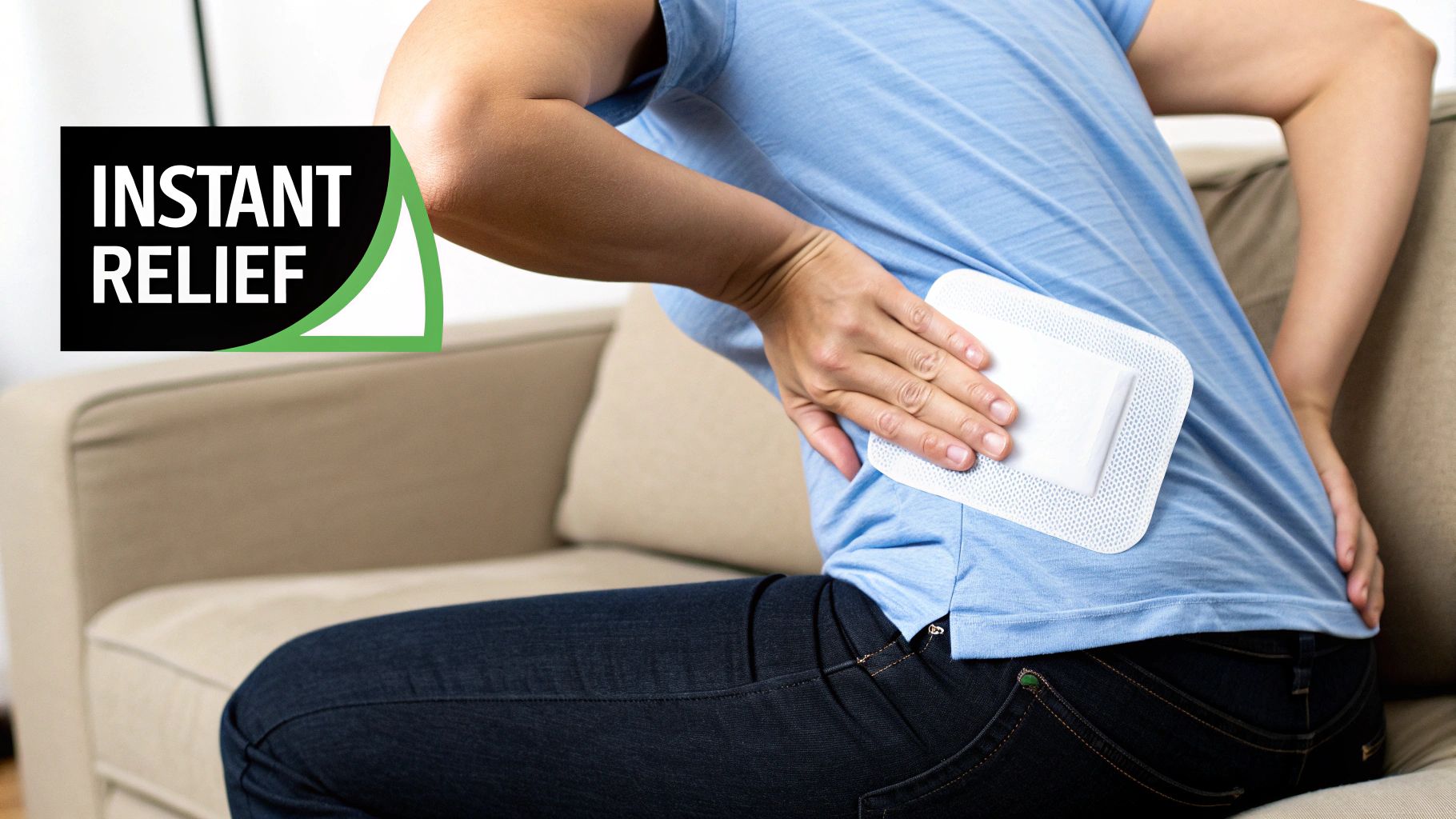
When back pain strikes, you're looking for a first line of defence that's both fast and effective. But what’s actually happening when you stick on a heat patch? It’s not magic; it’s your body’s own healing mechanisms getting a supercharged boost.
Picture your tight back muscles as a congested highway during rush hour. Everything is seized up, movement is a nightmare, and the pressure just keeps building. Applying a heat patch is like sending in a crew to open up new lanes. The warmth encourages your blood vessels to widen, a process called vasodilation.
This widening allows more oxygen-rich blood to flood into the tense, aching area. This fresh circulation not only brings in the nutrients needed to repair damaged tissues but also helps flush out the pain-inducing substances that have built up. The result? Your muscles start to relax, and the healing process gets a significant leg up.
Understanding the Core Benefits
The power of a heat patch isn't just a feeling; it's a practical application of proven thermotherapy. Back pain is a huge issue—in Canada, one in four Canadians (that's 7.63 million people) aged 15 and over live with chronic pain, and back pain is one of the biggest culprits. For the four out of five Canadian adults who will deal with back pain at least once, finding reliable relief is essential.
In fact, studies have shown that continuous low-level heat wrap therapy can significantly reduce acute low-back pain better than a placebo. If you want to dive deeper, you can explore the impact of chronic pain by reading the full government report.
The key takeaway here is that heat doesn’t just mask the pain. It actively creates a better environment for your muscles to recover by improving circulation and easing the underlying tension causing all that discomfort.
To give you a clearer picture, here’s a quick summary of what a heat patch for back pain does and when it’s most useful.
Using a Heat Patch for Back Pain at a Glance
This table breaks down the main benefits of using a heat patch and highlights the specific situations where it can offer the most relief.
| Key Benefit | How It Works | Best For |
|---|---|---|
| Muscle Relaxation | Eases muscle fibres, reducing stiffness and spasms. | Chronic muscle tightness, stress-related tension, and soreness. |
| Improved Circulation | Increases blood flow to deliver oxygen and nutrients. | Aches from overexertion or poor posture. |
| Pain Reduction | Blocks pain signals and comforts the affected area. | Dull, persistent aches rather than acute, sharp injuries. |
In short, a heat patch is a fantastic tool for managing those stubborn, achy back pains that stem from muscle fatigue and tension.
The Science of How Heat Soothes Aching Back Muscles
Ever wonder why warmth feels so incredibly good on a sore, aching back? That feeling of relief you get from a heat patch isn't just in your head; it’s your body's physiology kicking into high gear. Understanding what's happening under the skin helps you appreciate just how powerful this simple tool can be.
Think of a tense back muscle like a tightly knotted rope. It's stiff, rigid, and stubbornly stuck. If you yanked on it, you might just damage the fibres. But what if you gently warmed it up first? The rope would become more pliable and flexible, making it much easier to slowly untangle.
That's exactly what a heat patch does for your muscles. It delivers a consistent, low-level warmth to the sore spot, sparking three key processes that work together to calm pain and kickstart healing.
Boosting Blood Flow to Kickstart Healing
The first thing that happens when you apply heat is that your blood vessels widen, a process called vasodilation. As the warmth seeps through your skin and into the muscle tissue, it tells your blood vessels to relax and expand.
This expansion is like turning a two-lane country road into a six-lane superhighway. All of a sudden, you get a massive boost in blood flow right where you need it most. This fresh surge of blood is critical because it's carrying two very important things:
- Oxygen: This is essential for cellular energy and repair, helping damaged muscle tissue get back on its feet faster.
- Nutrients: These are the building blocks your body uses to mend microscopic tears and ease muscle fatigue.
At the same time, this beefed-up circulation acts like a cleanup crew, flushing out metabolic waste products like lactic acid that can build up in tense muscles and make them feel sore. It’s a two-for-one deal: removing the bad stuff while delivering the good stuff.
By increasing circulation, heat therapy creates the perfect environment for your body's own natural healing mechanisms to get to work. It’s not just masking the pain; it’s actively supporting the repair process from the inside out.
Encouraging Deep Muscle Relaxation
Beyond just getting the blood moving, the warmth from a heat patch has a direct calming effect on the muscle fibres themselves. Heat helps increase the elasticity of the collagen tissues found within your muscles, ligaments, and tendons.
This newfound flexibility helps relieve that awful stiffness that so often comes with back pain. When muscles are tight and constricted, they can sometimes go into spasm—an involuntary and often painful contraction. The soothing effect of heat helps to break that spasm cycle, allowing the muscle to finally relax and return to its normal state.
This is why heat is a go-to for chronic aches, stiffness from sitting at a desk all day, or soreness after overdoing it at the gym. It gets right to the root of the problem: the muscle tension itself.
Interrupting Pain Signals to Your Brain
This might be the most fascinating part of how heat works—it plays a clever trick on your nervous system. The idea is explained by the Gate Control Theory of Pain, which suggests your spinal cord has a kind of neurological "gate" that decides whether to let pain signals through to the brain or block them.
When you slap on a heat patch, the warmth stimulates sensory receptors in your skin. These receptors send "heat" signals rocketing up to your brain along large, fast nerve fibres. Meanwhile, the pain from your sore back is travelling along smaller, slower nerve fibres.
Because the heat signals are on the express train, they get to the "gate" first and essentially close it, blocking or overriding many of the slower-moving pain signals. To dig deeper into this, check out our detailed explanation of the Gate Control Theory of pain in our guide.
In simple terms, your brain gets busy processing the sensation of warmth, which means it has less bandwidth to pay attention to the sensation of pain. This provides immediate, noticeable relief and gives your muscles the break they need to heal without the constant nagging of discomfort.
How to Use a Heat Patch Safely and Effectively
Using a heat patch for back pain seems straightforward enough—just peel it, stick it, and wait for the relief to kick in. But getting the most out of it, and doing it safely, involves a little more know-how.
A few simple steps can be the difference between so-so results and truly effective, deep-reaching warmth that doesn't harm your skin. Think of it this way: you wouldn't just toss a steak on a cold grill. You prep it properly to get the best result. The same idea applies here.
Step One: Prepare Your Skin
Before you even tear open the packaging, getting your skin ready is key. For a heat patch to work well, it needs a clean, dry surface to stick to. Lotions, natural body oils, or even a bit of sweat can act as a barrier, preventing the patch from adhering properly and delivering consistent heat.
Start by giving the painful area on your back a gentle wash with mild soap and water. Afterwards, pat it completely dry with a towel. This quick bit of prep work ensures the patch stays put for its entire duration, giving you that uninterrupted, soothing warmth.
Step Two: Apply the Patch Correctly
When it comes to heat patches, placement is everything. You want to centre the patch directly over the source of your pain—right on the epicentre of that ache, knot, or stiffness.
If you’re dealing with that all-too-common general lower back pain from sitting at a desk or standing all day, placing the patch horizontally across the small of your back usually works best. Try to avoid putting it right on your spine. Instead, aim for the thick, meaty muscles on either side where all that tension loves to build up. Once it's in place, press down firmly for about 10-15 seconds to make sure the adhesive gets a good grip.
Step Three: Follow the Recommended Duration
With heat therapy, more isn't always better. While the warmth feels incredible, leaving a heat patch on for too long can irritate your skin or even cause low-grade burns. There’s a reason most products and health professionals give you a specific time limit.
The golden rule for most standard heat applications is 15 to 20 minutes at a time. This is the sweet spot—long enough for the heat to boost blood flow and relax tight muscles without overdoing it.
Some of the newer, low-level heat patches are designed to be worn for hours, but you should always, always read the specific instructions on the package. And a big one: never wear a heat patch to bed.
Comparing Types of Heat Patches for Back Pain
Not all heat patches are made the same, and the best one for you really depends on what you need. Are you looking for all-day convenience at the office, or something you can reuse at home? Here's a quick look at the most common options to help you choose the right heat patch for your back pain.
| Patch Type | How It Works | Pros | Cons | Ideal For |
|---|---|---|---|---|
| Adhesive Patch | An air-activated chemical reaction (iron oxidation) creates a steady warmth. | Thin, discreet, and stays put. Provides hours of low-level heat. | Single-use only. Can sometimes irritate sensitive skin. | All-day relief at work, during travel, or for continuous comfort. |
| Reusable Gel Pack | Heated up in the microwave or a bowl of hot water. | Reusable and cost-effective. Can also be frozen for cold therapy. | A bit bulky and needs a wrap to stay in place. The heat doesn't last as long. | At-home use when you can kick back, relax, and re-apply as needed. |
| Electric Pad | Plugs into a power outlet for consistent, adjustable heat. | You can control the temperature. Reusable and covers large areas. | Not portable. Requires an outlet and has a potential burn risk if used improperly. | Winding down on the sofa in the evening or just before you go to bed. |
Choosing the right type ensures you get the relief you need, when you need it. An adhesive patch is great for on-the-go support, while a reusable gel pack or electric pad might be your go-to for relaxing at home.
Common Mistakes You Need to Avoid
To make sure you're getting all the good stuff from your heat patch without any of the bad, try to steer clear of these common slip-ups:
- Applying to broken or irritated skin: This is a big no-no. Never put a heat patch on cuts, scrapes, rashes, or sunburned skin.
- Adding extra pressure: Don't wear a patch under a tight belt or waistband. This can concentrate the heat in one spot and seriously increase your risk of a burn.
- Using on swollen areas: If you have a fresh injury (within the first 48-72 hours), heat can actually make the inflammation worse. Reach for a cold pack first.
- Ignoring discomfort: Your body knows best. If the patch feels uncomfortably hot or your skin is getting red and irritated, take it off immediately.
Choosing Between Heat and Cold Therapy for Your Back
Trying to decide between a heat patch and a cold pack for your back can feel like a guessing game. But making the wrong call won't just leave you in pain—it could actually make things worse. The secret is knowing that heat and cold do completely different jobs.
Think of a brand-new injury like a small fire. The moment you strain a muscle or tweak your back, your body sends a rush of inflammatory cells to the area. This is what causes that immediate swelling, redness, and sharp pain. Your job is to put out that fire, and cold therapy is your fire extinguisher.
Once the fire is under control (usually after 48 to 72 hours), you're dealing with the aftermath: stubborn stiffness, tight muscles, and a dull, nagging ache. Now, the goal is to repair and rebuild. This is where heat comes in—it’s like the cleanup crew, opening up supply lines to bring in the resources needed for healing.
When to Use Cold Therapy
Cold therapy, also known as cryotherapy, is your go-to for acute injuries. It works by narrowing your blood vessels, which slows down blood flow to the injured spot. This helps numb the area, dial down the swelling, and stop inflammation in its tracks.
Grab a cold pack or some ice for:
- A new injury that’s happened within the last three days.
- Sharp, intense pain from a specific event, like lifting something the wrong way.
- Visible swelling or bruising around the sore spot.
- Pain that feels hot or inflamed when you touch it.
Just remember the golden rule: Ice first. Slapping heat on a fresh, inflamed injury is like throwing fuel on that fire. It’ll crank up the swelling and could set your recovery back.
When to Use a Heat Patch for Back Pain
Heat therapy, or thermotherapy, is your best friend for chronic pain and muscle stiffness that isn’t swollen. When you apply a heat patch for back pain, you’re opening up those blood vessels. This boosts circulation, delivering a fresh supply of oxygen and nutrients that help tight, achy muscles finally relax and heal.
A heat patch is the right move for:
- Chronic muscle soreness or stiffness that’s been hanging around for more than a few days.
- Dull, persistent aches from things like overexertion, bad posture, or even stress.
- Warming up muscles before an activity, like stretching or a light workout.
- Soothing muscle spasms and that deep, locked-up tension in your lower or upper back.
This infographic can help you quickly figure out which type of heat patch is best for your situation.
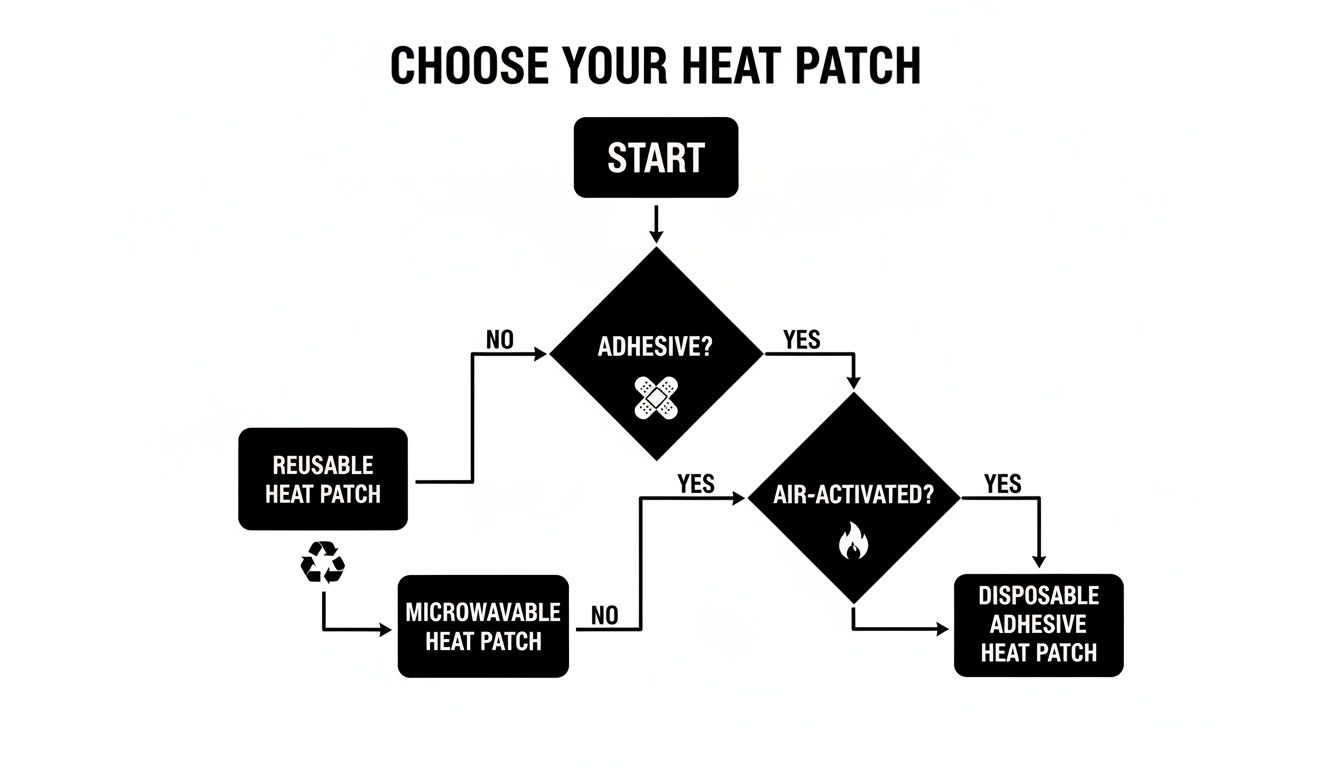
As you can see, the choice often comes down to convenience—do you need something you can wear on the go (adhesive, air-activated), or a reusable option for relaxing at home?
A Quick Checklist for Your Back Pain
Still on the fence? Run through this simple checklist. Just answer "yes" or "no."
| Symptom Check | Cold Therapy | Heat Therapy |
|---|---|---|
| Did the pain start suddenly in the last 72 hours? | Yes | No |
| Is the area visibly swollen or bruised? | Yes | No |
| Does the pain feel dull and achy? | No | Yes |
| Is your back feeling stiff and tight? | No | Yes |
| Does the pain feel sharp and intense? | Yes | No |
By tuning into what your body is telling you, you can confidently pick the right therapy. It’s the difference between helping your body heal and accidentally working against it.
Combining Heat Patches with Topical Analgesics
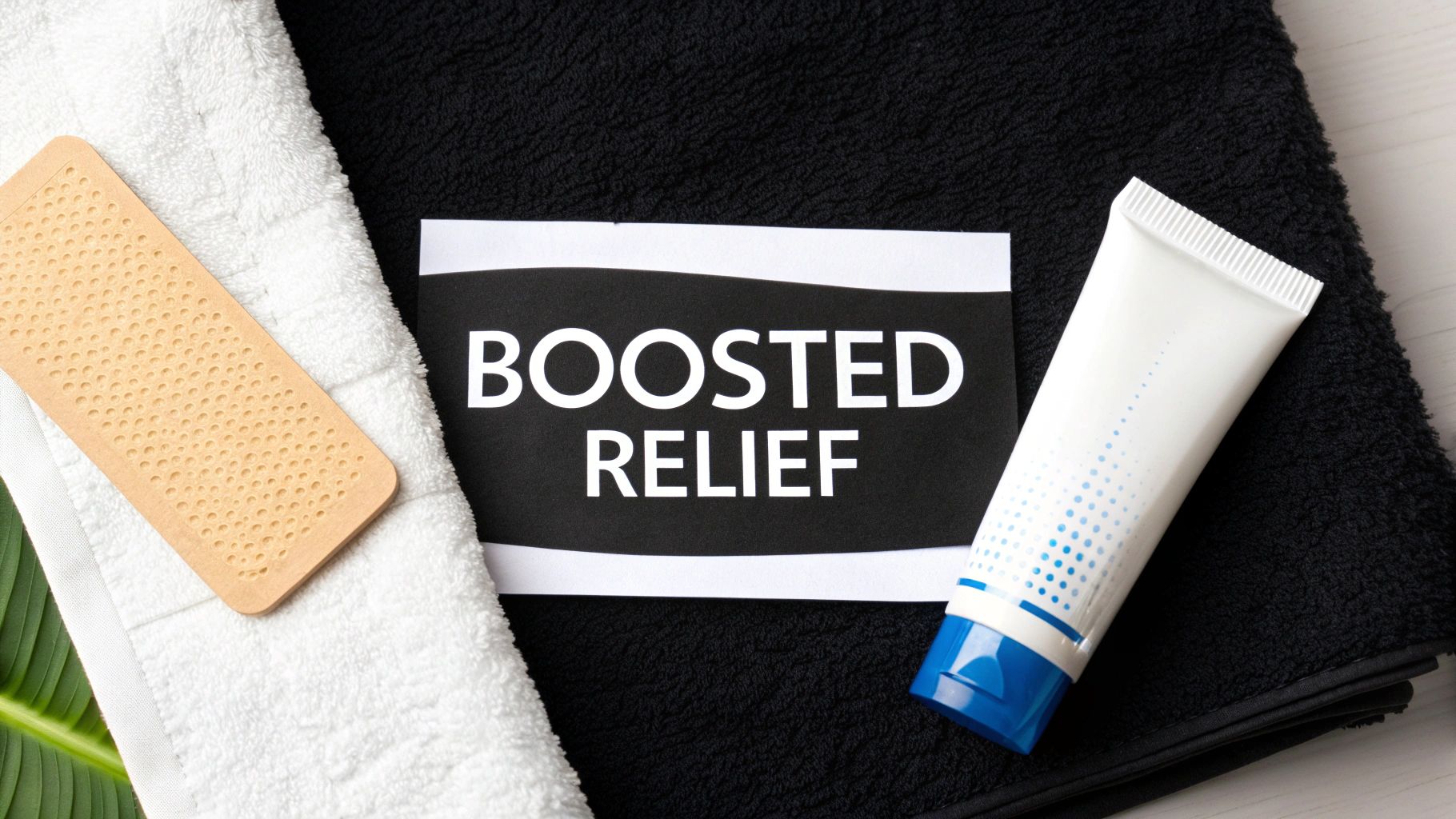
While a heat patch is a fantastic tool on its own, some types of stubborn back pain need a bit more backup. This is where you can get strategic by combining the deep, penetrating warmth of a heat patch with the targeted action of a topical analgesic.
This one-two punch often delivers a level of relief that neither method can quite manage alone.
Think of your tight, sore back muscle like a patch of hard, compacted soil. If you just pour water on it, most of it will run right off. A heat patch acts like a tiller, gently warming and loosening up that soil, making it far more receptive to anything you apply next.
Priming the Muscle for Maximum Relief
The whole idea here is to "prime" the area with heat first. When you apply a heat patch for the recommended time, it relaxes the muscle fibres and ramps up blood flow (vasodilation) to the skin and the tissues underneath.
This boost in circulation does more than just feel good; it opens up the pathways, allowing a topical analgesic to penetrate deeper and get to work more effectively.
Once that muscle is warm and relaxed, it’s ready to absorb the active ingredients in a pain relief cream, spray, or stick like MEDISTIK. The result? A more direct and potent effect right at the source of your pain and inflammation.
For countless Canadians, finding strategies that work is a daily battle. A survey in Alberta and Saskatchewan revealed that a staggering 83.8% of people have dealt with back pain, and it often comes back within a year. It’s no surprise that Canadian guidelines recommend non-invasive options like heat patches as a first line of defence. For the details, you can review the full Low Back Pain Guidelines from the College of Family Physicians of Canada.
How to Safely Combine Heat and Topicals
Following the right steps is absolutely key to getting the benefits without causing skin irritation. Here’s a simple, safe guide to layering your relief:
-
Apply Heat First: Place your heat patch over the sore spot for the recommended time, which is usually around 15-20 minutes. This gets the muscle warmed up and relaxed.
-
Remove and Cool Down: After the time is up, take the heat patch off. This next part is crucial: you have to wait for your skin to return to its normal temperature. Applying a topical product to hot skin can cause irritation or, in some cases, even minor burns.
-
Apply the Topical Analgesic: Once your skin has completely cooled, go ahead and apply your chosen topical pain reliever, like a MEDISTIK stick or spray, to the same area. This allows the product to target the pre-warmed, receptive muscle tissue safely.
By letting your skin cool down completely, you ensure that the sensations from the topical analgesic are from its active ingredients, not from a reaction with residual heat. This simple pause is your most important safety step.
Combining therapies this way creates a much more complete approach to managing your pain. You get the muscle-relaxing benefits of heat, followed by the targeted anti-inflammatory and pain-relieving action of a topical. It's a method that works especially well for those deep, nagging muscle aches that don't seem to budge with heat alone.
To get a better handle on how these products work, you can explore the benefits of topical vs oral pain relievers in our detailed article.
When You Should See a Doctor for Back Pain
A heat patch for back pain can feel like a lifesaver for managing everyday muscle aches and stiffness. But it's important to remember that it’s a tool for relief, not a cure-all. Knowing when to put the patch aside and pick up the phone to call your doctor is essential for your long-term health.
Think of self-care as your first line of defence. For the kind of soreness you get from a tough workout or stiffness from sitting too long, heat patches and a bit of rest can work wonders. But if that pain is severe, hangs around for a while, or just feels different, it might be your body's way of signalling something more serious needs a professional diagnosis.
Red Flags That Require Medical Attention
If your back pain comes with a few unwelcome friends, it's time to get a proper evaluation from a physiotherapist or physician. These "red flags" are clues that your issue might be more than a simple muscle strain.
Don't hesitate to book an appointment if you experience any of the following:
- Pain that worsens or just won't go away after about a week of self-care with heat, rest, and over-the-counter medication.
- Numbness, tingling, or weakness that travels down one or both of your legs. This can suggest a nerve is involved.
- Pain that starts after a significant injury, like a car accident, a bad fall, or a heavy impact during sports.
- Sudden loss of bladder or bowel control. This is a medical emergency and requires immediate attention.
Self-treatment is fantastic for predictable aches and pains. But if your symptoms are severe, unusual, or accompanied by other concerning issues, the safest bet is always to get a professional opinion. Your health is the number one priority.
Taking a Holistic Approach to Back Health
Truly effective back pain management goes beyond just quieting the immediate discomfort. While a heat patch offers that welcome relief, getting to the root of persistent back pain is the real key to lasting wellness.
For instance, if you often wake up with an aching back, your mattress might be the culprit. A supportive mattress is crucial for good sleep posture and can make a huge difference in how you feel each morning. Digging into finding the best mattress for back pain relief is a great step toward better mornings.
Beyond your bed, one of the best preventative measures is strengthening the muscles that support your spine. Think of a strong core as a natural corset for your back—it provides stability and takes the strain off your lower back muscles throughout the day. To be proactive, explore these vital exercises for core stability from our guide. This kind of proactive care empowers you to not just treat pain when it happens, but to build a more resilient back that can prevent it from returning.
Frequently Asked Questions About Heat Patches
Even when you know the basics of how a heat patch works, some practical questions always come up. Getting those answered is key to using them safely and getting the real relief you're after. Let's dig into some of the most common ones.
Can I Wear a Heat Patch to Bed Overnight?
It’s a tempting thought, but it’s one you’ll want to avoid. We strongly recommend you do not wear a heat patch to bed.
While you're asleep, you can't monitor how hot the patch gets or notice if your skin is becoming irritated. This puts you at risk for redness, irritation, or even low-grade burns. Play it safe and stick to the recommended application time—usually about 15-20 minutes—before you turn in for the night.
How Do I Know Where to Place the Heat Patch on My Back?
For a heat patch to really work its magic, you have to be precise. Take a moment to feel around and find the exact spot where the muscle feels tightest, most knotted, or sore. That’s your target—the "epicentre" of the pain. Place the patch directly over it.
A few common scenarios:
- General Lower Back Ache: For that nagging ache you get from sitting too long, lay the patch horizontally across the small of your back. You want it to cover the chunky muscles on both sides of your spine.
- One-Sided Soreness: If the pain is just on your left or right side, simply centre the patch right over that muscle group.
- Upper Back Tension: For that classic stiffness between the shoulder blades, place the patch vertically, running between your spine and the sore shoulder blade.
The whole point is to get the heat to penetrate deep into the specific tissues that are giving you grief.
Key Insight: Don't just slap the patch on your back randomly. Taking a minute to pinpoint the real source of your pain will make a huge difference in how effective the heat therapy is.
Is It Safe to Use a Heat Patch with a Medical Condition?
This is a big one. If you have a pre-existing medical condition, you absolutely need to chat with your doctor before reaching for a heat patch. Because heat therapy messes with blood circulation and skin sensitivity, it’s not always the right move for everyone.
You should always get professional medical advice if you have:
- Diabetes
- Poor circulation or vascular disease
- Heart disease
- Rheumatoid arthritis
- Or if you are pregnant
Your doctor knows your health history and can tell you if a heat patch is a safe and smart choice for you.
Can I Use a Heat Patch with Oral Pain Medication?
For the most part, yes. It's generally safe to use a heat patch while taking over-the-counter oral pain relievers like acetaminophen or ibuprofen. They work in completely different ways to help you feel better.
The heat patch works from the outside in, relaxing muscles and boosting blood flow right where you apply it. Oral medications work systemically, travelling through your entire body to reduce pain and inflammation from the inside out. Still, it never hurts to check with your pharmacist or doctor before combining treatments, just to be sure.
For a powerful, targeted approach to pain management that primes your muscles and supports recovery, explore the Canadian-made solutions from MEDISTIK. Discover the full range of products at MEDISTIK.


