

When joint pain flares up, your first move should be to calm things down right at home. This is where your first-response strategies come in, like the classic R.I.C.E. method (Rest, Ice, Compression, Elevation), smart use of cold or heat, and fast-acting topical analgesics. These are the tools that can manage that initial spike of pain and stop a flare-up in its tracks.
Finding Immediate Relief for Aching Joints
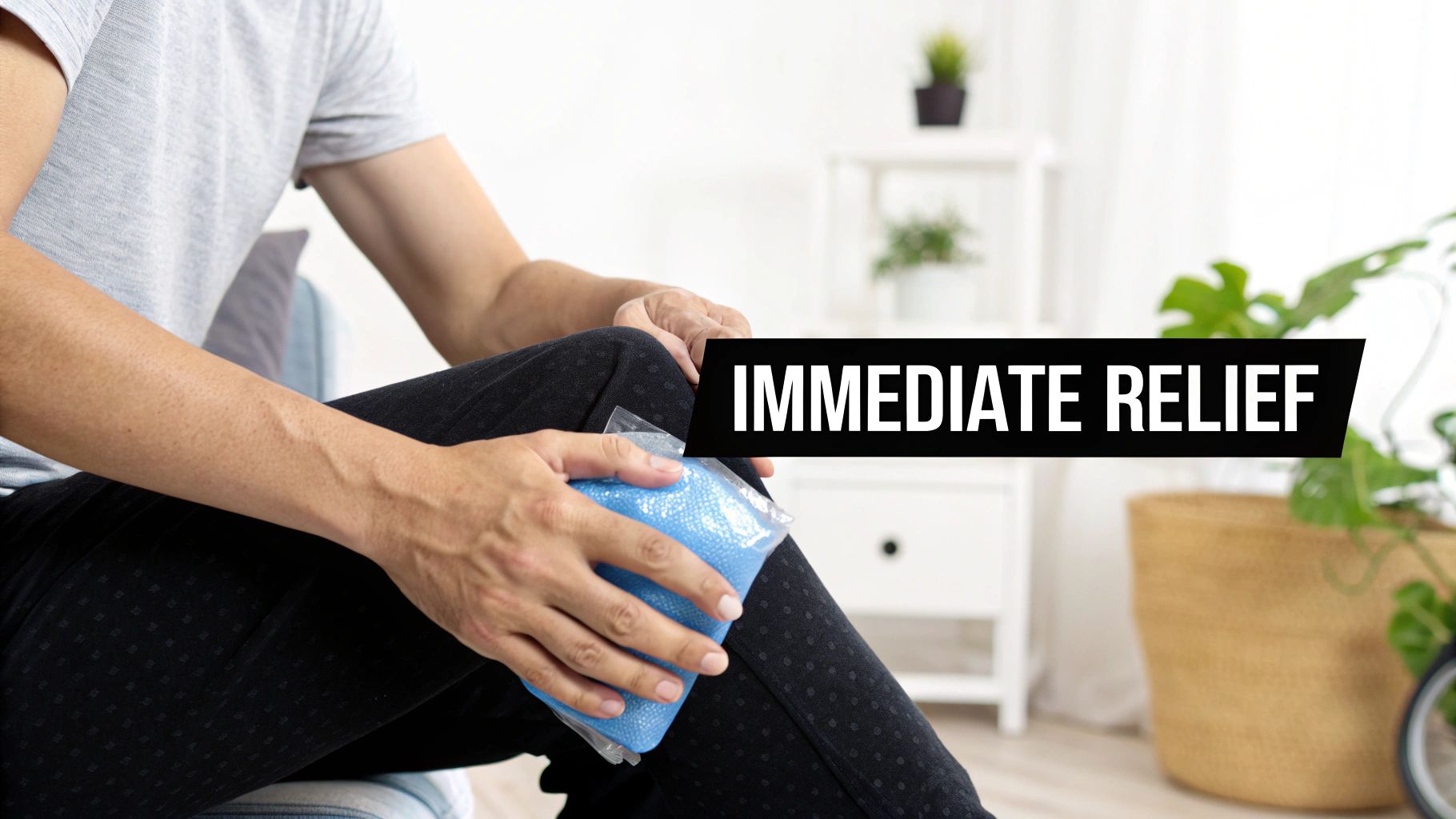
When a joint suddenly gets angry—painful, swollen, and stiff—the goal is simple: reduce that inflammation and get the discomfort under control, fast. Think of it as your rapid-response plan, the critical first steps to keep things from getting worse.
The Classic R.I.C.E. Method
For a fresh injury, like a twisted ankle from a hike or a strained knee from your weekend league, the R.I.C.E. protocol is your go-to. It's a simple but incredibly effective framework for minimizing damage and kick-starting the healing process.
- Rest: Stop what you're doing. It sounds obvious, but it’s the most important step. Don’t push through the pain or put more stress on a joint that’s already protesting.
- Ice: Grab a cold pack (wrapped in a thin towel, never directly on the skin) and apply it for 15-20 minutes every few hours. This constricts blood vessels, which is key for numbing the area and bringing down swelling.
- Compression: Gently wrap the joint with an elastic bandage. This gives it support and helps manage swelling. Just make sure it’s snug, not tight enough to cut off circulation.
- Elevation: Whenever you can, prop the injured joint up so it’s higher than your heart. Gravity is your friend here, helping to drain excess fluid away from the joint and reduce puffiness.
Settling the Heat vs. Cold Debate
Knowing whether to reach for an ice pack or a heating pad is crucial for getting real relief. They have opposite effects, so using the right one at the right time makes all the difference.
Cold therapy is what you want for acute injuries—think the first 48-72 hours. When swelling and inflammation are the main issues, the cold constricts blood vessels, numbs the pain, and reduces that fluid buildup. It’s perfect for a new sprain or a sudden flare-up.
On the flip side, heat therapy is your best bet for chronic, nagging pain that isn't actively inflamed, like the deep stiffness from arthritis. Heat boosts blood flow, helping to relax tight muscles and soothe those persistent aches. A warm compress or a soak in a warm tub can work wonders on stiff joints, especially first thing in the morning.
For those exploring natural ways to manage long-term discomfort, heat therapy can be a game-changer. You can learn more about using an infrared sauna for inflammation and natural pain relief.
Here's a quick rundown to help you decide what to grab when pain strikes.
Your First-Response Toolkit for Joint Pain
This table is a quick summary of at-home strategies for acute joint pain, helping you choose the right method for immediate relief.
| Technique | Best For | How It Works | Quick Tip |
|---|---|---|---|
| Cold Therapy | Acute injuries, swelling, new pain (first 48-72 hrs) | Constricts blood vessels, numbs nerve endings, reduces inflammation. | Always wrap ice packs in a thin towel to protect your skin. |
| Heat Therapy | Chronic stiffness, muscle soreness (after 72 hrs) | Increases blood flow, relaxes muscles, soothes achy joints. | Use moist heat (like a damp towel) for deeper penetration. |
| Topical Analgesics | Targeted relief, nerve-related pain, hard-to-reach areas | Creates cooling/warming sensations that "distract" the brain from pain. | Apply to clean, dry skin. A roll-on or stick is great for no-mess application. |
| Compression | Swelling control, joint support after an injury | Limits fluid buildup and provides stability to the affected joint. | Ensure the wrap is snug but doesn't cause tingling or numbness. |
Choosing the right approach based on your specific symptoms can make a world of difference in how quickly you start to feel better.
Tapping into Topical Analgesics
When you need targeted relief without swallowing a pill, topical analgesics are a fantastic option. These creams, gels, sprays, and sticks are applied right onto the skin over the aching joint, getting to work exactly where you need it.
They deliver active ingredients like menthol, camphor, or methyl salicylate directly to the source of the pain. These ingredients create a cooling or warming sensation that interferes with the pain signals travelling to your brain—a concept known as "gate control theory." You're essentially giving your nervous system something else to focus on besides the ache.
This method is especially handy for nerve-related discomfort. If you want to dive deeper into managing nerve pain, check out our guide on finding immediate relief for sciatica pain at home.
Products like the MEDISTIK Extra Strength Spray are perfect for those tricky, hard-to-reach spots like your mid-back or shoulders, offering quick relief on the go. For hands-on application to larger joints like your knees or lower back, a roll-on or stick provides a convenient, no-mess solution. This lets you pinpoint the pain with precision, making it an essential part of any immediate relief plan.
How Gentle Movement Can Soothe Sore Joints
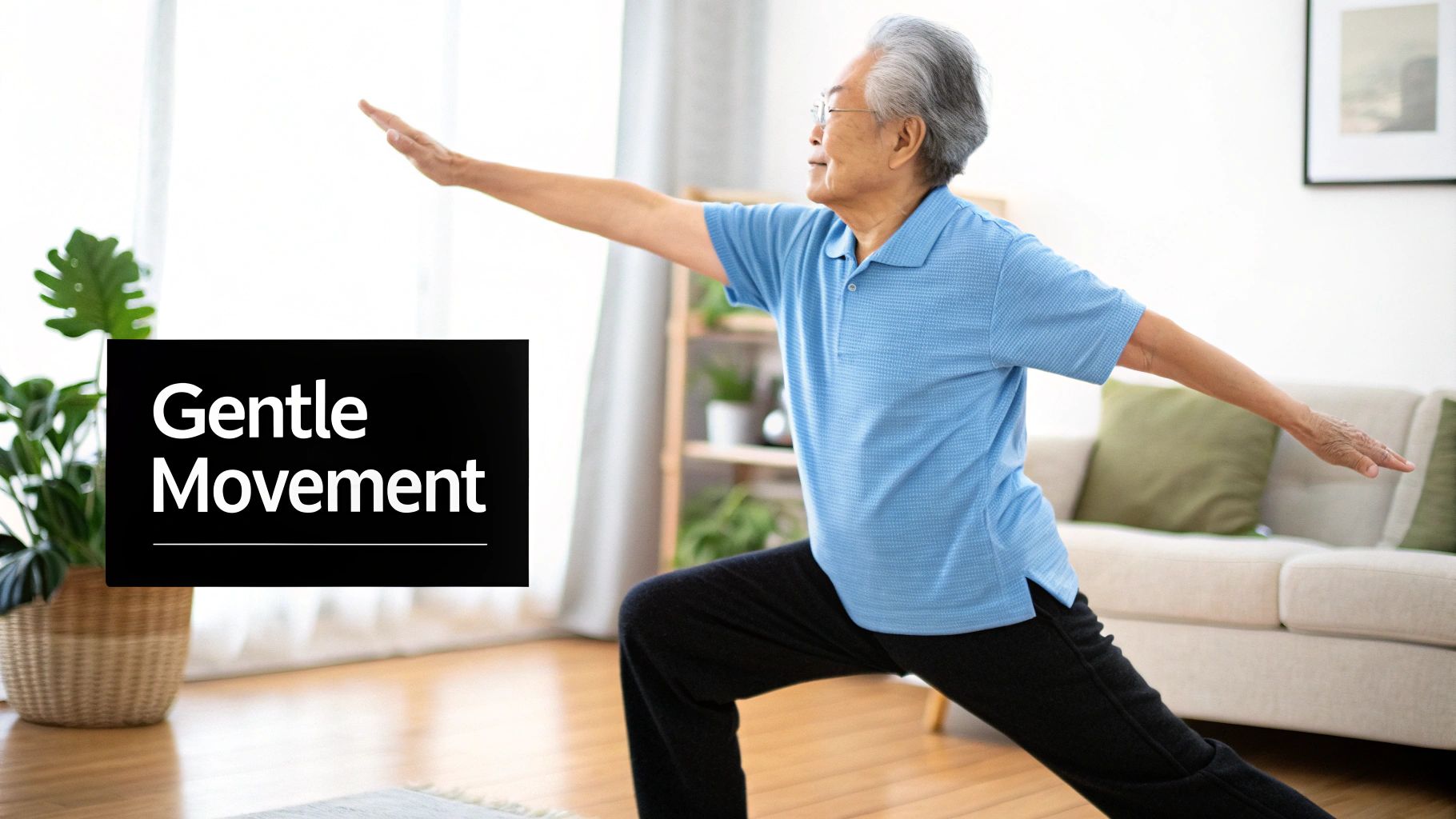
When your joints are screaming in protest, the absolute last thing you probably feel like doing is getting up and moving. But believe it or not, staying still is often one of the worst things you can do.
Gentle, mindful movement is actually a powerful tool for relieving joint pain. Think of it like a natural lubricant that eases stiffness and strengthens the very muscles that support those aching joints. The key is to trade fear for a smart, safe plan—coaxing your body back into motion, not pushing through sharp pain.
Why Low-Impact Exercise Is Your Best Friend
High-impact activities like running or jumping can be incredibly jarring for sensitive joints. Low-impact exercises, on the other hand, deliver all the same benefits—better blood flow, stronger muscles, improved flexibility—without the stressful pounding.
Here’s a way to think about it: your joints have cartilage that acts as a cushion. Movement helps circulate the synovial fluid that nourishes that cartilage. When you stop moving, that whole system stagnates, which only leads to more stiffness and discomfort. Low-impact workouts keep everything flowing smoothly.
A few excellent options to get you started include:
- Swimming or Water Aerobics: The water’s buoyancy supports your body weight, taking nearly all the pressure off your joints while still providing gentle resistance.
- Cycling: Whether on a stationary bike or outdoors, cycling is fantastic for building leg strength and improving cardio without hammering your knees and hips.
- Tai Chi or Yoga: These practices combine slow, deliberate movements with breathing and balance to improve flexibility, strength, and body awareness. For instance, a simple yoga modification for arthritic hands is to use fists instead of flat palms to protect the wrist joints.
- Walking: Never underestimate a good walk. Start with short distances on flat surfaces and gradually build up your time and distance as you feel more comfortable.
Preparing Your Body for Movement
Jumping straight into exercise, even the gentle kind, is never a good idea. A proper warm-up is non-negotiable. It gets your muscles and joints ready for activity and significantly cuts down your risk of injury.
Spend 5-10 minutes doing dynamic stretches that mimic the movements you’re about to perform. Simple things like arm circles, leg swings, or marching in place work wonders. The goal is to gently raise your heart rate and warm up your muscles, making them more pliable.
For an extra boost, try applying a topical pain reliever before you start. Using a product like the MEDISTIK Dual Action Extra Strength Stick can help increase blood flow to the area, creating a warming sensation that gets muscles ready for action. This pre-activity step can make the whole routine feel more comfortable from the get-go.
Simple Routines for Key Joints
Targeted strengthening and stretching can bring significant relief to problem areas like the knees and hips. When the muscles around a joint are strong, they act like a support system, taking pressure off the joint itself.
For many Canadians, this is a daily reality. Osteoarthritis (OA) is a primary cause of joint pain, affecting about 5 million people across the country. A JointHealth™ survey revealed just how much OA can disrupt daily life: 60% of respondents had difficulty with heavy chores, and 48% struggled with climbing stairs. You can discover more insights about OA's impact on Canadians.
Here are two simple, joint-friendly exercises you can easily do at home.
1. Seated Knee Extension (for knee support)
- Sit tall in a sturdy chair, feet flat on the floor.
- Slowly extend one leg straight out in front of you, squeezing your thigh muscle as you do.
- Hold for a few seconds without locking your knee, then gently lower it back down.
- Aim for 10-15 repetitions on each leg.
2. Side-Lying Clam (for hip stability)
- Lie on your side with your knees bent and stacked.
- Keeping your feet together, slowly lift your top knee toward the ceiling. Make sure you don't rock your hips back.
- Pause at the top, then slowly lower your knee.
- Perform 10-15 repetitions before switching to the other side.
A strong core is the foundation for supporting your entire body and taking the load off your joints. When you strengthen your abdominal and back muscles, you improve posture and stability, which directly benefits your hips, knees, and even your shoulders.
Incorporating core work can be a total game-changer for your overall joint health. If you're interested, check out our guide on how exercise for core stability can protect your body. By building a solid foundation of strength and mobility, you empower yourself to manage joint pain and stay active for the long haul.
Building a Lifestyle That Protects Your Joints
True, lasting relief from joint pain goes beyond just managing flare-ups. It's about building daily habits that support your joints for the long haul. This is the big-picture stuff—the proactive, everyday choices that can seriously cut down on pain and protect your joints for years to come.
Think of it as creating a supportive foundation for your body through smarter nutrition, better sleep, and mindful daily movements. When you focus on these core elements, you stop just reacting to pain and start actively preventing it. Each small tweak adds up, taking stress off your joints and fostering an internal environment that keeps inflammation in check.
The Impact of Healthy Weight Management
One of the most powerful things you can do for your joints—especially your knees, hips, and lower back—is to maintain a healthy weight. Every extra pound you carry adds multiple pounds of pressure to those weight-bearing joints. It’s like strapping on a heavy backpack and never taking it off.
Even a small amount of weight loss can make a huge difference. Research has shown time and again that losing just 10 pounds can take 20 to 40 pounds of pressure off your knees with every single step. This isn't about crash dieting; it's about sustainable changes like adding more whole foods and being mindful of portion sizes.
In Canada, where a significant portion of the adult population is overweight or obese, this mechanical stress is a major driver of joint pain. That's why Canadian experts often recommend a combined approach that includes weight management along with exercise and self-care. You can read the full research about these comprehensive strategies to get a better sense of how it all fits together.
Adopting an Anti-Inflammatory Diet
What you eat directly influences the level of inflammation in your body, and that has a huge effect on your joints. An anti-inflammatory diet isn’t about strict rules; it's a way of eating that focuses on whole, nutrient-packed foods that help calm your system down.
Start by getting more of these powerhouse foods onto your plate:
- Fatty Fish: Salmon, mackerel, and sardines are swimming in omega-3 fatty acids, which are fantastic for taming inflammation.
- Berries and Cherries: These fruits are loaded with antioxidants called anthocyanins, known for their inflammation-fighting properties.
- Leafy Greens: Think spinach, kale, and collard greens. They’re packed with vitamins and minerals that support healthy joints.
- Nuts and Seeds: Almonds, walnuts, and flaxseeds offer up healthy fats and more anti-inflammatory goodness.
- Turmeric and Ginger: These spices have been used for centuries to reduce inflammation. They’re easy to add to meals, smoothies, or teas.
At the same time, try to cut back on foods that are known to fuel inflammation, like processed snacks, sugary drinks, and refined carbs like white bread.
Small Swap, Big Impact: Instead of reaching for a processed snack in the afternoon, try a handful of walnuts and some tart cherries. It's a simple switch that floods your system with powerful anti-inflammatory compounds and helps you sidestep those sugary cravings.
The Critical Role of Quality Sleep
Sleep is prime time for your body's repair crew to get to work. If you're dealing with joint pain, getting 7-9 hours of quality sleep is absolutely essential. During deep sleep, your body releases growth hormones that help repair tissues, dial down inflammation, and even manage how you perceive pain.
The problem is, joint pain can create a vicious cycle: the pain makes it hard to sleep, and the lack of sleep makes the pain feel even worse the next day. To break this cycle, you need to create a sleep-friendly routine.
Make sure your bedroom is dark, quiet, and cool. Put away your phone and other screens at least an hour before bed—that blue light messes with your body's natural sleep signals. If pain is the issue, use pillows to prop up and support aching joints. A pillow between your knees can do wonders for aligning your hips and spine.
Mastering Everyday Ergonomics
Ergonomics is just a fancy word for setting up your environment to fit you, instead of forcing your body to fit your environment. When your setup is wrong, you put unnecessary strain on your joints, which can lead to chronic pain.
Take a look at your daily activities and see where you can make some simple adjustments:
- At Your Desk: Your computer monitor should be at eye level so you aren't craning your neck. Make sure your chair supports your lower back and that your feet are flat on the floor with your knees at a 90-degree angle.
- Lifting Objects: Always, always bend with your knees, not your waist. Use your powerful leg muscles to do the heavy lifting and keep the object close to your body to protect your back.
- Daily Chores: When you're vacuuming or gardening, use tools with long handles to help you stay upright. Take frequent breaks during repetitive tasks to give your joints a rest.
Being proactive with physical activity is also a key piece of the puzzle. Learning how to prevent running injuries and stay strong can help keep your joints protected while you stay active. By weaving these mindful habits into your daily life, you're building a resilient foundation for healthy joints that will last.
Using Topical Pain Relievers Correctly
Topical analgesics are a fantastic way to get relief exactly where it hurts, without the full-body side effects that can come with popping a pill. Think of them as your secret weapon for targeted pain management. But to really get the most out of them, you need to know which format to use and how to apply it correctly.
This isn't just about slathering on some cream and hoping for the best. It's about being strategic. The right product, applied the right way, can make a huge difference in your comfort, whether you're warming up for a workout or trying to get a decent night's sleep.
Choosing the Right Tool for the Job
Not all topicals are created equal. The format you pick—stick, spray, or roll-on—can seriously affect how convenient and effective it is for different parts of your body. The first step to getting great results is matching the product to the problem area.
Here are a few common scenarios I see all the time:
- For the Lower Back: You can’t beat a solid, no-mess stick like the MEDISTIK Extra Strength Stick. It lets you apply firm pressure to those big muscle groups without getting your hands messy.
- For Hard-to-Reach Spots: Ever tried to rub cream on your own shoulder blades? It’s basically a yoga pose. A spray gives you 360-degree coverage, so you can easily hit those awkward angles on your mid-back.
- For Targeted Joints: A roll-on is perfect for zeroing in on smaller joints like your knuckles, wrists, or the sides of your knees. It’s precise and mess-free.
To dig a bit deeper into why this direct approach often makes more sense than traditional pills, check out the benefits of a topical pain reliever versus an oral one.
Choosing the Right Topical Pain Reliever
Picking the right product format can make all the difference in getting quick and easy relief. This table breaks down your options to help you choose the best tool for your specific pain.
| Product Format | Key Feature | Best For | Application Scenario |
|---|---|---|---|
| Solid Stick | No-mess, hands-free application with pressure | Large muscle groups like the back, legs, neck | Applying firm pressure to your lower back before a long car ride or after a workout. |
| Spray | 360-degree coverage, quick-drying | Hard-to-reach areas like the mid-back | Quickly spraying your shoulders and upper back after waking up with stiffness. |
| Roll-On | Precise, targeted, and mess-free | Small joints like knuckles, wrists, knees | Rolling onto your knuckles before gardening or targeting the tendons around your elbow. |
| Cream/Gel | Allows for massage, variable absorption | Areas needing massage with pain relief | Massaging into a sore calf muscle to work out a knot while delivering active ingredients. |
Ultimately, the best format is the one you’ll actually use consistently. The convenience of these different applicators means you’re more likely to stay on top of your pain management, whether you're at home, in the clinic, or on the move.
Best Practices for Application
Getting the most out of your topical analgesic comes down to proper application. It’s not just about what you do, but also what you don't do. A few simple rules will keep you safe and ensure you're getting maximum relief.
First, always apply the product to clean, dry skin without any cuts or scrapes. This helps the active ingredients absorb properly and prevents any nasty stinging. After you’re done, wash your hands thoroughly unless you used a hands-free format like a stick or spray.
Here’s a critical safety tip: never, ever use a heating pad with a topical analgesic. Many of these products, including MEDISTIK, create their own warming sensation. Adding extra heat can make the ingredients absorb way too fast, leading to skin irritation or even burns.
Expert Tip: If you have a chronic issue like arthritis, applying a topical before bed can be a game-changer. The long-lasting relief can calm the nagging pain and stiffness that loves to flare up at night, helping you wake up feeling more rested and with less morning soreness.
Putting It All into Practice
Let’s see how this works in the real world. Think about an athlete getting ready for a big training session. They might use a warming topical on their quads and hamstrings as part of their warm-up. This helps get the blood flowing and preps the muscles for action, which can help manage soreness and reduce the risk of a strain.
Or, consider someone with osteoarthritis in their hands. Applying a roll-on before activities that require dexterity, like typing or gardening, can ease stiffness and make those tasks much more comfortable. It’s a small step that becomes a crucial part of their daily routine.
The infographic below shows three other pillars of joint health that work hand-in-hand with targeted relief to create a powerful long-term strategy.
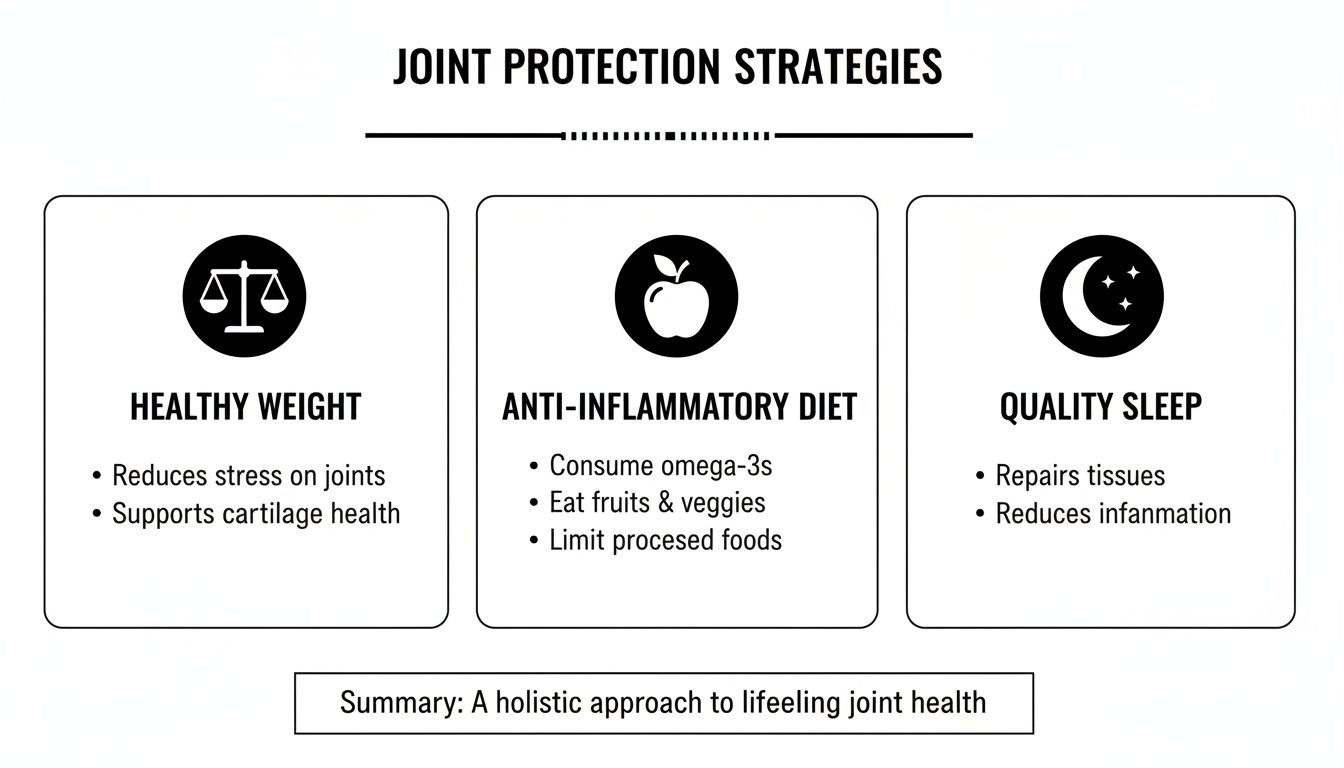
As you can see, managing your weight, eating well, and getting enough sleep all reduce the overall stress on your joints. When you combine these habits with the smart use of topical pain relievers, you’re building a really solid defence against joint pain.
Knowing When to See a Medical Professional
While at-home strategies are fantastic for managing day-to-day aches and flare-ups, they aren't a substitute for professional medical advice—especially when something feels seriously wrong. Taking charge of your joint pain means knowing your limits and recognizing when it’s time to call in an expert. Being your own best advocate is about managing pain confidently at home while getting the right help when it matters most.
A lot of people hesitate, asking themselves if their pain is "bad enough" for a doctor's visit. That uncertainty is completely normal, but some symptoms are clear signals that your body needs a professional assessment. Ignoring these red flags can sometimes lead to bigger issues down the road, so it’s crucial to listen to what your joints are telling you.
Red Flags You Should Never Ignore
Some symptoms go way beyond typical aches and pains and warrant a prompt call to your doctor. Think of these as your body’s emergency signals.
If you experience any of the following, don't wait to seek medical attention:
- Intense, Sudden Pain: This isn't the slow burn of morning stiffness; this is a sharp, severe pain that hits you quickly.
- A Deformed Joint: If a joint looks visibly out of place, crooked, or misshapen after an injury, it requires an immediate look.
- Inability to Bear Weight: If you suddenly can't put any weight on your leg because of hip, knee, or ankle pain, it’s a sign something is seriously off.
- Signs of Infection: Look for redness, significant swelling, skin that's hot to the touch around the joint, or a fever. These could point to a joint infection, which is a medical emergency.
- Loss of Motion: If a joint suddenly locks up or you can't move it through its normal range of motion, it's time for a professional opinion.
Trust your gut. If the pain feels different, is much more severe, or comes with other weird symptoms, it’s always better to get it checked out. A professional can give you an accurate diagnosis and a treatment plan that actually targets the root cause.
Demystifying the Healthcare Landscape
Knowing who to see can feel confusing. The Canadian healthcare system has several types of professionals who can help you figure out how to relieve joint pain, each with a specific role.
In Canada, relieving joint pain is a major issue, tied closely to the country’s growing arthritis burden. In 2023, 20.6% of Canadian adults—about 1 in 5—reported having arthritis, making it one of the most common chronic conditions nationwide. With the proportion of Canadians aged 65+ on the rise (where 1 in 2 live with arthritis), the demand for non‑prescription, easy‑to‑use options to relieve joint pain is only going to grow. You can learn more about the prevalence of arthritis in Canada.
Here’s a quick breakdown of who does what:
- Family Doctor (General Practitioner): This is your first stop. Your family doctor can do an initial assessment, order tests like X-rays or bloodwork, prescribe medication, and refer you to a specialist if needed.
- Physiotherapist: These professionals are the experts in movement and function. They can design a personalized exercise program to strengthen the muscles around your joints, improve your range of motion, and teach you how to move safely to prevent another injury.
- Rheumatologist: This is a specialist who diagnoses and treats arthritis and other diseases of the joints, muscles, and bones. If your doctor suspects an inflammatory condition like rheumatoid arthritis, this is likely where you'll be sent.
How to Prepare for Your Appointment
To get the most out of your visit, a little prep work goes a long way. Before you go, take a few minutes to think about your symptoms and jot down some notes.
Come ready to discuss:
- Your Pain Story: When did the pain start? What does it feel like (sharp, dull, throbbing)? What makes it better or worse? Is it constant, or does it come and go?
- Your Medical History: Make a list of any other health conditions you have and all the medications and supplements you're currently taking.
- Your Questions: Don't be shy about asking questions. What could be causing this? What are my treatment options? What can I do at home to help?
Walking into your appointment with this info ready helps your healthcare provider get a clear picture of what's going on. This teamwork ensures you walk away with a clear, effective care plan, putting you back in control of your joint health.
Common Questions About Joint Pain Relief
When you're dealing with joint pain, a lot of questions can come up. From figuring out the basics of hot and cold therapy to wondering about the safety of daily treatments, getting clear answers is the first step to managing your pain with confidence.
Let's tackle some of the most common questions we hear, breaking down the concerns with practical advice you can use right away.
How Long Should I Use Ice or Heat?
The golden rule for both is 15-20 minutes at a time. It’s a simple but crucial step: always wrap the pack in a thin towel to protect your skin from burns.
So, which one do you choose? Think of ice for new, acute injuries. It’s brilliant for reducing that initial swelling and numbing the sharp pain. Heat, on the other hand, is your best friend for chronic stiffness or that deep muscle soreness. It helps loosen up tight tissues, making it perfect to use before an activity.
A quick safety tip that can't be stressed enough: Never, ever fall asleep with a heat or ice pack on. Set a timer. Leaving it on too long can cause real damage, which is the last thing you need.
Can I Use Topical Pain Relievers Every Day?
Absolutely. Topical analgesics are designed for temporary relief and can generally be used up to 3-4 times a day. For anyone navigating chronic pain, they can be a game-changer, offering comfort before a workout or helping you get a better night's sleep.
The key is to listen to your body. If the pain sticks around for more than a week or gets worse even with the product, that's your cue to see a healthcare professional. They'll help you get to the root cause instead of just masking the symptoms.
What Are the Best Supplements for Joint Health?
Supplements like glucosamine, chondroitin, turmeric, and omega-3s are everywhere, but here’s the thing: their effectiveness can be really hit-or-miss. What works wonders for one person might do nothing for another, and they can sometimes interact with other medications.
Before you start anything new, have a chat with your doctor or a registered dietitian. They know your health history and can help you make a safe, informed choice.
Always remember that a balanced, anti-inflammatory diet is the best foundation you can build for long-term joint health.
Is Cracking My Knuckles Bad for My Joints?
This is one of those myths that just won't quit. Despite what your grandma might have told you, there’s no solid scientific proof that cracking your knuckles leads to arthritis.
That "pop" you hear is just a bubble of nitrogen gas bursting inside the fluid that lubricates your joints. While it’s not directly harmful, some studies suggest that doing it forcefully and habitually for years could potentially weaken your grip strength. But honestly, if it doesn't cause you any pain, it's probably not worth worrying about.
For seriously strong, non-prescription solutions that help you manage joint pain and stay active, trust MEDISTIK. Our Canadian-made topical analgesics are designed to help you prime, perform, and restore with confidence. Explore our effective, easy-to-use products at MEDISTIK.


