

When joint pain flares up, it can feel like it’s calling all the shots, sidelining you from the very life you love. To fight back effectively, the best joint pain relief cream will usually pack a one-two punch: powerful, targeted action combined with an easy-to-use format. That means looking for formulas with proven active ingredients like menthol, camphor, or even NSAIDs that get right to the source of the pain and inflammation.
Your Guide to Targeted Joint Pain Relief
Whether it’s the dull ache of arthritis, the sharp complaint of a fresh injury, or just the result of years of wear and tear, joint pain can feel like a constant roadblock. It gets in the way of your favourite hobbies, makes a long workday feel even longer, and turns simple movements into a challenge.
Many people reach for oral medications first, but they have a pretty significant downside—they treat your whole body just to fix a problem in one specific spot. This is exactly where topical analgesics come in, offering a smarter, more direct line of defense.
Applying a cream, stick, or spray sends relief directly where you need it. Think of it like calling in a specialist for a consult instead of waiting in a general walk-in clinic; you get focused support precisely where it hurts.
Why Topical Relief is a Smarter Choice
The biggest win for topical solutions is that they get to skip the digestive system entirely. When you swallow a pill, it has to go on a long journey through your stomach and liver before it even hits your bloodstream. This whole process can trigger side effects throughout your body and put extra strain on your organs. A good joint pain relief cream avoids that scenic route completely.
- Direct Application: The active ingredients soak through the skin to deliver concentrated relief right to the aching muscles and joints.
- Reduced Systemic Risk: Because the medication works locally, the chance of experiencing widespread side effects is much lower compared to oral painkillers.
- Faster Perceived Action: Many topicals include ingredients like menthol, which creates an immediate cooling or warming feeling. This sensation provides a quick distraction from the pain while the other active ingredients get down to business.
This targeted approach means you can manage your pain without sending medication through your entire system. It's a precise strategy for a localized problem, which is why it's become a go-to for everyone from elite athletes to people just trying to get through their day pain-free.
Consider this guide your roadmap to understanding what makes these products work. We’ll break down everything from the key active ingredients to the different application formats, giving you the confidence to choose the best joint pain relief cream for your needs—and get you back to moving comfortably again.
How Topical Pain Relief Creams Actually Work
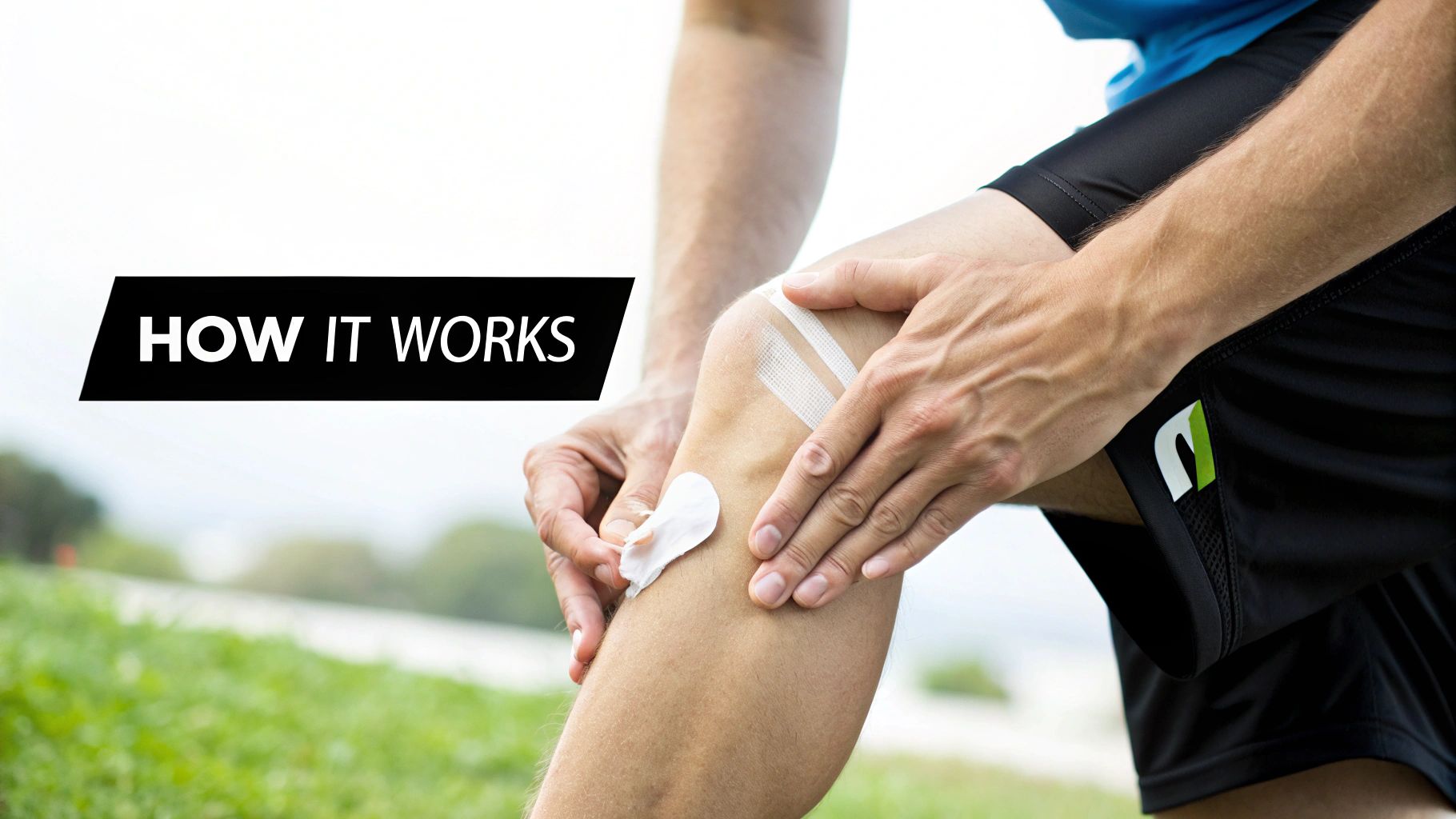
Ever wondered what’s really going on when you rub a pain relief cream onto a sore joint? It’s not magic, but it is some pretty clever science. These formulas are designed to deliver active ingredients right through the skin, letting them get to work directly at the source of your pain.
Think of it like calling in a specialist team to handle a problem on-site, instead of sending them through city-wide traffic where they might get delayed or lost. This targeted approach bypasses your digestive system, focusing the relief exactly where you need it most.
Let's break down the main ways these topical treatments tackle your aches and pains.
Decoding Active Ingredients in Joint Pain Creams
Not all active ingredients are created equal. The table below compares the most common categories, explaining how they work and what kind of pain they’re best suited for. This can help you quickly identify the right type of product for your specific needs.
| Ingredient Category | How It Works (Mechanism) | Sensation | Best For |
|---|---|---|---|
| Counterirritants | Creates a cooling or warming sensation to distract the brain from deeper pain signals. | Cooling (Menthol) or Warming (Camphor) | Quick relief from acute muscle soreness, sharp pains, and sprains. |
| Topical NSAIDs | Reduces inflammation by blocking the production of pain-causing chemicals (prostaglandins). | Neutral or mild sensation | Chronic inflammatory pain like arthritis, tendinitis, and persistent joint aches. |
| Anesthetics | Temporarily numbs the area by blocking nerve signals from reaching the brain. | Numbing | Localized, sharp nerve pain or discomfort before activity. |
| Capsaicin | Depletes a neurotransmitter responsible for sending pain signals, creating a warming effect over time. | Initial warming, can be intense | Chronic nerve pain, arthritis, and persistent muscle pain. |
By understanding these different approaches, you can move beyond marketing claims and choose a product based on the science of how it provides relief.
The Power of Distraction: How Counterirritants Work
One of the most common strategies you'll find in pain relief creams is counterirritation. It’s a smart way to trick your brain into ignoring pain. Ingredients like menthol and camphor create a new, harmless sensation on your skin—like cooling or warming—that overrides the deeper ache.
Imagine your nervous system as a busy switchboard. The nagging pain from your joint is one persistent call that keeps getting through. Counterirritants flood the switchboard with other calls, creating a "busy signal" that blocks the original pain message from reaching your brain.
This nerve-level distraction is why you feel that instant cooling or warming sensation. It's a sensory trick that gives your brain something else to focus on, providing fast—though often temporary—relief from the underlying discomfort.
These ingredients work by stimulating specific nerve receptors. Menthol, for example, triggers the same receptors that sense cold, producing a powerful cooling effect without actually changing your skin's temperature. This is why it feels so good on the sharp pain of an acute injury.
Fighting Inflammation at the Source with Topical NSAIDs
The other major approach gets more to the root of the problem: inflammation. This is the territory of topical Non-Steroidal Anti-Inflammatory Drugs (NSAIDs), such as methyl salicylate. Think of these ingredients as tiny, localized firefighters.
When a joint is injured or inflamed by a condition like arthritis, your body releases chemicals called prostaglandins that cause swelling, pain, and stiffness. A topical NSAID penetrates the skin to get to work directly on the tissues underneath.
Once absorbed, it blocks the enzymes that produce prostaglandins. By shutting down the fuel for the inflammatory response, the cream helps to:
- Reduce swelling in and around the joint
- Decrease stiffness and improve your range of motion
- Soothe the persistent ache caused by inflammation
This is a much different mechanism than the immediate sensory trick of a counterirritant. It’s a deeper, more therapeutic action that addresses a primary cause of pain, making it a fantastic choice for chronic conditions. To dig deeper, you can learn more about the benefits of topical versus oral pain relievers and see how they stack up for targeted relief.
Better Together: Combining Forces for Maximum Effect
The truly top-tier joint pain creams rarely rely on just one trick. Instead, they combine multiple active ingredients to create a powerful synergy, giving you both immediate and long-lasting relief.
For instance, a formula might use menthol for that quick cooling distraction while methyl salicylate works behind the scenes to calm inflammation. This multi-pronged attack is what makes a high-quality cream so effective. It tackles pain from different angles, giving you the best shot at finding real comfort and getting back to what you love.
Choosing the Right Format for Your Lifestyle
Even the most effective pain relief formula won't do you any good if it’s a hassle to use. The format of a topical analgesic—whether it's a cream, roll-on, spray, or stick—is just as crucial as its active ingredients. It dictates everything from where you can apply it to how often you'll actually reach for it.
Think of it like this: you wouldn't use a tiny artist's brush to paint an entire wall, and you wouldn't use a massive roller for the delicate trim. The tool has to match the job. Your daily routine and specific needs will determine which format fits seamlessly into your life instead of feeling like another chore.
The Classic Cream or Gel
Creams and gels are the traditional go-to for a reason. They're perfect for those moments when you can take a minute to really work the product into your skin.
- Best For: A deeper massage. The physical act of massaging a cream into a sore muscle or joint helps boost blood flow, which can improve absorption and provides its own therapeutic benefits.
- Ideal Scenario: At-home use, like in the morning before you get going or in the evening to soothe aches before bed. It's a fantastic choice for larger areas like your lower back or thighs.
- Consideration: The main drawback is the mess. You have to use your hands, which means washing them thoroughly afterward is a must to avoid accidentally touching your eyes or mouth with potent ingredients. This makes them less practical for quick, on-the-go relief.
The Convenient Roll-On
When you need mess-free relief, the roll-on is the undisputed champion. Its design lets you apply the product directly to the source of the pain without getting a single drop on your hands.
This format delivers both precision and cleanliness, making it a fan favourite for use outside the home. The rollerball also provides a gentle massaging action as you apply it, helping to target the specific muscles that are crying out for attention.
A roll-on is your discreet partner in pain management. It’s the perfect tool to keep in an office drawer, a purse, or a gym bag for immediate, targeted relief without any fuss or cleanup.
The Hard-to-Reach Spray
Let's be honest, some pain is just physically impossible to get to on your own. That nagging ache right between your shoulder blades or across your lower back can feel miles away. This is where a spray becomes absolutely essential.
Sprays offer a wide, continuous application that can cover large areas quickly and from almost any angle. You can just point and spray for even coverage, making it the ultimate solution for those hard-to-reach spots when there's no one around to help.
The Powerful Solid Stick
For those times when you need maximum strength and zero mess, nothing beats a solid stick. This format glides on, delivering a highly concentrated layer of active ingredients directly where you need it with a simple swipe. It’s built for potent, hands-free application and incredible durability.
A high-performance solid stick, like the kind trusted by athletes and first responders, is designed for demanding situations. It won't leak in your gym bag or melt in a hot car, so it’s always ready when you are. If you’re looking for a robust, long-lasting solution, you can learn more about the benefits of a high-potency solid stick format and see how it holds up under pressure.
Matching the Product to Your Pain
Not all joint pain is created equal, so it makes sense that a one-size-fits-all solution rarely works. Finding the best joint pain relief cream isn't about some miracle formula—it’s about playing detective with your own body. By figuring out the specific type of pain you're feeling, you can match it to the right product for a far better result.
Think of it like using a hammer to turn a screw. Sure, you might make some progress, but it’s clumsy, inefficient, and not the right tool for the job. In the same way, using a quick-cooling spray for deep-seated arthritic inflammation is a total mismatch. The secret is to match the tool to the task.
Start by asking yourself: is the pain sharp and sudden, or is it a dull, nagging ache that just won't quit? Is it the fiery heat of arthritic inflammation, a pulled muscle from your last workout, or irritated nerves sending out zinging signals? Nailing down this profile is your first big step toward meaningful relief.
Chronic Aches vs. Acute Injuries
The timeline and feel of your pain are the first major clues. Are you dealing with a fresh injury or a long-term problem?
- For Chronic Pain (e.g., Arthritis): This kind of persistent discomfort is often driven by stubborn inflammation. You need a product with ingredients designed to work over time, like topical NSAIDs, that can help reduce that deep swelling and soothe the joint. A long-lasting stick or a cream you can really massage in are excellent choices here.
- For Acute Pain (e.g., a Sprain): A sudden injury demands an immediate response. This is where fast-acting counterirritants like menthol or camphor shine. They create an intense cooling or warming sensation that essentially distracts your brain from the sharp pain signals, giving you quick sensory relief. Sprays and roll-ons are perfect for this because they get to work right away.
The need for these kinds of targeted solutions is huge. In Canada alone, over 6 million people live with arthritis, and the demand for topical pain relief has grown right alongside it. This is part of a larger trend, with North America holding a massive 39.7% of the global market share, and creams leading the pack at 35.0%. With pharmacies and drug stores making up 41.3% of distribution, trusted Canadian-made options like MEDISTIK are easy to find for those who need them most. You can explore the full topical pain relief market report to dig deeper into the numbers.
Choosing the right product isn't just about what's inside the bottle. It's about aligning the entire experience—from how it works to how you apply it—with the specific story your pain is telling you.
Aligning Format with Function
Once you’ve got a handle on your pain type, the next move is to pick a format that makes application easy and effective. Your lifestyle and where you’re hurting play a massive role in this decision.
This decision tree is a great starting point, helping you navigate from the location of your pain to the most practical format.
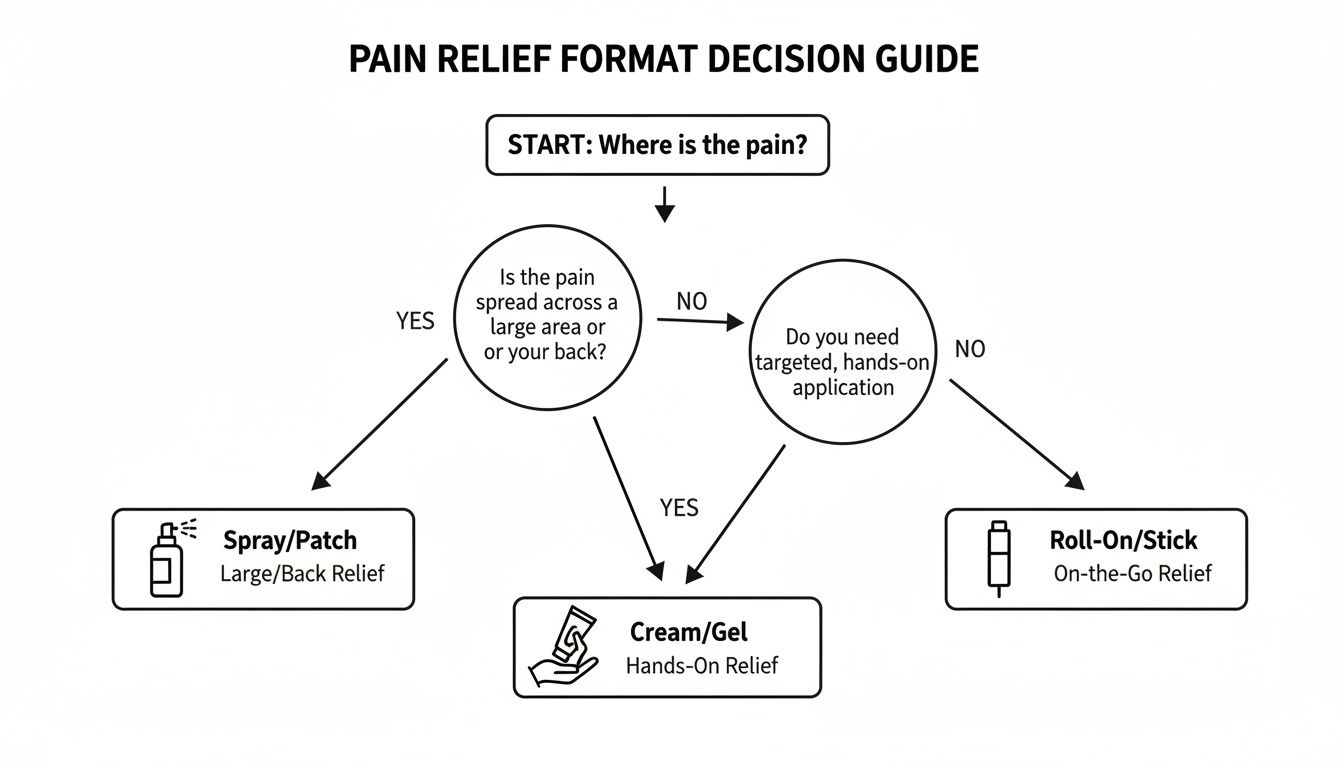
As the guide shows, the best format really depends on the situation. A spray is perfect for hard-to-reach spots, a cream is ideal for a hands-on massage, and a roll-on offers clean, portable relief.
For example, an athlete who needs to prep their muscles before a game will love a fast-acting spray that can cover a big area like the back or legs in seconds. On the other hand, someone managing arthritis in their hands would find a cream much more useful, as it allows them to massage the formula directly into their knuckles and joints.
The MEDISTIK system was designed to cover this entire spectrum.
- For Widespread or Hard-to-Reach Pain: The Extra-Strength Spray delivers a rapid, powerful blast of relief across large areas like your back and shoulders—no help needed.
- For Deep, Persistent Aches: The Extra-Strength Stick gives you a potent, hands-free way to apply long-lasting ingredients that are perfect for tackling chronic joint pain.
- For On-the-Go Acute Relief: The Natural Ice Roll-On offers a clean, mess-free application of a quick-cooling formula for smaller, targeted areas, anytime and anywhere.
When you correctly match your unique pain profile with the right active ingredients and the best application format, you're doing more than just masking symptoms. You’re starting to treat your pain with the precision it deserves, helping you get back to moving with confidence and comfort.
Best Practices for Maximum Relief
Believe it or not, how you apply a topical cream can be the difference between a little bit of comfort and real, lasting relief. Just slathering it on won't cut it. To unlock the full power of your product, there's a bit of technique involved.
These simple steps and precautions are the 'unwritten rules' for using your joint pain relief cream safely and getting the most out of it, every single time.
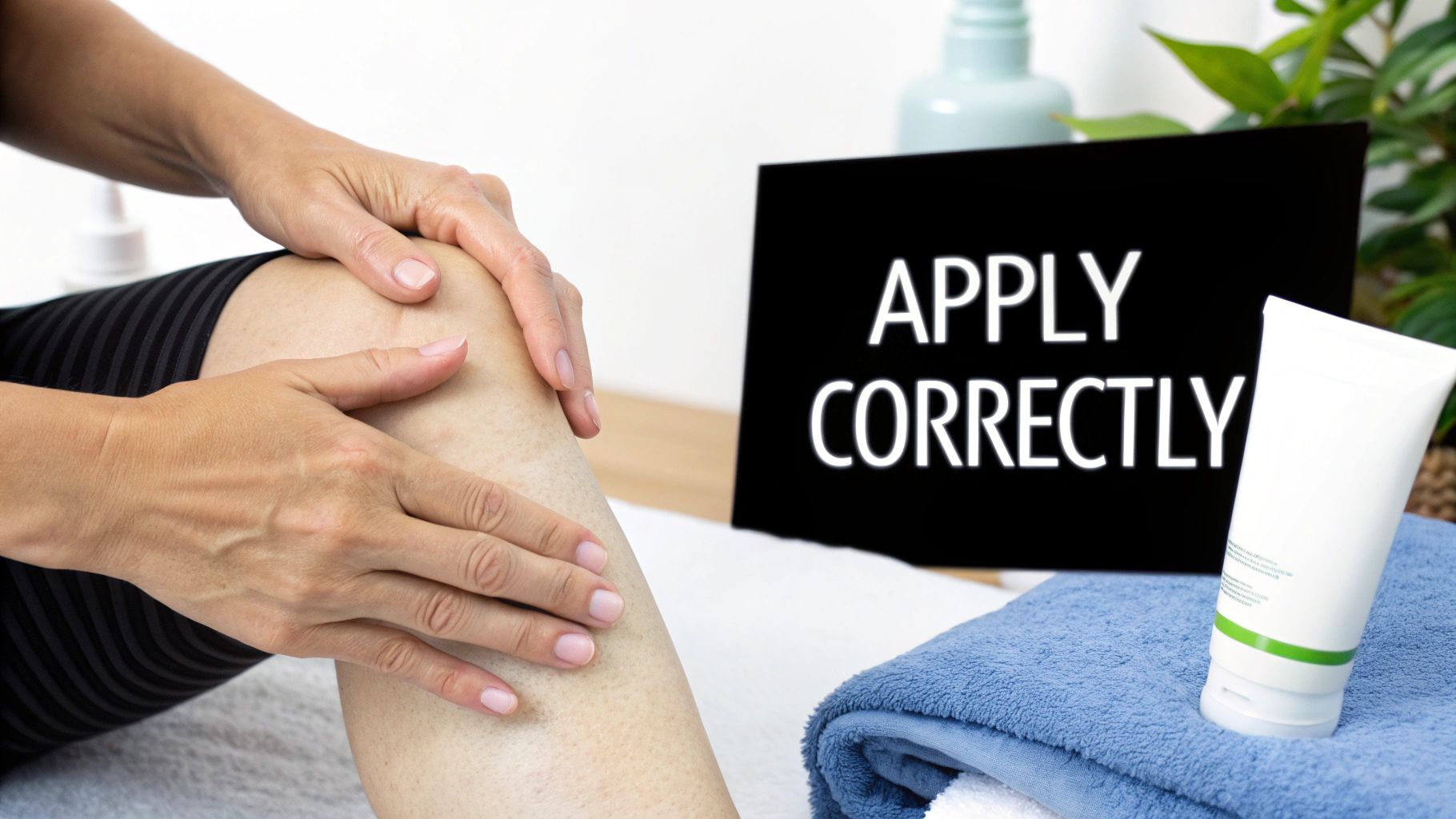
Think of this as your game plan for getting every ounce of value from your chosen product. From preparing your skin to the way you massage it in, each detail is key to helping those active ingredients do their job.
Your Step-by-Step Application Guide
Getting the best results from your joint pain relief cream actually starts before it even touches your skin. Following this simple process helps maximize absorption and effectiveness.
-
Start with Clean Skin: Before you do anything else, gently wash the area with some mild soap and warm water, then pat it completely dry. This simple step clears away dirt, oils, or leftover lotion that could create a barrier and block the cream from absorbing properly.
-
Apply a Generous Amount: Don't be shy with it. You need to use enough product to comfortably cover the whole painful area. You're aiming for an even, visible layer—not a super thin sheen that disappears instantly.
-
Massage It In Thoroughly: This is the most crucial part. Don't just wipe it on; take a minute or two to gently but firmly massage the cream right into the skin. This isn't just about working the product in; the physical massage helps boost blood flow to the area, which can really crank up the absorption of the active ingredients.
-
Wash Your Hands Immediately: Unless your hands are what you're treating, wash them thoroughly with soap and water as soon as you're done. The active ingredients in these creams are powerful, and you definitely don't want to accidentally rub them into your eyes, nose, or mouth.
Proper application isn’t just about feeling better; it's about doing it safely. Taking these few extra moments makes sure the powerful ingredients get to work exactly where they’re needed—and nowhere else.
Critical Mistakes to Avoid
Knowing what not to do is just as important as knowing what to do. A few common slip-ups can weaken your cream's effectiveness or, in some cases, lead to skin irritation or other problems. Steer clear of these pitfalls.
-
Never Apply to Broken Skin: Pain relief creams should never go on open wounds, cuts, scrapes, or rashes. The ingredients can cause a serious sting and aren't designed to enter your bloodstream directly.
-
Avoid Using Heat Right After: Don't slap a heating pad or a tight bandage over the area right after applying a cream, especially one with warming ingredients like camphor or methyl salicylate. This can trap heat, making the sensation uncomfortably intense and even potentially causing skin burns.
-
Don't Layer with Other Products: Putting on other lotions or skincare products first can interfere with absorption. Always apply your pain relief cream to clean, bare skin for the best results.
-
Do Not Overuse It: More isn't always better. Follow the directions on the label, which usually recommend no more than 3-4 applications per day. Applying it too often can increase your risk of skin irritation.
By sticking to these best practices, you can ensure every application is both safe and effective, helping you get the maximum benefit from what might just be the best joint pain relief cream for you.
Why Professionals and Athletes Trust MEDISTIK
When your performance is on the line—whether you're an elite athlete or working a physically demanding job—you can't afford to use just any pain relief product. You need something that works as hard as you do.
That's why top-tier athletes, healthcare professionals, and even the Canadian Military Health Services turn to solutions that are proven, powerful, and reliable.
MEDISTIK has earned its spot in the kits of over 10,000 healthcare clinics and countless professional sports teams. This isn't about slick marketing; it's about a system built for real-world demands, helping people prime their bodies for action, perform at their best, and restore themselves afterward.
A System Built for Performance
The MEDISTIK family isn’t just a random assortment of products. It’s a complete pain management system designed to tackle pain from multiple angles. Each product is engineered for a specific need, so whether the pain is deep and persistent or sharp and sudden, there's a precise tool for the job.
This system is built around three core products:
-
The Extra-Strength Stick: This is the heavy lifter of the lineup. It delivers potent, long-lasting relief in a solid, no-mess stick. It's perfect for getting deep into joints and large muscles, giving you hours of comfort so you can stay focused on what matters.
-
The Fast-Acting Spray: Need to cover a big, hard-to-reach area like your back or shoulders? The spray is a game-changer. It delivers a rapid, cooling blast of relief, making it ideal for warming up muscles before a workout or tackling soreness right after.
-
The Natural Ice Roll-On: For clean, on-the-go application, the roll-on is unmatched. It provides quick cooling with natural ingredients, perfect for targeting smaller joints like wrists, elbows, and knees without getting your hands messy.
Trust from professionals isn't given lightly. It’s earned through consistent results, superior formulations, and an unwavering commitment to quality. The MEDISTIK system delivers on all fronts, providing a reliable, non-prescription solution for those who push their bodies to the limit.
The need for effective pain relief is undeniable. North America's pain relief market is a 2.2 billion USD industry, with arthritis and sports injuries being major drivers. In Canada alone, arthritis affects 16% of the population—that's roughly 6 million people—fuelling the demand for powerful topicals. This is where products like MEDISTIK's ice roll-on, trusted by the Canadian Military Health Services, make a real difference.
More Than Ingredients A Commitment to Quality
Beyond the formulas themselves, the trust in MEDISTIK stems from its commitment to Canadian-made quality. Every product is manufactured by certified partners, ensuring that each batch meets the highest standards for safety and efficacy.
This is a non-negotiable for practitioners who recommend products to their patients and for athletes who have to be absolutely certain about what they put on their bodies.
For anyone who relies on their body to perform, managing pain effectively is about more than just temporary relief. It’s about having a comprehensive strategy. For instance, combining a great topical with proper movement techniques, like those for achieving a swing pain-free golf and back pain solutions, can create a powerful synergy for long-term wellness.
Ultimately, whether you're a physiotherapist guiding a patient's recovery, an athlete prepping for the big game, or a first responder facing another tough shift, MEDISTIK offers a system you can truly depend on. You can read more about why pain experts trust MEDISTIK and see for yourself. It’s about having the confidence to move, perform, and live without limitations.
Still Have Questions About Joint Pain Creams?
Even when you know how these creams work, it’s normal to have a few practical questions pop up. After all, you want to be completely sure about what you’re putting on your body. Let's tackle some of the most common queries so you can feel confident adding a topical analgesic to your routine.
Think of this as the final checklist before you get started.
How Quickly Will I Feel It Working?
This really comes down to the active ingredients in the formula.
- For an Immediate Sensation: If the product contains counterirritants like menthol, you’ll feel an almost instant cooling or warming effect. This sensation is great for providing a quick distraction from the pain signals your body is sending.
- For Deeper, Anti-Inflammatory Relief: Creams with topical NSAIDs, like methyl salicylate, need a bit more time to work their magic. They absorb into the skin to reduce inflammation at the source. You can generally expect to notice this kind of relief kicking in within an hour or two.
Can I Use a Joint Pain Cream Every Day?
Absolutely. Most over-the-counter topicals are designed for safe, daily use, as long as you stick to the directions on the label. The key is to pay attention to the maximum number of applications, which is typically 3-4 times a day.
However, if you're treating an acute injury and find you still need the cream after 7-10 consecutive days, it's a good idea to check in with a healthcare professional. They can make sure you're on the best treatment path for your specific situation.
Are There Any Side Effects I Should Know About?
For the most part, side effects from these creams are mild and stay right where you applied them. The most common things people experience are minor skin reactions like redness, a bit of itching, or a temporary burning feeling.
To play it safe, always do a small patch test on your skin before slathering the cream over a large area. Never apply it to broken or irritated skin, and make sure to wash your hands well after you're done.
This simple step ensures the powerful ingredients get to work exactly where you need them—and nowhere else.
Is It Safe to Use With My Other Medications?
While the risk of a topical cream interacting with something you take orally is quite low, it never hurts to be cautious. If you’re taking other medications—especially oral NSAIDs or blood thinners—it's always wise to have a quick chat with your doctor or pharmacist. They know your full health history and can give you personalized advice for total peace of mind.
This focus on safety and targeted relief is a big reason why Canadian consumers are turning more and more to topical analgesics. With arthritis now affecting 1 in 6 Canadian adults, the demand for effective solutions is growing. Safety reviews continue to confirm the low risks of approved products, making them a trusted choice for muscle and joint pain when used as directed. You can learn more by exploring insights on the Canadian OTC analgesics market.
Ready to experience powerful, targeted relief trusted by professionals? The MEDISTIK pain management system is designed to help you prime, perform, and restore your body with confidence. Find your perfect solution today at medistik.com.


