

When you're dealing with a stubborn knot or an aching muscle, a muscle relaxer cream can feel like a godsend. It works by delivering active ingredients right to the source of your pain, offering targeted relief exactly where you need it most.
This direct approach is a game-changer compared to oral pills, as it works locally and helps minimize those pesky body-wide side effects.
How Do Creams Target Muscle Pain Differently?
If you’ve ever had muscle pain, your first instinct might be to grab a pill. Oral medications can definitely work, but they have to take the scenic route—travelling through your entire digestive system and bloodstream before finally getting to the sore spot. That whole process can be slow and sometimes comes with side effects you'd rather avoid.
A muscle relaxer cream, on the other hand, is much more direct. Think of it like calling a specialist instead of putting out a company-wide memo. It goes straight to the problem area—your sore muscle—with the exact tools needed to get the job done.
The Science of Applying Relief Directly
By applying the cream right onto your skin, powerful pain-fighting compounds get absorbed and go to work on the underlying muscle and nerve tissues. This isn’t magic; it’s science. The relief usually comes from a couple of key mechanisms:
- Counterirritants: Ever notice that cooling or warming feeling from ingredients like menthol and methyl salicylate? That sensation is a clever trick. It distracts your brain by sending new signals for it to focus on, which helps interrupt and dial down the pain signals coming from your sore muscle.
- Local Anesthetics: Some formulas also contain mild numbing agents. These work by temporarily blocking the nerve signals in that specific area, giving you almost immediate relief from sharp or nagging pain.
This simple graphic shows just how different the journey is for a topical cream versus an oral pill.
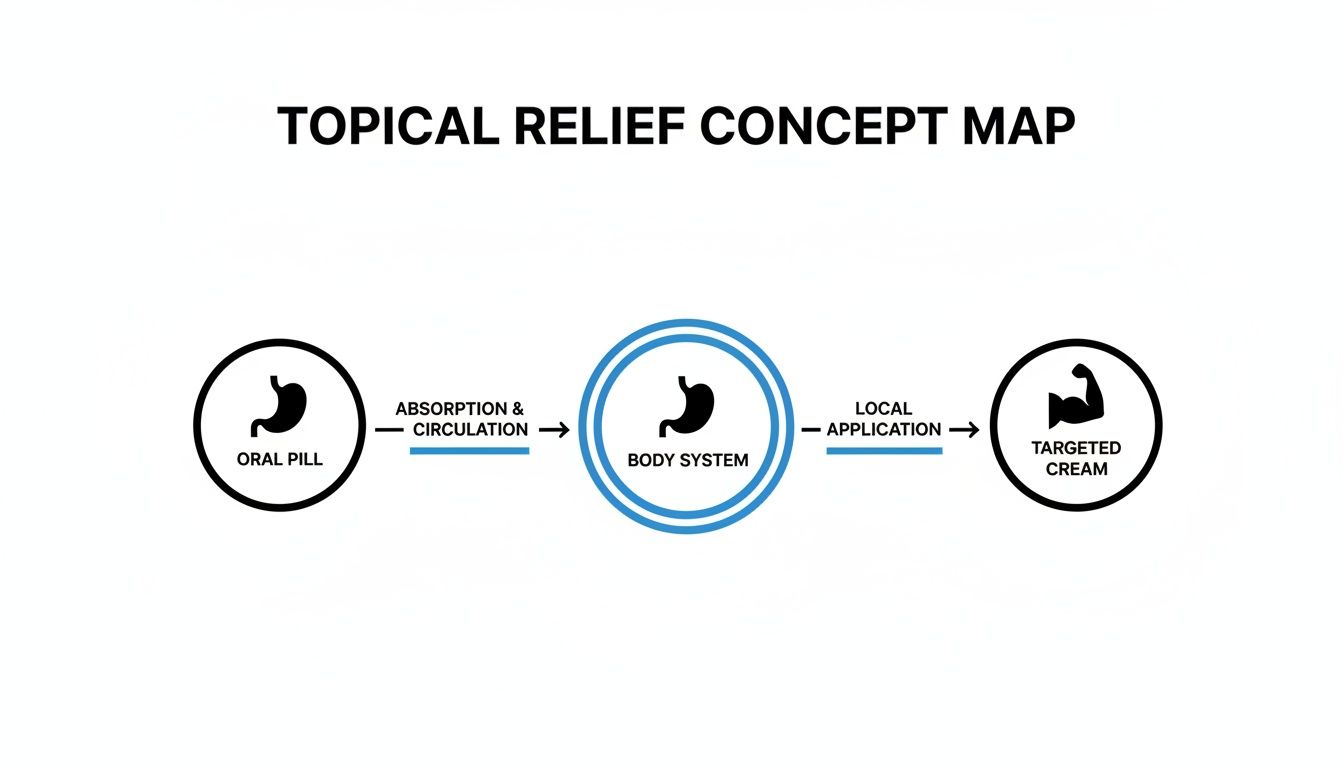
As you can see, the cream’s targeted approach avoids that whole-body journey, concentrating its power right where you feel the pain.
To give you a clearer picture, here’s a quick breakdown of how topical creams and oral relaxants stack up against each other.
Topical Creams vs Oral Relaxants At a Glance
| Feature | Topical Muscle Relaxer Cream | Oral Muscle Relaxant |
|---|---|---|
| Application | Applied directly to the skin over the painful area | Swallowed as a pill or capsule |
| Speed of Relief | Fast-acting, often within minutes | Slower onset, typically 30-60 minutes |
| Target Area | Localized to the specific muscle or joint | Systemic; affects the entire body |
| Side Effects | Minimal; may include localized skin irritation | Can cause drowsiness, dizziness, and stomach upset |
| Drug Interactions | Low risk of systemic interactions | Higher risk of interacting with other medications |
Ultimately, choosing a topical cream means you're getting relief delivered with precision, without involving your entire system in the process.
Why More People Are Choosing Targeted Relief
The demand for this kind of focused relief is on the rise, and for good reason. In Canada, with an aging population and a high rate of musculoskeletal conditions, people are looking for smarter ways to manage pain.
Consider this: over 9 million Canadians live with arthritis, and nearly 25% of the adult population deals with chronic pain. These aren't just numbers; they represent millions of people searching for effective, non-prescription options like topical creams. You can learn more about the benefits of topical pain relievers over oral ones here.
The biggest advantage? By bypassing the digestive system, a topical muscle relaxer cream slashes the risk of stomach irritation and other systemic side effects common with oral painkillers. It's a go-to for anyone who wants effective, localized pain management without impacting their whole body.
Understanding the difference between topical and oral relief helps you make a better choice for your body. The ability to apply powerful relief directly to the source is what makes a quality muscle relaxer cream an indispensable tool for managing pain.
Decoding the Ingredients That Fight Muscle Pain
So, what exactly gives a high-quality muscle relaxer cream its pain-fighting power? It’s never just one thing. Instead, think of it as a carefully chosen team of active ingredients working together to soothe soreness, cool discomfort, and knock down inflammation. When you understand what these key players do, you can really appreciate the science behind effective, targeted relief.
A well-formulated cream is like a symphony orchestra. Each ingredient has a specific role, but when they all come together, they create something far more powerful than any single part could alone. The most common and effective ingredients you'll find fall into a category known as counterirritants.
The Cooling Power of Menthol
Menthol is one of the most recognizable stars in the world of topical pain relief. It’s derived from mint plants, and its main job is to create a deep, cooling sensation right where you apply it. But how does feeling cold actually block out pain?
Picture your nervous system as a busy highway. Pain signals are like loud, honking cars causing a traffic jam straight to your brain. When you apply menthol, it flips a switch on specific cold-sensitive receptors in your skin (called TRPM8 receptors).
This sends a new, intense cooling signal racing down that same neural highway. This cooling sensation is so distinct and powerful that it effectively "distracts" your brain, pushing those nagging pain signals into the background. It doesn't magically erase the source of the pain, but it masterfully overrides how you perceive it, giving you that immediate, welcome relief.
The Warming Sensation of Methyl Salicylate
Working right alongside menthol, you’ll often find Methyl Salicylate, which you might know as oil of wintergreen. While menthol brings the cool, this ingredient provides a gentle, penetrating warmth. This warming effect is key because it helps boost blood flow to the sore muscle.
Why does that matter? Better circulation is crucial for healing. It brings more oxygen and vital nutrients to the damaged tissues while helping to flush out the metabolic waste products that make you feel sore in the first place. This one-two punch of cooling and warming is a classic, time-tested strategy for managing muscle discomfort.
By combining cooling and warming agents, a muscle relaxer cream creates a sensory "push-and-pull" that confuses pain receptors. This distraction provides fast relief while the underlying ingredients work to soothe the muscle and improve circulation for longer-term comfort.
Other Key Players in Pain Relief
Beyond the main counterirritants, many other ingredients add to the effectiveness of a topical muscle relaxer cream. Top-tier formulations often include a blend of components designed to tackle different aspects of pain and inflammation.
- Eucalyptus Oil: Often included for its soothing aroma and mild pain-relieving properties, eucalyptus oil works beautifully with menthol to enhance the overall sensory experience.
- Camphor: A lot like menthol, camphor creates a cooling feeling and can help numb nerve endings, adding another layer of distraction from those persistent pain signals.
- Capsaicin: This powerful ingredient comes from chili peppers. Capsaicin works by depleting a chemical in your nerve cells that transmits pain signals. It produces a warming sensation that can provide serious, long-lasting relief, especially for chronic conditions.
Beyond traditional ingredients like menthol and capsaicin, many people are now turning to creams containing CBD. Taking a moment to understand the therapeutic potential of CBD can help you choose the most effective muscle relaxer cream for your specific needs.
The precise concentration and combination of these ingredients are what really determine a product's strength and effectiveness. For example, professional-grade formulas often contain higher percentages of active ingredients to deliver the potent, long-lasting relief required in clinics and by athletes. By learning about the science behind MEDISTIK's formulations, you can see how these powerful ingredients are blended for maximum impact. This kind of expert formulation is what transforms a simple cream into a truly trusted tool for pain management.
How to Choose the Right Muscle Relaxer Cream
Walking down the pharmacy aisle looking for a muscle relaxer cream can feel overwhelming. With dozens of options lining the shelves, how do you pick the one that’s actually right for you? The trick is to look past the marketing and think about your specific needs—the kind of pain you’re feeling, your daily routine, and even what sensations feel best on your body.

Making the right choice isn't about just grabbing the first box you see. It's about matching the product to your unique situation to ensure you get effective, convenient relief. Let's break down exactly what you should consider.
Identify Your Pain Type and Goal
First things first, get specific about your discomfort. Are you dealing with a sharp, sudden pain from a new injury, or is it that familiar, dull ache from a chronic issue that just won’t quit? Your answer points you in the right direction.
-
Acute Pain (Sudden Injury): For a freshly pulled muscle or a sprain, a cream with a powerful cooling effect from an ingredient like menthol is often your best bet. That icy sensation helps numb the initial shock of the pain and can reduce inflammation right away.
-
Chronic Pain (Ongoing Aches): If you're managing something long-term, like arthritis or persistent back tension, a product that delivers deep, penetrating warmth might be more helpful. Ingredients like methyl salicylate or capsaicin boost blood flow to the area, which soothes stiffness and promotes healing over time.
You also need to think about your primary goal. Are you looking for immediate relief to get through a game, or do you need sustained comfort to make it through a long day at your desk? Knowing this will help narrow the field considerably.
Consider Your Sensation Preference
A big part of what makes these creams work is the sensory experience. The cooling and warming effects are created by counterirritants, which are designed to distract your brain from the pain signals. This is where personal preference really matters.
Do you find a crisp, icy feeling more soothing, or does a gentle, comforting warmth feel better on your sore muscles? Some people swear by the immediate, sharp relief of a cooling formula. Others find the muscle-loosening properties of a warming cream far more effective.
Think about your environment, too. A cooling cream might feel incredible after a hot workout, but a warming one could be the perfect thing for stiff joints on a cold morning. Trust how your body responds—the right sensation can make all the difference.
Some advanced formulas, like MEDISTIK's Extra-Strength Dual Action Stick, brilliantly combine both warming and cooling ingredients. This dual-action approach gives you the initial cooling sensation to dull the pain, followed by a deep warmth that helps the muscle relax for longer-lasting comfort.
Choose a Format That Fits Your Lifestyle
How and where you plan to use your muscle relaxer cream is just as important as what’s in it. Today’s products come in a variety of formats, each designed for a different application style and user.
A classic cream or gel is great when you’re at home and have time to properly massage it into the skin. But if you need relief on the go, other options are way more practical.
Think about these real-world scenarios:
-
For the Athlete Mid-Game: A fast-acting spray is perfect. It allows for a quick, no-touch application over a large area like a hamstring or quad, so you can get back in the action without missing a beat.
-
For the Office Worker: A no-mess roll-on or stick applicator is ideal. You can apply it directly to a stiff neck or sore lower back without getting any residue on your hands or clothes.
-
For Someone with Arthritis: A long-handled stick applicator offers amazing convenience, letting you reach tough spots like your mid-back or feet without having to strain.
Not sure which format suits you best? This table can help you decide.
Which Product Format Is Best for You?
| Product Format | Best For | Key Benefit | Ideal User |
|---|---|---|---|
| Stick | Deep, targeted pressure and hard-to-reach areas | Hands-free application with a massage-like effect | Individuals with back pain or limited mobility |
| Spray | Large muscle groups and quick application | Fast-acting and no rubbing required | Athletes needing rapid relief during activity |
| Roll-On | Small joints and precise application | Controlled, no-mess relief for targeted spots | People with joint pain in hands, wrists, or knees |
| Cream/Gel | At-home use and thorough massage | Allows for deep tissue massage during application | Anyone wanting to combine relief with manual therapy |
By thinking through your specific pain, preferences, and lifestyle, you can move past the confusion and confidently choose a muscle relaxer cream that delivers relief that feels made just for you.
Applying Your Cream for Maximum Effectiveness
So, you’ve picked out a muscle relaxer cream that feels right for you. That's a great first step, but getting the relief you're looking for isn't just about the product—it's about how you use it. Proper application is what unlocks its full potential, making sure the active ingredients get right to the source of the pain.
A few simple steps can make a world of difference in how well the cream works.

Think of it like watering a plant. You wouldn't just splash water on the leaves and hope for the best; you pour it at the base so the roots can drink it up. It’s the same idea here—applying your cream correctly helps it reach the muscle tissue underneath where it can do its job.
Prepare the Area for Application
Before you even unscrew the cap, take a second to prep your skin. This is a crucial step that a lot of people skip. Things like dirt, sweat, or natural oils can create a barrier, preventing the cream from absorbing properly.
For the best results, give the area a quick wash with mild soap and water, then pat it completely dry with a towel. Applying any topical cream to damp skin can water it down and lead to an uneven application. A clean, dry canvas is exactly what you need.
Use the Right Amount and Technique
When it comes to a potent topical analgesic, more isn’t always better. A common mistake is slathering on a thick layer, thinking it'll work faster. This is usually just wasteful and doesn't speed up relief.
Instead, start small. A pea-sized amount is often enough. Gently massage it into the skin over the entire sore muscle. The goal is to cover the area with a thin, even layer.
Use your fingertips with firm but gentle pressure, moving in circular motions. This massage doesn't just work the cream in; it also boosts blood flow to the area, which can help your muscles relax and feel better on its own.
A simple massage technique not only enhances absorption but also provides its own therapeutic benefit. The physical act of massaging a sore muscle helps release tension and break up minor knots, working in tandem with the cream's active ingredients for a more comprehensive effect.
Keep massaging until the cream is fully absorbed and your skin doesn't feel greasy anymore. This should only take a minute or two, but it’s a vital part of making sure those active ingredients get down deep.
Follow Critical Safety Precautions
While topical creams are very safe for most people, a few key precautions will ensure you can use your product with total confidence. These simple rules help prevent any irritation and make sure the product works exactly as it should.
Remember these essential tips:
- Avoid Sensitive Areas: Never apply the cream to broken, irritated, or sunburned skin. Be extra careful to keep it away from your eyes, mouth, and other mucous membranes.
- Wash Your Hands Thoroughly: This one’s a biggie. Always wash your hands with soap and water immediately after you’re done. It prevents you from accidentally rubbing the product into your eyes or other sensitive spots.
- Do Not Use with Heat: Never use a heating pad or wrap a tight bandage over an area where you’ve applied the cream. This can trap heat, increase absorption too quickly, and potentially lead to skin burns or bad irritation.
- Listen to Your Body: If you notice any signs of a reaction—like a rash, unusual redness, or blistering—wash the cream off right away and stop using it.
By following these straightforward guidelines, you can ensure a safe and effective experience every time. Proper application transforms a good product into a great one, allowing you to manage your pain confidently and get back to moving freely.
How Professionals Use Topical Pain Relief
Go beyond the bathroom cabinet, and you'll find high-quality muscle relaxer creams are a trusted staple in the toolkits of top-tier professionals. From physiotherapists guiding patients through recovery to elite athletes pushing their physical limits, these powerful topicals are used strategically to manage pain, boost performance, and speed up recovery. Their effectiveness in these high-stakes environments really speaks to their reliability.
For clinicians and athletes, these creams aren't just a quick fix for pain. They're a proactive tool used throughout the entire cycle of physical activity and rehab. This strategic approach is what separates professional use from casual home relief, turning a simple cream into a vital part of a comprehensive wellness plan.
In the Clinic: A Physiotherapist's Perspective
For pros like physiotherapists, chiropractors, and massage therapists, a muscle relaxer cream is so much more than a simple pain reliever. It’s a powerful therapeutic partner that makes their hands-on treatments even more effective. Applying it before a session helps relax tight muscles and dial down that initial discomfort.
This simple step allows the clinician to work more deeply and effectively, making manual adjustments or massage strokes more productive and a lot less painful for the patient. By easing muscle tension right from the start, the cream helps patients achieve a greater range of motion and makes therapeutic exercises more manageable, paving the way for faster progress.
This integration into treatment plans offers a huge advantage. The shift toward non-systemic pain management has been growing, especially here in Canada. After the opioid crisis in the 2010s, historical data shows that the use of over-the-counter topicals shot up by 40% by 2023, a trend supported by Health Canada guidelines that favour non-opioid solutions. You can explore more data on how the global muscle relaxants market reflects these trends.
By incorporating a topical analgesic, clinicians provide immediate sensory feedback to the patient. This helps calm the nervous system and builds patient confidence, creating a more positive and effective therapeutic experience from the very start of the session.
What’s more, sending patients home with a recommendation for a specific cream extends the benefits of the treatment well beyond the clinic walls. It empowers them to manage flare-ups between appointments, helping maintain their progress and reduce their reliance on oral pain medications. You can learn more about how MEDISTIK enhances professional treatments to speed up healing.
On the Field: An Athlete's Regimen
For any serious athlete, pain management isn't just about recovery—it's a critical part of performance. A good muscle relaxer cream is used across a three-stage athletic cycle to prime the body, manage in-game discomfort, and restore muscles after the hard work is done.
1. The Warm-Up Phase
Before training or competition, applying a warming cream to major muscle groups like the quads, hamstrings, or shoulders is a common practice. The warming sensation helps increase blood flow and prepare the muscles for intense activity, making them more pliable and less prone to strains or pulls. Think of this pre-activity application as giving your muscles a head start, ensuring they are ready to perform at their peak from the get-go.
2. The Performance Phase
During a game or an intense workout, unexpected aches and pains can completely derail performance. Having a fast-acting spray or roll-on ready on the sidelines provides immediate, on-the-spot relief. A quick application to a cramping calf or a tight lower back can be the difference between pushing through and having to stop, allowing athletes to manage acute discomfort without losing focus or momentum.
3. The Recovery Phase
After the final whistle blows, the focus shifts to restoration. Applying a cooling muscle relaxer cream helps to calm inflammation and soothe overworked muscles. Cooling ingredients, like menthol, provide instant relief from post-exercise soreness, while other components get to work reducing swelling and kickstarting the healing process. This post-activity ritual is essential for minimizing downtime and ensuring the body is ready for the next day's training.
By integrating topical pain relief into every stage of their routine, athletes can train harder, perform better, and recover faster. This strategic, multi-phase approach is what makes a professional-grade muscle relaxer cream an indispensable tool in any competitive athlete’s gear bag.
Answering Your Top Questions About Muscle Relaxer Cream
When you're dealing with pain, you want clear, straightforward answers. So let's cut through the noise and tackle some of the most common questions people have about using a muscle relaxer cream.
How Quickly Will I Feel Relief?
This is one of the biggest perks of a topical cream: it works fast. Because you apply it directly to the source of the pain, the active ingredients get to work almost immediately, completely bypassing your digestive system.
Most people start to feel the initial cooling or warming sensations within 5-10 minutes. This provides a quick distraction from the pain while the deeper therapeutic ingredients get to work on the muscle tissue. The length of relief can vary, but a high-quality, professional-strength cream is designed to keep you comfortable for several hours.
Is It Safe to Use Every Day?
If you're managing chronic pain from something like arthritis or a persistent sore back, daily use is very common. Topical muscle relaxants are generally considered safe for regular application because they work locally and have a very low risk of systemic side effects.
That said, it's always smart to have a chat with a healthcare professional, like your physiotherapist or doctor, before starting any new daily pain management routine. They can give you personalized advice to make sure a topical cream is the right move for you.
A key benefit of topical creams is their targeted action. Unlike oral medications that affect your entire body, a cream concentrates its relief right where you apply it, which significantly reduces the risk of the drowsiness or stomach upset often associated with pills.
What Are the Common Side Effects?
The side effect profile for muscle relaxer creams is typically very mild and localized. Since the ingredients are absorbed right through the skin, any reactions usually stay in that one spot.
You might notice:
- Mild skin irritation or redness where you applied it.
- A temporary rash or itching, especially if you have sensitive skin.
- An allergic reaction to a specific ingredient, though this is quite rare.
These effects are far less common and less severe than the risks that come with oral muscle relaxants, which can include dizziness, fatigue, and digestive problems. If you notice any irritation that doesn't go away, it's best to stop using the cream and check in with your doctor.
Can I Use It Before and After Exercise?
Absolutely. A good muscle relaxer cream is an incredibly versatile tool for anyone who's active, helping with both preparation and recovery.
Using a warming formula before a workout can help prime your muscles for activity by increasing blood flow to the area, making them more pliable and ready to go. It’s a great way to prepare your body for peak performance.
After you’re done, applying a cream helps kickstart the recovery process. Ingredients with cooling properties can soothe inflammation and ease that immediate post-workout soreness, while other components work to relax the muscles you just pushed to their limit. This dual-purpose use makes it a must-have for any complete athletic routine.
For a professional-grade solution trusted by clinicians and athletes alike, explore the powerful, Canadian-made formulas from MEDISTIK. Discover the right product for your pain relief needs at MEDISTIK.


