

When you're dealing with a sore knee, you want relief sent directly to the problem area, not a pill that has to travel through your whole system first. A pain patch for knee issues does just that. Think of it as a specialized delivery system for pain-fighting ingredients, skipping your digestive system to work right where it hurts.
How Knee Pain Patches Deliver Targeted Relief
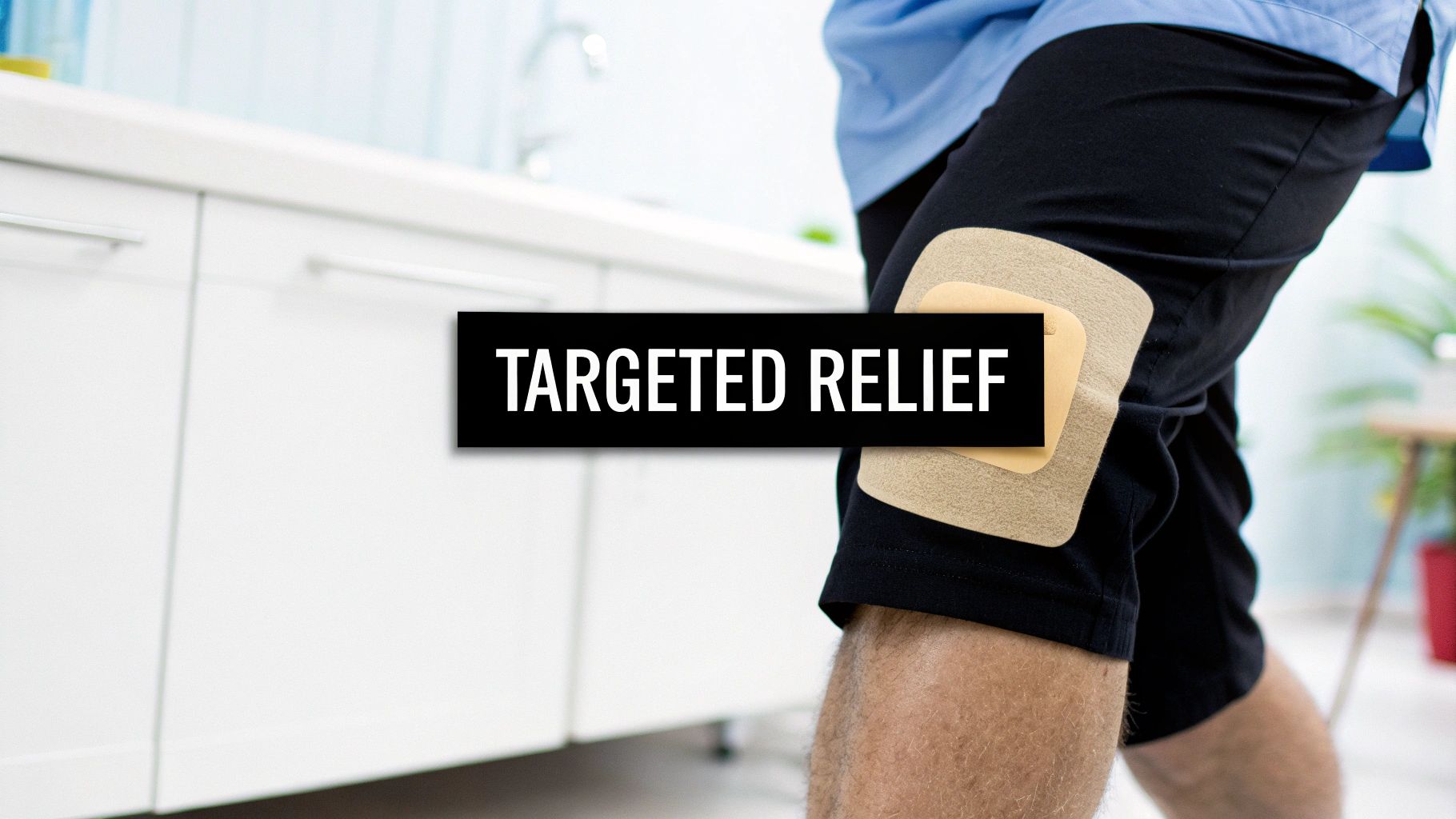
Let's imagine your skin is like a secure fortress wall. For any medication to get through, it needs a special key. A pain patch knee product uses a process called transdermal delivery, where the active ingredients are designed to gently pass through this protective barrier and get down to the sore muscles and tissues underneath.
This is a totally different route than oral medications, which have to be digested and processed by your liver before they even enter your bloodstream. A patch offers a much more direct path.
This focused approach is exactly why so many people prefer it for localized problems like runner's knee, ligament sprains, or arthritic flare-ups. You get the relief where you need it, and only where you need it, minimizing exposure to the rest of your body.
The Benefits of a Direct Approach
The biggest advantage of targeted relief is plain and simple: efficiency. By concentrating the active ingredients right at the site of discomfort, you can often get results without the systemic side effects that are common with pills, like an upset stomach. It makes patches a fantastic first-line defence for many types of knee pain.
Other perks include:
- Sustained Delivery: Patches are made to release medication slowly over several hours. This gives you a steady stream of relief instead of the ups and downs you might get with pills.
- Convenience: For anyone who has a tough time swallowing pills or remembering to take them on schedule, a patch is a simple "set it and forget it" solution.
This direct-to-the-source method avoids many of the gastrointestinal issues and potential drug interactions linked to oral painkillers. It's a smarter, more focused way to manage localized knee discomfort.
While a pain patch for the knee is an excellent tool, it's just one member of a whole family of topical analgesics. At MEDISTIK, we offer powerful, Health Canada-approved alternatives like our fast-acting sprays and long-lasting sticks, which provide similar targeted benefits but in different formats.
Understanding how MEDISTIK’s formulas work can give you a complete system for managing your knee pain effectively. These options let you pick the best application method for your specific situation, whether you need quick relief before a run or sustained comfort to get through your workday.
The Science Behind Topical Pain Relief for Knees
When you smooth a topical analgesic or apply a pain patch to your knee, it’s doing more than just masking the ache—it’s having a clever conversation with your body’s nervous system to bring you relief. The whole process is a fascinating mix of sensation and distraction, all thanks to some powerful active ingredients.
At the core of many topical formulas, you'll find counterirritants like menthol and camphor. These are the ingredients responsible for that distinct cooling or warming feeling on your skin. But that sensation isn't just a gimmick; it's the key to how these products get the job done.
Closing the Gate on Pain Signals
The best way to picture what’s happening is with the ‘gate control theory’ of pain. Think of the nerve pathways from your knee to your brain as a gate. When your knee is throbbing, that gate is flung wide open, letting a steady stream of pain signals march right up to your brain.
This is where counterirritants come in. They create a new, competing sensation—cold or heat—that rushes toward that very same gate. Your nervous system can only handle so much information at one time, so these cooling or warming sensations essentially "crowd out" the pain signals, forcing the gate shut. Your brain starts paying more attention to the new feeling, and your perception of the pain starts to fade.
This neurological trick is incredibly effective for the dull, persistent ache common in knee issues like ligament sprains and osteoarthritis. It doesn't eliminate the source of the pain, but it provides powerful, targeted relief by interrupting the message.
Reducing Inflammation at the Source
But it's not all about distracting the brain. Other key ingredients get to work on tackling inflammation right where it starts. Analgesics like Methyl Salicylate, a relative of aspirin, are able to penetrate the skin and get in the way of prostaglandins—compounds that your body produces to cause pain and swelling in injured tissue.
- Menthol: Delivers a cooling sensation that helps desensitize nerve endings.
- Camphor: Provides a warming effect that boosts local blood flow.
- Methyl Salicylate: Works to reduce inflammation deep down in the muscle and joint tissue.
This multi-pronged approach is why products like MEDISTIK's extra-strength formulas feel so effective. By combining high concentrations of these proven ingredients, they offer a powerful, non-prescription solution. It's this commitment to real results that has earned the trust of over 10,000 health clinics across Canada. And the need is growing—arthritis already affects over 6 million Canadians, with knee osteoarthritis being a major cause of mobility issues.
Ultimately, the science behind a pain patch for the knee is a smart combination of neurological distraction and targeted anti-inflammatory action. If you want to get into the nitty-gritty of specific ingredient combinations and how they work, you can explore the science behind MEDISTIK’s formulations.
Choosing the Best Topical Format for Your Knee
When it comes to topical analgesics for your knee, the format you choose—whether it's a patch, spray, stick, or roll-on—is just as important as the ingredients inside. It’s not a one-size-fits-all situation. Each type is designed for different scenarios, and knowing their strengths helps you pick the right tool for the job.
A pain patch for knee aches is fantastic for its "set it and forget it" convenience. It delivers slow, steady relief over several hours, making it a great choice for managing chronic pain or getting you through the night without discomfort. But, that slow-release nature means it’s not ideal when you need to tackle sudden, sharp pain.
That’s where other formats shine. A spray, for example, gives you a rapid cooling or warming sensation and is perfect for quickly covering the entire knee joint, even those awkward, hard-to-reach spots. On the other hand, a solid stick offers a mess-free, targeted application, letting you apply deep pressure to a specific trigger point without getting any product on your hands.
This handy decision tree helps visualize how your specific pain signals and what you want to feel can point you to the right format.
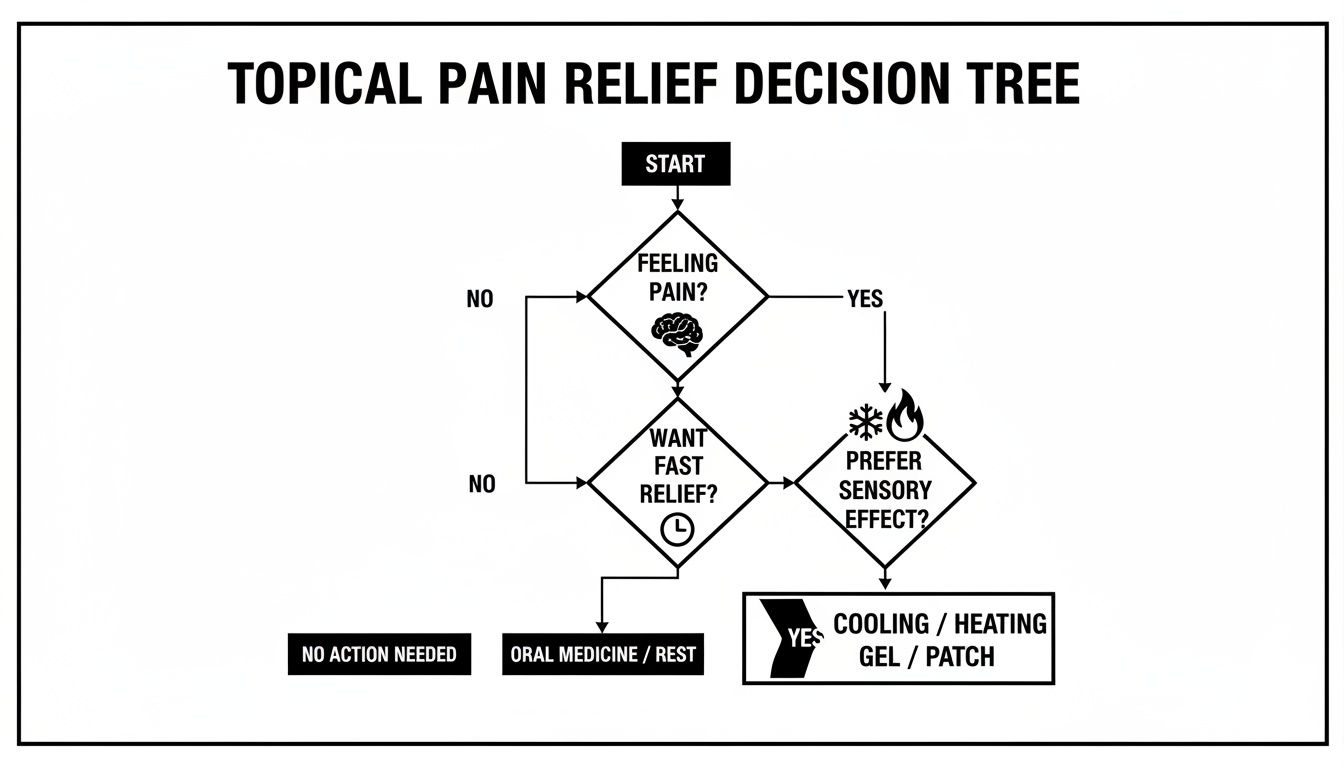
The main takeaway here? Match the application style to your pain and your lifestyle. That’s how you’ll get the best possible relief.
Comparing Your Options
Let's break down the practical differences between these formats. Think of it like picking the right shoes for an activity—you wouldn’t wear hiking boots for a 100-metre dash. The same logic applies to pain relief. The best choice really depends on what you need at that moment, whether it's getting ready for a workout, recovering after one, or just managing pain while you sit at your desk.
To make it easier, here's a side-by-side comparison of the most common formats to help you choose what works for your specific needs, where you need to apply it, and your lifestyle.
Comparing Topical Pain Relief Formats for Knee Pain
| Format Type | Best For | Application Speed | Duration | Portability |
|---|---|---|---|---|
| Patches | Sustained, long-term relief for chronic aches or overnight use. | Slow | Long (4-8+ hours) | Good |
| Sprays | Quick, pre-activity relief and covering large, awkward areas. | Very Fast | Short (1-3 hours) | Excellent |
| Sticks | Deep, targeted, mess-free application for specific sore spots. | Fast | Moderate (3-5 hours) | Excellent |
| Roll-Ons | Soothing massage application for post-workout soreness. | Moderate | Moderate (2-4 hours) | Excellent |
Ultimately, the format that feels best and fits seamlessly into your daily routine is the one you’ll stick with, giving you consistent and effective relief.
Matching the Format to Your Needs
So how does this translate to real life? Let's walk through a few common scenarios:
- Before a Morning Run: You need something fast-acting to warm up the joint and get blood flowing. This is the perfect time for the MEDISTIK Extra Strength Spray, which covers the entire knee in just a few seconds.
- During a Long Workday: If a dull, persistent ache from arthritis is distracting you at your desk, you need relief that's sustained and won't make a mess. The MEDISTIK Extra Strength Stick lets you discreetly hit the sore spot without interrupting your workflow.
- After a Tough Workout: To cool down inflammation and ease that immediate soreness, the gentle massage action of the MEDISTIK Ice Roll-On is exactly what your muscles need.
The most effective strategy often involves using different formats at different times. A well-rounded approach might include a spray for quick warm-ups and a stick for long-lasting relief later in the day.
At the end of the day, while a pain patch for the knee is a really valuable tool, it’s just one piece of the puzzle. Sprays, sticks, and roll-ons each bring something different to the table—speed, convenience, or a specific application style—that might be a better fit for your active life. By understanding these differences, you can build a personalized pain management toolkit that tackles your knee discomfort from every angle.
How to Safely Apply Topical Relief for Best Results
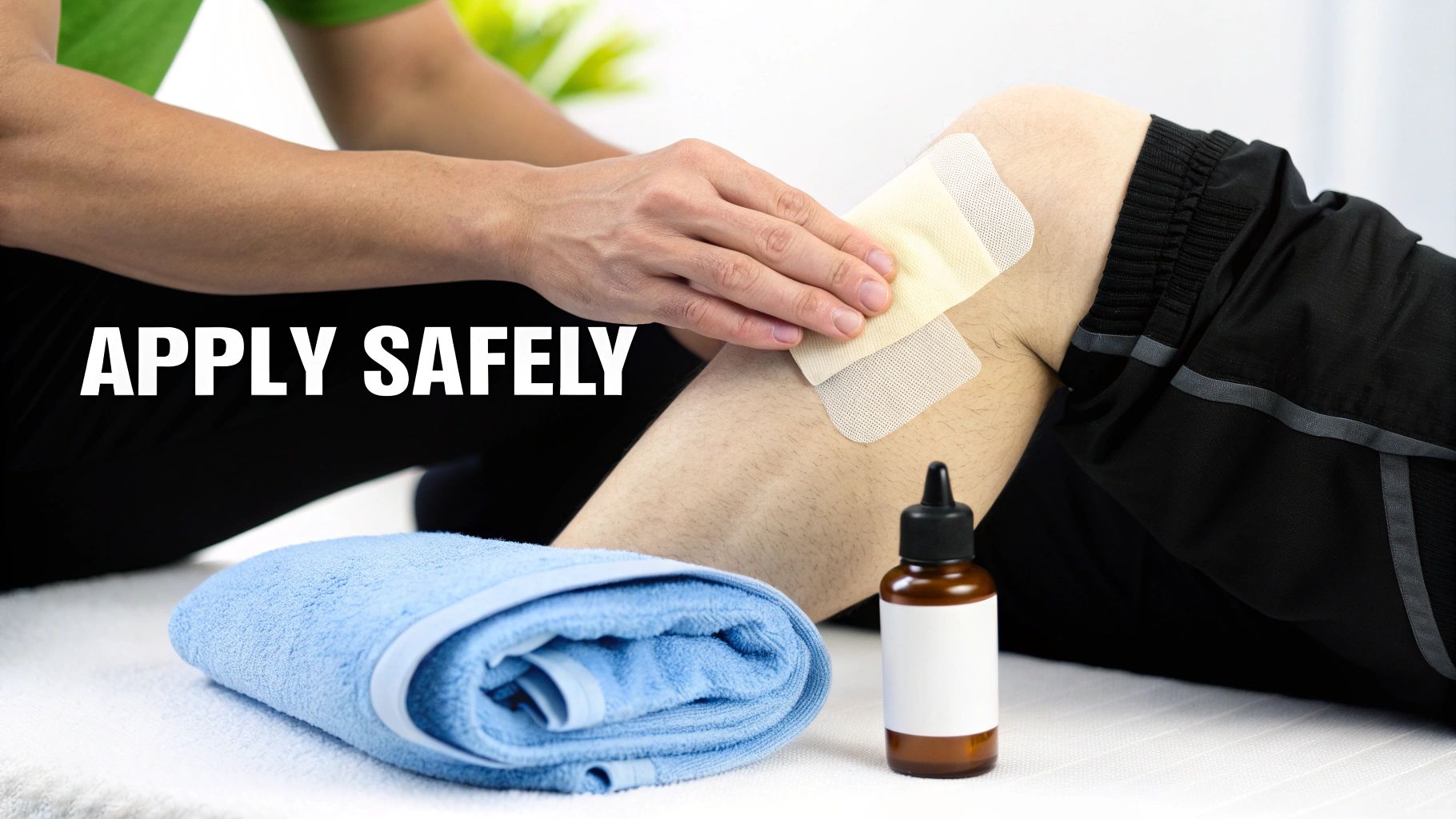
To get the most out of any topical analgesic, whether it's a pain patch for knee discomfort or a roll-on, it’s about more than just slapping it on. How you apply it makes a huge difference in getting safe, consistent, and effective relief. Think of it less as a quick fix and more as a technique—these tips from the pros go way beyond the basic instructions on the box.
First things first: you need to prep the area. Your skin has to be a clean, dry canvas for the product to do its job. Any lingering oils, lotions, or even sweat can act like a barrier, stopping the active ingredients from getting where they need to go.
Before you apply anything, gently wash the skin around your knee with some mild soap and water. Pat it completely dry with a clean towel. Be gentle here—scrubbing too hard can create tiny abrasions on the skin, which could lead to irritation later on.
The Right Way to Apply
Once your skin is prepped, it's all about targeting the right spot. For general knee pain, you'll want to focus on the soft tissue that surrounds your kneecap, not directly on the hard, bony part. If you’re using a spray, stick, or roll-on, gently massage it into the muscles and tendons above, below, and on either side of the joint.
Here’s a simple checklist to follow every time:
- Start with Clean Skin: Make sure the knee area is totally clean and dry. This helps with both absorption and, if you're using a patch, adhesion.
- Target the Soft Tissues: Aim for the muscles and ligaments around the kneecap. Steer clear of applying directly onto the bony patella itself.
- Use the Right Amount: A thin, even layer is all you need. More isn't better; piling it on won't make it work faster and might just lead to skin sensitivity.
- Wash Your Hands Thoroughly: This is a big one. As soon as you’re done, wash your hands well with soap and water. You definitely don’t want to accidentally rub your eyes or touch your mouth with any residue.
Proper application isn't just about making the product work better—it's a critical safety measure. Avoiding broken skin, using the right amount, and washing your hands are non-negotiable steps for responsible use.
Essential Safety Precautions
Your safety should always come first. A hard and fast rule is to never apply a topical analgesic to broken, irritated, or damaged skin. Putting it on a cut, scrape, or rash can cause a pretty painful burning sensation and lead to other issues. If you’ve got any broken skin, wait until it’s fully healed before using any topical products.
You’ll also want to keep an eye out for any skin reactions. It's rare, but some people might experience a bit of redness, itching, or a rash. If that happens, wash the product off right away with cool water and soap, and stop using it. If the irritation doesn't go away, it's best to check in with a healthcare professional. This focus on user well-being is a key reason why brands like MEDISTIK have earned the trust of clinics all across Canada.
Understanding the Pros and Cons of Knee Pain Patches
Before you decide how to manage your knee discomfort, it’s smart to get a balanced view of any treatment. A pain patch for knee issues has some real advantages, but like anything, it has its limits too. Knowing both sides of the coin helps you figure out when a patch is the right tool for the job.
The biggest win for patches is their targeted action. Unlike a pill that has to travel through your entire body, a patch gets the active ingredients right to the source of the pain. This direct-to-the-spot approach means relief is concentrated exactly where you need it, which is perfect for things like a muscle strain or a mild arthritis flare-up.
This localized delivery system also means you're less likely to deal with systemic side effects. Because the medicine stays mostly in the knee area and only a small amount enters your bloodstream, you can often sidestep the stomach upset or other digestive troubles that sometimes come with oral painkillers. You can learn more about the benefits of topical versus oral pain relievers in our side-by-side comparison.
Acknowledging the Limitations
Of course, a pain patch for the knee isn’t a magic bullet for every situation. One of its main drawbacks is strength. If you’re dealing with severe, deep-joint pain from something like a significant cartilage tear, a patch might not be powerful enough to give you the relief you need. The ingredients can only penetrate so deep into the tissue.
Skin sensitivity is another thing to keep in mind. While most people have no trouble, some might notice redness, itching, or irritation where the patch is applied. This can be more common if you have sensitive skin or wear the patch for a long time.
Here’s the bottom line: patches are fantastic for managing mild to moderate, localized pain. Think of them as a great first line of defence for surface-level muscle aches and joint soreness, but not a substitute for a proper medical evaluation when pain is severe or won't go away.
Knowing When to Choose a Patch
So, when is a pain patch knee solution your best bet? It's a great go-to in these scenarios:
- Mild Arthritis: For taking the edge off the daily, nagging ache of osteoarthritis.
- Muscle Strains: When you've overdone it at the gym or in the garden and the muscles around your knee are sore.
- Overuse Injuries: For that familiar ache after repetitive activities like running or cycling.
It’s no surprise that the demand for these targeted solutions is on the rise. An increase in sports and workplace injuries has driven the need for pain patches in Canada, which is part of North America's projected 32% share of the global market. In 2023 alone, the Association of Workers' Compensation Boards of Canada reported 250,000 lost-time claims, with many involving knee sprains from physically demanding work. You can read the full research about these market trends on Research Nester.
On the other hand, if your pain is sharp, constant, or comes with significant swelling or a feeling of instability in the joint, it’s time to put the patch aside and see a doctor.
When Your Knee Pain Warrants a Doctor's Visit
While a pain patch offers incredible, targeted relief for many common knee issues, it’s not a replacement for professional medical care. Knowing when to put down the patch and pick up the phone to call your doctor is a crucial part of taking care of your body.
Some symptoms are more than just a simple ache—they're red flags signaling a potentially more serious, underlying problem. These signs mean it's time to get a proper evaluation from a physician, physiotherapist, or chiropractor. Topical products are designed to work alongside, not in place of, expert medical guidance.
Red Flags to Watch For
Don't brush off symptoms that go beyond typical muscle soreness or a mild, achy joint. If you experience any of the following, it's time to seek a professional diagnosis:
- Severe swelling or noticeable redness around the joint.
- An inability to bear any weight on the affected leg.
- A visible deformity or obvious misalignment in your knee or leg.
- Knee pain that's accompanied by a fever or chills.
- A distinct popping sound at the moment of injury, followed immediately by pain.
- The feeling that your knee is unstable or "giving out" when you try to move.
An accurate diagnosis is always the first step toward effective treatment. Think of products like MEDISTIK as part of your overall health toolkit, but a professional opinion ensures you're on the right path for long-term recovery.
Musculoskeletal issues are a huge driver for Canada's pain relief market, especially since over 4 million adults live with osteoarthritis, which most often affects the knees. When you do see a doctor, they'll often suggest adding other therapies to your routine. Learning how to incorporate low impact strength training exercises can be a game-changer for protecting your joints for years to come.
Common Questions About Knee Pain Relief Products
Diving into the world of topical pain relief can bring up a lot of questions. It's totally normal. Whether you're trying a pain patch for knee discomfort for the first time or you’re a seasoned pro, getting clear, practical answers is key to using these products safely and getting the results you want.
Let's walk through some of the most common queries I hear from clients. My goal is to clear up any confusion and help you feel confident in picking and using the right solution for your knee pain, so you can get back to your life.
How Quickly Will a Pain Patch or Spray Work?
That’s a great question, and the honest answer is: it depends on the product. The speed of relief really comes down to the format and the active ingredients doing the work.
Something like the MEDISTIK Extra Strength Spray is built for speed. Its fast-acting formula can deliver a powerful cooling or warming sensation within just a few minutes of application. This makes it a fantastic choice for immediate pre-workout prep or for tackling that sudden ache that pops up out of nowhere.
On the other hand, formats like a stick or a patch are designed more like a slow-release system. They’re engineered for sustained, long-lasting relief that can carry you through several hours. The magic is all about how quickly those ingredients can get through the skin to calm down nerve receptors and ease local inflammation.
Can I Use Topical Relief for Knee Arthritis Pain?
Yes, absolutely. For many people, topical analgesics are an incredibly helpful tool for managing the daily aches and stiffness that come with osteoarthritis in the knee.
They offer targeted relief right where you need it, which can seriously improve your comfort and make it easier to move. Products with counterirritants like menthol are especially good at dialing down that persistent, dull pain that often accompanies arthritis.
A quick but important note: Always have a chat with your doctor to make sure a topical analgesic is a good fit for your overall arthritis treatment plan.
Is It a Good Idea to Apply a Pain Relief Product Before Exercise?
Definitely. Applying a topical analgesic before a workout is a smart and effective strategy that a lot of athletes use to get ahead of pain.
Using a product like MEDISTIK's dual-action stick can help warm up the muscles and joints, boost local blood flow, and reduce stiffness before you even start your first rep.
For the best results, put it on about 15-20 minutes before you start moving. That gives the active ingredients enough time to really get to work. Just be careful to avoid applying it to spots where your skin might chafe from clothing or equipment.
How Often Can I Reapply Topical Pain Relievers to My Knee?
This is a critical one. You always, always want to follow the specific instructions on the product label, because every formula is a bit different.
As a general rule of thumb, most topical analgesics can be safely applied up to 3 or 4 times per day. Pushing it beyond the recommended frequency can increase the risk of skin irritation, and we don't want that.
If you find that the recommended dose just isn't cutting it, take that as a sign. It's time to check in with a healthcare professional for a more thorough look at what's going on. Beyond just managing the immediate pain, a solid long-term strategy often involves strengthening the muscles that support the knee. Looking into how to build leg muscle is a great next step to improve stability and reduce future strain.
For a complete system to prime, perform, and restore, explore the full range of topical analgesics from MEDISTIK at MEDISTIK.


