

Tackling joint inflammation isn't about finding a single magic bullet. It’s about a smart, comprehensive approach that combines lifestyle tweaks, the right kind of movement, and effective therapies. The real goal is to get to the root of the problem—like an inflammatory diet or extra body weight—while also managing the immediate pain and stiffness. Success comes from making long-term, sustainable changes, not just chasing temporary fixes.
Understanding Why Your Joints Are Inflamed

Before you can really start to reduce inflammation in your joints, it’s helpful to know what’s actually going on in there. Think of inflammation as your body’s built-in alarm system. When it senses a threat—an injury, an infection, or even the cartilage wear-and-tear from osteoarthritis—it dispatches an army of inflammatory cells to the scene. This emergency response is what causes those telltale signs: swelling, pain, heat, and stiffness.
This initial, or acute, response is incredibly useful for healing something like a sprained ankle. But chronic inflammation? That's a whole different beast. It's like having an alarm that’s stuck on, blaring 24/7. In autoimmune conditions like rheumatoid arthritis, the body gets its signals crossed and mistakenly attacks its own healthy joint tissues, creating a state of constant, damaging inflammation.
Key Drivers of Joint Inflammation
So, what keeps this alarm going? Several factors can either trigger or pour fuel on an ongoing inflammatory fire. Getting a handle on these is your first real step toward taking back control.
- Chronic Conditions: Osteoarthritis and rheumatoid arthritis are the big ones. They directly cause the breakdown of joint tissue and keep the inflammatory process active.
- Excess Body Weight: Fat tissue does more than just store energy; it’s a metabolically active organ that pumps out inflammatory chemicals. Understanding what visceral fat is and how to reduce it is crucial, as it’s a major contributor to body-wide inflammation that directly affects joint health.
- Dietary Choices: A diet loaded with sugar, unhealthy fats, and heavily processed foods can keep your body in a pro-inflammatory state.
- Repetitive Stress: Overusing a joint, whether through a demanding job or a specific sport, can cause tiny traumas that accumulate over time and lead to chronic inflammation.
And it's not just about long-term diseases or injuries. Even a short-term illness can trigger widespread aches. We actually dive deeper into why your joints and muscles hurt when you have the flu in another article.
The Problem with Chronic Inflammation
When inflammation becomes a long-term resident, it does more than just cause pain. That constant bath of inflammatory chemicals can actively erode cartilage and bone inside the joint. This kicks off a vicious cycle: the damage causes more pain and inflammation, which in turn causes more damage. This is exactly why being proactive is so important.
The goal isn't just to silence the pain but to calm the underlying inflammatory storm. This requires a comprehensive plan that addresses lifestyle factors, strengthens supporting muscles, and uses targeted therapies to manage flare-ups.
When you look at these root causes, it becomes clear why just popping a painkiller isn’t a long-term solution. The most effective strategies for how to reduce inflammation in joints are the ones that tackle the source of the problem to bring lasting relief.
Building Your Anti-Inflammatory Lifestyle
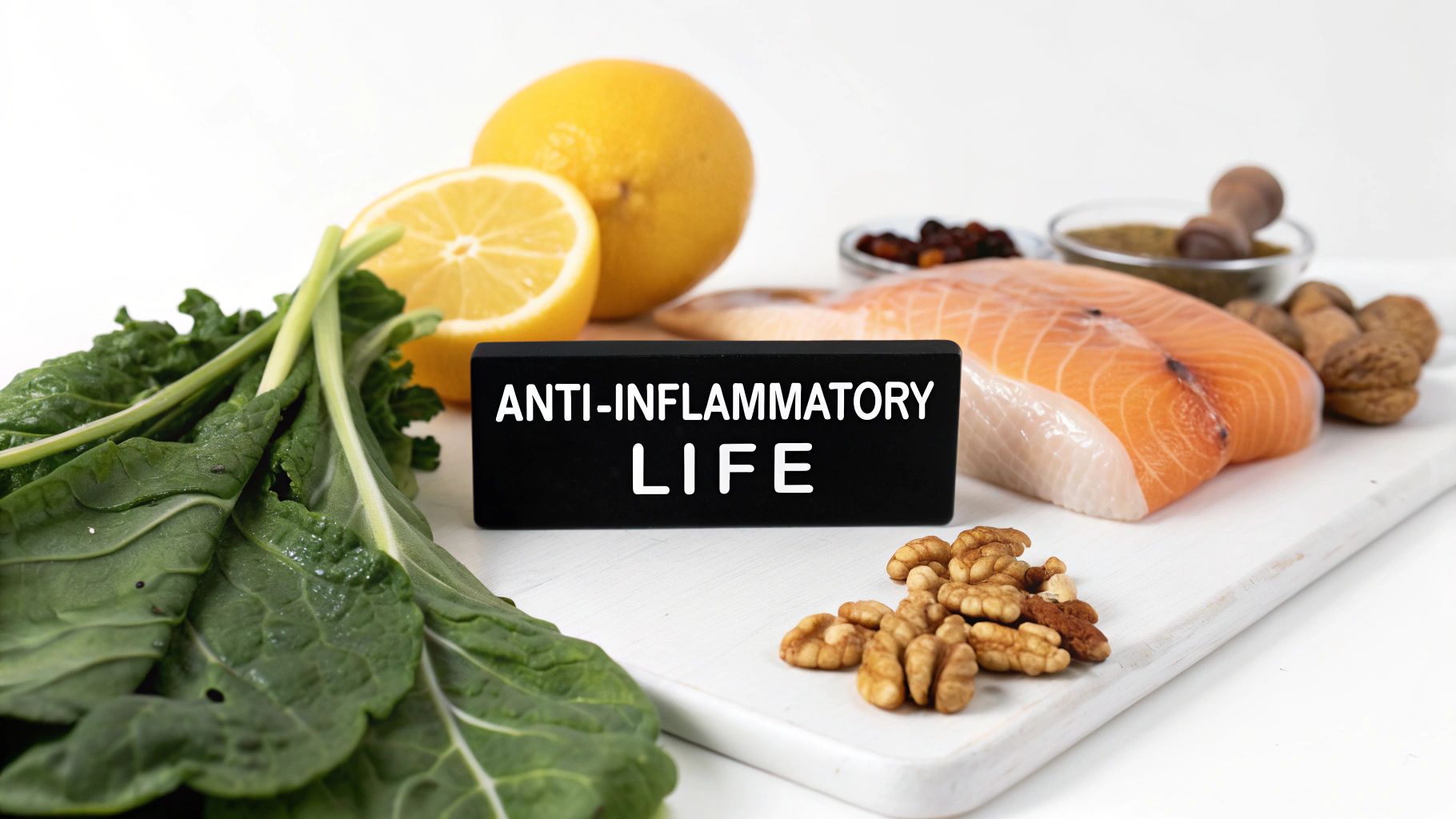
Real, lasting relief from joint inflammation isn’t something you find in a bottle. It’s built through the small, consistent choices you make every single day. Think of it as creating a supportive, calming environment inside your body—one that quiets the inflammatory response instead of constantly poking it.
This isn’t about some radical, all-or-nothing diet or a punishing fitness routine you can't stick with. It’s about making smart, sustainable shifts that eventually become second nature. By focusing on four key areas—diet, weight management, sleep, and smoking—you can build a seriously powerful foundation for long-term joint health.
Harnessing the Power of Anti-Inflammatory Foods
Let's be blunt: what you put on your plate can either fuel the inflammatory fire or help put it out. Heavily processed foods, sugary drinks, and certain unhealthy fats are known to trigger the release of pro-inflammatory cytokines—chemicals that can make your joint pain and swelling much worse.
On the flip side, whole foods packed with antioxidants and healthy fats can actively fight back against that process.
The goal here is simply to shift the balance. You don't have to be perfect, but making consistently better choices adds up to big results over time. I find it’s much more effective to focus on adding the good stuff in, rather than just obsessing over what to cut out.
For example, simply swapping your usual cooking oil for extra virgin olive oil introduces oleocanthal, a compound that has anti-inflammatory properties surprisingly similar to ibuprofen. Or try adding a handful of walnuts to your morning oatmeal—that’s an easy dose of omega-3 fatty acids, which are famous for their ability to cool inflammation in the joints.
Think of your diet as a daily opportunity to soothe your joints from the inside out. Every meal is a chance to choose ingredients that fight inflammation, support cartilage health, and provide the building blocks for a stronger, more resilient body.
Simple Anti-Inflammatory Food Swaps for Joint Health
Making big dietary changes can feel like a lot, so I always tell my clients to start with simple swaps. It’s not about restriction; it’s about making smarter substitutions that you can actually live with.
Here’s a quick-glance table to make it easy.
| Instead Of This (Pro-Inflammatory) | Try This (Anti-Inflammatory) | Why It Helps Your Joints |
|---|---|---|
| Sugary cereals, white bread | Oatmeal with berries, whole-grain bread | Provides fibre and antioxidants that fight inflammation. Refined carbs can spike blood sugar, which is a known trigger for inflammatory responses. |
| Red meat like steak or burgers | Fatty fish like salmon or mackerel | Salmon is packed with omega-3 fatty acids (EPA and DHA), which are powerful agents in reducing systemic inflammation and easing joint pain. |
| Processed snack foods (chips, crackers) | A handful of almonds or walnuts | Nuts offer healthy fats, fibre, and anti-inflammatory compounds. Processed snacks often contain unhealthy trans fats and additives that promote inflammation. |
| Sugary sodas or fruit juices | Green tea or water with lemon | Green tea contains polyphenols that have a strong anti-inflammatory effect. Plus, you’re avoiding the massive sugar hit that drives inflammation. |
Making even one or two of these changes consistently can have a noticeable impact on how your joints feel.
The Connection Between Weight and Joint Stress
Managing your weight is one of the single most impactful things you can do for your joints, especially the ones that carry your load—like the knees, hips, and spine. The benefit here is twofold.
First, there's the simple mechanics of it. Less body weight means less physical stress. It's a staggering fact that for every single pound of body weight you lose, you reduce the load on your knees by four pounds.
But there’s a second, equally important biochemical reason. Adipose (fat) tissue isn't just inactive storage; it's an active organ that actually produces and releases pro-inflammatory chemicals. This means that carrying excess body fat creates a constant state of low-grade, chronic inflammation throughout your body, which can seriously worsen joint pain and stiffness.
Prioritizing Sleep for Recovery and Repair
Never, ever underestimate the power of a good night's sleep. While you’re resting, your body is busy repairing tissues and regulating the very hormones that control inflammation.
Chronic sleep deprivation does the exact opposite. It throws your body into a state of stress and can significantly increase the levels of inflammatory markers in your bloodstream.
The goal is 7-9 hours of quality sleep per night. If that feels out of reach, start by improving your sleep hygiene with these practical tips:
- Stick to a Schedule: Go to bed and wake up around the same time every day, even on weekends. This helps regulate your body's internal clock.
- Create a Sanctuary: Make your bedroom dark, quiet, and cool. It signals to your brain that it's time to shut down.
- Power Down Your Screens: The blue light from phones, tablets, and TVs can mess with your body's production of melatonin, the sleep hormone. Try to put them away an hour before bed.
Why Quitting Smoking Is Non-Negotiable
If you struggle with joint inflammation and you smoke, quitting is one of the best things you will ever do for your body. Smoking unleashes a massive wave of oxidative stress and triggers a powerful inflammatory response everywhere.
We see it in the clinic all the time: smokers often have more severe symptoms with conditions like rheumatoid arthritis, and they may find their medications are less effective. The toxic chemicals in cigarette smoke interfere with your body's healing processes and can even accelerate cartilage damage.
Quitting isn't easy, but it is a direct and powerful step toward turning down the inflammation and protecting your joints from future harm.
Using Movement to Soothe Inflamed Joints
When your joints are stiff, sore, and swollen, your first instinct is probably to curl up on the couch and stay perfectly still. It makes sense, but the right kind of movement is actually one of the most powerful tools you have for tackling joint inflammation. It might sound backward, but think of gentle, consistent exercise as medicine for your joints.
Movement helps in a few critical ways. First, it acts like a lubricant for your joints, easing stiffness and reducing those nagging pain signals. More importantly, it strengthens the very muscles that support and protect your joints. Stronger muscles take a significant load off the compromised cartilage and bone, giving them a much-needed break. The goal is to reframe movement not as a chore that causes pain, but as a therapeutic activity that brings relief.
Finding Your Joint-Friendly Rhythm
Not all exercise is created equal, especially when you're navigating joint inflammation. High-impact activities that jolt the joints—think running on pavement or intense jumping—can easily make things worse. Instead, the focus should be on activities that provide smooth, controlled motion.
Consider these low-impact options:
- Swimming or Water Aerobics: The water is your best friend here. Its natural buoyancy takes the weight right off your joints, letting you move freely without the stress of gravity.
- Cycling: Whether it's a stationary bike or a leisurely ride outdoors, cycling is a fantastic, low-impact way to improve the range of motion in your knees and hips.
- Walking: Never underestimate the power of a simple walk. It does wonders for circulation and stiffness. Just make sure you’re wearing supportive shoes and, if you can, choose softer surfaces like a park trail or a track.
The real secret is consistency over intensity. Even just 15-20 minutes of gentle activity each day can make a massive difference in your pain levels and overall mobility. You're trying to coax your joints back into moving comfortably, not force them.
Building Strength to Protect Your Joints
Think of strong muscles as a natural, custom-fit brace for your joints. When the muscles around your knees, hips, or shoulders are well-conditioned, they absorb a lot of the shock and daily stress that would otherwise go straight to the joint. This is exactly why adding some strength training to your routine is so vital.
You don't need to start lifting heavy weights. Simple, controlled exercises using your own body weight, light dumbbells, or resistance bands are incredibly effective. If you're new to this or just want a safe starting point, checking out a beginner's guide to strength training can give you a structured way to build up that crucial joint support without overdoing it.
Try to focus on exercises that target the big muscle groups supporting your most painful joints. For instance, if knee pain is the main issue, strengthening your quadriceps and hamstrings is a top priority. A strong core is also foundational for protecting your entire body, which is why understanding the principles of exercise for core stability can be a game-changer for your overall mechanics.
The Critical Role of Flexibility and Balance
Inflammation often leads to stiffness, which kicks off a vicious cycle: you move less because you're stiff, and you get stiffer because you move less. This is where flexibility work becomes essential. Gentle activities like yoga or simple daily stretching help lengthen those tight muscles and improve your joint's overall range of motion.
Balance is the other piece of the puzzle that’s easy to overlook. When a joint is unstable, your body tries to compensate, often leading to more strain and even injury. Simple balance exercises, like standing on one foot for 30 seconds, can dramatically improve your proprioception—your body's awareness of where it is in space—making you more stable on your feet.
The most important rule? Listen to your body. Exercise should feel good, or at the very least, not make your pain worse. The old "no pain, no gain" mantra absolutely does not apply here. A gentle stretch or mild muscle fatigue is perfectly fine, but any sharp, shooting, or increased joint pain is a clear signal to stop.
Start slow and build up gradually. Maybe today you can only manage five minutes of stretching. That’s a fantastic start. Tomorrow, try for six. This gentle, progressive approach allows your body to adapt and get stronger without triggering a painful inflammatory flare-up. By combining low-impact cardio, targeted strength work, and daily flexibility, you create a powerful routine that actively soothes and supports your joints.
Applying Topical Relief For Direct Action
While lifestyle changes and exercise create the foundation for long-term joint care, sometimes you just need relief that’s both fast and targeted. This is where topical treatments really shine.
Instead of swallowing a pill that has to journey through your entire digestive system, topical products let you apply active ingredients directly to the source of your pain. This direct approach has some serious advantages, delivering relief right where you need it, often working within minutes to soothe a sore knee, an aching shoulder, or a stiff wrist. By bypassing the stomach, it also sidesteps the potential for gastrointestinal side effects that can sometimes come with oral anti-inflammatory drugs.
How Do Topical Analgesics Actually Work?
Topical pain relievers work through a cool process called counter-irritation. They use active ingredients like menthol, camphor, or methyl salicylate to create a distinct sensation on the skin—either cooling or warming.
This new sensation creates a kind of "sensory noise" that interrupts the pain signals travelling from your joint to your brain. Your brain gets busy processing the new cooling or warming feeling, which effectively gates or blocks the underlying ache from getting through. Think of it like turning up music to drown out a distracting background noise; the original problem is still there, but your perception of it is dramatically reduced.
Key Takeaway: Topical analgesics don't just mask pain; they actively interrupt the nerve signals that transmit it. This provides immediate, localized relief that helps calm the area, making it an essential tool for managing daily aches and prepping for activity.
Many high-quality topicals, like those from MEDISTIK, combine several of these ingredients to create a multi-pronged effect. A product might use menthol for its immediate, powerful cooling effect while also incorporating camphor for a deeper, warming sensation that helps relax tight muscles around the inflamed joint.
This is why pairing topical relief with gentle, joint-friendly movements can be so effective.

Activities like swimming, cycling, and stretching improve joint mobility without the high-impact stress, making them ideal companions to a topical relief strategy.
Integrating Topical Relief Into Your Daily Routine
Knowing when and how to use different topical products can make a huge difference in how well they work. A strategic approach ensures you get the right kind of relief at the right time. For example, the MEDISTIK system is designed to support you through every stage of your day.
1. Preparing For Activity Before you head out for a walk, play a round of golf, or even start a day of gardening, applying a fast-acting topical can make a world of difference. A spray is ideal for this. The MEDISTIK Extra-Strength Spray is a perfect pre-activity tool. It dries quickly without any greasy residue, delivering a powerful cooling sensation that helps prime your joints for movement and reduce that initial stiffness.
2. Managing Chronic Aches For that persistent, nagging ache in your lower back or the deep throb in an arthritic knee, you need something with more staying power. This is where a long-lasting solid stick format is invaluable. The MEDISTIK Extra-Strength Stick is formulated for deep, enduring relief. Its solid form allows you to apply firm pressure during application—a mini-massage that helps the active ingredients penetrate deeper. The potent warming and cooling effect can last for hours, making it perfect for managing chronic inflammation or for applying before bed to help you sleep more comfortably.
3. Soothing Post-Activity Soreness After you’ve been active, your joints and muscles might feel tired and sore. A roll-on applicator is excellent here, as it allows for gentle application on tender areas without getting your hands messy. The MEDISTIK Natural Ice Roll-On uses natural ingredients to create an intense cooling effect that calms post-exercise inflammation and soothes sore spots. It's a convenient option for your gym bag or for use on the go.
This kind of strategic pain relief is especially important when you consider the numbers. In Canada, arthritis affects over 6 million people, and for the 52% of sufferers under age 65, timely interventions can make daily life much more manageable. Without effective relief, these conditions contribute to a staggering $33 billion in annual costs from healthcare and lost productivity.
By understanding how to use different application methods, you can build a smarter, more effective pain management toolkit. If you're weighing your options, you might also want to learn more about the benefits of a topical pain reliever versus an oral pain reliever. This knowledge helps you choose the right product for the right situation, maximizing your ability to reduce inflammation and stay active.
Navigating Supplements and Professional Care
While sorting out your diet, sleep, and exercise is the absolute bedrock of managing joint inflammation, there are times when you just need a little extra support. This is where supplements and professional medical advice can be a game-changer, but you have to go in with your eyes open, understanding what they can—and can't—do.
For many people, the first stop for quick relief is the pharmacy aisle for over-the-counter options like nonsteroidal anti-inflammatory drugs (NSAIDs). And it's true, medications like ibuprofen can be incredibly effective for knocking down pain and swelling during a bad flare-up. But they aren't a long-term fix and can come with some serious side effects if you rely on them day in and day out. Think of them as a tool for acute pain, not a daily habit.
This need for sustainable, long-term strategies is especially real for us here in Canada. With wait times for joint replacements often dragging on longer than in other developed countries, finding ways to manage your symptoms isn't just about comfort—it's a necessity. The economic hit from arthritis is a staggering $33 billion a year, and with 1 in 3 Canadian adults getting diagnosed before they even hit 45, getting proactive about self-care has never been more critical. Learn more about the state of arthritis care in Canada.
Popular Supplements Under the Microscope
Walking into the supplement aisle can feel overwhelming. There are endless bottles all promising to fix your joints. It’s vital to look at these with a healthy dose of skepticism because the science behind them can be all over the map.
Let's break down a couple of the most common ones you'll see.
- Turmeric (Curcumin): You've probably heard about this one. Curcumin, the active compound in turmeric, has some solid research backing its anti-inflammatory properties. Many people find it really helps take the edge off their daily aches. The catch? Its effectiveness really depends on the quality of the supplement and how well your body can actually absorb it.
- Glucosamine and Chondroitin: These are basically building blocks of your cartilage, so the idea is that taking them as a supplement can help protect your joints. The research here is pretty mixed. Some studies show a bit of a benefit for certain people, but others have found they're no more effective than a placebo.
Here's the bottom line: supplements might give you some support, but they will never replace the foundational pillars of good nutrition, consistent movement, and a healthy weight. Always, always talk to your doctor before adding a new supplement to your routine to make sure it’s safe for you and won’t mess with any other medications you’re on.
Recognizing Red Flags: When to See a Doctor
Taking control of your joint health is empowering, but you also have to know when it's time to call in the professionals. Trying to tough it out through serious symptoms can lead to joint damage that you can't undo.
You need to book an appointment with your doctor or a physiotherapist, no exceptions, if you experience any of these:
- Sudden and severe swelling or redness around a joint.
- Pain so intense that rest or over-the-counter meds don't touch it.
- You're completely unable to put weight on the affected joint.
- You're running a fever or have chills along with your joint pain.
- The pain is so bad it's waking you up at night consistently.
These aren't just minor aches; they could be signs of something more serious, like an infection or a major injury that needs immediate medical help. A healthcare professional is the only one who can give you an accurate diagnosis and create a treatment plan that's right for you. It's truly the most reliable path to getting inflammation under control and protecting your joints for the long haul.
Your Top Questions About Joint Inflammation, Answered
When you're dealing with joint inflammation, a lot of questions pop up. It’s completely normal. Getting clear, straightforward answers is the first step to feeling in control of your health and figuring out how to manage that inflammation for the long haul.
Let's break down some of the most common things people wonder about.
Can Inflammation Actually Be Reversed?
This is a big one. The answer really depends on the type of inflammation you're dealing with.
If you’ve got acute inflammation from a recent injury—say, a sprained ankle—then yes. The body's natural healing process kicks in, the inflammation subsides, and things go back to normal.
But for chronic conditions like osteoarthritis (OA), the game changes. The goal isn't really reversal, but smart management. You can absolutely lower inflammation, dial down the pain, and slow down joint damage, but the underlying condition is usually there to stay.
Is This Just Soreness, or Is It Inflammatory Pain?
It's easy to mix these up. Think of muscle soreness after a tough workout: it's usually a dull, spread-out ache that gets better in a day or two.
Inflammatory joint pain feels different. It tends to be sharper and more persistent. You’ll often see other tell-tale signs like obvious swelling, stiffness (especially in the morning), and sometimes even heat coming from the joint itself.
Why Do Some Joints Hurt More Than Others?
It’s true—inflammation doesn’t always play fair. While it can be a systemic, whole-body issue, it often picks on the joints that do the most work. Your knees, hips, and spine are classic targets simply because they bear your body's weight all day, every day.
But other things can tip the scales. A shoulder injury from your university rugby days could make that joint a hotspot for inflammation years later. The same goes for repetitive strain from a job or hobby, which can lead to chronic inflammation in places like your wrists or elbows.
The location of your pain is a major clue. If you have pain in joints on both sides of your body (symmetrical pain), it might hint at an autoimmune condition. Pain in a single, hard-working joint often points to something like osteoarthritis or an overuse injury.
What’s the Link Between Joint Pain and My Overall Health?
This connection is huge, and we're learning more about it all the time. Chronic inflammation isn't just a joint problem; it affects your entire body.
Recent Canadian research has uncovered a critical link between the systemic inflammation women with osteoarthritis experience and a higher risk of cardiovascular problems. This really drives home why getting a handle on joint inflammation is about more than just managing aches and pains—it's vital for your long-term health.
With over 6 million Canadians living with arthritis and medication costs soaring to $3.5 billion in 2023, having effective, non-drug options is more important than ever. You can read the full research about these important findings for a deeper dive.
For powerful, targeted relief that helps you manage inflammation right where it hurts, check out the MEDISTIK lineup of topical analgesics. Our Canadian-made products are designed to help you get back to moving with confidence. Find your solution at MEDISTIK today.


