

When you’re dealing with knee pain, finding the "best" relief isn't about a single magic bullet. It’s about a smart, combined strategy: getting immediate, targeted relief for the ache you feel right now, while also committing to long-term care through strengthening and lifestyle tweaks. This integrated approach is the key to getting sustainable results because it tackles both the symptoms and the root causes.
Your Guide to Lasting Knee Pain Relief

Knee pain can feel like an unwelcome houseguest who just won't leave. It turns simple things like a walk in the park or climbing stairs into frustrating daily hurdles. When that discomfort starts sidelining you from the activities you love, finding a reliable solution becomes a top priority.
But the real goal isn’t just to silence the pain for a few hours. It’s about finding lasting control.
This guide is designed to give you the knowledge to do exactly that. We’ll break down why the most effective strategy is almost always a combination of treatments—tackling immediate aches with targeted solutions while building a solid foundation for long-term joint health.
Combining Immediate Relief with Long-Term Care
Think of it like tending to a garden. You might need to pull a few weeds for a quick fix (that’s your immediate relief), but you also need to water, fertilize, and care for the soil to ensure healthy plants in the long run (that’s your long-term care). For your knees, this means pairing fast-acting relief with proactive habits.
This dual approach is so important because knee pain is a massive issue, especially here in Canada. Knee osteoarthritis (OA), a leading cause of chronic discomfort, affects millions. The Public Health Agency of Canada estimates that around 4 million Canadians are living with diagnosed OA, and that number is expected to climb to 12 million by 2040.
What’s really telling is that data shows only 39% of patients manage their symptoms with prescription medications, which highlights just how crucial accessible and effective non-prescription options are.
The most effective pain management plans address the immediate "symptom" and the long-term "cause." A topical analgesic handles the first part, while strengthening exercises and lifestyle changes tackle the second.
A Framework for Relief at a Glance
To give you a clearer picture of your options, we've put together a quick comparison table. A successful plan often pulls elements from each of these categories to create a personalized strategy.
| Relief Method | Best For | Key Benefit | Consideration |
|---|---|---|---|
| Topical Treatments | Localized pain, acute flare-ups, post-activity soreness | Targets pain at the source with minimal systemic side effects | Not for deep internal issues; effectiveness varies by ingredients |
| Oral Medications | Widespread pain, significant inflammation | Systemic relief, strong anti-inflammatory effects | Potential for stomach upset, liver, or kidney side effects with long-term use |
| Physical Therapy | Chronic instability, post-injury recovery, poor biomechanics | Corrects underlying muscle imbalances and movement patterns | Requires time commitment and professional guidance |
| Lifestyle Adjustments | Overweight individuals, high-impact activity-related pain | Reduces daily stress on the knee joint, preventing future damage | Can require significant changes to diet and daily habits |
By understanding how each piece fits into the puzzle, you can build a powerful, personalized strategy for taking back control.
Building Your Relief Toolkit
To make informed choices, it helps to understand the main tools at your disposal. A solid pain relief plan usually involves a mix of the following:
- Topical Treatments: These are the creams, gels, sprays, or sticks you apply directly to the skin over the painful joint. They’re fantastic for targeted relief with minimal risk of the side effects you might get from pills, making them a go-to for localized pain.
- Oral Medications: This category includes over-the-counter or prescription pills that work to reduce pain and inflammation throughout your entire body.
- Physical Therapy and Exercise: This is non-negotiable for long-term health. Strengthening the muscles that support your knee is crucial for creating stability and taking the strain off the joint itself.
- Lifestyle Adjustments: Don’t underestimate the power of simple changes. Maintaining a healthy weight and choosing low-impact activities can dramatically reduce the stress on your knees day in and day out.
Incorporating targeted physical activity is a cornerstone of managing and preventing knee issues. Focusing on strengthening supporting muscles through a variety of leg exercises can provide truly lasting relief and build resilience against future problems.
Getting to the Root of Your Knee Pain
Before you can find real relief, you have to figure out what's actually causing your knee to hurt. Think of your knee as a complex, hard-working machine. It's got a lot of moving parts—bones, cartilage, ligaments, and tendons—and they all need to work together smoothly. When just one of those parts gets damaged or worn down, the whole system can start to feel it.
That nagging pain isn't just a random feeling; it's a specific signal that something is wrong. Once you can pinpoint the root cause, you can stop just masking the symptoms and start targeting the real problem. This is why a direct approach, like using a topical analgesic, can be so effective for pain and inflammation that’s concentrated in one spot.
The Most Common Culprits
While a ton of different things can make your knees ache, a few usual suspects are behind most cases. Learning about them can help you connect the dots between what you’re feeling and what might be going on inside your joint.
-
Osteoarthritis (OA): You've probably heard this called "wear-and-tear" arthritis, and it's the number one cause of knee pain in adults. It happens when the protective cartilage cushioning the ends of your bones wears down over time. The result is stiffness, swelling, and a deep, aching pain that usually gets worse when you're active.
-
Tendonitis: This is when the thick cords connecting your muscles to your bones (the tendons) get inflamed. It’s almost always an overuse injury, really common in people who suddenly ramp up their running or cycling. The pain is usually sharp and easy to point to in one specific spot.
-
Sprains and Strains: These are the injuries that happen in an instant. A sprain is a stretched or torn ligament (the tissue connecting bone to bone), while a strain affects a muscle or tendon. They’re typically caused by a sudden twist, a fall, or a hard impact, leading to immediate pain and a feeling of instability.
Figuring out which of these sounds most like your situation is the first step. For instance, the constant, dull ache of OA and the sharp, localized inflammation of tendonitis both tend to respond well to treatments you can apply right where it hurts.
How Injuries and Overuse Turn Into Chronic Pain
Knee pain isn't just for older folks; it often starts much earlier than you'd think. Even injuries that seem minor at the time can pave the way for long-term issues down the road. This is especially true for young athletes, whose growing joints are under a massive amount of stress.
In fact, youth knee injuries are creating a silent future epidemic of osteoarthritis in Canada. Somewhere between 500,000 and 700,000 children and teens injure their knees every single year playing sports. Here's the shocking part: studies suggest that a staggering 50% of them will develop OA by age 40, sometimes in as little as a decade after that first injury. All too often, the focus is on a quick return to the game instead of long-term prevention, which can make things much worse for their knees later on. You can explore more research on youth sports injuries and future arthritis risk to understand this growing concern.
This really drives home a critical point: managing inflammation and pain right from the start is absolutely vital if you want to stop small problems from snowballing into major, chronic ones.
Key Takeaway: Your knee pain is telling you a story. A dull, progressive ache might point to osteoarthritis, while a sharp, sudden pain after a workout could be tendonitis. Learning to recognize these patterns helps you choose a smarter, more effective treatment.
By getting a better handle on the source of your discomfort, it becomes clear why a localized treatment—one that delivers relief directly to the sore tissues—is often a better choice than a pill that affects your entire body. This targeted approach is the key to managing your pain effectively and getting you back to doing what you love.
Topical Treatments Versus Oral Pain Pills

When your knee starts aching, the first instinct for many of us is to grab a pain reliever. But not all relief is created equal. The choice between a topical treatment you apply to your skin and an oral pill you swallow is one of the most important decisions you can make for managing your pain effectively and safely.
Let’s break it down with an analogy. Taking an oral pain medication, like a common nonsteroidal anti-inflammatory drug (NSAID), is a bit like turning on a floodlight in a dark room. It lights up everything, not just the one corner where you actually need to see.
While that pill might help your sore knee, it has to travel through your entire bloodstream first. That means it affects your stomach, liver, and kidneys along the way. For a one-off ache, that's often fine. But for chronic knee pain, the risk of systemic side effects—like stomach upset or more serious complications—goes up the longer you rely on them.
The Targeted Approach of Topical Relief
Topical analgesics offer a completely different strategy. Instead of a floodlight, think of them as a highly-focused spotlight, delivering active ingredients directly to the source of your pain. When you rub in a cream, use a spray, or apply a stick to your knee, the medication absorbs through the skin to get right to work on the underlying tissues and nerves.
This localized approach is the game-changer. It concentrates the pain-relieving action exactly where you need it, which can lead to faster relief without sending the medication on a full tour of your body. Most importantly, it dramatically reduces the risk of the systemic side effects that are a major concern with long-term oral pill use.
To see just how different these two approaches are, let's compare them side-by-side.
Topical Analgesics vs Oral Pain Relievers
| Feature | Topical Analgesics (e.g., MEDISTIK) | Oral Pain Relievers (e.g., NSAIDs) |
|---|---|---|
| Method of Action | Applied directly to the skin over the painful area. | Swallowed and absorbed into the bloodstream. |
| Target Area | Localized: Works right at the source of the pain. | Systemic: Travels through the entire body. |
| Speed of Relief | Often faster for localized muscle and joint pain. | Can take 30-60 minutes to start working. |
| Risk of Side Effects | Low risk of systemic side effects; possible skin irritation. | Higher risk of stomach, kidney, and liver issues. |
| Ideal For | Chronic conditions like arthritis, muscle soreness, joint pain. | Widespread pain or severe, acute inflammation. |
As you can see, topicals are one of the best options for anyone managing long-term conditions like osteoarthritis or for those who are simply concerned about the effects of oral medication on their overall health.
Why Application Format Matters
Beyond how they work, the way you apply a topical pain reliever can make a huge difference in your daily routine. The best solution is one that fits seamlessly into your life, whether you're at home, at the gym, or on the go.
Different formats are designed for different needs:
- Mess-Free Sticks: Perfect for deep, persistent aches like chronic arthritis. An extra-strength stick allows you to apply firm pressure, massaging the product right into the joint for deep penetration—all without getting your hands messy.
- Fast-Acting Sprays: When you need quick relief before a workout or during a sudden flare-up, a spray is your best friend. It applies a fine, even coat, absorbs quickly, and is easy to use on hard-to-reach spots.
- Convenient Roll-Ons: A roll-on gives you a great balance of targeted application and clean use. It’s excellent for smaller joints or for when you need a quick, no-fuss solution while you’re out and about.
For a deeper dive into how these methods stack up, learn more about the benefits of a topical pain reliever versus an oral pain reliever in our detailed guide. Choosing the right format ensures your pain relief isn’t just effective, but also practical for your specific lifestyle, helping you stay active and in control.
How Topical Pain Relievers Actually Work
Ever wondered how a cream you rub on your skin can possibly quiet a deep, nagging ache in your knee? It might feel a bit like magic, but the way topical pain relievers work is all science. They don't just cover up the pain; they get right to the source and actively interrupt the signals your knee is sending to your brain.
It’s a clever biological workaround. When you apply a topical analgesic, its active ingredients start working on the nerve endings in your skin and the tissues just beneath. This creates a powerful, targeted effect exactly where you feel the pain, without having to travel through your entire system like a pill does.
The Power of Counter-Irritants
One of the main ways topicals provide relief is through something called counter-irritants. You’ll know them by the distinct cooling or warming feeling they create on your skin—think ingredients like menthol and camphor. That new sensation is more than just a distraction; it’s a high-priority message that jumps to the front of the line in your nervous system.
Think about what you do the moment you bang your elbow on a doorframe. You probably grab it and rub it, right? That rubbing sensation sends a new signal that overrides the sharp throb of pain, giving you instant relief. Counter-irritants work the exact same way.
The cooling or warming feeling essentially "crowds out" the pain signals coming from your knee. Your nerve pathways get busy transmitting this new sensory information, which effectively shuts the "gate" that would otherwise let pain messages through to your brain. This whole process is a real-world example of what experts call the Gate Control Theory of Pain. If you're curious about the deeper science, you can learn more about how the Gate Control Theory of Pain works in our detailed guide.
By creating a competing sensation, topical analgesics can effectively turn down the volume on your knee pain, providing immediate and noticeable relief right where you need it most.
Reducing Inflammation at the Source
But interrupting pain signals is only half the story. Many high-quality topical treatments also contain ingredients with powerful anti-inflammatory properties. This is a critical second punch, especially for knee pain that stems from conditions like osteoarthritis or tendonitis, where swelling is a major part of the problem.
Ingredients like methyl salicylate get to work reducing inflammation in your muscles and joint tissues. Here’s how they deliver a deeper level of relief:
- Improved Blood Flow: Certain active ingredients help kickstart circulation to the area. This helps flush out inflammatory substances while bringing in fresh, oxygen-rich blood to help the tissues recover.
- Targeted Action: By penetrating the skin, these compounds directly soothe inflamed tissues and calm down irritated nerve endings, addressing one of the root causes of the pain itself.
This dual-action approach is what makes products like MEDISTIK so effective. High-potency formulas are specifically designed to deliver a strong, therapeutic dose of these active ingredients deep into the joint. You get the immediate relief from the counter-irritant effect, plus the long-term benefit of managing the underlying inflammation that keeps the pain coming back. The result is real, science-backed relief that helps you get back to moving with more confidence and less pain.
Choosing the Right Topical Relief for Your Needs
Walking down the pain relief aisle can feel a little overwhelming. When it comes to your knees, how do you know what to grab? The secret is matching the product to your specific kind of pain.
Not all topical treatments are built the same. A dull, constant ache from arthritis needs a different game plan than the sharp, sudden pain you feel after overdoing it at the gym. It starts with getting to know your pain. Is it a constant companion, or does it show up unannounced? Answering that simple question is the first step toward finding a solution that really works.
Matching the Product to the Pain
Think of different topicals like tools in a toolbox—you wouldn't use a hammer for a screw. A fast-acting spray and a deep-penetrating stick are both great, but they shine in different situations.
Let's break it down with some common scenarios:
-
For Chronic Aches (like Arthritis): If your knee pain is that slow, grinding ache that leaves you stiff and sore, you need something that delivers deep, sustained relief. This is where the MEDISTIK Extra-Strength Stick excels. Its solid form lets you apply firm pressure, massaging the powerful formula right into the joint for long-lasting warmth and comfort.
-
For Acute Pain and Pre-Activity Warm-Ups: For those times you need relief right now—like before a run or after an unexpected tweak—speed is everything. The MEDISTIK Extra-Strength Spray is designed for exactly that. It goes on in a fine, even coat that absorbs quickly to either prime your muscles or calm down a sudden flare-up. It's the perfect sidekick for an active life.
Understanding how these products interrupt pain signals can help you feel even more confident in your choice.
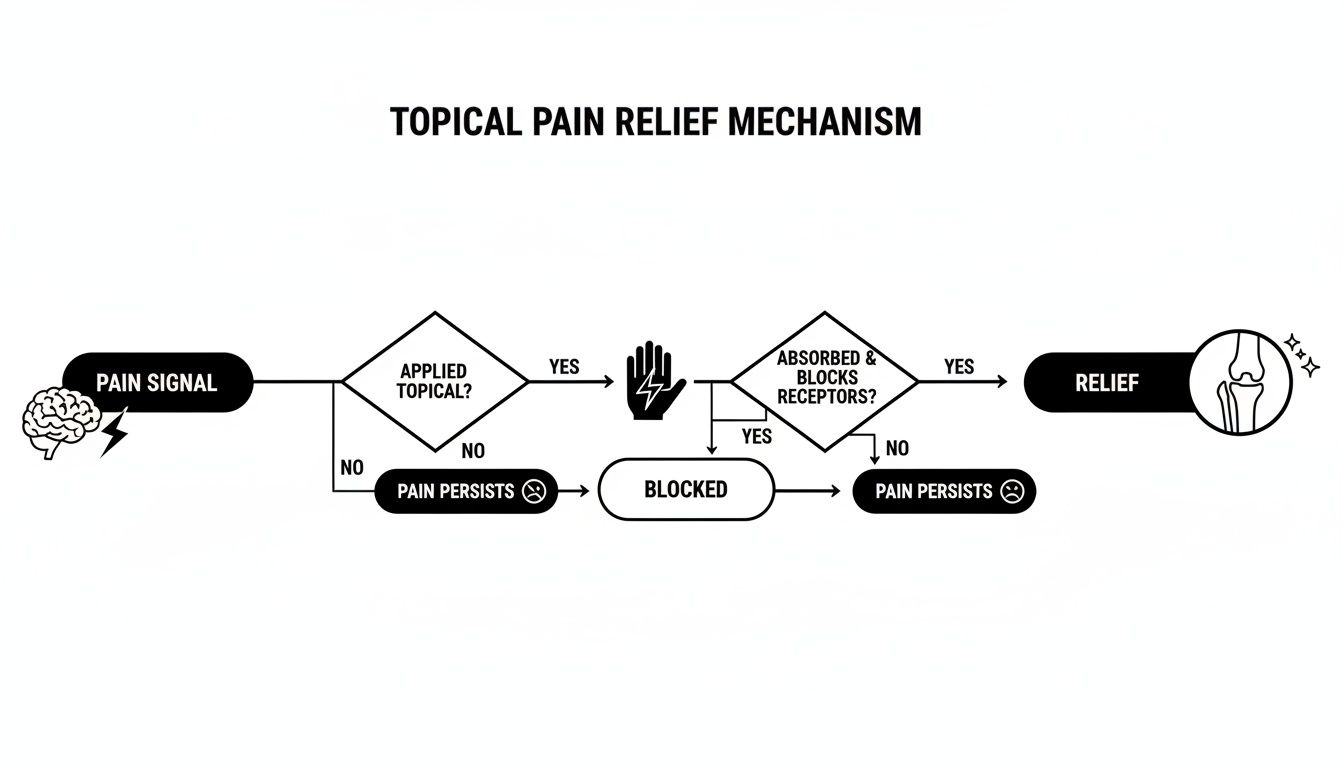
Simply put, topicals work by blocking pain signals before they have a chance to reach your brain. They shut down the discomfort right at the source. For a deeper dive into the science, check out our guide on how MEDISTIK works to deliver its powerful, targeted relief.
How to Apply Topical Relief for Maximum Benefit
Getting the most out of your topical isn't just about what you use, but how you use it. Proper application is key to making sure the active ingredients get where they need to go, safely and effectively.
Just follow these simple steps:
- Start with Clean, Dry Skin: Before you apply anything, make sure the skin around your knee is free of other lotions or moisture. This helps the product absorb properly.
- Apply a Generous, Even Layer: Don't be shy. Whether you're using a stick, spray, or roll-on, make sure you cover the entire area of pain—front, back, and sides of the knee.
- Massage It In (If Applicable): With sticks or creams, take a moment to gently but firmly massage the product into your skin. This not only helps with absorption but also boosts blood flow to the area, which can provide even more relief.
- Wash Your Hands Thoroughly: After you're done (unless you're using a no-touch spray or stick), give your hands a good wash with soap and water. This is crucial to avoid accidentally touching your eyes or other sensitive areas.
- Let It Absorb Completely: Give it a few minutes to dry and sink in before you cover up with clothing or a knee brace.
Safety First: Never apply topical pain relievers to broken, irritated, or damaged skin. It's also really important to avoid using a heating pad on an area where you've just applied a warming topical—this can lead to skin irritation or even burns.
By carefully choosing the right product and applying it correctly, you’re creating a smart, personalized strategy to take control of your knee pain.
When You Should See a Doctor for Knee Pain
Over-the-counter solutions, including powerful topical analgesics, are fantastic for managing the daily grind of knee discomfort and sudden flare-ups. But it’s important to remember they’re just one tool in your health toolkit—they aren’t a substitute for professional medical advice when your body is sending up serious warning signals.
Knowing when to put self-treatment on pause and call a doctor or physiotherapist is absolutely essential for the long-term health of your joints.
Think of persistent or severe symptoms as your body’s emergency flares. Ignoring them can let a minor issue spiral into a major problem. These are clear signs that you need a professional to get to the bottom of what’s really going on. A proper diagnosis is the bedrock of any solid treatment plan, making sure you’re fixing the root cause, not just masking the pain.
Recognizing Critical Red Flags
A dull ache after a long day on your feet is one thing, but some symptoms demand immediate medical attention. These aren’t “wait and see” situations. If you experience any of the following, it’s time to book an appointment to prevent further damage and figure out the best way to get relief.
Be on the lookout for:
- Severe Pain or Swelling: The pain is intense, or your knee suddenly blows up like a balloon.
- Inability to Bear Weight: You find it impossible or incredibly painful to put your full weight on the sore leg.
- Obvious Deformity: Your knee or leg looks visibly out of place or misshapen.
- An Audible 'Pop': You hear or feel a distinct "pop" when the injury happens, usually followed by immediate and severe pain.
- Knee 'Giving Way': A buckling sensation or feeling of instability, as if your knee can no longer hold you up.
- Signs of Infection: The knee feels hot to the touch, looks very red, and you’re running a fever.
If your knee pain is messing with your daily life, getting worse despite your best efforts at home, or sticking around for more than a few weeks, getting professional advice is the smartest move. Catching things early almost always leads to better and faster results.
When to Consult a Physiotherapist
Not every ache and pain warrants a visit to an orthopaedic surgeon. For problems related to how you move, muscle weakness, or getting back on your feet after a minor strain, a physiotherapist is an incredible resource.
They can design a personalized exercise program to strengthen the muscles that support your knee, which improves stability and cuts down on long-term strain. A good physio can spot biomechanical quirks you’d never notice on your own, helping to correct the underlying issues that are causing the pain in the first place. This proactive approach is a cornerstone of preventing future injuries and managing chronic conditions, making it a key part of keeping your knees healthy for the long haul.
Your Top Questions About Knee Pain Relief, Answered
When you're dealing with knee pain, a few questions always seem to pop up. Getting clear, practical answers can make all the difference in how you manage your discomfort and help you feel confident you're making the right choices. Let's dig into some of the most common ones.
How Often Can I Use a Topical Pain Reliever on My Knee?
For most high-quality topical analgesics, applying them 3 to 4 times a day is the sweet spot for safe and effective relief. Of course, it's crucial to always read the label on your specific product, as every formula is a little different.
The real advantage of a topical is that it works right where you put it. This localized approach dramatically cuts down on the risk of body-wide side effects you might get from oral medications. But if you find yourself needing to apply it more often than recommended, that's a sign. It's your body's way of telling you it's time to check in with a healthcare professional to figure out what's really going on.
Can I Use Both Heating and Cooling Products on My Knee?
It’s generally not a great idea to apply heating and cooling topicals to the same spot at the same time. Think of it like sending mixed signals to your nervous system—it can get confused, and you might not get the full benefit of either product.
A much smarter strategy is to use them for different jobs at different times.
- Heat for Stiffness: A warming product is your best friend before an activity, especially for stiff, arthritic joints. That warmth helps get the blood flowing and can really improve your flexibility.
- Cold for Inflammation: After you've been active, a cooling product is perfect for calming down soreness and helping to reduce any inflammation that's flared up.
By matching the treatment to what your body needs in the moment, you'll get much more targeted and effective relief.
Are Topical Relievers Effective for Knee Arthritis?
Absolutely. In fact, for the chronic ache of osteoarthritis, topical pain relievers are often recommended as one of the first things to try. They are a fantastic option because they go right to the source of the problem, targeting the inflammation and discomfort directly in the joint.
This targeted approach means you get the relief you need with a much lower risk of the systemic side effects that can be a real worry with long-term use of oral pain pills. Products with strong concentrations of active ingredients can offer significant, lasting relief that makes a real difference in your daily mobility and quality of life.
Do Topicals Just Mask Pain or Do They Help It Heal?
That’s a great question, and the answer is that they do a bit of both—which is what makes them so powerful. A good topical analgesic tackles pain from two different angles.
First, you have ingredients like menthol and camphor, which act as counter-irritants. They create a new sensation, like cooling or warming, that essentially distracts your brain and blocks the pain signals from getting through. That’s what gives you that immediate feeling of relief.
But that's not all. Other ingredients, like methyl salicylate, have anti-inflammatory properties. This means they're actively working to calm down the underlying swelling and irritation that’s causing the pain. By getting inflammation under control, they help create a better environment for your body to get on with its own natural healing process.
For a powerful, targeted solution that addresses both pain signals and inflammation, check out the full range of products from MEDISTIK. Find the right format for your needs and get back to moving with confidence. Learn more at MEDISTIK.com.


