

When it comes to relieving muscle soreness, the best game plan involves a two-pronged attack: tactics for immediate relief and strategies for long-term recovery. Think of it as putting out the fire right now, while also fireproofing your body for the future.
For quick comfort when you're feeling that ache, things like gentle movement, applying a topical analgesic, and staying hydrated are your best friends. At the same time, you need to be building a solid foundation with good nutrition and plenty of sleep to help your muscles repair and come back stronger. This dual approach is the secret to managing discomfort today and minimizing it down the road.
Your Blueprint for Aching Muscle Relief
We’ve all been there. That familiar, deep ache that sets in a day or two after a tough workout or a long day of physical labour. That’s Delayed Onset Muscle Soreness (DOMS), and it’s a totally normal response to your muscles being pushed in a new or intense way, causing tiny, microscopic tears in the fibres.
While some people wear it as a badge of honour, the old "no pain, no gain" mentality is seriously outdated. Smart recovery is what truly fuels progress. It's not about toughing it out; it's about giving your body the right tools to repair itself efficiently so you can stay consistent and keep moving forward.
Immediate vs. Foundational Strategies
The best way to think about managing muscle soreness is to have two different toolkits. One is for the "I need relief now" moments, and the other is for building a more resilient, recovery-focused lifestyle.
A balanced approach uses both. For example, after a killer leg day, you might grab a foam roller for some immediate relief, but you’ll also make sure to refuel with a protein-packed meal to support the foundational repair process.
To help you distinguish between these two approaches, here’s a quick-reference table.
Immediate vs. Foundational Soreness Relief Strategies
| Strategy Type | Examples | Primary Goal | Best For |
|---|---|---|---|
| Immediate Relief | Topical analgesics, ice packs, foam rolling, gentle stretching | Reduce acute pain and inflammation, improve mobility | On-the-spot relief after a workout or when soreness peaks |
| Foundational Recovery | Consistent protein intake, 7-9 hours of quality sleep, proper hydration, balanced nutrition | Enhance the body's natural repair processes, build resilience, prevent future soreness | Long-term muscle health, optimizing performance and adaptation |
Think of immediate strategies as your first responders for discomfort, while foundational habits are the ongoing training that makes your recovery system stronger and more efficient over time.
As you explore different recovery aids, you might come across various compounds designed to help with muscle soreness. For instance, understanding the differences in CBD vs THC effects can give you a clearer picture of how different options might fit into your routine.
The most effective recovery plan isn't about picking one magic bullet. It’s about layering your strategies. A solid plan integrates immediate comfort measures with the non-negotiables—sleep, nutrition, and hydration—for a complete muscle restoration process.
This transforms your downtime from a frustrating pause into an active, strategic advantage. In Canada, chronic pain is a significant issue, affecting 18.9% of adults, with musculoskeletal problems being a leading cause.
Research shows that using effective topical analgesics can make a real difference in pain intensity, helping you get back on your feet faster. Applying a product like MEDISTIK right after activity helps kickstart the restoration process, so you can keep moving with confidence. By understanding and applying these principles, you'll bounce back faster and train smarter.
Finding Immediate Relief for Sore Muscles
When every step is a painful reminder of yesterday's hard work, you're not thinking about a long-term plan—you need relief that works right now. This is all about fast-acting, practical methods you can use the moment that post-workout ache sets in, whether it’s your quads screaming after leg day or a stiff back from a weekend of gardening.
One of the most effective tools for immediate comfort is a topical analgesic. There's a reason products with active ingredients like menthol and methyl salicylate are a go-to for athletes and active people. They work by creating a cooling or warming sensation on the skin, which cleverly distracts your brain from the pain signals your sore muscles are sending. This process, known as counter-irritation, gives you targeted relief exactly where you need it.
For instance, applying a cooling roll-on directly to your calves after a long run can dial down that throbbing ache almost instantly, making it much easier to move around. It's an invaluable approach for anyone who needs to stay on their feet.
The journey from ache to resilience is a process, and getting that initial relief is the first, most crucial step.
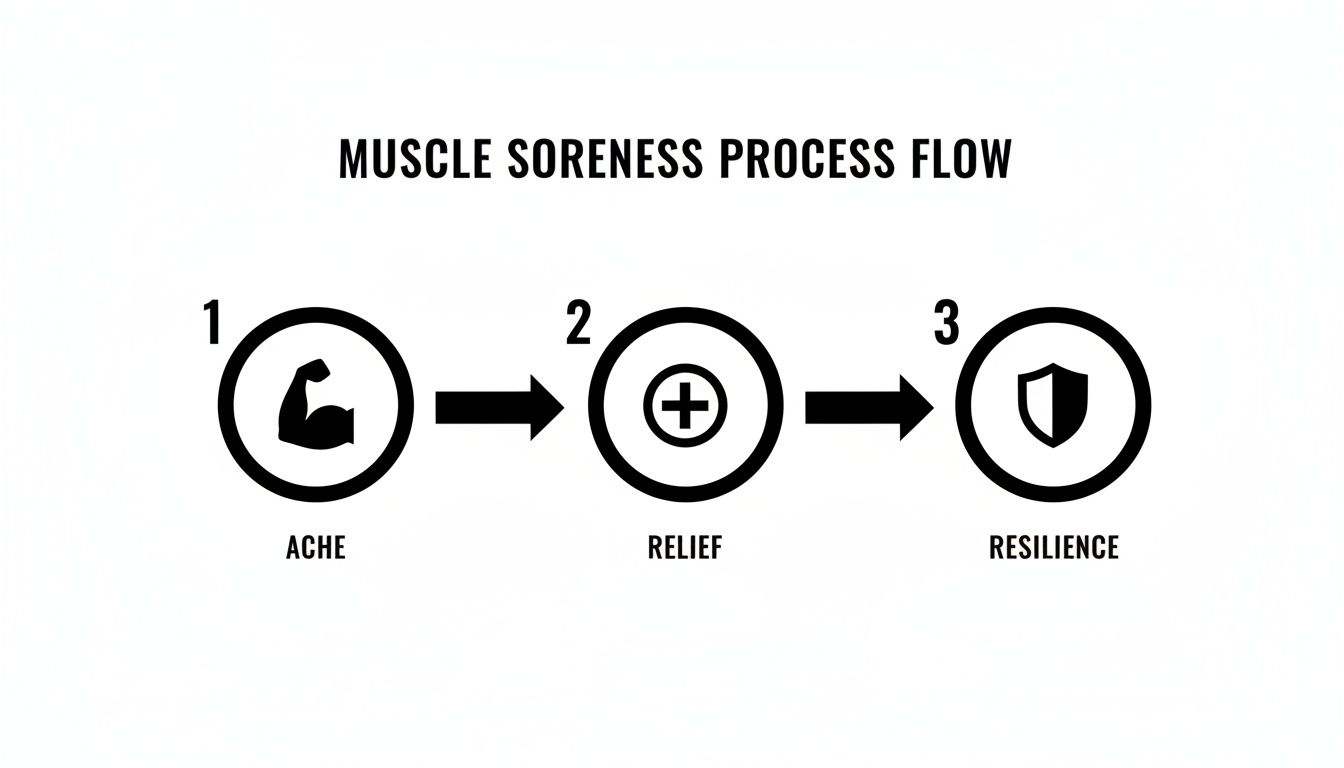
As this shows, immediate comfort is the gateway to a body that bounces back faster and stronger over time.
Applying Cold and Heat Strategically
Knowing whether to grab an ice pack or a heating pad is key. They serve completely different purposes, and using the wrong one at the wrong time can be ineffective or even make things worse.
- Cold Therapy (Cryotherapy): Your best bet within the first 24-48 hours after a tough workout or a minor strain. Cold constricts blood vessels, which helps calm inflammation and reduce swelling. An ice pack on a sore shoulder or knee for 15-20 minutes can numb the area and bring significant relief.
- Heat Therapy (Thermotherapy): Perfect for the stiffness and muscle tightness that sets in after the initial inflammation has passed. Heat boosts blood flow, relaxing tight muscles and helping shuttle oxygen and nutrients to the tissue to speed up repairs. A warm compress on a stiff lower back before you get moving in the morning can make a world of difference.
For deep-seated aches, nothing quite beats hands-on work. High-quality therapeutic massages are incredibly effective for soothing muscles and boosting circulation, targeting specific knots and tension spots that are tough to get to on your own.
The Power of Gentle Movement
It might feel like the last thing you want to do, but light, gentle activity is one of the best ways to ease muscle soreness. We call this active recovery, and it works by increasing blood flow to your muscles. This helps flush out metabolic byproducts that contribute to stiffness and pain.
Don't mistake active recovery for another workout. The goal is to move gently, not to push yourself. Think of it as a quiet signal to your muscles that it's okay to relax.
A slow walk, a casual bike ride, or some dynamic stretches like arm circles and leg swings can work wonders. Just keep the intensity low and listen to your body—stop if you feel any sharp pain. If you're curious about how these different methods stack up, you can learn more about the benefits of topical versus oral pain relievers in our detailed guide.
Having portable, on-the-go solutions is especially important here in Canada, where musculoskeletal disorders (MSKDs) have a point prevalence of up to 27.8%. A high percentage of students and active individuals report pain, and for athletes, military personnel, and first responders, fast-acting relief is essential for maintaining performance. Products designed for rapid cooling can target exercise-induced inflammation, helping you get back in the game without downtime.
Building a Sustainable Muscle Recovery Routine
Quick fixes are great for a bit of immediate relief, but if you're serious about your training, you need a long-term game plan. True, lasting progress comes from building a system that helps your body repair, adapt, and get stronger over time.
This is where we move past simply reacting to soreness and start building a sustainable protocol. Forget the old, rigid rules; modern recovery is all about smart, consistent habits that become a seamless part of your fitness journey.
The classic recovery acronym used to be R.I.C.E. (Rest, Ice, Compression, Elevation). While it still has its place for acute injuries, our thinking on muscle soreness has evolved. Today, the focus is often on movement rather than complete rest.
Active recovery—think light, gentle activity—has been shown to be more effective for DOMS. Why? It stimulates blood flow, which helps clear out metabolic waste and deliver fresh nutrients to your aching muscles.

This means after a tough workout, a slow walk or a gentle swim is often a much better choice than collapsing on the couch for two days. The goal is to create a routine that’s both proactive and practical.
Fuel Your Muscles for Repair
You can’t build a house without bricks, and you definitely can’t repair muscle tissue without the right nutrients. What you eat—and when you eat it—plays a massive role in how quickly you bounce back.
Post-exercise, your primary focus should be on two key macronutrients:
- Protein: This is the non-negotiable building block for muscle repair. Consuming protein after a workout gives your body the amino acids it needs to mend those microscopic tears and rebuild stronger muscle fibres. Think lean chicken, fish, eggs, Greek yogurt, or a quality protein shake.
- Carbohydrates: Carbs are not the enemy! They are essential for replenishing the glycogen stores your muscles burned for energy during your workout. Pairing carbs with protein actually helps your muscles absorb amino acids, making the whole repair process more efficient.
And don't forget hydration. Water is crucial for transporting all those good nutrients to your cells and flushing out waste products. Even mild dehydration can make muscle soreness feel worse and drag out your recovery time. Keep sipping throughout the day, not just during your workout.
Prioritize Sleep for Optimal Recovery
If there was ever a "magic pill" for muscle recovery, it's quality sleep. This is when your body gets down to its most important repair work. During deep sleep, your body releases human growth hormone (HGH), which is absolutely critical for tissue growth and repair.
Think of sleep as your body's dedicated maintenance window. Skimping on sleep is like asking a construction crew to rebuild a site with half its tools and only a few hours of daylight—the job just won't get done properly.
Aim for 7-9 hours of quality, uninterrupted sleep per night. Poor sleep doesn't just hinder physical recovery; it also messes with your hormone regulation, mood, and energy levels for the next day. Creating a relaxing bedtime routine in a dark, cool, and quiet room can make a world of difference.
If you want to explore more ways to support your body's healing processes, check out our guide on how to improve pain relief and recovery with complementary strategies.
Master Your Recovery Tools
You don't need a pro-level facility at home; a few simple tools can make a huge difference. The most popular and effective one is the foam roller.
Foam rolling, or self-myofascial release, is basically giving yourself a deep tissue massage. It helps break up knots, release muscle tightness, and boost blood flow to sore areas.
For example, after a long run, spending just a few minutes rolling out your quads, hamstrings, and calves can dramatically cut down on stiffness the next day. The key is to roll slowly and pause on any particularly tender spots, breathing into it to help the muscle relax.
Sample Recovery Schedule for a Weekend Warrior
Integrating these practices into a busy life doesn't have to be complicated. Here’s a simple look at how someone who works a desk job Monday to Friday but hits the gym hard on weekends might structure their recovery:
| Day | Activity | Recovery Focus |
|---|---|---|
| Saturday | Heavy Leg Day Workout | Post-workout protein shake. Foam roll quads/glutes. Hydrate well. |
| Sunday | Upper Body & Cardio | Active recovery walk in the evening. Prioritize a protein-rich dinner. |
| Monday | Rest or Light Activity | Focus on hydration. Gentle stretching during work breaks. Early bedtime. |
This simple schedule shows how recovery can become an automated part of your routine, not just an afterthought. By building these sustainable habits, you’ll not only learn how to relieve muscle soreness but also how to minimize it in the first place. That means you can train more consistently and reach your goals faster.
Advanced Recovery Tactics from Pros
Once you've nailed the basics, you might be wondering how the pros manage soreness. It's a different mindset. Clinicians and elite athletes don't just react to muscle pain; they get ahead of it. They use smart, targeted strategies to speed up muscle repair, boost performance, and build bodies that are far more resilient to the daily grind of training or physical work.
It’s all about being more intentional with your recovery. Many of these advanced techniques work by manipulating blood flow and stimulating the nervous system, essentially giving your body's natural healing processes a serious push in the right direction.
Harnessing Temperature for Faster Recovery
One of the most powerful tools in any pro's recovery kit is contrast water therapy. There's a reason it's a staple in athletic training rooms everywhere. It involves switching between hot and cold water immersion to create a "pumping" action in your blood vessels.
- Cold Water: This causes your blood vessels to tighten (vasoconstriction), which helps dial down inflammation and flush out metabolic by-products from your muscles.
- Hot Water: This does the opposite, widening your blood vessels (vasodilation) to flood the area with oxygen and nutrient-rich blood needed for repair.
Alternating between the two creates a dynamic circulatory effect that can cut down on stiffness and kickstart recovery. A common protocol is to cycle through 1-2 minutes in cold water (around 10-15°C) and 1-2 minutes in hot water (around 37-40°C), repeating for several rounds.
Percussive Therapy for Targeted Relief
You've seen the massage guns, and they’re not just a fad. Percussive therapy delivers rapid, concentrated pulses deep into your muscle tissue, offering a level of relief that a foam roller can't always reach.
Those intense vibrations are great for releasing stubborn muscle knots, helping to break up scar tissue, and driving blood flow to a very specific spot. For a triathlete with calves that are always tight or a weightlifter with sore pecs, a massage gun offers immediate, precise relief and can really improve range of motion.
From a clinician's point of view, recovery isn't just something you do after a workout—it's a continuous cycle. How you prep your body beforehand is every bit as important as how you cool it down.
This proactive approach is where muscle priming comes into play.
Priming Your Muscles Before the Work Begins
Instead of just thinking about damage control, pros focus on getting their muscles ready for the work ahead. We call this priming. The aim is to increase blood flow, warm up the tissues, and fire up the nervous system before you even start your dynamic warm-up.
A simple way to do this is by applying a warming topical analgesic to the key muscle groups you're about to train—think quads and glutes before a big squat session. That warming sensation signals an increase in circulation, helping your muscles become more pliable and potentially reducing how bad your DOMS will be later.
This is especially critical for people in physically demanding jobs. Repetitive strain injuries (RSI) have affected over two million Canadians, with 55% of those cases linked directly to work activities. First responders and trade workers, for example, need reliable ways to manage the soreness that comes with the job. The MEDISTIK portfolio of stick, spray, and roll-on products delivers seriously strong, temporary relief from the aches caused by RSI or a tough workout. Physiotherapists often see quicker patient recovery when they pair manual therapy with these topicals, and chiropractors treating workers with RSI frequently recommend extra-strength options for portable, on-the-job relief. You can dig into more data on repetitive strain injuries in this detailed report from Statistics Canada.
Integrating Professional Therapies
Let's be real: sometimes, self-care just doesn't cut it. That's when it's time to call in the professionals for specialized treatments. Modalities like acupuncture or dry needling can provide incredible relief for chronic tightness and trigger points that just won't budge with stretching or massage.
These techniques target very specific points in the muscle to release tension and restore proper function. If you're wrestling with stubborn knots or soreness that keeps coming back, understanding the differences between dry needling and acupuncture could be a game-changer. These treatments, once reserved for the pros, are now widely available and can be a powerful addition to any serious recovery plan.
How to Prevent Muscle Soreness Before It Starts
Knowing how to find relief once muscle soreness hits is one thing, but the best strategy is always to get ahead of the problem. If you're proactive about preparing your body for physical stress, you can minimize the kind of debilitating aches that completely derail your progress.
This isn't about avoiding hard work—it’s about working smarter. A few key tweaks can be the difference between a satisfying ache that tells you you've made progress and soreness so bad it keeps you on the sidelines.
The Critical Role of a Dynamic Warm-Up
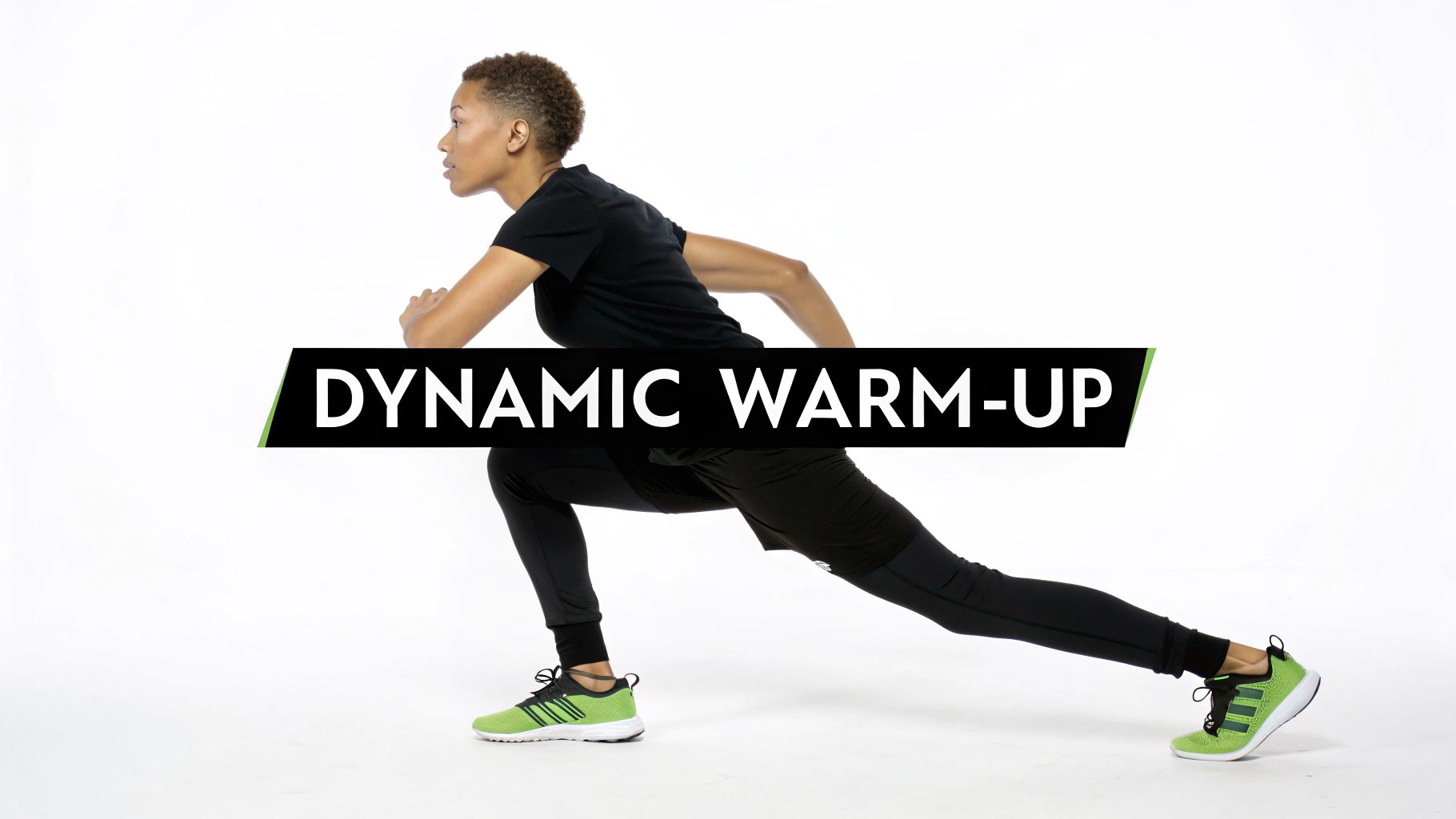
Jumping straight into an intense workout without warming up is like trying to stretch a cold rubber band. It’s a recipe for micro-tears and unnecessary pain. A proper dynamic warm-up is absolutely non-negotiable for preventing excessive soreness and injury.
Unlike old-school static stretching (where you hold a pose), a dynamic warm-up involves active, controlled movements that mimic what you're about to do. This gets the blood flowing, raises your muscle temperature, and wakes up your nervous system, making your muscles much more elastic and ready for action.
A good warm-up should take you 10-15 minutes. Here’s what that looks like in the real world:
- For a Runner: Ditch the static calf stretches. Instead, spend your time on leg swings, walking lunges with a torso twist, high knees, and butt kicks. These movements prime your hips, hamstrings, and quads for the demands of running.
- For a Weightlifter: Before you even think about the squat rack, get moving with bodyweight squats, hip circles, and arm circles. This lubricates the joints you’re about to load and activates the key muscle groups.
A warm-up isn't just a formality; it's a direct signal to your body that intense work is coming. This preparation phase is your first line of defence against the micro-trauma that leads to severe DOMS.
Understanding Progressive Overload
One of the biggest culprits behind extreme muscle soreness is trying to do way too much, way too soon. The principle of progressive overload is your blueprint for getting stronger without causing unnecessary damage. It’s all about gradually increasing the stress on your muscles, giving them time to adapt and grow.
If you jump from lifting 10 kg dumbbells to 20 kg in a single week, you're practically guaranteeing intense soreness. A much smarter approach is to increase your weight, reps, or intensity by a small, manageable amount—around 5-10% per week is a solid guideline. This hits the sweet spot where you challenge your muscles enough to grow but not so much that you cause excessive breakdown and a long, painful recovery.
Prime Your Muscles Pre-emptively
Just like a dynamic warm-up prepares your body from the inside, you can also prime it from the outside. Using a topical product with warming agents before you train can boost circulation to the specific muscles you’re about to target, enhancing their readiness.
Think of it as giving your muscles a head start. For example, rubbing a warming stick on your lower back and glutes before a heavy deadlift session can help those muscles feel more pliable and engaged from the very first rep. It's a simple, pre-emptive step that can make a real difference in how you feel the next day.
And don't forget the basics. Chronic stress floods your body with cortisol, a hormone that can interfere with muscle repair. Even mild dehydration can make muscle soreness worse and slow down your recovery. Staying on top of your hydration and stress levels are foundational pillars of any effective soreness prevention plan.
Knowing When Soreness Is a Red Flag
Let’s be clear: most muscle soreness is a good thing. It’s that familiar, satisfying ache that tells you your body is adapting, repairing, and gearing up to come back stronger. This is what we call Delayed Onset Muscle Soreness (DOMS), and it usually peaks a day or two after a tough workout.
But here’s the thing—you have to learn the difference between that productive discomfort and the kind of pain that’s actually a warning sign. Pushing through the wrong kind of pain can sideline you, turning a small issue into a nagging, long-term problem. Being smart about your recovery means knowing when to back off and get a professional opinion.
Assessing Your Symptoms
If you’re on the fence about whether what you're feeling is normal, you need to play detective and pay close attention to the specifics. Standard DOMS feels like a dull, widespread ache in the muscles you trained. It’s not a sharp, focused pain.
Watch out for these clear red flags that signal something more serious is going on:
- Pain Character: The pain is sharp, stabbing, or shooting, not the dull ache you’d expect from DOMS.
- Pain Duration: Your soreness drags on for more than three days without getting any better.
- Visible Signs: You can see significant swelling, redness, or dark bruising around the sore spot.
- Functional Impairment: The pain is bad enough that it’s seriously limiting your range of motion, or you can’t put weight on the affected limb.
If you feel any numbness or tingling, or if you heard a distinct "pop" when the injury happened, stop what you’re doing immediately. These are signs that you need to consult a healthcare professional right away.
Think of these symptoms as your body’s alarm system. It's telling you it needs more than just a foam roller and some rest. Listening to these signals is crucial for getting the right care when it counts, preventing further damage, and making sure you can get back to your activities safely.
Your Top Questions About Muscle Soreness Answered
Even when you have a solid recovery plan, a few questions about muscle soreness always seem to pop up. Let's clear up some of the most common ones so you can fine-tune your approach and get back to training with confidence.
How Long Does Muscle Soreness Usually Last?
That familiar ache, known as Delayed Onset Muscle Soreness (DOMS), typically makes its appearance 12 to 24 hours after you've pushed yourself. The discomfort tends to peak somewhere between the 24 and 72-hour mark before it naturally starts to subside.
If the pain is still intense after three days, or if it feels more like a sharp, specific pain instead of a general dull ache, that could signal an injury. In that case, it’s always best to get it checked out by a healthcare professional.
Can I Work Out If My Muscles Are Still Sore?
Working out with mild soreness is usually fine—in fact, it can even help. We call this active recovery. Think gentle movement like walking, a light swim, or some easy stretching. The goal is to get blood flowing to the muscles without adding more stress.
What you really want to avoid is intensely training the same sore muscle groups. Pushing through significant pain is a fast track to injury and can actually get in the way of the muscle repair process. Your body is pretty good at telling you what it needs, so listen up when it asks for a rest day.
Wondering how topical pain relievers fit in? They work through a fascinating process called counter-irritation. Ingredients like menthol create a cooling sensation that stimulates your sensory nerves. This new feeling essentially "distracts" your brain, overriding and blocking the deeper pain signals from your muscles.
These products also boost local blood flow, which helps reduce inflammation and supports your body’s own healing mechanisms. It’s a way to get targeted, temporary relief right where you need it, helping you move more comfortably while your muscles get on with the business of recovery.
For seriously strong, targeted relief that supports your warm-up, performance, and recovery, trust MEDISTIK. Explore our range of Canadian-made, clinic-approved topical analgesics at MEDISTIK.


