

That nagging, sharp pain that pops up between your shoulder blades can be a real showstopper, making you wonder what on earth you did to deserve it. More often than not, it's an upper back muscle strain.
Understanding Upper Back Muscle Strain and Its Causes
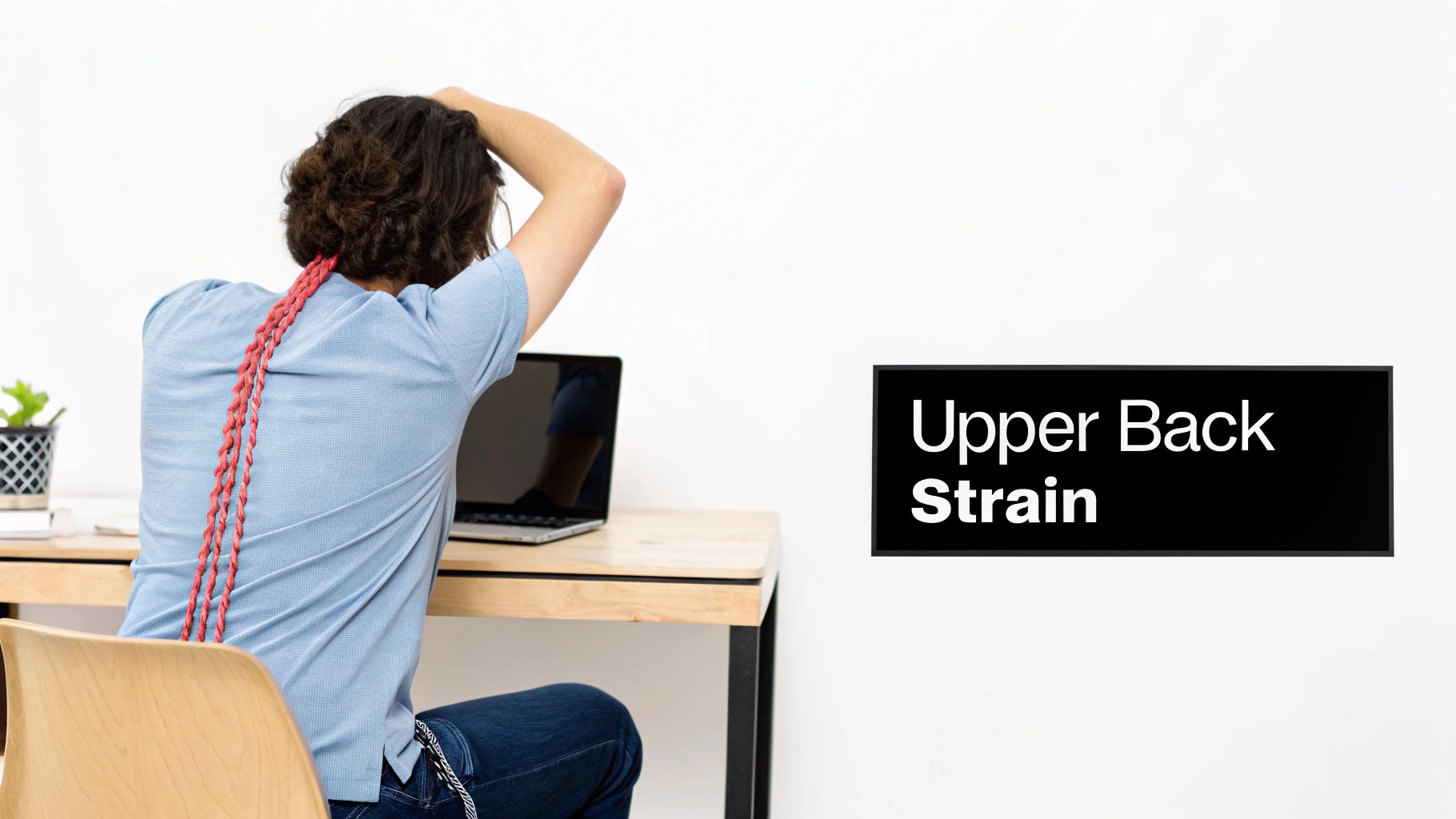
So, what exactly is an upper back muscle strain? Think of it as damage to the muscles that support your thoracic spine—the part of your back from the base of your neck down to your ribs. This includes key players like the rhomboids and trapezius muscles, which are essential for good posture, moving your arms, and keeping you stable.
Imagine your muscle is like a rope made of thousands of tiny fibres. When you put the right amount of stress on it, it holds strong. But if you suddenly yank that rope or just let it fray from constant wear and tear, those fibres start to give way. That’s a muscle strain.
A mild (Grade 1) strain is like a slightly frayed rope—just a few fibres are overstretched. A moderate (Grade 2) strain means more significant tearing, while a severe (Grade 3) strain is a complete rupture. The rope has snapped.
Acute vs. Chronic Causes
The triggers for an upper back strain usually fall into two buckets: a single, sudden event (acute) or a slow-burn from overuse (chronic). Figuring out which one is behind your pain is the first step to getting better and stopping it from happening again.
-
Acute Injuries: These are the “oops” moments. They happen suddenly from one forceful event, like lifting a heavy box with terrible form, a sudden, awkward twist playing sports, or the impact from a fall. The force is just too much, too fast for the muscle to handle.
-
Chronic Overuse: This type of strain is much sneakier. It builds up over time from repetitive stress that gradually wears down those muscle fibres. Poor posture is a huge culprit here, especially hunching over a desk or phone all day. Repetitive motions in sports, like swimming or throwing a baseball, can also cause this kind of cumulative damage.
Back and neck pain are incredibly common. Research conducted at a Canadian university between 2018 and 2021 found that a whopping 67% of participants reported neck or back pain in the past year. An upper back strain fits right into this picture, often made worse by things like stress, poor sleep, and an active lifestyle. You can read the complete Canadian musculoskeletal health findings on pmc.ncbi.nlm.nih.gov.
The big takeaway here? An upper back strain isn't always from one big, dramatic moment. It's often the final straw after hundreds of small, repetitive movements or sustained poor postures finally push the muscle past its limit.
Common Triggers for Upper Back Muscle Strain
To help you pinpoint what might be causing your pain, we've broken down the most common triggers. Recognizing these risk factors is the key to preventing a nagging strain from coming back.
| Cause Category | Specific Examples | Who Is Most at Risk |
|---|---|---|
| Acute Trauma | Lifting heavy objects improperly, sudden twisting motions, sports collisions, falls, or car accidents. | Weightlifters, athletes in contact sports, individuals with physically demanding jobs. |
| Chronic Overuse | Poor posture (hunching at a desk), repetitive overhead arm movements, carrying a heavy backpack on one shoulder. | Office workers, painters, swimmers, tennis players, students. |
| Deconditioning | Weak back and core muscles that are unprepared for sudden activity or prolonged stress. | Individuals with a sedentary lifestyle who then engage in strenuous activity. |
| Other Factors | Severe coughing or sneezing fits, emotional stress leading to muscle tension. | People with respiratory illnesses, individuals experiencing high levels of stress. |
Looking at this list, you can see how easily these strains can happen in day-to-day life, whether you're an athlete or an office worker.
How to Identify an Upper Back Strain

When your upper back starts aching, it's easy to let your mind wander. Is it just a simple pulled muscle, a stubborn knot from stress, or could it be something more? The first step toward real relief is figuring out the specific signs of a muscle strain in the upper back.
Learning to read your body's signals helps you pick the right self-care approach and explain what's going on to a healthcare professional if you need one. A muscle strain has a distinct personality, with symptoms that set it apart from other back problems. Paying close attention to exactly what you're feeling will give you major clues about what’s really happening.
Key Symptoms of a Pulled Upper Back Muscle
A pulled muscle in your upper back usually feels localized, meaning you can point to the exact spot that hurts. The pain is almost always centred in the muscle tissue itself, somewhere between your shoulder blades or along the thoracic spine.
Here are the most common signs to watch for:
- Sharp or Burning Pain: The pain from a strain isn't usually a dull ache. It’s often described as a sharp, stabbing, or even burning feeling that gets worse when you move, especially with twisting or reaching.
- Localized Tenderness: The injured spot will probably feel sore to the touch. If you gently press on the muscle and it sends a sharp jolt of pain, that's a good sign you've found the strain.
- Stiffness and Limited Motion: Your body is smart. To protect the injured muscle, it instinctively tightens everything up around it. This leads to stiffness that can make turning your head, lifting your arms, or even taking a deep breath a painful ordeal.
- Muscle Spasms: Don't be surprised if you feel sudden, involuntary twitches or cramps in your upper back. These spasms are your body’s emergency brake, trying to keep the injured area still to prevent more damage.
One of the biggest giveaways of a muscle strain is that the pain is directly tied to using the muscle. Rest usually calms it down, while any activity—even something simple like grabbing a cup from a high shelf—makes it flare up again.
Distinguishing a Strain from Other Conditions
It’s really important to know that not all upper back pain is a straightforward muscle strain. Other issues can feel similar but need a completely different game plan for recovery.
Think of a strain as an injury to a muscle or its connecting tendon. A sprain, on the other hand, is an injury to ligaments—the tough tissues that connect bone to bone. While both can happen from an accident, sprains are more common around joints. For a deeper dive, our guide on managing pain in the middle of your back has some extra insights.
Let's break down how a muscle strain stacks up against other possibilities:
| Condition | Primary Symptoms | Key Differentiator |
|---|---|---|
| Muscle Strain | Sharp, localized pain; tenderness; stiffness; spasms. Pain worsens with muscle use. | The pain is right in the soft muscle tissue and directly linked to movement. |
| Ligament Sprain | Pain near a joint (like where your ribs meet your spine); might involve bruising or a feeling of instability. | The pain often feels deeper, closer to the bones and joints themselves. |
| Herniated Disc | Can cause pain that radiates, plus numbness, tingling, or weakness that travels down into an arm or hand. | Symptoms tend to follow a clear nerve path, which is very different from localized muscle pain. |
Understanding these differences is empowering. If your pain is sharp, located in the fleshy part of the muscle, and gets worse when you move, chances are you're dealing with a muscle strain. But if you feel any of those radiating nerve symptoms, that’s your cue to get it checked out by a professional.
Your Immediate Action Plan for Pain Relief
When a sharp pain flares up in your upper back, the first moves you make can have a massive impact on how quickly you recover. The initial 48 hours after a muscle strain are critical. This is your window to get inflammation under control and set the stage for real healing. Think of it as your game plan for immediate, effective self-care.
Many of us grew up hearing about the R.I.C.E. method—Rest, Ice, Compression, Elevation. While the core ideas are solid, modern sports medicine has given this classic advice a much-needed update. Instead of complete rest, the focus now is on relative rest, which means you avoid activities that cause pain but still encourage gentle, safe movement.
Moving Beyond RICE
Think of it like this: complete immobilization is like parking your car for a week and not touching it. Sure, the engine is resting, but the tires might develop flat spots, and the battery could die. Relative rest is more like avoiding the highway but still taking short, slow drives around the neighbourhood—it keeps everything in working order without pushing it too hard.
This updated approach centres on a few key actions:
- Protect: Shield the injured area from anything that could make it worse. This might be as simple as using a supportive pillow at your desk or asking for help with heavy groceries.
- Optimal Loading: This is just a technical term for relative rest. Gentle, pain-free movement is your friend here. It keeps blood flowing and stops everything from seizing up.
- Ice: Applying cold is still a cornerstone for a reason. It's fantastic at calming down inflammation and numbing that initial, sharp pain.
- Compression & Elevation: These are less critical for an upper back strain than, say, a sprained ankle, but some people find gentle compression offers a comforting sense of support.
The goal isn't to stop moving entirely—it's to move smarter. Listen to your body. If an activity brings on that sharp, wincing pain, that’s your cue to stop and find another way. Gentle movement within a pain-free range is exactly what your body needs.
Your Step-by-Step Guide for the First 48 Hours
When that muscle strain in your upper back first makes itself known, it's easy to feel a bit lost. Here’s a simple, actionable plan to take control right away.
-
Prioritize Relative Rest: Stop whatever you were doing that caused the pain. For the next day or two, steer clear of heavy lifting, intense workouts, or those prolonged postures—like hunching over a laptop—that clearly aggravate the area. The idea is to take the load off those strained muscle fibres.
-
Apply Cold Therapy: For the first 48 hours, cold is your best friend. It works by constricting blood vessels, which helps reduce the swelling and inflammation that are the main sources of pain in a fresh injury. Grab a cold pack and apply it for 15-20 minutes every two to three hours.
Let's be honest, though—traditional ice packs can be messy and awkward. For targeted, no-fuss relief, a product like MEDISTIK's Rapid Cooling Natural Ice Roll-On is a perfect tool for your first-aid kit. It delivers all the benefits of cold therapy directly where you need it, without any drips or forcing you to stay put. It's a great way to manage pain on the go.
- Modify Your Activities: You don’t have to put your life on hold, but you do need to make some temporary tweaks. If sitting at your desk is agony, set a timer to get up and stretch frequently. If you're struggling to get comfortable at night, use pillows to support your upper back and keep your spine in a more neutral alignment. To better manage the discomfort and help your body heal, it's worth exploring proven strategies on how to reduce muscle soreness and recover faster.
By thoughtfully applying these principles, you can take charge of that initial, acute phase of an upper back strain. This proactive approach doesn't just offer immediate pain relief; it creates the ideal environment for your muscles to start their natural healing process. And if you're curious about different pain relief options, you can explore the benefits of topical versus oral pain relievers to see what might work best for you.
The Road to Recovery with Staged Exercises
Once you're through the first 48 hours of managing that sharp, initial pain from an upper back strain, it's time to shift gears. Forget about just lying still; we're moving into active recovery. This is where a smart, phased exercise plan becomes your best friend for getting back to 100%. The goal is to gently reintroduce movement, build back strength, and regain flexibility without re-aggravating those sensitive muscle fibres.
Think of it like nursing a delicate plant back to health. At first, it just needs a safe spot and a little water. But as it gets stronger, you gradually give it more sunlight and nutrients so it can grow resilient. Your back needs the same careful, progressive approach, moving from gentle mobility to solid, foundational strength.
This simple process shows the immediate steps for relief, which really just set the stage for the real rehab work to begin.

Nailing these first steps is key. They calm down the inflammation and get your body ready for the gentle movements that follow.
Phase 1: Gentle Mobility and Activation
The first stop on your comeback tour is all about getting movement back without the pain. After an injury, your muscles get tight and guarded, so the main job here is to ease that stiffness and remind your body how to move properly again. These exercises should feel like a gentle awakening, not a gruelling workout.
Focus on slow, controlled motions and never push past a comfortable range. If you feel a sharp pain, that's your body's signal to back off immediately.
- Cat-Cow Stretch: Get on your hands and knees. Slowly arch your back up toward the ceiling (like an angry cat), holding for a couple of seconds. Then, gently let your belly drop toward the floor as you look forward (cow pose). Repeat this for 8-10 reps to gently get your thoracic spine moving.
- Thoracic Rotations: While still on all fours, place one hand behind your head. Slowly rotate that elbow up toward the ceiling, feeling a nice, easy stretch in your mid-back. Come back to the start and repeat 5-8 times on each side.
To really get the most out of this phase, think about applying a warming product first. Using MEDISTIK's Extra-Strength Stick before these gentle drills can help boost blood flow to the area. This makes the muscles more pliable and shakes off any lingering stiffness, setting you up for a safer and more effective session.
Phase 2: Rebuilding Strength and Stability
Once you can get through your day with minimal pain and you’ve noticed your range of motion improving, it’s time to start rebuilding. The goal now is to strengthen the muscles that support your upper back and shoulders. This creates a stable foundation that acts as your built-in defence against future injuries.
Remember, these exercises aren’t about lifting heavy weights. It's all about control and endurance.
- Wall Angels: Stand with your back flat against a wall, with your feet a little bit forward. Put your arms against the wall in a "goalpost" position. Slowly slide your arms up the wall as high as you can without letting your lower back arch or your arms come off. Slide back down and repeat 10-12 times.
- Banded Rows: Hook a resistance band to a doorknob. Standing with a slight bend in your knees, pull the band toward your chest, making sure to squeeze your shoulder blades together. Control the movement as you release. Aim for 2-3 sets of 12-15 repetitions.
The golden rule here is that consistency beats intensity every time. Doing these exercises with good form a few times a week is way more effective than going too hard once and triggering a flare-up.
This step-by-step approach is crucial for a full recovery, especially when you consider how common back problems are. Chronic pain affects nearly 19% of Canadian adults, and upper back strains are often tied to the repetitive strain injuries (RSIs) that impact about 4.5 million people. A structured rehab plan helps tackle the root causes of this widespread problem. You can dive deeper into the research on chronic pain and RSIs in Canada to learn more.
By following a phased program, you're not just healing—you're taking control. For more tips on speeding things up, check out our guide on how to speed up muscle strain recovery. This proactive approach helps ensure you not only recover but also build the resilience to keep upper back pain from making an unwelcome return.
How to Prevent Future Upper Back Strains
Getting over the initial pain of an upper back strain is one thing, but making sure it doesn’t come back is the real goal. True prevention isn't a one-time fix; it's an active process of making smart, lasting changes to your daily routines—at your desk, in the gym, and even how you sleep. By building up your back's resilience through better habits, you can keep your upper back strong, mobile, and out of the pain zone.
This proactive approach is particularly crucial in Canada. According to Statistics Canada, a staggering four out of five adults will deal with back pain at some point, often sparked by things like poor posture or muscle overexertion. These problems are a major reason for missed work and restricted activities, which really underlines the need to get prevention right.
Fortifying Your Workspace
For many of us, the workday is ground zero for upper back strain. Spending hours hunched over a laptop puts a constant, nagging stress on the rhomboids and trapezius muscles. Fixing your ergonomic setup is easily one of the most powerful moves you can make.
Start by giving your desk a quick audit with these key ideas in mind:
- Monitor at Eye Level: Your screen should be set up so the top third is at or just below your eye level. This simple tweak stops you from craning your neck forward or looking down—a classic recipe for strain.
- Support Your Spine: Grab a chair that has solid lumbar support to help you sit upright naturally. Your feet should be flat on the floor with your knees bent at a 90-degree angle. If your feet don't reach, a footrest is a great investment.
- Keep Everything Within Reach: Place your keyboard, mouse, and phone close enough that you can use them without constantly reaching or twisting. Those little movements add up and can easily trigger a muscle strain.
Think of ergonomics as creating a partnership with your workspace. Instead of fighting against your environment and forcing your body into awkward positions, you adjust the environment to support your body's natural alignment.
Smarter Strategies for the Gym and Sports
Athletes and anyone who loves to stay active needs to be extra vigilant about preventing upper back injuries. The dynamic, repetitive movements in most sports can lead to a strain if you're not careful. To keep future upper back strains at bay, it's not just about what you do, but also about creating a safe environment, which includes the proper maintenance of gym equipment.
Your best defence is always going to be a mix of solid preparation and clean technique.
- Always Warm Up: Never, ever jump straight into a tough workout. A good 5-10 minutes of dynamic stretches like arm circles and torso twists will get the blood flowing and prime your muscles for what's to come.
- Perfect Your Form: When you're doing exercises like rows, pull-ups, or overhead presses, really focus on engaging the right muscles. Don't use momentum or arch your back to cheat the movement—that just shifts the load to weaker spots and jacks up your injury risk.
- Balance Your Workouts: It's easy to focus on the "mirror muscles" like your chest and biceps while forgetting about your back. Make sure your routine has a healthy dose of pulling exercises to build a strong, balanced upper body.
Everyday Lifestyle Adjustments for a Healthier Back
Finally, don't underestimate the small changes you can make in your daily life. Building a resilient back goes way beyond your desk and your workout.
- Optimize Your Sleep: If you're a side sleeper, try putting a pillow between your knees. If you sleep on your back, a small pillow under your knees can help keep your spine in a more natural position.
- Take Mobility Breaks: Set a timer on your phone to remind you to get up and move every 30-60 minutes. A few simple shoulder rolls or a gentle stretch is all it takes to counteract the strain of sitting still.
- Stay Hydrated: Your muscles are mostly water, and they need it to work properly. Being dehydrated can lead to muscle stiffness and cramping, making you much more likely to pull something.
When You Should See a Doctor for Your Back Pain
Most of the time, an upper-back muscle strain is more of a frustrating annoyance than a serious problem. With a bit of smart self-care, it usually gets better on its own. However, it's crucial to know when your body is signalling that something more is going on. Ignoring these warning signs can mean delaying the right diagnosis and treatment.
While home care is often enough for a minor strain, some symptoms are non-negotiable—they’re your cue to see a doctor or physiotherapist. Think of these as “red flags.” You just don’t ignore them.
Identifying Red Flag Symptoms
Pain is your body's alarm system. Sometimes it's a quiet beep, and other times it's a full-on siren. If you experience any of the following, it’s time to get professional medical advice right away. This isn't the time to "tough it out."
Here are the key warning signs to watch for:
- Severe, Unrelenting Pain: We're talking about pain that doesn't let up, no matter what you do. If it doesn't ease with rest, changing positions, or over-the-counter pain relievers—and it's intense enough to wreck your sleep or daily life—it needs to be checked out.
- Radiating Symptoms: Pay very close attention if the pain travels. Any numbness, tingling, weakness, or sharp pain shooting from your back down into your arms or hands is a major red flag. This can signal that a nerve is being pinched or irritated, which is a step beyond a simple muscle issue.
- Pain from a Major Trauma: If your back pain started after a big event like a car crash, a nasty fall, or a direct hit to the back, don’t wait. See a doctor immediately. These kinds of impacts can cause more severe injuries like fractures or disc problems that you can't see from the outside.
- Accompanying Systemic Symptoms: Back pain that comes with other weird signs—like a fever, chills, or unexplained weight loss—could point to an underlying infection or another medical condition that needs a doctor's attention.
Think of it this way: a typical muscle strain is like a temporary, noisy construction project next door. Annoying, but it will end. Red flag symptoms are like the fire alarm in your own house—blaring and persistent. You don't ignore it; you get it checked to make sure you're safe.
Why Professional Guidance Matters
Sometimes, what feels like a straightforward muscle strain could be masking something else entirely. A healthcare professional can give you a proper assessment, figure out exactly what’s going on, and build a treatment plan that targets the real problem. This way, you’re fixing the root cause, not just chasing symptoms.
Pairing smart self-care strategies with professional medical guidance is always the fastest and safest route to a full recovery from upper back pain.
Your Top Questions About Upper Back Strain, Answered
Working through an upper back strain can leave you with a lot of questions. Let's clear up some of the most common ones so you can feel more in control of your recovery.
Should I Use Heat on My Upper Back?
While ice is your best friend for the first 48 hours to calm down inflammation, heat plays a key role a little later. Once that initial swelling has gone down, applying a heat pack for 15-20 minutes can work wonders.
The warmth boosts blood flow to the strained muscles, bringing in fresh oxygen and nutrients needed for repair. It’s also fantastic for easing any leftover tightness and stiffness.
What's the Best Way to Sleep?
Sleeping on your back is usually the winning position here because it keeps your spine in a nice, neutral line. To make it even better, try popping a small pillow under your knees.
This simple trick takes the pressure off your entire back, helping those strained muscles truly relax and recover overnight. If you can only sleep on your side, stick a pillow between your knees to get a similar supportive effect.
The goal is to support your body's natural alignment. Definitely try to avoid sleeping on your stomach—it forces your neck into a twisted position and puts a lot of unneeded stress on your upper back, which can easily make things worse.
Do I Have to Stop Exercising Altogether?
Not at all! While you absolutely need to stop any movement that causes a sharp pain, sitting still completely is old-school advice. We now know that relative rest is the way to go.
This just means swapping out high-intensity activities for gentle, pain-free movement. Think of it as keeping your body moving without derailing your recovery. For example, trade heavy overhead lifts for a brisk walk, or stick to light mobility work like cat-cow stretches as long as they feel good. This keeps you from getting stiff and actually helps speed up the healing process.
For powerful and reliable pain relief to support you through every stage of your recovery, turn to MEDISTIK. Our topical analgesics are made to help you warm up, perform your best, and recover faster. Get the seriously strong, Canadian-made solution for your muscle pain at MEDISTIK.


