

The key to figuring out what helps sore muscles after a workout isn't a single magic bullet. It's really about a smart combination of proper nutrition, active recovery, and targeted relief. Think of it as supporting your body's natural repair cycle—giving it the protein, gentle movement, and solid rest it needs to soothe that classic post-exercise ache.
Why Your Muscles Ache After a Good Workout
That familiar tenderness you feel a day or two after hitting the gym hard is actually a good sign. It means you’ve pushed your body to adapt and grow stronger. This sensation has a name you’ve probably heard: Delayed Onset Muscle Soreness (DOMS). And far from being a bad thing, it’s a positive signal that your muscles are getting stronger.
Imagine your muscles are a structure undergoing a renovation. When you introduce new or intense exercises, you create tiny, microscopic tears in the muscle fibres. This is like the "demolition" phase of the project. Your body immediately starts the repair process, sending fluid and nutrients to the site to clear out the damaged cells and rebuild the fibres—only this time, they come back bigger and more resilient. This whole inflammatory and rebuilding process is what creates the signature ache of DOMS.
The Difference Between Soreness and Injury
Knowing the difference between productive soreness and a real injury is crucial for training safely and consistently. DOMS is usually a diffuse, dull ache that pops up 24 to 48 hours after your workout. It feels tender to the touch and a bit tight, but the discomfort is manageable and fades over a few days.
An injury, on the other hand, often feels very different. It's typically a sharp, sudden, or very specific pain that happens during the workout.
Here are a few other red flags that point toward an injury:
- Pain that is severe, shooting, or doesn't get better after 72 hours.
- Noticeable swelling, bruising, or a change in the shape of the area.
- You can't put weight on it or move the joint through its full range of motion.
Recognizing these signs helps you make the right call. DOMS is your cue for active recovery, but an injury is a clear signal to stop, rest, and maybe get some professional advice. To get a better handle on these signals, you can learn more about how pain is processed by the brain.
Decoding the DOMS Timeline
The good thing about DOMS is that it follows a fairly predictable pattern. This helps you plan your recovery and your next workout.
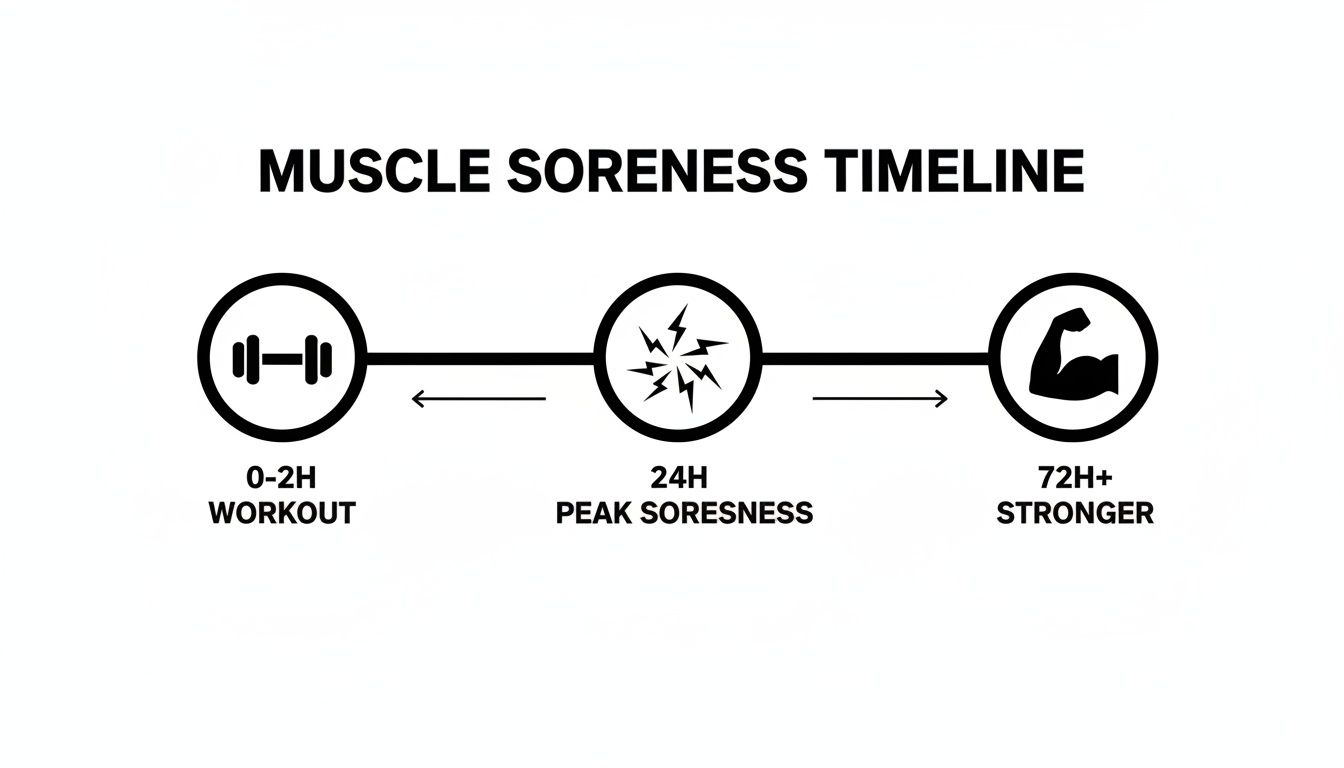
As you can see, the soreness usually peaks around the 24-hour mark and then starts to ease up. By the time you hit 72 hours, you should be feeling much better, and your muscles will actually be stronger for it.
When you start seeing soreness as feedback instead of a setback, it completely changes your approach to recovery. It’s not about just waiting for the pain to disappear. It's about actively supporting that renovation project your body has already started. This shift in mindset is the real key to faster, more effective healing.
Fuelling Your Recovery: Nutrition and Hydration
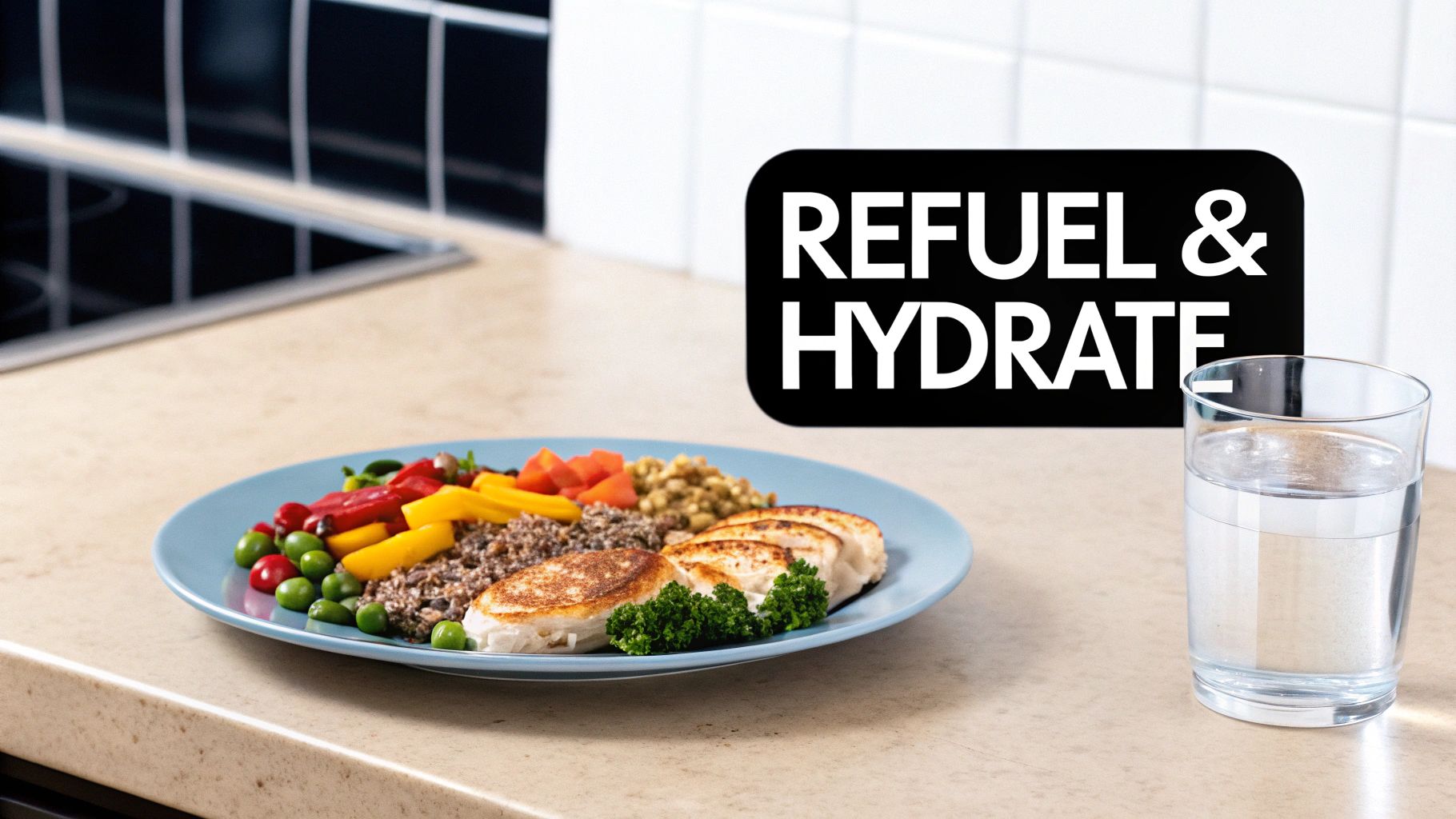
Think of your muscles after a hard workout like a construction site that’s just cleared the ground for a new building. They’re primed and ready for repair, but they need the right materials—and fast. That's where smart nutrition and hydration come in. They’re the crew that shows up with the supplies to rebuild everything bigger and stronger than before.
Fuelling your body properly after exercise is about more than just quieting a rumbling stomach. It’s about giving your muscles the exact building blocks they’re crying out for. Getting the right nutrients at the right time can dramatically speed up the repair process, take the edge off soreness, and get you ready for your next session.
Protein: The Essential Building Blocks
If your muscles are a renovation project, protein is the lumber, bricks, and mortar. Exercise creates tiny micro-tears in your muscle fibres. Protein delivers the essential amino acids needed to patch up these tears, mend the damage, and reinforce the whole structure. Over time, this is what makes your muscles stronger and more resilient.
Without enough protein, the whole rebuilding process just stalls out. Your body can’t repair itself efficiently, which means you’ll stay sore for longer and see slower progress. Making high-quality protein a priority is your first step to kick-starting a solid recovery.
A good post-workout meal or snack could include:
- Lean meats like chicken or turkey
- Fish like salmon or tuna
- Eggs and dairy, such as Greek yogurt
- Plant-based choices like lentils, chickpeas, or tofu
For athletes following a plant-based diet, getting enough protein is especially important. Choosing the best post workout snacks for vegan athletes helps replenish your energy stores and repair muscle tissue without animal products, ensuring you get the high-quality protein your body needs.
Refilling the Fuel Tank with Carbohydrates
While protein provides the building materials, carbohydrates are the energy that powers the entire construction crew. During a workout, your muscles burn through their main fuel source, called glycogen. When those glycogen stores are empty, you feel drained, and the muscle repair process slows right down.
Eating carbs after a workout is essential to “refill the tank.” This signals to your body that it has plenty of energy to focus on repairing muscle instead of trying to conserve what little it has left.
Consuming a mix of protein and carbohydrates within a couple of hours after exercise not only replenishes energy stores but also enhances protein synthesis, helping your muscles rebuild more efficiently. This combination is far more effective than consuming either nutrient alone.
This powerhouse combo helps spike insulin, a hormone that acts like a key, unlocking your muscle cells to let glucose and amino acids rush in and get to work right away. Great sources of post-workout carbs include sweet potatoes, quinoa, oats, fruit, and whole-grain bread.
Here’s a quick rundown of what your body needs to refuel effectively after a workout. Think of this as your cheat sheet for post-exercise nutrition.
Post-Workout Recovery Nutrition Quick Guide
| Nutrient | Primary Role in Recovery | Recommended Intake (Post-Workout) | Food Source Examples |
|---|---|---|---|
| Protein | Repairs micro-tears in muscle fibres and promotes muscle growth. | 20-40 grams, depending on age and activity level. | Chicken breast, salmon, Greek yogurt, tofu, lentils, whey protein. |
| Carbohydrates | Replenishes depleted muscle glycogen (energy) stores. | 1.0-1.2 g/kg of body weight per hour for the first 4 hours. | Sweet potatoes, quinoa, oats, bananas, whole-grain bread. |
| Water | Transports nutrients, flushes out waste, and prevents dehydration. | Drink enough to replace fluid lost during exercise (monitor urine colour). | Water, coconut water, electrolyte drinks. |
| Electrolytes | Regulates muscle contractions and nerve function; lost through sweat. | Varies; often included in sports drinks or post-workout meals. | Bananas (potassium), nuts (magnesium), salted pretzels (sodium). |
Remember, consistency is key. Getting these nutrients in consistently after your workouts will make a significant difference in how you feel and perform.
The Importance of Timing and Hydration
You've probably heard about the "anabolic window"—that magical time after a workout when your body is supposedly primed to absorb nutrients. While this window is likely a bit wider than the 30-60 minutes people often talk about, timing still counts. Try to get a protein-and-carb-rich meal in within about two hours after your workout to really maximize recovery.
Age also plays a role in how your body bounces back. Research from McMaster University in Canada found that masters athletes over 40 often have slower muscle recovery. A younger athlete might only need 20 grams of protein post-workout, but older muscles often require 20-30 grams within that two-hour window to get the same recovery boost.
Finally, don’t ever forget about hydration. Water is the delivery truck for your recovery crew, carrying all those vital nutrients to your muscles and flushing out the metabolic junk that makes you sore. Being dehydrated can make muscle cramps worse and seriously delay your recovery. A simple rule of thumb? Drink enough water to keep your urine a pale yellow colour. It’s an easy way to know your body is ready to handle the repair process.
Using Movement to Heal: Active Recovery Methods
When every muscle is screaming at you, the absolute last thing you probably want to do is get up and move. But as strange as it sounds, light and gentle movement—what we call active recovery—is one of the best things you can do for sore muscles. The trick is to fight that instinct to curl up on the couch and stay perfectly still.
Think of your sore muscles like a traffic jam on a major highway. All the metabolic waste products from your workout have clogged things up, bringing repair and recovery to a standstill. Active recovery is like the traffic cop who gently waves everyone through, getting things flowing again. It boosts your circulation, helping to flush out all that junk while delivering fresh, oxygen-rich blood to your tired muscle fibres to kick-start the healing process.
Gentle Movement for Faster Healing
The point of active recovery isn't to push yourself; it’s to soothe your body. You want to pick low-impact activities that get the blood pumping without putting any more stress on your taxed muscles. The goal is to keep moving without creating any more of those tiny muscle tears.
Here are a few great options for the day after a tough workout:
- Light Walking: A simple 20-30 minute walk can work wonders, especially for soreness in your legs and glutes.
- Easy Cycling: Hopping on a stationary bike at a low resistance is a fantastic, no-impact way to encourage blood flow.
- Swimming or Water Aerobics: The water’s buoyancy is your best friend here. It supports your body weight, taking all the pressure off your sore joints while you move.
These activities are clutch for the day after a hard session when DOMS is really making itself known. You'll likely notice a real difference in stiffness, helping you feel way less creaky. To see how these methods fit into a bigger picture, check out our guide to improve pain relief and recovery.
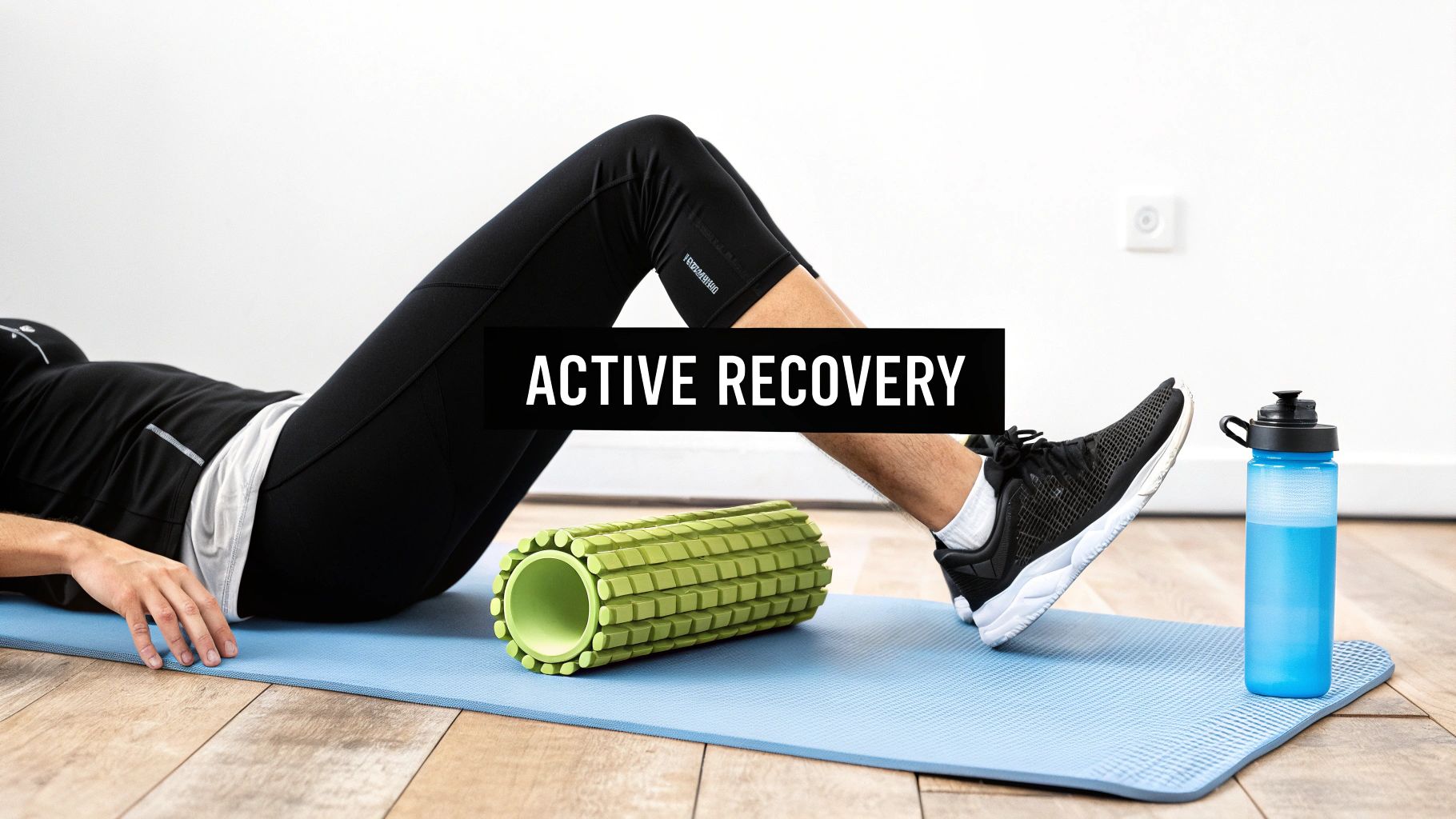
Foam Rolling and Self-Myofascial Release
Another powerful tool for your recovery kit is the foam roller. It’s a form of self-myofascial release (SMR). Just imagine your muscles are wrapped in a thin sheet of cling film called fascia. After a tough workout, this fascia can get tight and develop "knots" that make you feel sore and restricted.
Foam rolling is basically like giving yourself a deep tissue massage. When you apply steady pressure to those tight spots, you help release the knots, improve your flexibility, and drive blood flow right into the muscle. It might feel a bit intense at first, but sticking with it after your cool-down can seriously ease that muscle tension.
The real secret to foam rolling is to go slow. Don't just roll back and forth quickly. When you find a tender spot, pause on it for 20-30 seconds and just breathe, letting the muscle relax under the pressure. That’s how you get real results.
Strategic Stretching for Muscle Recovery
Stretching is a recovery classic, but how and when you do it makes all the difference. Not all stretches are the same, and doing the wrong kind at the wrong time can actually set your recovery back.
There are two main types you should know: dynamic and static.
- Dynamic Stretching: This involves active movements that take your joints through their full range of motion—think arm circles, leg swings, or twisting your torso. Dynamic stretching is perfect for your warm-up because it gets your muscles ready for the work ahead.
- Static Stretching: This is the classic "hold" stretch, where you lengthen a muscle until you feel a light pull and hold it for 15-60 seconds. This type is best reserved for your cool-down, when your muscles are warm. It helps bring your nervous system back to a calm state and improves flexibility.
A crucial tip: never perform deep static stretches on cold muscles. That’s a recipe for injury. By combining gentle active recovery, foam rolling, and the right kind of stretching in your cool-down, you create a powerful system that not only helps you feel better now but also gets your body ready to come back even stronger.
Targeted Relief with Temperature and Topicals
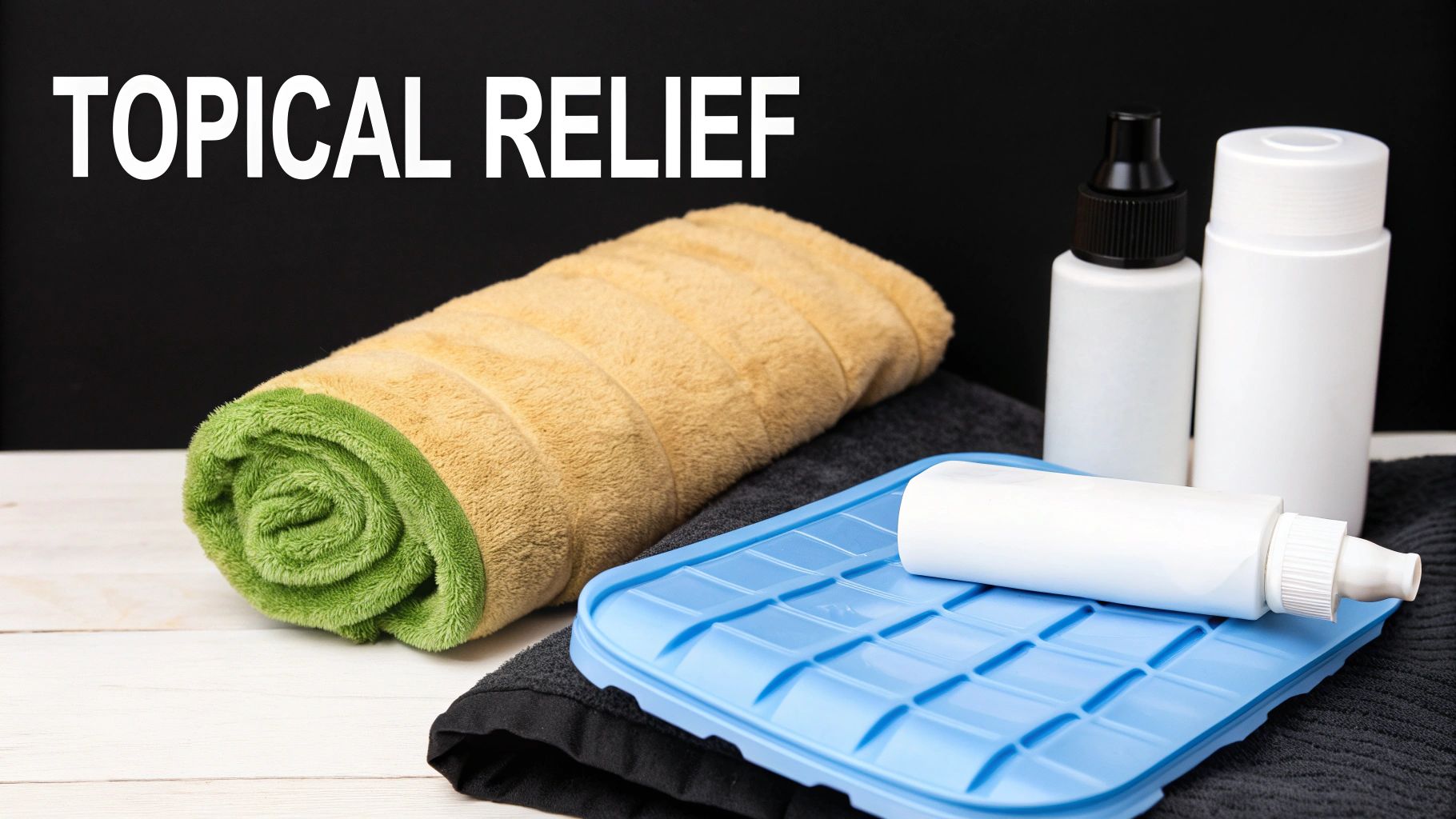
While smart movement and solid nutrition are your long-term recovery champions, sometimes you just need to quiet down those screaming muscles right now. This is where temperature therapy and topical analgesics come in—they're your specialized tools for instant relief.
Think of them as your first responders for managing inflammation and soothing aches right at the source. They won't replace the deeper repair work your body is doing, but they provide immediate comfort so you can stay functional. The trick is knowing which one to grab and when.
The Hot and Cold Approach to Muscle Soreness
The whole heat-versus-ice debate isn't about finding a single winner. It's about knowing which tool is right for the job depending on where you are in the recovery timeline. Using them correctly is like dispatching different emergency services—one to handle the immediate crisis, and the other to help with the cleanup and rebuilding.
Cold Therapy for Immediate Relief
Right after a grueling workout, your muscles are in an acute inflammatory state. This is when cold therapy (cryotherapy) is your best friend. Applying cold constricts your blood vessels, which helps tamp down swelling and numb the nerve endings, giving you that blessed relief from the sharp, post-exercise throb.
Here are a couple of effective ways to use cold:
- Ice Packs: For a specific sore spot, wrap an ice pack in a towel and apply it for 15-20 minutes. This is great for quickly reducing localized swelling.
- Cold Water Immersion: If you're feeling sore all over, a quick ice bath or even a cool shower can help calm inflammation system-wide.
Make this your go-to strategy within the first 24 hours after a workout, when inflammation is peaking.
Heat Therapy for Lingering Stiffness
After that initial inflammatory chaos has died down (usually around 48-72 hours later), it's time to bring in the heat. Heat therapy does the exact opposite of cold: it opens up the blood vessels, boosting circulation to the area. This fresh blood flow brings in the oxygen and nutrients needed for the final stages of muscle repair while flushing out any leftover metabolic junk.
Heat is fantastic for tackling that lingering stiffness and tightness that can leave you feeling creaky. Try a warm compress, a heating pad, or a soak in a warm bath to help those tense muscles finally relax.
Topical Analgesics for On-the-Go Relief
But what happens when you need immediate relief and you can't be tethered to an ice pack or a heating pad? That’s where modern topical analgesics really shine. They offer a powerful, portable solution for what helps sore muscles after a workout. These aren't just cosmetic lotions; they’re formulated with active ingredients that get to work directly on the site of your pain.
Topical pain relievers, like the ones from MEDISTIK, use compounds like menthol and methyl salicylate. These ingredients create a cooling or warming sensation that essentially distracts your nervous system. It’s based on something called the "Gate Control Theory of Pain," where the feeling of cold or heat "closes the gate" on pain signals trying to reach your brain.
Topical analgesics have a major advantage: they deliver relief right where you need it. This localized approach minimizes the side effects you might get from oral medication and provides fast, targeted comfort.
A 2023 Public Health Agency of Canada report noted that while about 50% of Canadians meet muscle-strengthening guidelines, groups like the 16% of older adults meeting balance guidelines can be more susceptible to prolonged soreness. For them, and for athletes or anyone with a physically demanding job, topicals are a vital tool. Products like MEDISTIK's, which are approved by Health Canada and used by the Canadian Military, provide strong, convenient relief that helps people stay active. Discover more insights from the Public Health Agency of Canada's report on national activity levels.
This direct application makes topicals incredibly efficient. You can learn more about how they stack up against pills by exploring the benefits of a topical pain reliever versus an oral one. Instead of waiting for a pill to work its way through your system, a quick spray or roll-on starts working in minutes—a total game-changer for managing soreness without missing a beat.
The Hidden Pillars of Recovery: Sleep and Stress
Recovery is so much more than just what you do right after a workout. The most critical muscle repair actually happens when you're not even thinking about it, orchestrated by two powerful, often overlooked, forces: sleep and stress.
If you ignore either of these, it's like trying to build a house on shaky ground. It doesn't matter how perfect your nutrition or stretching routine is; your results will never be what they could be. These two pillars work behind the scenes, controlling the hormones that decide how fast and how well your body heals. Getting a handle on them is a game-changer for turning your downtime into your most productive recovery time.
Why Sleep Is Your Ultimate Recovery Tool
Think of sleep as your body’s dedicated, overnight repair crew. The moment you drift off, your system gets down to the serious business of rebuilding. During the deepest stages of sleep, your body releases a major surge of Human Growth Hormone (HGH), an essential player in tissue repair and muscle growth. This is where the real magic happens, as HGH gets to work mending the micro-tears you created during training.
When you don't get enough quality sleep, you're essentially shutting down the repair shop. Even a single night of poor sleep can throw off this hormonal rhythm, leaving your muscles achy for longer and slowing down your progress. For anyone serious about recovery, prioritizing sleep isn't just a suggestion—it's non-negotiable.
To make your nights count, start by cleaning up your sleep hygiene:
- Create a Sanctuary: Your bedroom should be cool, dark, and quiet. This environment sends a clear signal to your brain that it's time to power down.
- Establish a Routine: Try to go to bed and wake up around the same time every day, even on weekends. This helps regulate your body's internal clock.
- Wind Down: Step away from screens for at least an hour before bed. The blue light they emit can mess with melatonin, the hormone that tells your body it's time to sleep.
How Stress Sabotages Muscle Repair
Stress isn't just in your head; it triggers a powerful physical response that can seriously derail your body's ability to recover. When you’re chronically stressed, your system is flooded with a hormone called cortisol. While a little cortisol is helpful for "fight or flight" moments, constantly high levels are a disaster for muscle recovery.
Cortisol is catabolic, which means it breaks down tissue—the exact opposite of what you want after a hard workout. It gets in the way of protein synthesis, keeps inflammation around for longer, and can even ruin your sleep. This creates a vicious cycle that leaves you feeling sore, exhausted, and stuck in a rut.
Managing stress is just as important as managing your workout. High cortisol levels can keep your body in a constant state of breakdown, effectively cancelling out the hard work you put in at the gym.
Learning to manage your stress is one of the most effective recovery strategies you can adopt. Simple techniques can make a huge difference, lowering cortisol and shifting your body back into a state of repair.
Here are a few effective stress-management practices to try:
- Mindful Breathing: Just five minutes of slow, deep belly breathing can calm your nervous system and bring cortisol levels down.
- Meditation: A regular meditation practice has been shown to reduce stress and improve sleep quality, both of which directly support muscle recovery.
- Light Activity: A gentle walk outside or some light stretching can do wonders for clearing your head and lowering stress hormones.
By treating sleep as a vital part of your training and actively managing stress, you create the ideal internal environment for your body to heal. This approach gets to the root cause of lingering soreness, helping your muscles repair faster so you can hit your next workout feeling strong and ready to go.
Knowing When Soreness Is Something More
While that post-workout ache is usually a good sign you’ve challenged your muscles, it's crucial to know the difference between normal soreness and an actual injury. Being able to tell them apart helps you make smarter decisions—knowing when it’s okay to push through and when you absolutely need to pull back and get help.
Think of DOMS as a dull, widespread ache that creeps in gradually, usually hitting its peak 24 to 48 hours after you’ve finished your workout. An injury, on the other hand, is totally different. It’s often a sharp, sudden pain that you feel during the activity. It also tends to be localized to one specific spot, not spread across an entire muscle group.
Key Red Flags of an Injury
If your soreness isn't starting to fade after 72 hours—or worse, it’s getting more intense—it’s time to pay close attention. Your body is great at sending signals, and you need to listen for the warning signs that something more serious is happening.
Keep an eye out for these symptoms:
- Sharp, stabbing, or shooting pain that gets in the way of your daily activities.
- Visible swelling, bruising, or redness around the painful area.
- A significant loss of strength or finding you can’t put weight on the limb.
- A limited range of motion that doesn't get better with gentle movement or stretching.
Normal soreness is a temporary visitor that leaves as you recover. Pain from an injury is a persistent alarm bell you shouldn’t ignore. If you experience any of these red flags, the best thing to do is rest up and consult a professional.
When to See a Professional
If you think you might have an injury, it’s time to stop guessing and self-treating. Professionals like physiotherapists and chiropractors are trained to figure out exactly what’s going on with musculoskeletal issues.
They can give you a proper diagnosis, create a recovery plan just for you, and guide you back to your activities safely. Seeking their expertise isn’t giving up; it’s a proactive and responsible step toward getting better.
Common Questions About Soothing Sore Muscles
Even with a solid recovery game plan, you're bound to have questions. Let's tackle some of the most common queries and myths about dealing with sore muscles after a workout, giving you clear, straightforward answers to get your recovery on the right track.
Do Epsom Salt Baths Actually Work?
The theory behind an Epsom salt bath is that your skin soaks up magnesium, which is believed to help relax muscles and calm inflammation. While a lot of people swear by them for feeling less stiff and more relaxed, the hard science showing your skin absorbs a meaningful amount of magnesium is still pretty thin.
The real hero here is likely the warm water. A good soak improves blood circulation and can ease that tight, achy feeling in your muscles. It's best to think of the Epsom salts as a nice little bonus that makes the whole experience more relaxing, rather than a magic bullet for DOMS.
Should I Train a Muscle Group That Is Still Sore?
Ah, the classic dilemma. Here's the short answer: hitting a muscle group with an intense workout while it's still really sore from DOMS is not a good move. Your muscle fibres are in the middle of a crucial repair and rebuilding phase. Pushing them too hard can disrupt that process and even up your risk of injury.
But that doesn't mean you have to glue yourself to the couch.
- Listen to your body: If the soreness is just a mild ache (think a 1-3 on a scale of 10), some very light active recovery like a walk or gentle stretching can actually help.
- Train around it: Focus on a different part of your body. If your legs are screaming from squat day, it’s the perfect time to work on your upper body.
The golden rule? Avoid high-intensity training on any muscle group that's still significantly sore. Give it the time it needs to repair properly so it can come back stronger.
Are Massage Guns Better Than Foam Rolling?
Both massage guns (percussive therapy) and foam rollers (self-myofascial release) are aiming for the same goals: boost blood flow, work out knots, and dial down soreness. A massage gun gives you that deep, targeted pressure that can zero in on specific trigger points much more effectively than a broad foam roller can.
But one isn't necessarily "better"—they're just different tools for different jobs. A foam roller is fantastic for covering large areas like your quads, lats, or hamstrings. A massage gun, on the other hand, is your go-to for pinpointing those smaller, harder-to-reach spots. For a complete look at how to speed up your recovery, check out this practical guide to recover faster after a workout.
At MEDISTIK, we know that smart recovery is non-negotiable for consistent performance. Our line of Health Canada-approved topical analgesics delivers powerful, targeted relief to soothe sore muscles, reduce inflammation, and help your body bounce back. Get back to doing what you love, faster. Move with confidence and find your recovery solution at MEDISTIK.


