

You bend to pick up a laundry basket, feel a sudden grab in your lower back, and freeze halfway upright. The muscle seems to lock, every movement feels risky, and even turning in bed becomes a carefully planned manoeuvre. That sudden tightening is what is called a back muscle spasm.
The pain is real, but the spasm itself may not be the whole problem. In many cases, it's the body's protective response to irritation, strain, fatigue, or an awkward movement pattern. Calming the contraction can help you move again, yet lasting improvement usually depends on identifying what made the muscles react in the first place.
Understanding Back Muscle Spasms
A back muscle spasm is a sudden, involuntary contraction of one or more muscles around the spine. You may feel a hard knot, intense tightness, cramping, or a sharp pain that makes you stop moving. The contraction can last briefly or continue long enough to restrict normal activities.
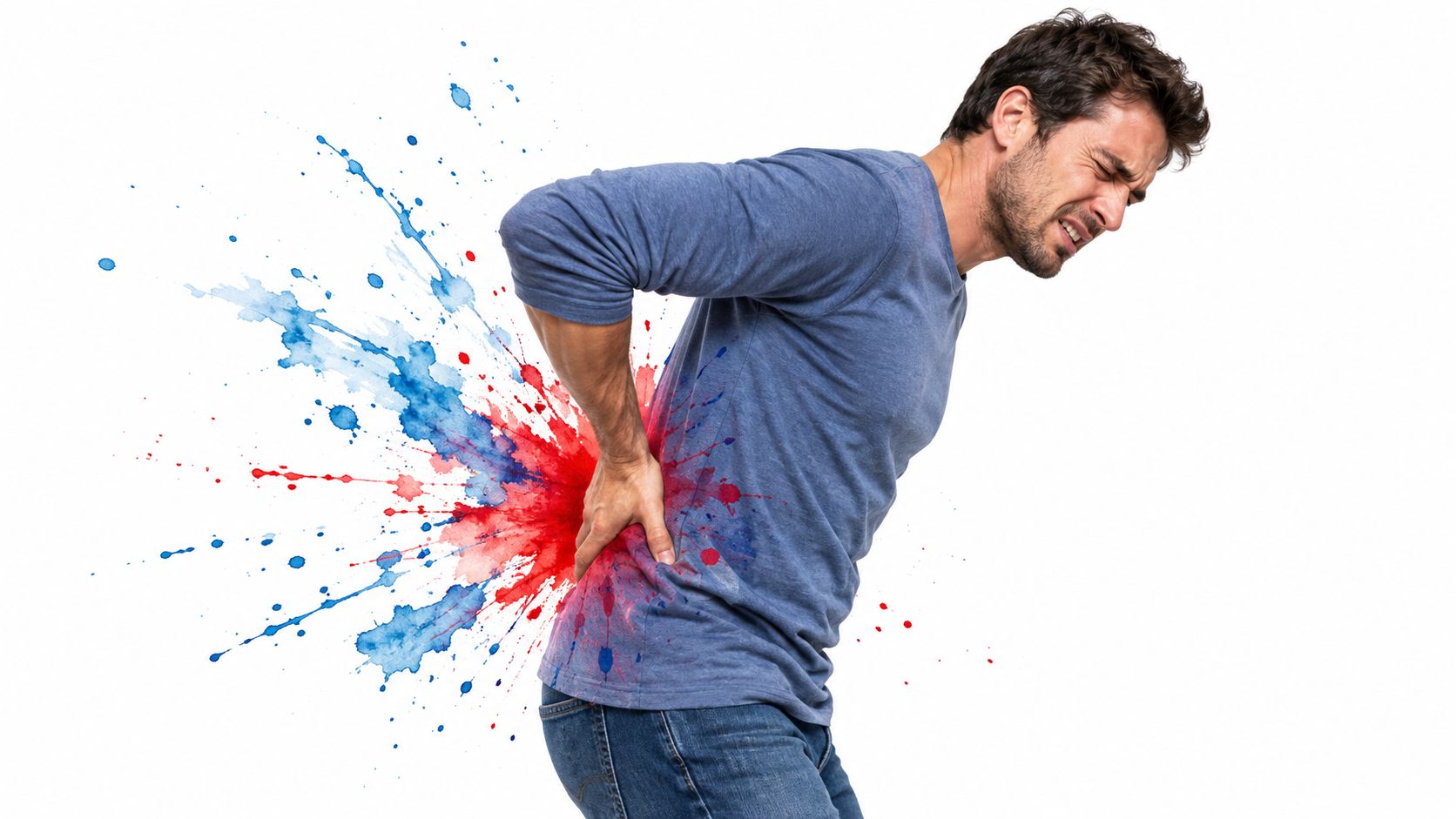
Normally, nerves tell a muscle to contract, then signal it to relax. During a spasm, that cycle becomes overprotective or poorly coordinated. The muscle stays partially or fully contracted, which can make the area feel rigid and painful. A tight muscle may also limit movement, causing you to brace further and creating a cycle of guarding and discomfort.
Why the muscle tightens
The contraction often acts as a protective brake. If a joint, disc, ligament, or muscle is irritated, the nervous system may increase tension around the area to reduce movement. That reaction can be useful for a short time, but it can also become painful when the muscle remains switched on after the original trigger has settled.
Canadian health guidance describes back spasms as sudden tightness and pain that may follow overuse, awkward sleep posture, bending, lifting, standing, or sitting, while also noting that the exact cause isn't always identifiable (Alberta Health Services guidance on back spasms).
Back problems are common enough to deserve careful attention. A Statistics Canada report on chronic back problems estimated that 3.1 million Canadians aged 16 and older, or 13.6% of the population, reported chronic back problems in 1996/97. The report also identified back problems as among the country's most common chronic conditions, with many cases occurring between ages 30 and 50 and affecting men and women at roughly equal rates.
Clinical perspective: The spasm is often the alarm response, not the underlying fault. Relief matters, but finding the mechanical reason for the alarm matters more.
Common Causes and Triggers
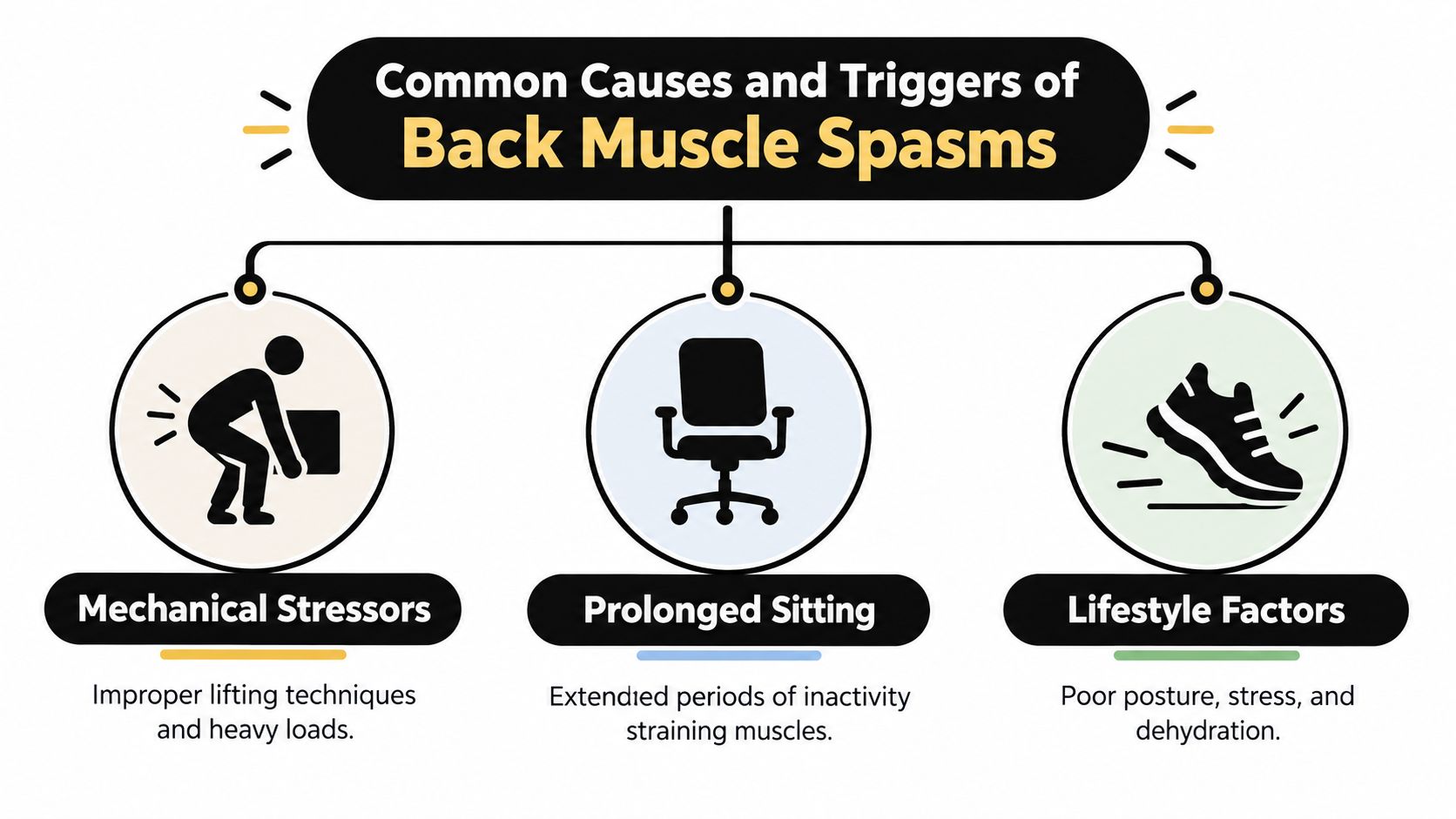
Back spasms usually arise when the load placed on the spine and surrounding muscles exceeds what the body can comfortably control. That load may come from one heavy lift, or from a low-level demand repeated for hours.
Mechanical strain
Lifting with a rounded back, twisting while carrying an object, or rushing through a change of position can irritate muscles and supporting tissues. The nervous system responds by increasing muscle tension to stabilise the area. Repetitive bending, reaching, or sport-specific movements can create the same response through accumulated fatigue.
Poor conditioning can add to the problem. If the hips, abdomen, and back don't share movement efficiently, smaller spinal muscles may work harder than they should. A weak or poorly coordinated trunk doesn't automatically cause spasms, but it can reduce your tolerance for lifting, prolonged standing, or repeated movement.
Static positions and posture
Sitting for long periods keeps some muscles shortened while others remain underused. Slouching, leaning toward a screen, or standing with your weight shifted to one side can maintain low-level tension. Over time, that tension may make an ordinary movement feel like the final trigger.
Your sleeping position can matter too. An unsupportive position, an abrupt roll, or waking with the spine held in rotation may provoke tightness. If your mattress or sleep position contributes to morning stiffness, reviewing Sleep Number bed back pain settings may help you assess support and positioning without assuming the mattress is the only cause.
For a broader look at how physical habits and other contributors can create muscle discomfort, review these muscle pain causes. The useful question is not, “How do I stop the tightness?” Ask instead, “What was my back trying to protect me from?”
Stress, poor sleep, and dehydration may also increase perceived tension or reduce your ability to tolerate physical demand. They shouldn't be treated as definitive explanations for every episode. A clinician may need to assess the spine, nerves, joints, and muscles when spasms recur without an obvious trigger.
Recognizing Symptoms and Severity
A back spasm can stop you mid-movement. Typical localised pain, tightness, and restricted movement may make it difficult to stand upright, rotate your trunk, rise from a chair, or walk normally. The muscle may feel firm or knotted, and stretching or loading it can increase the pain.
The contraction is often the symptom, not the whole problem. A protective spasm may develop when irritated joints, discs, muscles, or movement patterns place excessive mechanical demand on the back. A painful episode after lifting that gradually settles, without neurological symptoms, commonly follows a mechanical pattern. Pain extending down a leg, pins and needles, or weakness suggests possible nerve or spinal involvement. These findings do not confirm a disc problem, but they change how carefully the episode should be assessed.
A practical self-check
Ask three questions:
- What preceded it? Record lifting, bending, prolonged sitting, new exercise, an awkward sleep position, or an injury.
- What can you still do? Note whether you can walk, change position, and complete basic tasks without rapid deterioration.
- What else do you feel? Check for numbness, tingling, weakness, fever, unexplained illness, or symptoms beyond the back.
The pattern matters more than the label. Comparing bone versus muscle pain can help you describe whether the discomfort seems muscular or may involve bone, joints, or nerves.
Severity also depends on persistence and function. Repeated spasms, steadily declining movement, or pain that does not follow a settling pattern deserves clinical attention even if the muscle contraction itself is manageable.
Canadian data shows why recurring back symptoms should not be dismissed. A 2019 BMC Public Health study reported age-standardised chronic back disorder prevalence of 18.9% in 2007 and 17.8% in 2014, roughly one in five Canadian adults during that period. The study also found crude prevalence peaked at nearly 23% in 2008 and remained around 18% by 2014. A temporary spasm may resolve, yet repeated episodes can signal a mechanical issue requiring a broader assessment.
When to Seek Professional Care
Self-management is reasonable when a spasm follows a clear, minor trigger, you have no warning signs, and symptoms begin to settle. You can arrange an appointment with a family physician or physiotherapist if the pain keeps returning, limits work or sleep, or fails to improve as expected. A chiropractor may also assess mechanical contributors, provided concerning neurological or systemic symptoms have first been considered.
Seek urgent assessment when you notice
- New weakness or significant numbness: Difficulty lifting the foot, standing steadily, or controlling a limb needs prompt evaluation.
- Bowel or bladder changes: New loss of control, difficulty passing urine, or numbness around the saddle area is an emergency concern.
- Major trauma: A spasm after a serious fall, collision, or forceful impact may conceal more than a muscle strain.
- Systemic symptoms: Fever, feeling acutely unwell, or unexplained weight loss alongside back pain requires medical review.
- Progressive or unrelenting pain: Pain that worsens regardless of position, repeatedly wakes you, or keeps escalating shouldn't be managed indefinitely at home.
Don't use the intensity of the spasm alone to decide whether it's safe. Neurological changes, trauma, and systemic symptoms carry more significance than how tight the muscle feels.
If visiting a clinic is difficult, home-based services may offer an assessment option in some locations. For readers in the United Arab Emirates, this overview of physiotherapy on call for Dubai residents explains how an in-home appointment may work. The same safety rules still apply. Severe warning signs need emergency care, not a delayed routine visit.
For treatment planning, a clinician may examine your movement, strength, reflexes, sensation, and functional limitations. Read more about physiotherapy for back pain relief when you're deciding how rehabilitation might fit into your recovery.
Short-Term Relief Strategies
The best immediate option depends on whether the back feels freshly irritated, swollen, stiff, or predominantly cramped. Heat and cold can both provide symptom relief, but neither corrects a lifting habit, prolonged sitting pattern, disc irritation, or movement coordination problem.
Heat or cold
Heat often feels better when the dominant sensation is stiffness or muscle tightness. Use a comfortable warm pack with a protective layer rather than intense heat directly against the skin. Cold may suit a newly irritated area or sharp pain, especially after a minor strain. Keep the application brief and protect the skin.
The MEDISTIK guide to heat or ice for back spasms offers a practical comparison of these approaches. Choose the method that improves movement without causing skin irritation, increased pain, or prolonged numbness.
Movement versus rest
Extended bed rest usually creates more stiffness and reduces confidence in movement. Instead, change position regularly, take short walks if tolerated, and avoid the specific action that sharply increases pain. Gentle movement is a bridge back to normal activity, not a test of toughness.
Over-the-counter anti-inflammatory medicines may help some adults, but they aren't suitable for everyone. Stomach ulcers, kidney disease, cardiovascular conditions, pregnancy, anticoagulant use, and medication interactions can change the risk. Ask a pharmacist or clinician before using an NSAID, and follow the product label.
The College of Family Physicians of Canada guidance on low back pain supports short-term, symptom-targeted use of cyclobenzaprine for selected patients with pain and muscle spasm. It notes that the greatest benefit is typically seen within one week and that treatment for up to two weeks may be justifiable in selected cases. Muscle relaxants can cause drowsiness and aren't a reason to drive, drink alcohol, or continue hazardous work.
Topical analgesics can provide another short-term option for local discomfort, particularly when you want to avoid or cannot take oral medication. Treat them as an aid that makes gentle movement easier, not as proof that the underlying mechanical issue has been resolved.
Long-Term Management and Prevention
Recurring back spasms require more than repeated attempts to relax the muscle. A spasm is often a protective response to an underlying mechanical problem, such as limited mobility, poor load tolerance, or repeated strain. Long-term care should therefore improve how the back handles everyday demands through comfortable movement, gradual strength building, practical workstation and sleep adjustments, and attention to activities that repeatedly trigger guarding.
Consistency matters more than intensity. Short walks, regular position changes, and controlled exercises usually provide a steadier foundation than occasional demanding workouts. A physiotherapist can match movements to your symptoms and progress them as tolerance improves. These exercises to help with back pain offer a starting point. Stop any exercise that causes escalating pain, new neurological symptoms, or a clear decline in function.
Build capacity around the spine
A practical programme may include:
- Trunk control: Brace gently while breathing instead of keeping the abdomen rigid throughout the day.
- Hip strength: Stronger gluteal muscles can spread demand during lifting, stair climbing, and rising from a chair.
- Mobility: Restore comfortable hip and thoracic movement so the lower back does not compensate for every task.
- Load progression: Increase walking, resistance training, or sport gradually after inactivity rather than making a sudden jump.
Posture works best as a flexible target, not a fixed position. Arrange your chair and screen to limit prolonged reaching or slumping, then change position before discomfort accumulates. At home, place frequently used objects within easy reach and turn your whole body instead of twisting while carrying a load.
Stress management also affects muscle tension. Slow breathing, brief movement breaks, adequate sleep, and awareness of unconscious bracing can reduce the tension maintained between activities. These measures do not correct every structural problem, but they may reduce nervous-system reactivity and make rehabilitation easier to sustain.
| Strategy | Implementation | Expected outcome |
|---|---|---|
| Movement breaks | Change position and walk briefly throughout the day | Less stiffness and greater confidence with movement |
| Lifting technique | Keep loads close, bend through the hips and knees, and avoid twisting while carrying | More controlled distribution of load |
| Strength training | Progress trunk, hip, and leg exercises gradually | Greater tolerance for work and daily activity |
| Ergonomic adjustments | Support the lower back and bring work surfaces to a comfortable height | Reduced sustained strain |
| Recovery habits | Use sleep, breathing, and short relaxation practices to limit bracing | Lower background muscle tension |
For temporary local relief during activity or recovery, MEDISTIK topical products are one non-prescription option. The DUAL Stick and DUAL Spray are intended for topical application to areas such as the back and are described as helping relax muscle spasms. Follow the product label, and use topical relief alongside appropriate assessment and rehabilitation. Symptom reduction can support movement, rather than evidence the root cause has been addressed.
The long-term burden of low back pain also supports prevention as an ongoing process. Canadian projections described low back pain as contributing substantially to years lived with disability, with the burden expected to increase over time. Population-level estimates cannot predict an individual outcome, but they reinforce a practical point: recurring spasms deserve assessment of the mechanical factors that keep provoking them, rather than treatment as a series of isolated accidents.
MEDISTIK offers non-prescription topical options, including the DUAL Stick, DUAL Spray, and cooling Ice Roll-On, for temporary relief of sore muscles and joints during work, sport, and recovery. Visit MEDISTIK to explore the products and choose a practical topical option to support movement while you address the mechanical triggers behind recurring back muscle spasms.


