

When foot pain flares up, it feels like it puts your entire life on pause. This guide is here to help you move past that—from figuring out why your feet are hurting to taking real, practical steps to feel better.
We'll break down the common culprits behind foot pain and give you a complete plan to manage it.
Your First Steps Toward Foot Pain Relief
When every step is a painful reminder, your world starts to feel a lot smaller. Everyday things you once took for granted—like walking the dog, standing at your job, or going for a weekend hike—suddenly feel like major hurdles. That constant ache or sharp, stabbing pain doesn't just stay in your feet; it messes with your mobility, your mood, and your overall quality of life.
If you're dealing with this, you're definitely not alone. Foot pain is an incredibly common problem that throws a wrench into the daily lives of millions. It could be from a demanding job that keeps you on your feet all day, an active lifestyle full of high-impact sports, or an underlying issue that’s been slowly developing over time.
The goal isn't just to "put up with it." It's to actively get ahead of the pain and start resolving it.
Understanding the Scope of Foot Pain
Just how common is this? It's estimated that a staggering 75% of Canadians will experience foot health problems at some point in their lives. That number alone shows just how widespread this kind of discomfort really is.
This guide is designed to give you the knowledge and tools you need to fight back. We’ll cover it all, from getting to the root of the problem to finding immediate relief and building long-term strategies for healthy, happy feet.
Think of your feet as the foundation of your body. When that foundation is unstable, the entire structure is compromised. Taking care of foot pain isn't just about comfort—it's about restoring your stability, mobility, and freedom to move.
To help you get started, here's a quick look at the strategies we'll be covering in this guide.
Your Foot Pain Relief Options at a Glance
This table offers a quick summary of the primary strategies for foot pain relief discussed in this guide, helping you find the right approach.
| Relief Strategy | Best For | Examples |
|---|---|---|
| Topical Analgesics | Quick, targeted relief for localized pain and inflammation | Creams, sprays, or roll-ons with ingredients like menthol or camphor |
| Home Remedies | Immediate comfort for acute pain, swelling, and muscle soreness | Ice packs, Epsom salt soaks, elevating your feet |
| OTC Medications | Reducing inflammation and managing moderate, persistent pain | Ibuprofen (Advil), Naproxen (Aleve) |
| Stretches | Improving flexibility, relieving tension in tight muscles/ligaments | Calf stretches, toe curls, plantar fascia stretches |
| Strengthening Exercises | Building support, improving stability, preventing future injuries | Toe raises, marble pickups, towel scrunches |
| Proper Footwear | Providing all-day support, reducing strain, preventing pain | Supportive shoes with good arch support and cushioning, proper work boots |
| Orthotics/Insoles | Correcting biomechanical issues, providing targeted support | Over-the-counter insoles, custom-molded orthotics |
By combining these different approaches, you can build a comprehensive plan that works for you.
Creating Your Action Plan
Lasting relief comes from a multi-faceted plan. One of the most impactful first steps you can take is to make sure your footwear is actually supporting you. For anyone on their feet all day, finding comfortable work boots for all-day comfort is a non-negotiable for both preventing and easing foot pain.
This guide will help you build a complete strategy that focuses on:
- Identifying the Cause: Pinpointing whether your pain is from something common like plantar fasciitis or Achilles tendonitis.
- Immediate Relief: Using home remedies, topical analgesics, and proper rest to calm down acute flare-ups.
- Long-Term Health: Building habits like targeted stretches, strengthening exercises, and choosing the right footwear to keep pain from coming back.
By taking these first steps, you’re not just managing pain—you're starting the journey to reclaim an active, comfortable life.
Finding the Root Cause of Your Foot Pain
To get lasting relief from foot pain, you have to put on your detective hat and figure out what’s causing it in the first place. Just trying to numb the pain without getting to the source is like bailing water out of a boat that has a hole in it—you'll be at it forever. Real, lasting comfort starts with pinpointing what’s actually wrong.
Your foot is an incredibly complex piece of machinery, with dozens of moving parts. If even one of those parts is out of whack, it can throw the whole system off balance. Let's walk through the most common culprits so you can connect your symptoms to the cause and choose a strategy that actually works.
Decoding Your Daily Habits
More often than not, foot pain isn’t from one big, dramatic injury. It's the slow, steady buildup of stress from our everyday lives. The things that define our days—our jobs, our workouts, even our fashion choices—can start to cause real discomfort if we're not paying attention.
Sound familiar?
- The Demanding Job: Spending eight hours a day on a concrete floor without the right shoes is a recipe for strained arches and angry heels.
- The Weekend Warrior: Going from zero to one hundred on a weekend hike or run can easily overload tendons and ligaments that just aren't ready for that kind of stress.
- The Fashion-Forward Footwear: Those shoes that look amazing but pinch your toes or force your heel into an unnatural position? They can mess with your body's entire alignment, causing problems way beyond just sore feet.
Each of these habits puts a unique strain on your feet, which is why they often lead to very specific—and identifiable—conditions.
Common Conditions Behind Foot Pain
While there are many potential causes, a few usual suspects pop up time and time again. Getting to know them is the first step toward finding the right fix.
Plantar Fasciitis This is one of the most common reasons for heel pain, hands down. Picture a thick, powerful rubber band—that's your plantar fascia—stretching along the bottom of your foot from your heel to your toes. When this band gets overstretched or strained from overuse, it develops tiny tears and gets seriously inflamed.
The classic sign of plantar fasciitis is a sharp, stabbing pain right in the heel when you take your first steps in the morning. It might ease up as you get moving, but it often comes roaring back after you've been standing or sitting for a while.
If that sounds like your morning routine, you should dig deeper into why your feet hurt when you wake up and what to do about it. It’s a frequent complaint for runners, people on their feet all day, and anyone with flat feet or very high arches.
Achilles Tendonitis Your Achilles tendon is a big deal—it's the largest one in your body, connecting your calf muscles to your heel bone. It's the powerhouse behind walking, running, and jumping. Achilles tendonitis is what happens when this workhorse tendon gets inflamed from repetitive stress.
You’ll usually feel it as:
- Pain and stiffness along the back of your heel.
- Discomfort that gets worse the more you move.
- Serious pain the day after you exercise.
This is a common one for athletes who suddenly ramp up their training intensity, or for "weekend warriors" who play hard on Saturday and Sunday after a week at a desk.
Other Potential Culprits
Beyond those two heavy hitters, other things could be going on. Structural issues like flat feet or high arches can mess with how your weight is distributed, leading to chronic aches in your feet and ankles. Other conditions like bunions, stress fractures, or even arthritis could also be the hidden source of your discomfort.
Take a second to really think about your pain. When does it hit (morning vs. night)? Where is it located (heel, arch, ball of the foot)? What makes it worse? Answering these questions helps you piece the puzzle together. This self-awareness is your ticket to moving past temporary fixes and building a smart, targeted plan for lasting relief.
How to Get Immediate Foot Pain Relief
When a sharp, throbbing pain in your foot stops you in your tracks, you don't have time to wait for a long-term fix. You need relief, and you need it now. This is your go-to guide for fast-acting strategies that can calm inflammation, soothe aching tissues, and give you the immediate comfort you need to get on with your day.
Think of these methods as your first line of defence against a sudden flare-up. They’re simple, proven, and you can do them right at home the moment the pain hits.
Start With The R.I.C.E. Method
The R.I.C.E. method is a classic for a reason—it’s an incredibly effective, four-step emergency response plan for acute soft tissue injuries, including sudden foot pain.
- Rest: This is the most critical first step. Stop whatever you're doing that’s causing the pain. Pushing through by walking, running, or even standing on a hurting foot will only make the injury and inflammation worse.
- Ice: Applying a cold pack helps constrict blood vessels, which is key to reducing swelling. It also helps numb the nerve endings, giving you direct pain relief. Just be sure to wrap the ice pack in a towel and apply it for only 15-20 minutes at a time.
- Compression: Gently wrapping the sore area with an elastic bandage can help control and minimize swelling. The key word here is gently—if you wrap it too tightly, you can cut off circulation.
- Elevation: Prop your sore foot up so it's above the level of your heart. This simple trick uses gravity to help drain excess fluid away from the injury, which further reduces swelling and eases discomfort.
This powerful combination works together to quickly tackle both the pain and its root cause: inflammation.
Harnessing The Power Of Topical Analgesics
For targeted relief that goes right to the source, topical analgesics are a game-changer. Unlike oral medications that have to travel through your entire system, topicals get to work directly where you apply them. You just rub them onto the skin over the painful muscle or joint, and they deliver active ingredients right where you need them most.
Many of these products, like MEDISTIK’s Spray or Roll-On, use ingredients known as counter-irritants, such as menthol and camphor.
The science behind counter-irritants is pretty cool. They create a cooling or warming sensation on your skin, which essentially creates a "traffic jam" for your nerves. Your brain gets busy processing these new temperature signals, which helps block the original pain signals from getting through.
This is known as the Gate Control Theory of Pain, and it’s a brilliant way to get rapid relief without having to swallow a pill. It’s perfect for managing localized issues, from a nagging arch pain to a sore Achilles tendon. Pain on the outer edge of your foot can be particularly stubborn, and understanding what’s behind it can help you find relief faster. To dig deeper, check out our guide on managing pain on the side of your foot.
Simple Home Remedies For Quick Comfort
Beyond R.I.C.E. and topicals, a few simple home remedies can go a long way in providing comfort and easing foot pain. These techniques are great for relaxing tense muscles and bringing down inflammation even further.
An Epsom salt soak is a time-tested remedy for good reason. The magnesium sulphate in Epsom salts can help soothe muscle aches and reduce swelling. Soaking your feet in a basin of warm water with a cup of Epsom salts for about 20 minutes can feel like heaven after a long day.
Self-massage is another fantastic option. Using your thumbs, apply gentle but firm pressure to your arch, heel, and the ball of your foot. You can also roll a tennis ball or even a frozen water bottle under your foot to work out tension, especially in the plantar fascia.
To help you get a better idea of what might be causing your discomfort, this simple decision tree can help guide you based on your symptoms.
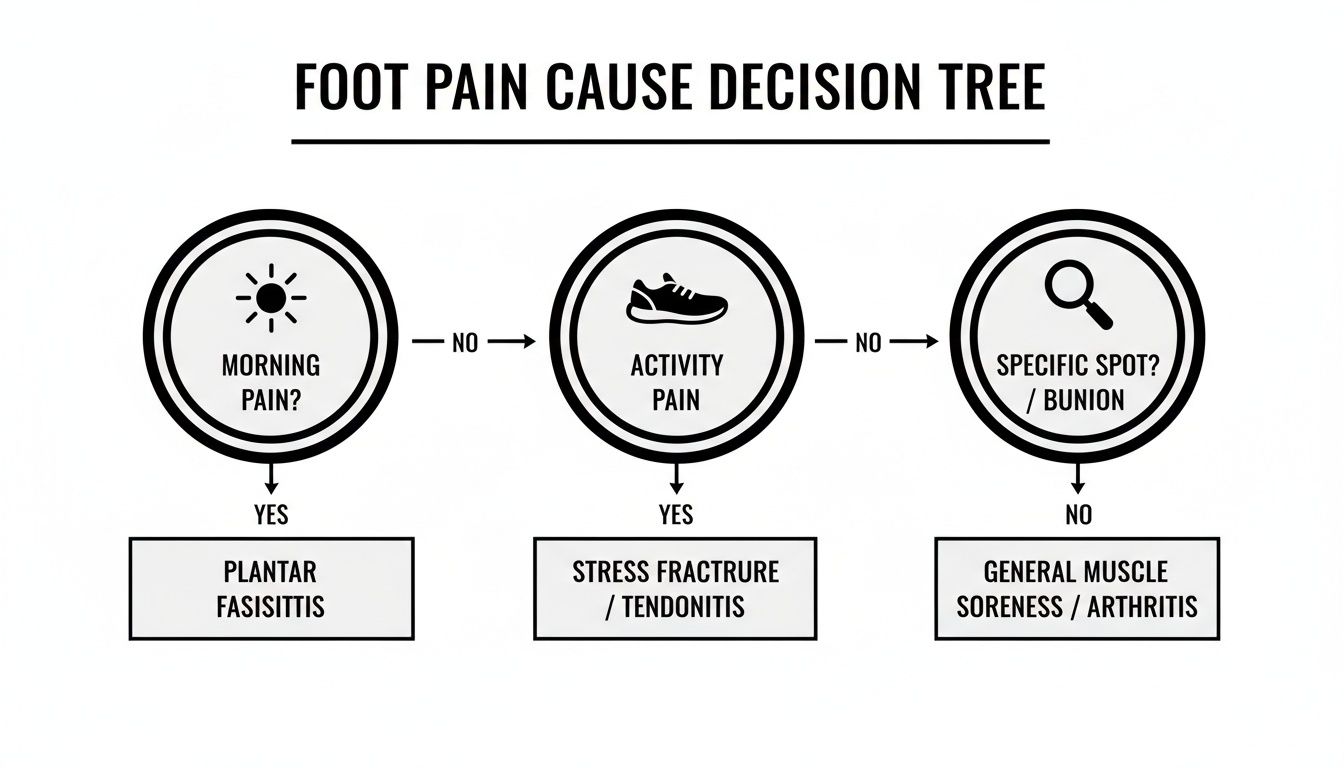
As you can see, the timing and location of your pain offer major clues. It helps you distinguish between issues like plantar fasciitis (which often causes sharp pain first thing in the morning) and stress fractures (which typically hurt more during activity). By combining these immediate relief strategies, you can take control of acute flare-ups and get the comfort you need to keep moving.
Building Long-Term Foot Strength and Resilience
While quick fixes are great for getting through a painful flare-up, they’re only half the battle. Real, lasting comfort comes from building a stronger, more resilient foundation from the ground up. This is about being proactive—transforming your feet from a source of pain into a powerful base that supports your entire body.
Think of it like taking care of a car. Patching a flat tire will get you home, but it’s the regular maintenance—aligning the wheels, checking the pressure, and looking after the engine—that prevents breakdowns. By focusing on flexibility, strength, and the right support, you can dramatically cut down the chances of future pain and truly take control of your foot health for good.
This isn't about just managing symptoms. It’s about creating a system that stops them from coming back.
Essential Stretches for Foot Pain Relief
Tight muscles are often the hidden culprits behind chronic foot pain. When the muscles and tendons in your lower legs and feet get constricted, they tug on sensitive areas, leading to inflammation and discomfort. A consistent stretching routine is your best weapon for releasing that tension and getting things working properly again.
These targeted stretches are simple, effective, and you can do them almost anywhere.
-
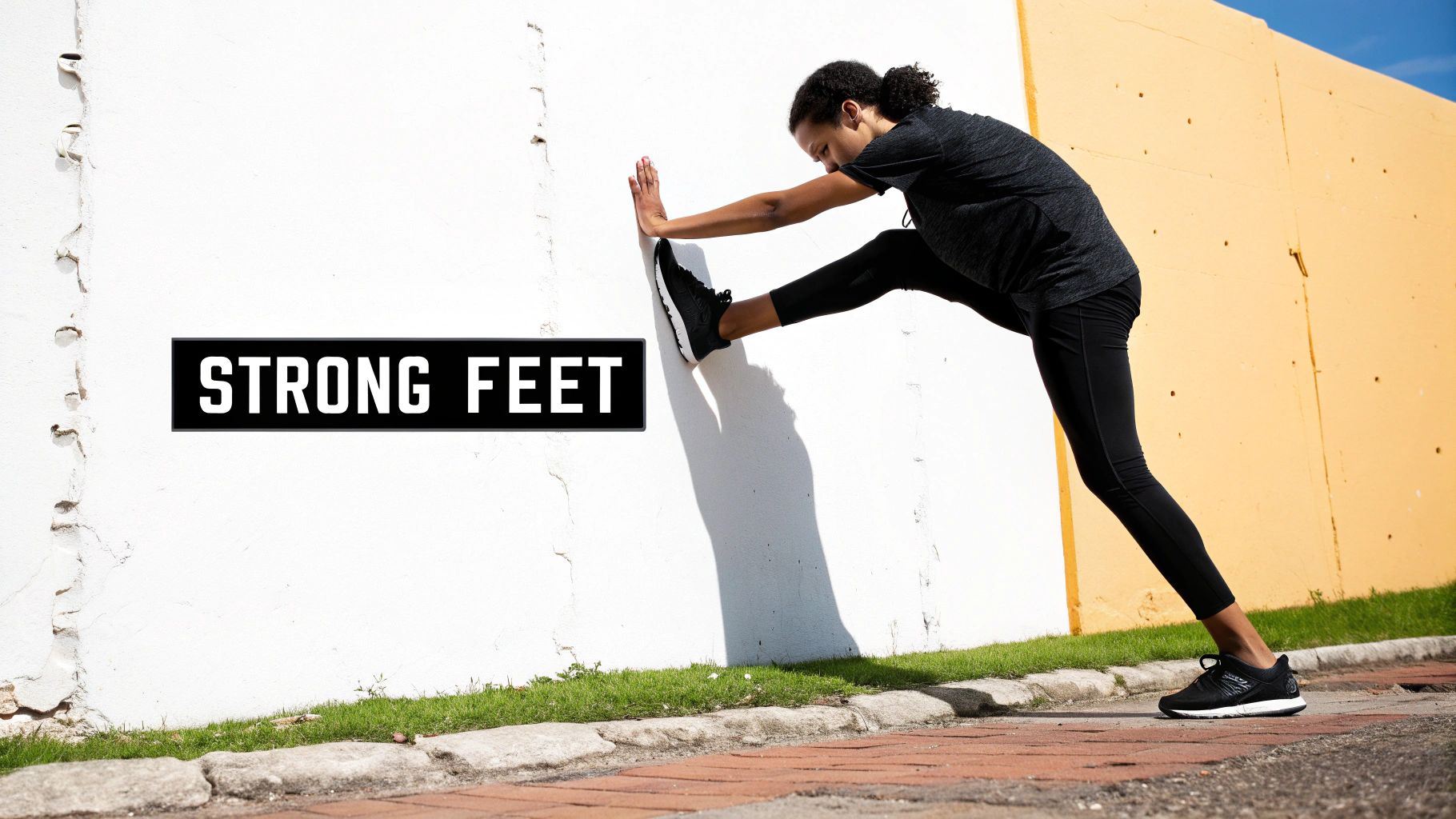
Calf Stretches: Your calf muscles link to your heel through the Achilles tendon. If they’re tight, they pull on your heel, which is a major contributor to both Achilles tendonitis and plantar fasciitis. To stretch them, stand facing a wall with your hands on it for balance. Step one foot back, keeping that leg straight and your heel firmly on the floor. Lean forward gently until you feel the stretch in your calf, hold it for 30 seconds, then switch legs.
-
Plantar Fascia Stretch: This one goes right for the ligament on the bottom of your foot. Sit down and cross one leg over the opposite knee. Gently pull your toes back toward your shin until you feel a good stretch in your arch. Hold for 15-20 seconds and repeat three times on each foot. This is a fantastic stretch to do before you even get out of bed in the morning.
Simple Exercises to Strengthen Your Feet
Stretching improves your flexibility, but strengthening is what builds stability. Your feet have a complex network of tiny muscles that are meant to act as a natural support system. When these muscles are weak, your arches can start to sag, putting extra strain on your ligaments.
These easy exercises are perfect for waking up and fortifying those crucial support muscles.
- Towel Curls: Sit in a chair with a small towel on the floor. Using just your toes, bunch up the towel and pull it toward you. It’s a simple move that does wonders for the small, intrinsic muscles in your feet.
- Marble Pickups: Drop a handful of marbles (or even pens or other small objects) on the floor. Use your toes to pick them up one by one and place them in a bowl. This is a great way to improve your dexterity and muscle control.
- Toe Raises: Stand with your feet flat on the floor. Slowly lift your heels until you’re on the balls of your feet, hold for a moment, and then lower them back down. This is excellent for strengthening your calves and the muscles that support your arch.
A strong foot is a stable foot. By dedicating just a few minutes each day to these exercises, you are actively building a better, more durable shock absorption system, which is your best defence against the repetitive impact of daily life.
The Critical Role of Proper Footwear
Even the strongest, most flexible feet can be brought down by the wrong shoes. Your footwear isn't just a fashion accessory; it's a vital piece of equipment for your daily life. Squeezing your feet into shoes that lack support, cramp your toes, or mess with your natural gait is one of the fastest ways to cause or worsen foot pain.
Choosing the right footwear means matching the shoe to your foot and your activity. A shoe that’s fine for a quick walk around the block could be a disaster for an eight-hour shift on a hard floor. When you're shoe shopping, look for key features like a firm heel counter, decent arch support, and a toe box that’s roomy enough for your toes to spread out naturally.
The tough reality is that foot pain is incredibly common in Canada. An estimated 75% of Canadians will face foot health problems at some point, with 19% of the population dealing with an average of 1.4 foot problems every single year. These issues are often made worse by simple biomechanical imbalances, like having one foot that's slightly larger than the other, which can throw off your gait and lead to chronic, uneven stress. You can learn more about Canadian foot health facts on ontariochiropodist.com to see the full picture.
By bringing these long-term strategies—stretching, strengthening, and smart footwear choices—into your routine, you move beyond just reacting to pain. You start building a resilient foundation that will support you through every step, turning the goal of lasting relief for foot pain into an achievable reality.
Integrating MEDISTIK Into Your Daily Routine
Truly effective pain relief isn't just about reacting to a sudden ache—it's about weaving a smart, proactive system into your daily life. This is where topical analgesics can make a world of difference, shifting your approach from reactive damage control to a seamless part of your warm-up, performance, and recovery cycle.
Bringing MEDISTIK into your routine gives you a complete toolkit to manage foot pain at every stage. It's a system trusted by thousands of Canadian clinics because it addresses the full spectrum of pain, from priming your muscles for activity to soothing them when the work is done. It’s not just about grabbing something when you feel a twinge; it's a strategic approach to keep you moving comfortably and confidently.
When you understand how each product works, you can build a personalized plan for powerful, targeted relief that supports your feet before, during, and after anything you throw at them.
Prime Your Feet for Performance
Before you head out for a run, start a long shift on your feet, or tackle any activity that puts stress on your soles, preparation is everything. A good warm-up gets the blood flowing to your muscles and ligaments, making them more flexible and far less prone to injury. This is the perfect time to bring in a warming topical analgesic.
The MEDISTIK Extra-Strength Stick is designed for exactly this moment. Its warming action helps prime the muscles in your arches and calves, getting them ready for the demands ahead. Applying it 10-15 minutes before activity can help you fend off the kind of strain that often leads to plantar fasciitis or Achilles tendonitis. Think of it as a pre-emptive strike against pain.
On-the-Go Relief During Activity
Sometimes, even with the best prep, pain flares up mid-stride. You might be halfway through a hike when your arch starts screaming, or standing at your workstation when that familiar heel pain strikes. In those moments, you need something fast, effective, and easy to apply without any mess.
This is where the MEDISTIK Extra-Strength Spray shines.
- Rapid Action: The spray absorbs quickly, delivering active ingredients right where you need them for fast-acting relief.
- Hands-Free Application: You can apply it without touching the area, which is incredibly convenient and hygienic for use anytime, anywhere.
- Targeted Comfort: It provides that immediate relief you need to finish your activity or get through your day with way less discomfort.
Restore and Recover Afterward
What you do after your activity is just as important as what you do before. After a long day or an intense workout, your feet are often inflamed, tired, and sore. This is the time to cool down that inflammation and soothe your tissues to speed up your body's natural healing process.
The MEDISTIK Natural Ice Roll-On is your ideal post-activity partner. Its cooling formula, packed with menthol and eucalyptus, delivers an immediate soothing sensation that helps reduce swelling and calm down irritated nerves. The roll-on applicator also provides a gentle massage, which helps to release lingering tension in the muscles of your feet.
By using a cooling topical after activity, you are actively helping your body manage inflammation, which is a primary driver of pain. This step is critical for preventing minor aches from turning into chronic problems.
Topical analgesics have a major advantage over oral medications because they deliver relief directly to the source of the pain, bypassing the rest of your system. If you're weighing your options, you can learn more about the benefits of a topical pain reliever versus an oral one in our detailed guide.
Choosing the Right MEDISTIK Product for Your Foot Pain
Not sure which product fits your needs? This table breaks down the MEDISTIK lineup to help you choose the perfect solution for your specific foot pain, whether you're warming up, in the middle of an activity, or cooling down.
| MEDISTIK Product | Primary Use Case | Key Ingredients & Action | Best Time to Apply |
|---|---|---|---|
| Extra-Strength Stick | Pre-activity warm-up, chronic stiffness | Methyl Salicylate & Camphor: Creates a deep, warming sensation to increase circulation and loosen tight muscles. | 10-15 minutes before any activity or first thing in the morning to ease stiffness. |
| Extra-Strength Spray | Mid-activity flare-ups, hard-to-reach areas | Methyl Salicylate & Menthol: Fast-absorbing spray provides rapid hot-cold relief without needing to touch the area. | As needed during workouts, hikes, or long work shifts for immediate pain control. |
| Natural Ice Roll-On | Post-activity recovery, inflammation, acute pain | Menthol & Eucalyptus: Provides an intense cooling effect to reduce swelling and soothe sore, tired muscles. | Immediately after activity or before bed to calm inflammation and promote recovery. |
Each product is designed to play a specific role in your pain management strategy. By combining them, you create a comprehensive system that keeps your feet supported around the clock.
When to Seek Professional Medical Advice
While self-care strategies can work wonders for everyday foot pain, they aren't a silver bullet. Knowing when to put the ice pack down and pick up the phone to call a medical professional is absolutely critical. Think of home remedies as your first line of defence, but sometimes you have to call in the specialists to win the battle.
Ignoring persistent or severe symptoms can turn a minor annoyance into a major problem. Your body has its own alarm system, and when it starts blaring, you need to listen.
Red Flags You Should Never Ignore
If you experience any of the following, it’s a clear sign that it's time to book an appointment with a healthcare professional. These are your body’s signals that something more serious might be going on.
- Inability to Bear Weight: If you can't walk or even put the slightest pressure on your foot, it's a sign of a significant injury.
- Intense, Unexplained Swelling: Severe swelling, especially when it comes with redness and the area feels warm to the touch, could point to an infection or a fracture.
- Visible Deformity: Does your foot or ankle look "off" or misshapen after an injury? This could mean a dislocation or a break.
- Pain That Worsens or Doesn't Improve: If you've been consistent with home care for a week and the pain is getting worse or simply not getting better, you need a professional diagnosis.
These symptoms aren't something to tough out; they require an expert assessment to rule out serious issues like fractures, infections, or torn tendons. For situations requiring an expert eye, a UK online doctor consultation can be a convenient way to get professional medical advice quickly.
Knowing Who to Call
Figuring out who to see can feel a bit overwhelming. Here’s a quick breakdown of who can help with what:
- Family Doctor (GP): This is usually your best first stop for most non-emergency foot pain. They can give you an initial diagnosis, prescribe medication if needed, and refer you to the right specialist.
- Physiotherapist: These are the experts in movement and rehabilitation. A physio is your go-to for creating a custom exercise and stretching plan to treat conditions like plantar fasciitis or Achilles tendonitis.
- Podiatrist or Chiropodist: These are the true foot specialists. They diagnose and treat a huge range of conditions affecting the feet and lower limbs, from structural issues to skin problems.
Falls are a major cause of acute foot injuries that need immediate attention, especially for older adults. In Canada, a staggering 61% of injuries in seniors were caused by falls while walking, and 39% of those injuries were fractures. What’s more, 70% of those individuals sought medical help, which underscores just how important prompt professional care is. You can read more about falls surveillance among older Canadians to understand the risks.
Don't guess when it comes to your health. Getting a professional opinion ensures you get the right treatment, right from the start.
Your Foot Pain Questions, Answered
When you're dealing with foot pain, you've probably got a lot of questions. Getting clear answers is the first step toward feeling better and getting back on your feet. We've gathered some of the most common questions we hear to give you the straightforward advice you need.
How Long Should I Use Ice On My Sore Foot?
For a fresh injury where you're seeing swelling and feeling that sharp, new pain, the rule of thumb is 15-20 minutes of ice at a time. You can do this a few times a day to help calm things down.
Just be sure to wrap your cold pack in a light towel—putting it directly on your skin can cause irritation. This icing process helps narrow your blood vessels, which is key to reducing that initial inflammation and providing some welcome numbing relief. For a less messy option, something like the MEDISTIK Natural Ice Roll-On gives you that cooling therapy plus a gentle massage, making it perfect for soothing sore spots anywhere, anytime.
Can The Wrong Shoes Really Cause Serious Foot Pain?
One hundred percent, yes. Shoes that don't fit right or lack proper support are one of the biggest culprits behind ongoing foot issues. Think about it: footwear that crams your toes, offers zero arch support, or is just plain worn out throws your whole body out of alignment.
This forces the muscles and ligaments in your feet to work overtime, putting them under a ton of strain. Over time, that constant stress can lead straight to painful problems like plantar fasciitis, bunions, or even tiny stress fractures. Investing in good shoes that actually fit your foot shape and are right for your activities is one of the smartest preventative moves you can make.
Is Heat or Cold Better for Relieving Foot Pain?
This is a great question, and the answer really depends on what kind of pain you're dealing with. It's best to think of heat and cold as two different tools for two completely different jobs.
Use cold therapy when an injury is new—usually within the first 48 hours. The cold is fantastic for bringing down swelling, fighting inflammation, and dulling that sharp, acute pain.
Use heat therapy for the stubborn stuff, like chronic muscle stiffness, lingering aches, or arthritic discomfort. Heat is brilliant for relaxing tight muscles and boosting circulation to the area, which helps with healing.
For instance, a warming topical like the MEDISTIK Extra-Strength Stick is perfect for warming up your feet before you get moving or for soothing those deep, dull aches that just won't seem to go away.
How Quickly Does a Topical Analgesic Like MEDISTIK Work?
Topical analgesics are designed to get to work fast. When you apply a product like MEDISTIK's Extra-Strength Spray, you should start feeling relief within just a few minutes.
The active ingredients absorb quickly through the skin to get right to the source of the pain, helping to block pain signals before they can even reach your brain. If you need something that lasts a bit longer to get you through a long day or help you sleep through the night, the Extra-Strength Stick is formulated to provide a sustained effect that can last for hours.
Ready to build your complete pain management toolkit? The MEDISTIK system provides targeted solutions to warm up, perform, and recover. Explore the full range of products and find the right relief for your foot pain today.


