

The most popular advice for a sudden back spasm is often the least useful: lie still until the pain disappears. A short period of relative rest can help, but prolonged bed rest usually makes movement harder, increases stiffness, and leaves the irritated tissues less prepared for normal loading. The more useful question isn't "Which structure is broken?" It's, what load or irritation caused the back to guard, and how can you reduce that load while restoring safe movement?
A spasm can feel dramatic. The muscles may tighten suddenly, movement can become frightening, and the back may seem locked in place. Yet the intensity of the reaction doesn't reliably tell you how serious the underlying problem is. In Canadian data, approximately 85% to 90% of people with back pain have no single identifiable cause (Statistics Canada). That doesn't mean the pain isn't real. It means the body often responds to a combination of strain, fatigue, sensitivity, and mechanical stress rather than one obvious lesion.
Back Spasms as Protective Muscle Guarding
A back spasm is commonly a protective neuromuscular response, not proof that one structure has failed. When tissues become irritated, nearby muscles can contract to restrict movement and create temporary stability. That guarding may protect an aggravated area, yet prolonged contraction can become painful itself by increasing pressure, fatigue, and apprehension about moving.
The response can feel dramatic. A sudden lock-up may lead you to suspect a herniated disc, fractured vertebra, or permanent damage. A specific condition is sometimes involved, but a spasm alone cannot confirm it. Canadian guidance describes spasms as commonly following overuse or injury, with triggers including awkward sleep, bending, lifting, standing, and sitting (Alberta Health Services guidance).
Why searching for one broken part often fails
Back pain is often labelled non-specific when no single structure can be confirmed as its source. Muscles, ligaments, joints, discs, nerves, and the nervous system can all contribute, and they interact during ordinary movement. An examination can identify patterns and screen for concerning conditions, but it may not produce one neat anatomical answer.
That uncertainty can increase protective tension. You brace harder, move less, and expect pain whenever you change position. Learning how pain is processed by the brain helps explain why pain intensity and tissue damage do not always match.
Practical rule: Treat a spasm as a signal to modify load, not automatic proof of severe injury.
Back problems have long ranked among the most common chronic conditions, and four out of five adults are expected to experience at least one episode of back pain during their lifetime (Statistics Canada). Use that context to avoid both panic and dismissal. Reduce aggravating activity, keep comfortable movement within tolerance, and seek assessment when symptoms fail to behave like a straightforward mechanical episode.
Mechanical Triggers and Occupational Risk Factors
Back spasms usually develop when the demand placed on the spinal muscles exceeds what they can currently manage. That demand may come from one heavy lift, but recurring episodes more often reflect a pattern: repeated handling, long periods in one position, poor recovery, or a sudden task that the body hasn't practised.
Workplace biomechanics makes this especially clear. Canadian government guidance identifies repetitive lifting as the most common cause of chronic low-back injury, with risk increasing when loads are heavy, carried over long distances, held far in front of the body, or moved while bending or twisting (Rexall summary of Canadian back-disorder guidance). A nurse transferring a patient, a tradesperson carrying materials, and a military worker lifting equipment may all face different tasks, but the spinal demand follows similar principles.
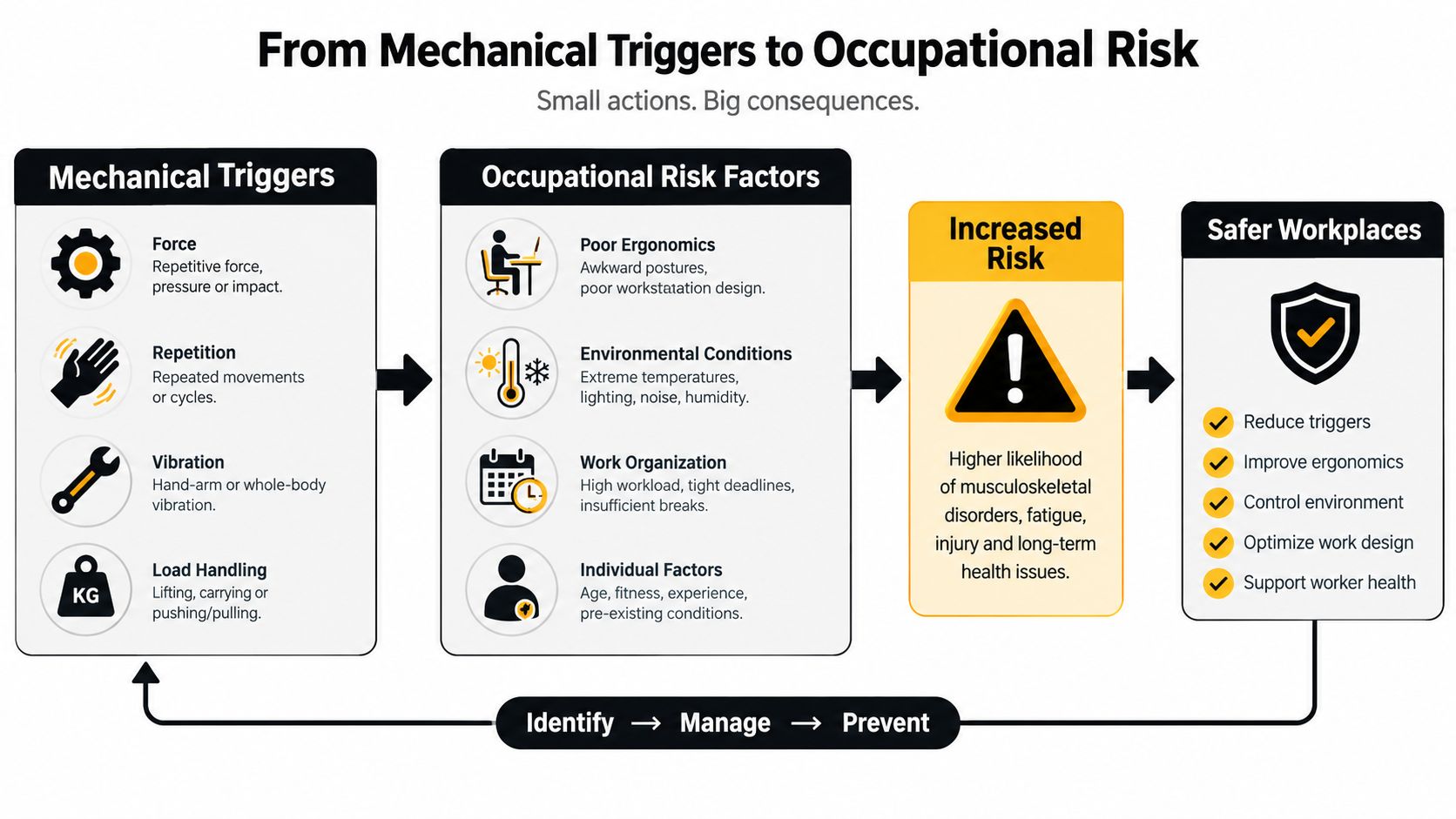
The loads that commonly provoke guarding
- Repetitive lifting: Even a manageable object can become provocative when you handle it repeatedly without enough variation or recovery.
- Reach distance: Holding a load away from your torso increases the demand on the back because the spinal muscles must resist a larger bending force.
- Bending and twisting together: This combination reduces your ability to distribute force through the hips and legs, particularly when repeated under fatigue.
- Carrying over distance: A load that feels comfortable at the start of a shift may become difficult as the trunk muscles tire.
- Static posture: Sitting or standing in one position doesn't necessarily injure the back, but it reduces movement variety and can make the next transition feel abrupt.
- Unconditioned effort: Shovelling, lifting during a move, or returning to sport after inactivity can exceed current tissue capacity even when the movement appears ordinary.
“Bad posture” is too vague to guide change. The better question is, which posture is held for too long, under what load, and with how much fatigue? A slightly flexed back during a controlled lift isn't automatically dangerous. Repeated flexion while reaching, twisting, and carrying is a different exposure.
A practical audit of your day can reveal more than a generic stretching routine. Note when symptoms appear, whether they follow a particular task, how far the load is held from your body, and whether the spasm arrives after accumulated fatigue rather than the first movement. Strategies for preventing repetitive strain injury are most useful when they change that exposure, not when they just encourage you to tolerate the same workload with more discomfort.
Differentiating Muscular Strain from Structural Conditions
Most acute spasms fit a mechanical pattern, but not every back symptom is just a tight muscle. The quality and spread of the symptoms matter, although they can't replace an examination.
A muscular strain or protective spasm often feels broad, tight, aching, or cramping. You may notice a tender area beside the spine, restricted movement, and pain that changes with position or effort. The muscles can feel hard or overactive because they're trying to control movement around an irritated region.
Nerve irritation tends to behave differently. Pain may travel into the buttock or leg and feel sharp, burning, electric, or associated with pins and needles. Numbness or weakness raises the importance of a clinical assessment, especially if symptoms are worsening or affecting walking. A joint irritation, such as involvement of a facet or sacroiliac region, may cause more localised pain with reflex tightening around the area, but symptoms can overlap.
| Pattern | What you may notice | Appropriate response |
|---|---|---|
| Muscular guarding | Local tightness, aching, cramping, and movement-related pain | Modify load, use comfortable mobility, and monitor progress |
| Possible nerve involvement | Radiating, burning, electric pain, altered sensation, or weakness | Arrange clinical assessment, especially when neurological symptoms progress |
| Possible joint irritation | Localised pain with certain positions and protective stiffness | Seek assessment if it persists, recurs, or limits normal function |
The distinction between bone and muscle pain can give you more useful vocabulary when describing symptoms, but self-diagnosis has limits. A spasm can occur alongside a disc problem, joint irritation, or nerve sensitivity, and a lack of dramatic symptoms doesn't rule out every important condition.
A persistent or recurrent pattern deserves more attention than a single episode that steadily settles. Repeatedly suppressing the spasm without examining the task, movement strategy, or neurological signs can leave the primary driver unchanged.
Immediate Self-Care and Targeted Topical Relief
When a spasm starts, the first goal is to lower the threat response without freezing the back completely. Move into a comfortable position, take slow breaths, and avoid repeatedly testing the painful movement. Then use gentle changes of position, such as a short walk around the room or easy pelvic movements, provided they don't cause sharp or spreading symptoms.
Canadian family-practice guidance supports heat therapy for short-term pain reduction, particularly when muscle spasm is present (College of Family Physicians of Canada guidance). Heat may help the muscles relax enough for comfortable movement. Ice can feel preferable after a clearly aggravating event or when the area feels acutely irritated, so the choice should be based on which option improves comfort rather than a rigid rule.
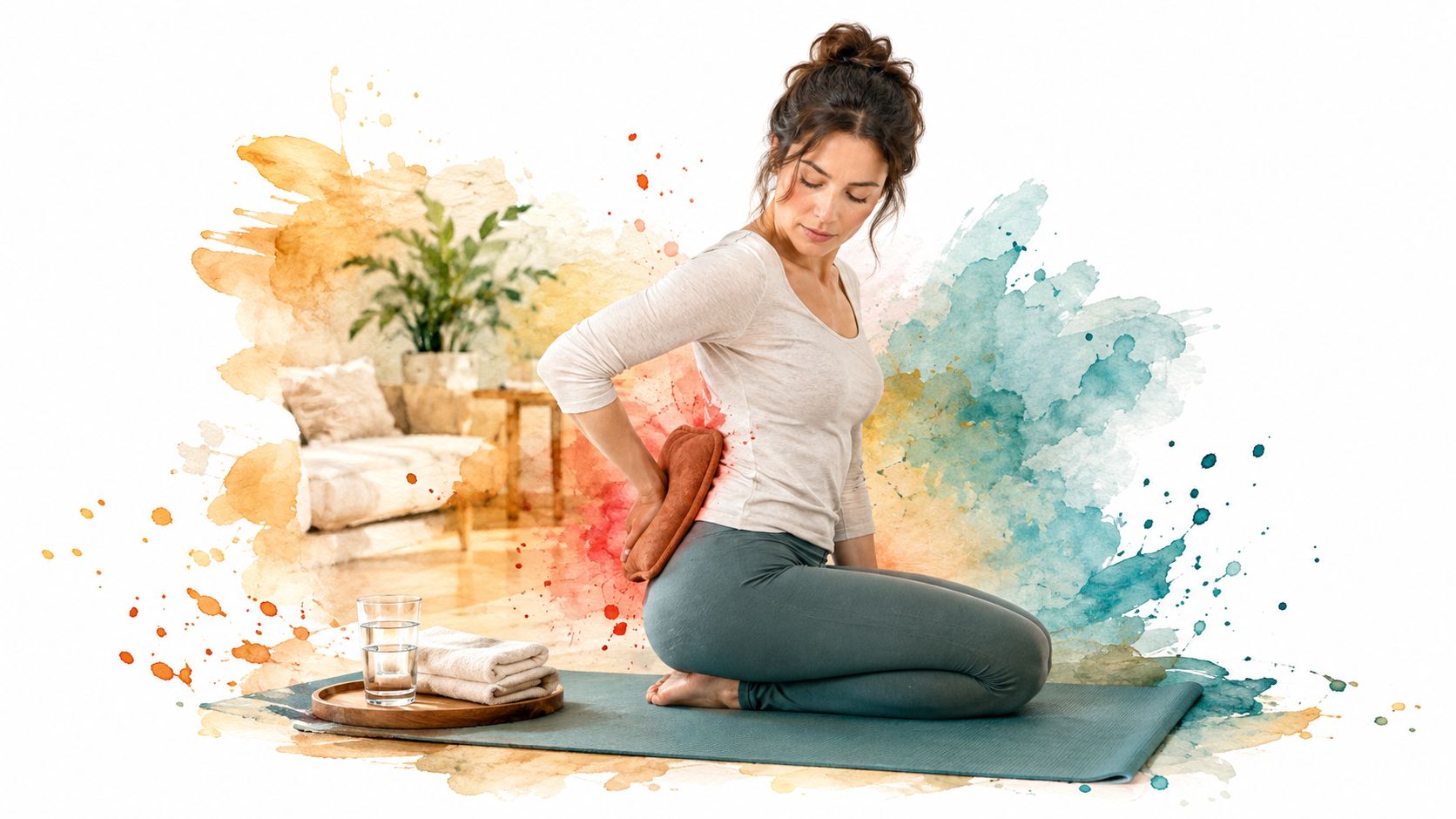
A useful first-response sequence
- Unload the position: Stop the lifting, bending, or twisting task. Sit or lie in a position that reduces symptoms, but don't stay there for the rest of the day.
- Apply comfortable heat or cold: Protect your skin and use the option that reduces discomfort. Stop if the skin becomes painful, numb, or irritated.
- Restore small movements: Try brief, easy walking and frequent position changes. Pain-free movement is more useful than forcing a stretch.
- Use local relief when appropriate: A targeted topical analgesic can reduce minor muscle and joint pain enough to make gentle movement more tolerable. MEDISTIK offers topical formats, including a spray and stick, intended for temporary relief of sore muscles and joints.
- Return to activity gradually: Resume ordinary tasks in smaller doses, avoiding the exact combination of load, reach, bend, and twist that triggered the episode.
Topical treatment should support movement, not disguise warning signs so you can continue heavy work. If you're pregnant or reviewing supplements for another reason, discuss magnesium choices with a qualified clinician and use a specialised resource on prenatal nutrition with magnesium rather than assuming a supplement will correct a mechanical spasm. For the practical choice between temperature-based approaches, see back spasms and heat or ice.
Long-Term Prevention and Spinal Load Management
Preventing another spasm isn't about keeping your back perfectly still or maintaining one ideal posture. It's about building enough capacity for the tasks you repeatedly perform, then managing those tasks so the demand doesn't outrun recovery.
The trunk and hips work as a system. Stronger abdominal, back, and gluteal muscles can help distribute force during lifting, carrying, climbing, and sport. Conditioning doesn't make the spine invulnerable, but it gives you more options for sharing load instead of asking fatigued spinal muscles to do everything.
Build capacity around your real activities
A desk worker needs a different plan from a warehouse worker. For prolonged sitting, adjust the workstation so the screen, chair, and keyboard support a comfortable position, then interrupt sitting with brief movement. For manual work, practise the actual patterns that cause trouble, including hip hinging, close-load carrying, controlled rotation, and staged lifting.
“Core work” also needs context. A set of exercises that never resembles your job may improve general strength without changing how you handle a patient, tool, or box. A physiotherapist can help scale exercises from low-load control to the demands of your work or sport. A practical exercise routine for back pain should match your current irritability and progress gradually.
Use movement snacks, not perfect posture
Small interruptions can be easier to maintain than a major lifestyle overhaul:
- Stand during a phone call.
- Walk briefly after a period of sitting.
- Change your stance while working at a bench.
- Alternate carrying sides when the task allows.
- Place frequently used items closer to reduce repeated reaching.
- Divide a heavy task into smaller trips where possible.
Track the relationship between workload and symptoms. If a shift, training session, or weekend project repeatedly causes a flare, reduce volume or improve technique before adding more strengthening. Prevention is a continuing process of load management, tissue capacity, and recovery, not a one-time correction.
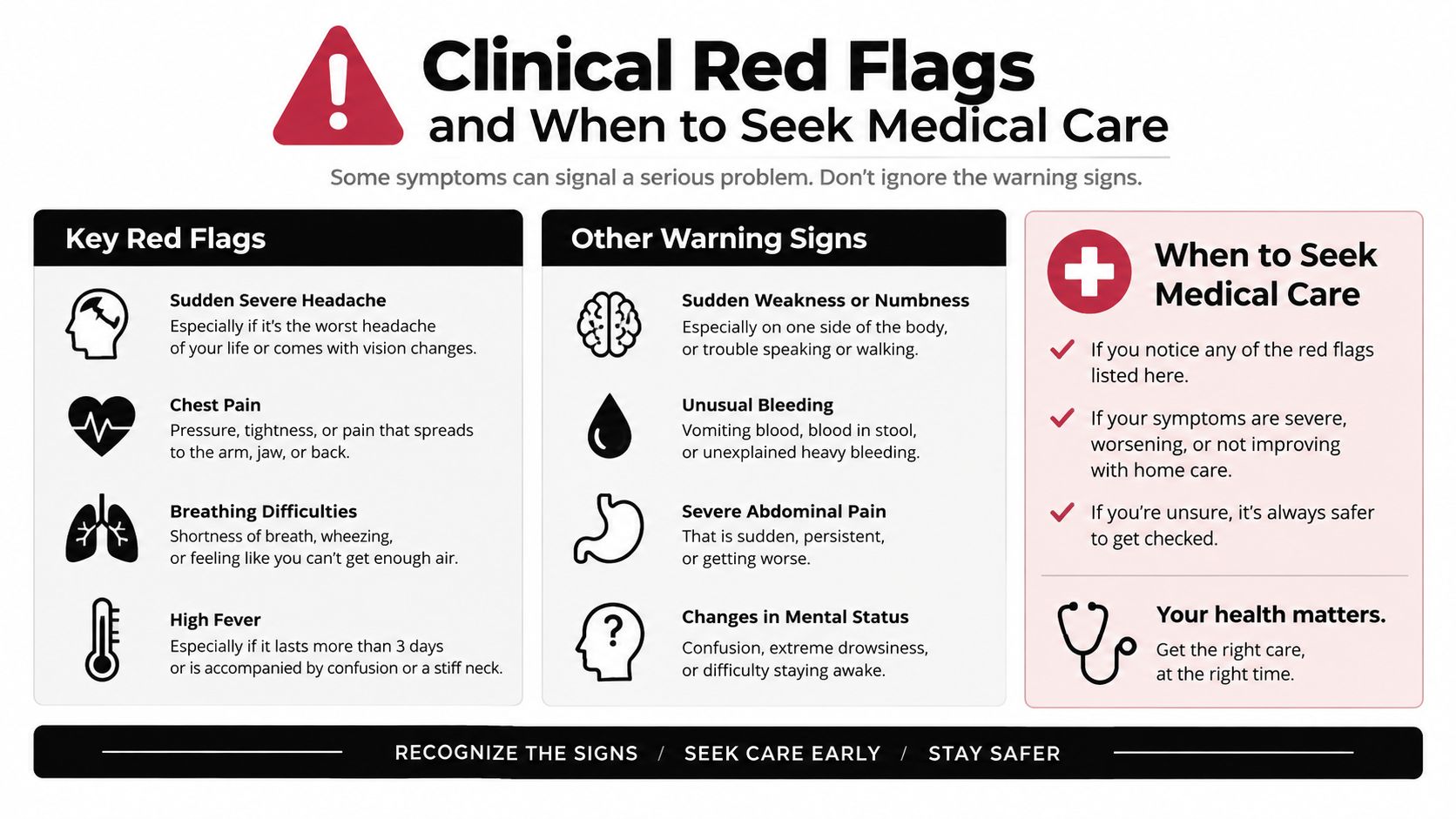
Clinical Red Flags and When to Seek Medical Care
Conservative care suits many uncomplicated mechanical spasms, but some symptoms require prompt medical attention. Seek urgent assessment for new bowel or bladder dysfunction, numbness in the saddle area, or progressive weakness in the leg. These signs can indicate significant neurological compromise and shouldn't be managed with heat, stretching, or topical treatment alone.
You should also arrange medical evaluation when back pain follows significant trauma, occurs with fever or other systemic illness, or is accompanied by unexplained weight loss. Pain that's unrelenting, worsening at rest, or unlike your usual mechanical symptoms deserves a clinician's review. A new spasm in someone with relevant medical risk factors also warrants a lower threshold for assessment.
Why imaging isn't automatically the next step
People often want an X-ray or MRI immediately, especially when a spasm feels severe. Canadian guidance generally supports avoiding routine imaging for uncomplicated low-back pain when there are no red flags, because a scan may show age-related or incidental findings that don't explain the current pain. Imaging becomes more useful when the examination suggests a fracture, infection, serious disease, or significant nerve involvement.
That approach isn't a refusal to investigate. It's a way to match the test to the clinical question. A healthcare professional can assess strength, sensation, reflexes, movement, medical history, and symptom behaviour before deciding whether imaging or another investigation is warranted.
Seek urgent help now if you develop saddle numbness, sudden bowel or bladder changes, or worsening leg weakness.
If symptoms are severe but gradually improving, continue to monitor function and arrange care if progress stalls. If they keep recurring, the appointment should examine work demands, training volume, movement habits, sleep, and other contributing factors rather than focusing only on temporary muscle relaxation.
Common Questions About Back Spasm Recovery
Should you stretch a muscle that's actively spasming?
Usually, don't force it. Aggressive stretching can increase the stretch reflex and make a guarding muscle tighten further, particularly during the most irritable phase. Use small, comfortable movements instead, then reintroduce gentle mobility as the spasm settles. A stretch should feel manageable, not like a test of endurance.
How long should recovery take?
There isn't one reliable timetable because the trigger, tissue sensitivity, workload, sleep, and general conditioning all differ. A straightforward mechanical episode should show a gradual trend toward easier movement and better function. If pain is worsening, staying highly limiting, or repeatedly returning with ordinary activity, arrange an assessment rather than repeatedly waiting it out.
Is sleep position the cause?
An awkward position can contribute to a spasm, but it isn't automatically the underlying problem. Choose a position that allows relaxed breathing and reduces symptoms, such as side-lying with support between the knees or lying on your back with the legs supported. The best position is the one that lets you sleep and change position without provoking a sharp response.
Can topical relief be used during a workday?
Read the product directions, apply only to intact skin, and avoid combining products unless a pharmacist or clinician advises you to do so. Use topical relief to make light movement and a modified task more tolerable, not to push through heavy lifting or ignore radiating symptoms. If you need repeated applications just to complete ordinary work, that pattern calls for a broader management plan.
Do recurring spasms mean your back is damaged?
Not necessarily. Recurrence often reflects repeated exposure to the same load, insufficient capacity, or a work and training pattern that hasn't changed. That doesn't make the symptom insignificant. It means the most useful intervention may be a detailed assessment of how you lift, carry, sit, train, recover, and respond to early warning signs.
MEDISTIK provides Canadian-made topical analgesic options for temporary relief of minor muscle and joint aches, including formats designed for use at home, in the clinic, during work, or around sport. Visit MEDISTIK to explore targeted topical relief and practical pain-management resources that can support comfortable movement while you address the mechanical cause of recurring back spasms.


