

When you pull a muscle, the first question that usually pops into your head is, "How long will this take to heal?" The honest answer is: it depends entirely on the severity. A minor tweak might feel better in a week or two, but a serious tear could sideline you for months.
Your Muscle Strain Recovery Timeline Explained
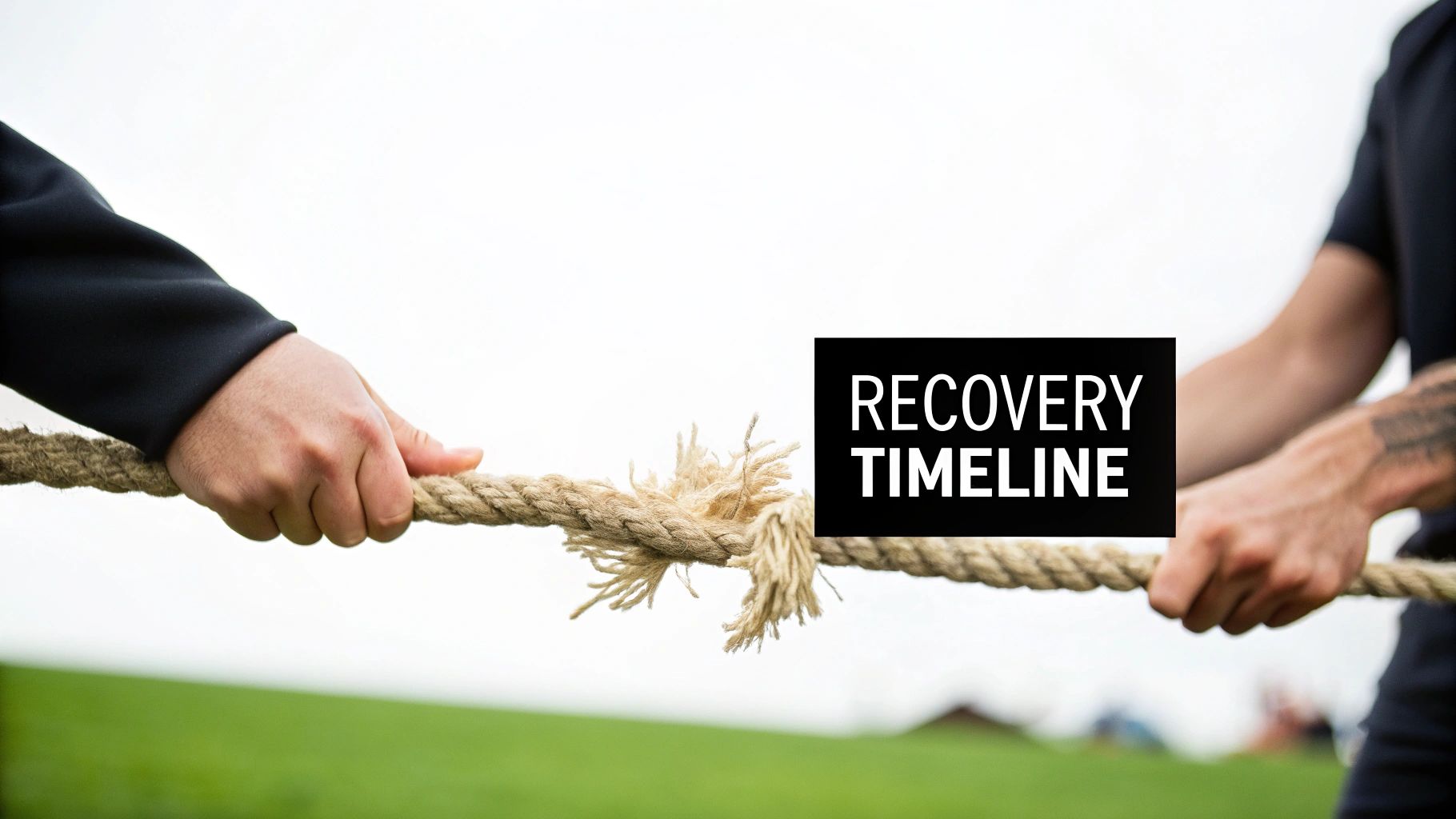
To get a clearer picture of your recovery, you first need to understand the grade of your injury. Imagine your muscle is a thick rope made up of thousands of individual fibres. The healing time is directly tied to how many of those fibres were damaged.
Grading Your Injury
Muscle strains are graded on a simple scale from I to III, with each grade representing a different level of damage and a different path back to health.
- Grade I (Mild): Think of this as a slightly frayed rope. Only a handful of muscle fibres are stretched or have tiny tears. You’ll probably feel some tenderness and mild pain, but you should still have a full range of motion.
- Grade II (Moderate): Now, the rope is partially torn. A significant number of fibres are damaged, leading to noticeable weakness, pain, and some loss of function. Bruising is common here.
- Grade III (Severe): The rope has snapped in two. This is a complete tear or rupture of the muscle. The pain is severe, swelling is significant, and you'll have a total loss of function in that muscle.
A Grade III tear can sometimes create a visible "divot" or gap in the muscle. This is a serious injury that usually needs a doctor's evaluation to see if surgery is on the table.
In Canada, recovery timelines for muscle strains vary quite a bit. A Grade I injury, the most common type involving microscopic fibre damage, typically heals within one to three weeks. Grade II strains need more time, usually around four to eight weeks. A severe Grade III tear can take eight to twelve weeks or even longer to fully recover. For more insights from Canadian physiotherapy experts on sprain and strain recovery, you can check out this resource from Huron Crossing Physiotherapy.
Muscle Strain Healing Times at a Glance
For a quick reference, here’s a breakdown of what to expect for each grade of muscle strain. Keep in mind that these are just general guidelines—your personal recovery journey will depend on several other factors we'll get into next.
| Strain Grade | What It Feels Like | Expected Healing Time |
|---|---|---|
| Grade I | Mild discomfort, tightness, and tenderness with minimal loss of strength. | 1 to 3 Weeks |
| Grade II | Moderate pain, noticeable weakness, bruising, and some loss of function. | 4 to 8 Weeks |
| Grade III | Severe, sharp pain, complete loss of function, and significant swelling. | 8 to 12+ Weeks |
Remember, these timelines aren't set in stone. Your age, overall health, and how you manage the injury all play a huge role in how quickly—and how well—you bounce back.
The Three Biological Stages of Muscle Healing
To really get a handle on the healing time for a muscle strain, you have to look past the calendar and appreciate the incredible biological construction project happening inside your body. Think of it like building a house—muscle repair follows a very specific, three-stage blueprint. If you rush a phase or use the wrong tools at the wrong time, you end up with a weak structure that's just waiting to collapse again.
Each stage flows into the next, creating a seamless transition from that first painful moment to a full recovery. Understanding what your body is up to at each step is the key to helping it along, ensuring the final repair is strong and resilient. Let's break down this amazing natural process.
Stage 1 The Inflammation Phase (Destruction)
This first stage kicks off the second you get injured and usually takes centre stage for the first one to three days. Picture it as the emergency response and demolition crew rushing to the scene. When muscle fibres tear, blood vessels break, causing a hematoma (a collection of clotted blood) that leads to that familiar swelling and bruising.
But that inflammation isn't the bad guy; it’s a crucial first step. Specialized cells swarm the area to start the cleanup. They’re like a demolition team, clearing out all the dead and damaged muscle fibres and cellular junk. This whole process walls off the injury site, preventing more damage and getting it prepped for the rebuild.
It's tempting to try and wipe out all inflammation with aggressive icing or anti-inflammatory meds, but your body needs some of it to signal the start of the repair process. The goal is to manage the swelling, not obliterate this essential first response.
During this phase, the name of the game is protection. Your body is in a delicate cleanup mode, and the best thing you can do is let it work without causing more harm.
Stage 2 The Repair Phase (Regeneration)
Once the demolition crew has cleared the site, the "builders" arrive. The repair (or proliferation) phase gets going around 24 to 48 hours post-injury and can last for several weeks. This is a critical time when your body starts laying down the foundation for new tissue.
Specialized cells called fibroblasts get to work producing collagen, which acts as a sort of biological scaffold. These new collagen fibres are thrown down in a messy, disorganized way to quickly patch the gap in the torn muscle. Imagine slapping spackle on a hole in the wall—it fills the space, but it's not exactly strong or neat.
This new tissue, basically scar tissue, is incredibly fragile. This is precisely why this phase has such a big impact on the overall healing time of a muscle strain. If you push the muscle too hard now, you can easily re-tear those delicate new fibres, which sends you straight back to square one—the inflammation stage—and makes your recovery time much longer.
To give your body the best support during these biological stages of muscle healing, you need to provide the right building materials. Ensuring you get enough protein and other key nutrients is vital for creating that collagen scaffold. For a great breakdown, this guide on foods that help muscle recovery and repair offers some excellent insights.
Stage 3 The Remodeling Phase (Maturation)
The final stage is where the real strength comes from. The remodeling phase starts not long after the repair phase but can continue for a year or even longer. Now, the finishing crew comes in to transform that weak, jumbled patch of collagen into strong, functional muscle tissue.
Over the coming weeks and months, your body works to reorganize those messy collagen fibres. Through gentle, progressive stress from your rehab exercises, these fibres start to line up in the direction of tension, just like the original muscle. This process is what builds the tissue's strength and flexibility back up.
The whole point here is to gradually reintroduce load, which tells the body to make the repaired area stronger and more durable. If you skip this controlled stress, the scar tissue can stay weak and stiff, which seriously increases your risk of getting injured again down the line. This final, lengthy stage is what ultimately decides how well your muscle works for the long haul.
Factors That Can Change Your Recovery Timeline
Ever wondered why your muscle strain seems to be clearing up in two weeks, while a friend with a nearly identical injury is still struggling a month later? It's because the healing time for a muscle strain is never a one-size-fits-all number. Your personal biology, lifestyle, and even the specifics of the injury itself play a huge role in how fast your body can get back to business.
Think of your body like a construction site. After an injury, a repair crew is dispatched to the scene. The speed and quality of their work depend entirely on the tools they have, the materials available, and the overall conditions on-site. Several factors can either help this crew work at peak efficiency or throw a major wrench in their plans.
Non-Negotiable Biological Factors
Some variables are simply out of our control, but understanding them is key to setting realistic expectations for your healing journey.
- Age: It's a simple fact of life—as we get older, our body's natural repair processes slow down. A younger person's system usually has more robust circulation and a faster rate of protein synthesis, both of which are critical for rebuilding damaged muscle fibres.
- Injury Location and Blood Supply: Not all muscles are created equal. Those with a rich blood supply, like your quads or biceps, tend to heal faster because they get a constant flow of oxygen and nutrients needed for repair. Areas with less circulation, especially near tendons, often have a much slower recovery.
- Severity of the Initial Injury: This is the most straightforward factor. A minor Grade I strain involves cleaning up and rebuilding far less tissue than a severe Grade III tear. Naturally, the timeline will be much shorter for the smaller job.
Lifestyle Variables You Can Control
While you can't turn back the clock or change where you pulled a muscle, you have a surprising amount of influence over other key recovery factors. Nailing these is your best bet for a quicker return to your daily activities.
Your body does its most important repair work while you sleep. Prioritising seven to nine hours of quality sleep per night is one of the most powerful, non-negotiable actions you can take to support muscle healing.
Proper nutrition is the fuel for reconstruction. A diet high in protein provides the essential amino acids to build new muscle, while key vitamins and minerals support all the cellular processes driving the repair. On the flip side, things like dehydration can slow down nutrient transport, and chronic stress pumps out cortisol—a hormone known to interfere with tissue repair and prolong inflammation. If you're looking for more ways to support the process, you can explore our guide on how to speed up muscle strain recovery.
The Challenge of Repetitive Strain Injuries
Not every muscle strain happens in one dramatic moment. Repetitive Strain Injuries (RSIs) are a completely different animal, stemming from thousands of tiny micro-traumas over time instead of a single event. They are especially common in many Canadian workplaces and sports.
An RSI develops when a muscle is stressed over and over without enough time to recover, which leads to chronic inflammation and tissue breakdown. This creates a really difficult healing environment because the damage is cumulative. In Canada, RSIs are a major public health concern—reports show that over two million Canadians have experienced one severely enough to limit their activities. The Association of Workers' Compensation Boards of Canada also reported over ten thousand accepted lost-time injuries from similar issues in 2019 alone.
Because the tissue is in a constant state of irritation, the healing timeline for an RSI is often much longer and more complicated than an acute strain. Recovery isn't just about healing the existing damage; it's also about identifying and changing the repetitive motion that caused the problem in the first place. This makes a careful, patient approach absolutely crucial.
Your Step-By-Step Rehabilitation Roadmap
Figuring out how to get from a fresh injury back to full strength can feel overwhelming, but breaking it down into a structured plan makes all the difference. Think of your rehabilitation as a journey with three distinct phases, each designed to work with your body's natural healing process. This roadmap will walk you through each step, helping you support your recovery without pushing too hard, too soon.
The big idea is to move from managing the initial damage to rebuilding a strong, functional muscle. When you know what to do—and just as importantly, when—you can seriously improve your healing time muscle strain and lower the risk of another injury down the road.
Phase 1: The Acute Phase (First 1 to 5 Days)
This is your game plan for right after the injury happens. For the first few days, your body is in full-on damage control mode. Your main job is to protect the injured area and manage that initial rush of inflammation. This is where the classic P.R.I.C.E. protocol is your best friend.
This initial phase, usually lasting the first three to five days, is critical for setting the stage for a good recovery. The goal is simple: limit further damage by minimizing bleeding and swelling.
- Protection: Step one is to stop doing whatever causes sharp pain. This could mean using crutches for a bad leg strain or just avoiding heavy lifting if you've strained your back.
- Relative Rest: This doesn’t mean locking yourself on the couch. Gentle, pain-free movement is actually good for blood flow, but you need to avoid anything that puts stress on the injured muscle.
- Ice: Grab a cold pack and apply it for 15-20 minutes every few hours. This is a huge help for managing both pain and swelling.
- Compression: Gently wrapping the area with an elastic bandage helps keep swelling in check. Just make sure it’s snug, not uncomfortably tight.
- Elevation: Whenever you can, prop the injured limb up so it's higher than your heart. This uses gravity to help drain away excess fluid.
During this phase, topical analgesics can be a lifesaver. A cooling roll-on, for example, can give you targeted relief right where it hurts, without the side effects of oral medications. It just makes managing the discomfort a whole lot easier.
Phase 2: The Repair And Mobility Phase (Days 3 to 21+)
Once the initial inflammation starts to calm down, you move into the repair phase. Behind the scenes, your body is hard at work laying down new, fragile collagen fibres to patch up the tear. Your focus needs to shift from pure protection to promoting organized healing and carefully restoring your range of motion.
The golden rule here is pain-free movement. If you push through sharp pain at this stage, you can easily re-tear that delicate new tissue and find yourself right back at day one.
Actionable Steps for Phase 2:
- Gentle Stretching: Start with very light active or passive stretches. If you've strained a hamstring, this could be as simple as lying on your back and gently pulling your knee toward your chest.
- Isometric Contractions: These are exercises where you tense the muscle without actually moving the joint. For a quad strain, you could sit with your leg straight and just tighten the muscle for a few seconds, then let go.
- Light Cardio: Hopping on a stationary bike or going for a walk can boost blood flow to the area without impact, which is exactly what the healing tissue needs.
For a common injury like a calf strain, a more specific plan is key. You can find detailed exercises and tips in our article on how to heal a calf strain quickly.
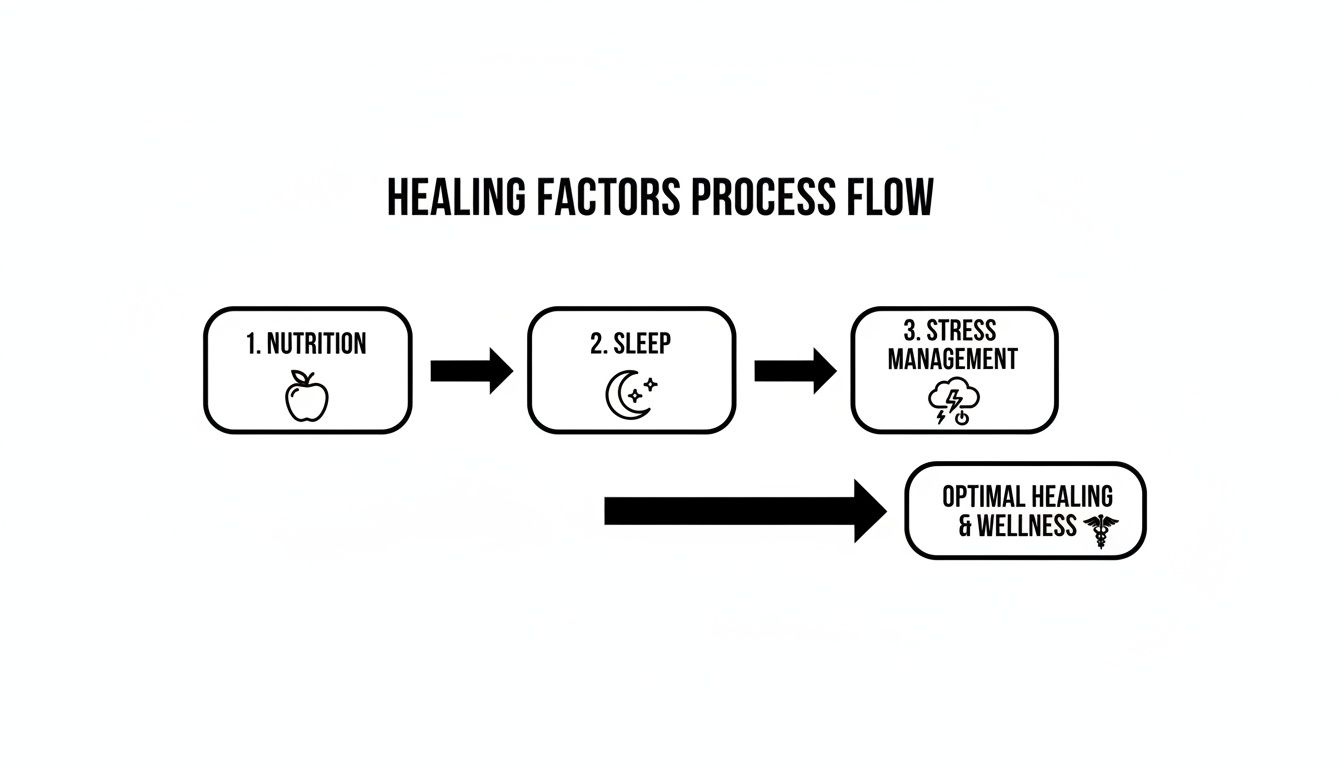
As you can see, things like good nutrition, quality sleep, and managing stress aren't just nice-to-haves; they are fundamental parts of an efficient healing process.
Phase 3: The Remodeling And Strengthening Phase (Week 3 Onward)
Once you've got most of your pain-free range of motion back, it’s time for the final—and longest—phase: remodeling. The mission now is to strengthen that new tissue and gradually reintroduce the movements it needs to handle for daily life and your favourite activities.
This is where your patience will be tested the most. The muscle might feel a lot better, but that new tissue is still maturing. Jumping back into your old routine too quickly is the number one reason people re-injure themselves.
Your training should now focus on progressive overload. This just means you'll gradually increase the demands on the muscle, which encourages it to get stronger and more resilient.
- Concentric and Eccentric Strengthening: Start with light resistance. For a bicep strain, this might be curls with a very light weight, making sure to control the movement both on the way up (concentric) and on the way down (eccentric).
- Functional Exercises: Begin adding movements that look like your real-life activities. If you’re a runner, this is where you progress from walking to jogging and then to running drills.
- Proprioceptive Training: These are exercises that challenge your balance and coordination, like standing on one leg. They help retrain the connection between your brain and your muscles that got disrupted by the injury.
To get professional guidance tailored to your specific needs and environment, you might consider in-home rehabilitation services. A physiotherapist can design a goal-oriented program that ensures you're progressing safely, helping you get back to your activities with confidence.
Managing Pain the Smart Way During Recovery
Pain is a normal, expected part of healing, but it shouldn't completely derail your recovery. Smart pain management isn't about toughing it out or ignoring what your body is telling you. It's about using the right strategies to stay comfortable enough to actually participate in your own rehabilitation.When you manage pain effectively, you can perform the gentle movements and specific exercises that are so important for rebuilding strong, healthy muscle tissue. It also helps you avoid developing funky movement patterns to compensate for the pain, which can cause a whole new set of problems down the line.
Choosing Between Hot and Cold Therapy
One of the first questions people ask is whether to grab an ice pack or a heating pad. The answer completely depends on where you are in the healing process, as each one does something very different. Using the wrong one at the wrong time can actually set you back.
Cold Therapy (Cryotherapy):
- When to Use It: Stick to cold therapy in the acute inflammation phase, which is typically the first 24 to 72 hours after you get hurt.
- What It Does: Cold makes your blood vessels constrict, which is a fancy way of saying it clamps them down. This helps reduce swelling, limit bruising, and numb the area for some immediate pain relief. Think of it like a fire extinguisher for that initial inflammatory flare-up.
- How to Apply: Use an ice pack wrapped in a thin towel for 15–20 minutes at a time, several times a day. Never put ice directly on your skin.
Heat Therapy (Thermotherapy):
- When to Use It: Bring out the heat once you're in the later repair and remodeling stages, usually after the first 72 hours once the initial, major swelling has gone down.
- What It Does: Heat does the opposite of cold—it opens up the blood vessels (vasodilation) to boost blood flow. This brings a fresh supply of oxygen and nutrients to the area to speed up tissue repair and helps flush out waste products. It’s brilliant for soothing stiffness and relaxing tight muscles before you do some gentle stretching.
- How to Apply: A heating pad or warm compress for 15–20 minutes is perfect, especially right before you do your rehab exercises.
Targeted Relief with Topical Analgesics
While popping a pill for pain is common, those medications affect your entire system. Topical analgesics are a much smarter alternative because they deliver pain-relieving ingredients right where you need them, giving you targeted relief with fewer system-wide side effects.
They work by creating a cooling or warming sensation on your skin. This sensation sends a new signal to your brain that essentially distracts it, overriding or "gating" the pain signals coming from your injured muscle. To get the full story on this amazing biological process, you can read about the Gate Control Theory of pain in our in-depth guide.
Topical products are a fantastic tool for managing the day-to-day aches of a healing muscle strain. A cooling roll-on can be a lifesaver for that acute soreness, while a warming formula can help get the muscle ready for gentle activity in the later stages.
Hands-On Techniques for Releasing Tension
As you get further into your recovery, adding some gentle hands-on methods can make a world of difference for your comfort and the quality of the healing tissue. These techniques help release built-up tension, improve blood flow, and break down any minor adhesions or "knots" that can form in the muscle as it heals.
- Gentle Massage: Light massage around the injured area helps relax the muscle and surrounding tissues, which improves circulation and eases discomfort. The key here is gentle—avoid any deep, aggressive pressure directly on the injury site, especially early on.
- Foam Rolling: Once your physiotherapist or doctor gives you the green light, foam rolling is an excellent way to work on tightness in the muscles around the injury. This helps restore your normal movement patterns and stops secondary stiffness from setting in.
By mixing and matching these strategies, you can build a solid pain management plan that works with your body's natural healing process, making your recovery journey a whole lot smoother and more comfortable.
When to See a Professional for Your Muscle Strain
While most minor muscle strains get better with a bit of rest and self-care at home, some signs are your body's way of telling you this is more serious. Ignoring these red flags can drag out your recovery, lead to improper healing, or even set you up for chronic problems later on.
Knowing when to switch from couch-based care to a clinical evaluation is a huge part of a successful recovery. Think of these signs as your body’s emergency signals—clear indicators that you need an expert diagnosis from a doctor or physiotherapist to get on the right track.
Obvious Signs of a Severe Injury
Some symptoms are impossible to miss and need immediate attention. If you experience any of the following, it’s time to seek professional medical advice right away.
- An Audible "Pop" or "Snap": Hearing a distinct sound at the moment of injury often means a complete muscle rupture or a tendon tearing away from the bone. This isn't something to wait out.
- A Visible Deformity: If you notice a gap, divot, or strange bulge in the muscle that wasn't there before, it can be a sign the muscle has torn completely and retracted.
- Inability to Bear Weight: Can't put any weight on the injured limb? Does moving it cause excruciating pain? This points to a significant Grade II or Grade III tear that needs a proper assessment.
- Major Swelling and Bruising: Rapid, widespread swelling or deep, dark bruising that shows up quickly suggests significant internal bleeding from torn muscle fibres and blood vessels.
Symptoms That Evolve Over Time
Not all warning signs appear instantly. Sometimes, how your symptoms change over the first couple of days tells you everything you need to know. Keep a close eye on these developments.
If your pain gets worse after the first 48 hours instead of gradually improving, it’s a strong signal that your self-care plan isn’t enough. This could indicate a more severe injury than you initially thought or a potential complication.
Also, be alert for any numbness, tingling, or a "pins-and-needles" feeling around the injury. These sensations could mean a nerve has been affected. Don't just hope it goes away—get it checked out. Making that call to see a professional ensures you get an accurate diagnosis and the right treatment plan for a full, uncomplicated recovery.
Common Questions About Muscle Strain Healing
Going through the recovery process always sparks a few questions. Getting straight answers is key to making smart decisions on your journey back to full strength and feeling confident in your body again. Let's tackle some of the most common things people ask about healing a muscle strain.
Can I Speed Up the Healing Time for a Muscle Strain?
While you can’t exactly hit the fast-forward button on your body's natural healing timeline, you can absolutely create the perfect environment for that process to run as smoothly and efficiently as possible. Think of it like giving your internal repair crew a five-star hotel and a gourmet menu.
The biggest things you can do are dial in your nutrition with plenty of protein, stay hydrated, and make quality sleep a priority—that's when most of the real tissue repair magic happens. Most importantly, stick to a structured, progressive rehab plan. Trying to push through sharp pain or skipping the foundational exercises is the fastest way to slow things down, not speed them up.
How Do I Know It Is Safe to Return to Sports?
Getting back on the field or in the gym should be about hitting functional milestones, not just circling a date on the calendar. Rushing back is one of the biggest reasons people re-injure themselves.
You're likely ready when you can check these boxes:
- Full Range of Motion: You can move the injured limb through its entire normal range without any pain.
- Symmetrical Strength: The injured side has clawed its way back to at least 90% of the strength of your uninjured side.
- Pain-Free Functional Movement: You can perform movements specific to your sport—like sprinting, cutting, or jumping—without pain or even a hint of hesitation.
A physiotherapist can run you through some objective tests to give you the official green light, which seriously reduces your risk of another frustrating setback.
The goal isn’t just to be pain-free, it's to be resilient. Your repaired muscle needs to be strong enough to handle the chaotic, unpredictable demands of your sport, not just a controlled test in a clinic.
Is This Pain From Healing or a Re-Injury?
Learning to tell the difference between normal recovery soreness and the sharp, blaring alarm of a re-injury is a crucial skill.
That post-exercise soreness, often called DOMS (Delayed Onset Muscle Soreness), usually feels like a dull, widespread ache across the muscle belly. It tends to show up 24-48 hours after you've tried a new or tougher workout and fades away within a couple of days. A re-injury, on the other hand, usually hits you with a sharp, sudden, and specific pain right when you make a certain move. It might also bring immediate weakness or swelling along with it.
Think of it this way: sharp pain is your body’s stop sign. DOMS is just a progress report letting you know your muscles are adapting and getting stronger.
At MEDISTIK, we know that managing pain smartly is a huge part of a successful recovery. Our targeted, extra-strength topical analgesics are made to help you control discomfort so you can stay consistent with your rehabilitation and get back to what you love. Move with confidence and check out our Canadian-made solutions at MEDISTIK.


