

Ever felt a sharp, sudden twinge or a nagging, dull ache right between your shoulder blades? That's the classic sign of an upper back muscle strain, an injury that happens when the muscles supporting your spine get stretched too far or even tear. It can make simple things like turning your head or reaching for something on a high shelf surprisingly difficult.
Figuring out what's going on under the surface is the first step to getting real, lasting relief.
Unpacking Your Upper Back Anatomy
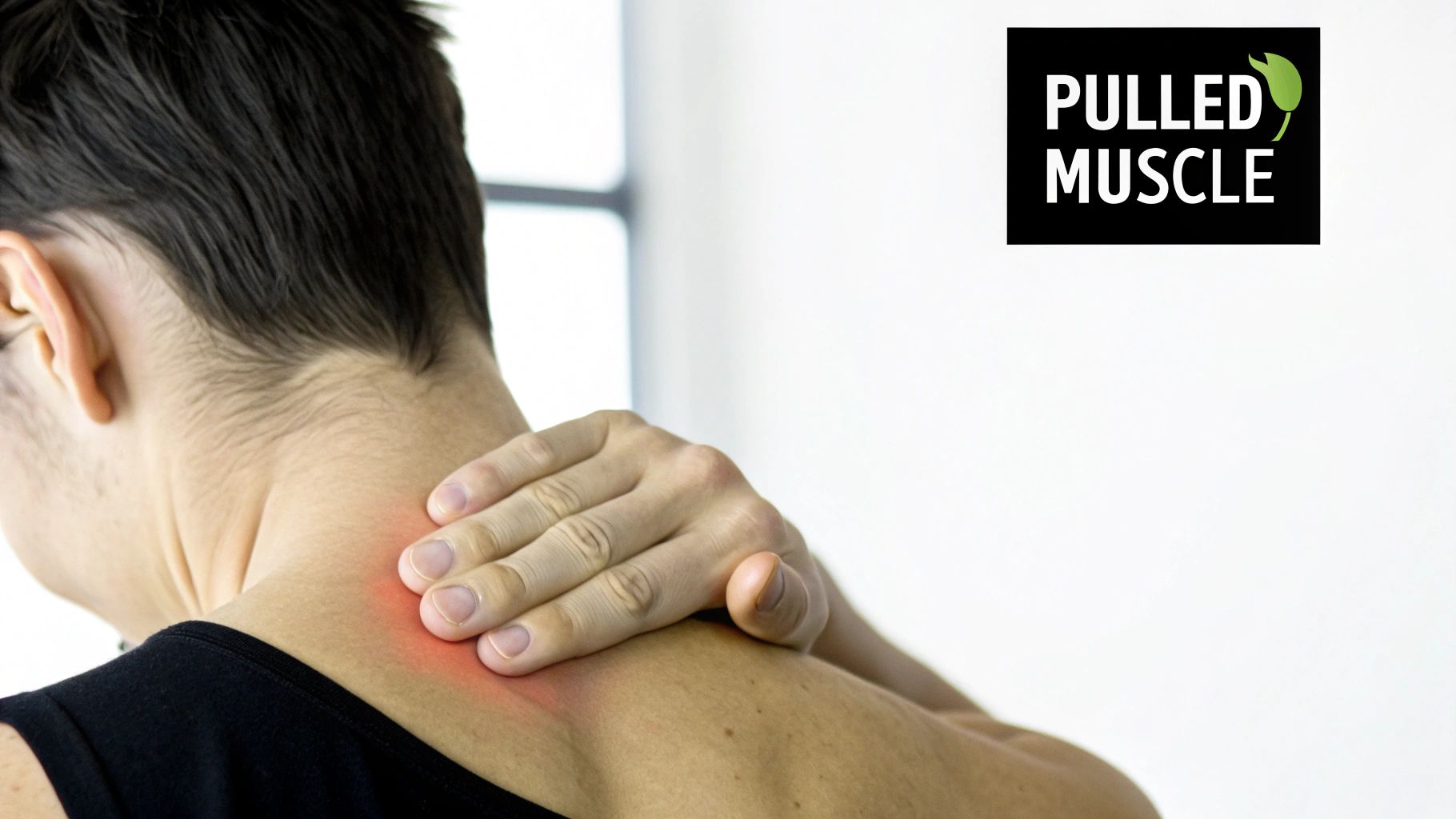
Imagine your upper back muscles as a complex network of ropes and pulleys. Each muscle is made up of thousands of tiny fibres that work in concert to hold you upright, move your arms, and keep your torso stable. When you strain your upper back, it’s like some of those individual fibres have frayed or snapped under pressure.
This area, known as your thoracic spine, is held in place by several key muscles that, unfortunately, often take the brunt of the damage.
Key Muscles Involved in Upper Back Strain
Most of the time, when we're talking about upper back strain, we're talking about two main muscle groups: the rhomboids and the trapezius.
- The Rhomboids: Tucked between your spine and your shoulder blades, these muscles are crucial for pulling your shoulders back. If you've strained them, you'll likely feel a deep, persistent ache right in that spot, especially if you try to squeeze your shoulder blades together.
- The Trapezius: This is the big, diamond-shaped muscle that stretches from the base of your neck, across your shoulders, and down to your mid-back. A "traps" strain is notorious for causing pain that can creep up into your neck, often leading to stiffness and even tension headaches.
When these muscles get overstretched, microscopic tears form in the muscle fibres. Your body’s natural emergency response kicks in, sending inflammatory cells to the site to start the healing process. This is what causes the swelling, tenderness, and pain you feel.
An upper back muscle strain isn't just a physical inconvenience—it's a major disruption. Suddenly, everyday activities like sitting at your desk, lifting a bag of groceries, or even taking a deep breath can become painful obstacles.
This kind of injury is incredibly common. In Canada, musculoskeletal issues are a huge deal, affecting a massive chunk of the population. A 2017 study actually found that back joint problems were the most prevalent of these conditions, which just goes to show how vulnerable this area is. You can read more about these musculoskeletal health trends to get the bigger picture.
It’s especially common for active people and those with physically demanding jobs, which makes finding effective pain management a top priority. Being proactive about your recovery isn't just about getting rid of the pain; it's about reclaiming your freedom to live, work, and play without being held back.
The Common Triggers of Upper Back Pain
An upper back muscle strain can feel like it hits you out of nowhere, but there’s almost always a specific trigger hiding in the background. Understanding what causes these injuries is your first real step toward preventing them.
Think of your muscle fibres like a brand-new elastic band—they’re designed to stretch and snap back into shape. But if you yank that band too hard all at once, or stretch it over and over for too long, it starts to lose its spring. Eventually, it can fray or even break.
That’s pretty much what happens to the muscles in your upper back, like the trapezius and rhomboids. Most strains boil down to one of two things: a single, forceful event (an acute injury) or the slow, creeping damage from repetitive actions (a chronic strain). Figuring out which one you’re dealing with gives you major clues for how to recover and stop it from happening again.
Acute Injuries from Sudden Overload
Acute strains are the "yank on the elastic band." They happen in a single, traumatic moment that pushes your muscle fibres way past their limit. This kind of injury is usually pretty dramatic and hard to forget—the pain is immediate and sharp, leaving you with no doubt that something just went wrong.
These sudden overloads can pop up in all sorts of everyday situations. A few of the most common culprits include:
- Improper Lifting: We've all been told to lift with our legs, and for good reason. Heaving a heavy box off the floor using your back is a textbook way to cause a strain.
- Sudden Twisting: A quick, awkward turn while swinging a golf club or reaching for something in the back seat of the car can easily strain the muscles supporting your thoracic spine.
- Accidents or Falls: The shock from a slip on an icy sidewalk or even a minor fender-bender can make your back muscles contract violently, causing them to tear.
- Overreaching: Lunging to catch a falling glass or stretching just a bit too far to grab something off a high shelf can put a sudden, unexpected load on your upper back.
Chronic Strain from Repetitive Stress
Unlike a dramatic, one-off injury, chronic strain is a much sneakier problem. It's the slow, relentless stretching of that elastic band—day after day, week after week—until it finally gives out. This type of upper back strain is often the result of poor posture, repetitive movements, or any activity that keeps your muscles in a constant low-grade state of tension.
This slow-burn damage is incredibly common in modern life and can affect anyone, from office workers to elite athletes. The source is almost always rooted in our daily habits.
The biggest risk factors for chronic upper back muscle strain are often the things we do every day without a second thought. It's the hours spent hunched over a desk or the same motion repeated on an assembly line that quietly chips away at muscle resilience over time.
This kind of persistent strain isn't a new problem. In fact, chronic back issues have been a major concern for Canadian workers for decades. Data from Statistics Canada going back to the late 1990s showed that high physical demands at work were a significant predictor for developing these problems. You can learn more about these long-standing trends in this report on back problems in the Canadian workforce.
The most common causes of chronic strain today include:
- Poor Posture: Slouching over a laptop or constantly looking down at a phone (what many now call "tech neck") places continuous tension on your upper back muscles. If you're dealing with discomfort from sitting all day, you might find our guide on the causes of pain in the middle of your back helpful, too.
- Repetitive Occupational Tasks: Jobs that involve doing the same motion over and over—think assembly line work, painting, or even certain tasks that first responders perform—create cumulative stress that builds up.
- Endurance Sports: Activities like swimming, rowing, or long-distance running can lead to overuse injuries if you don't focus on proper form and give your body enough time to recover between sessions.
Knowing When to See a Professional
Most upper back muscle strains get better with a bit of smart self-care, but knowing how to listen to your body is key to a safe recovery. It's really important to tell the difference between the usual discomfort of a pulled muscle and signs that point to something more serious that needs a professional eye. Getting this right means you can take the right action at the right time.
Think of it like the smoke detector in your house. A little puff of smoke from burnt toast (a mild strain) is something you can probably handle yourself by just opening a window. But if that alarm is blaring and you see thick smoke (red flag symptoms), you don't think twice about calling the fire department. Your body’s pain signals work in much the same way.
The type of pain you're feeling offers some valuable clues. A dull, nagging ache that gets worse when you move in certain ways is pretty typical for a standard upper back strain. You might feel it most when you reach for something on a high shelf or turn to look over your shoulder. This is your "burnt toast" scenario—annoying, for sure, but manageable.
Red Flags That Signal It's Time for Help
While most strains are minor, some symptoms should absolutely not be ignored. These are your body's version of a blaring fire alarm, signalling that the problem might be more than just a simple muscle issue and could involve nerves or even your spine.
If you experience any of the following, it is critical to get immediate medical attention from a doctor or at an urgent care centre:
- Radiating Pain: The pain doesn't just stay in your back but shoots down one or both of your arms.
- Numbness or Tingling: You get that "pins-and-needles" feeling or a loss of sensation in your arms, hands, or chest.
- Significant Weakness: A sudden, very noticeable weakness in your arms or hands that makes it tough to grip things.
- Pain Following a Major Trauma: Any severe upper back pain that kicks in after a big event like a car accident or a bad fall.
- Difficulty Breathing or Chest Pain: These can sometimes show up with a thoracic spine injury and need to be checked out urgently.
These symptoms suggest that something more than muscle fibres might be involved—like a herniated disc or nerve compression—and you need a professional to rule that out.
A minor muscle strain is an inconvenience; a nerve-related injury can have long-term consequences if left unaddressed. Prioritizing a professional evaluation when red flags appear is the safest path forward.
Choosing the Right Professional for Your Recovery
So, what if your symptoms aren't on the red flag list, but they're just not getting better with home care after a week or so? That's when consulting a healthcare professional is a really smart move. Different pros have different ways of treating an upper back strain, and knowing what they do can help you pick the best one for you.
A physiotherapist is a fantastic choice if you're looking for a personalized rehab plan. They're experts at figuring out muscle imbalances, improving your range of motion, and giving you specific exercises to strengthen the muscles that support your upper back. Their goal isn't just to fix the current injury but to help you prevent it from happening again.
A chiropractor will often focus on spinal manipulation and adjustments to get your joints moving better and improve alignment. They work to make sure your joints are functioning correctly, which can take a lot of stress off the muscles around them. Many people find this hands-on approach really effective for shaking off stiffness and getting back to normal.
At the end of the day, the goal is to get an accurate diagnosis and a solid, evidence-based treatment plan. A professional can clear up any confusion and guide you safely through recovery, making sure you get back to your life without pain.
Your First 48 Hours of At-Home Treatment
When you feel that sharp, sudden twinge of an upper back strain, what you do in the next two days can make all the difference. This 48-hour window is your critical first-response period. The right moves here will help you get a handle on the pain and inflammation, paving the way for a much smoother recovery.
Think of this initial phase as damage control. Your main goal is to calm the inflammatory storm that’s rushing to the injury site. We do this with a modified version of the classic RICE method—Rest, Ice, Compression, and Elevation. While compressing and elevating your upper back isn't really practical, rest and ice are your two most powerful tools right now.
Taming Inflammation with Rest and Cold Therapy
First things first: give that strained muscle a break. Pushing through the pain, whether you’re at your desk or in the gym, is only going to make things worse. You need to take the load off those injured muscle fibres so they can start their natural healing process without being re-injured.
This doesn't mean you need to be glued to the couch. It’s more about "active rest." Simply avoid any movements that cause a sharp jolt of pain, like lifting heavy objects, twisting suddenly, or reaching high overhead. How you sleep also plays a big role in your comfort during this stage; finding the best way to sleep with upper back pain can prevent you from waking up stiffer than you went to bed.
Next up is cold therapy. Grab an ice pack and apply it to the sore spot for 15-20 minutes every couple of hours. This is absolutely crucial in the first 48 hours. The cold causes your blood vessels to constrict (a process called vasoconstriction), which limits swelling and fluid buildup around the muscle. As a bonus, it also helps numb the area, giving you some much-needed pain relief.
The first 48 hours are all about managing the initial chaos of the injury. By focusing on rest and ice, you're actively fighting the inflammation that causes the worst of the pain and stiffness.
The Role of Topical Analgesics for Targeted Relief
Along with ice, a good topical analgesic can be a game-changer for managing pain right where it hurts. Products that create a cooling sensation, like MEDISTIK's natural ice roll-on, work on a similar principle. They use ingredients like menthol to create a cooling effect that helps block pain signals before they can even reach your brain.
This gives you targeted relief directly at the source, without the full-body effects you’d get from oral pain medication. It’s an incredibly effective tool to have in your corner for dealing with the sharp, localized pain of a new strain. For more tips on getting back on your feet faster, check out our guide on how to speed up muscle strain recovery.
The flowchart below gives you a simple, clear process for what to do right after an injury happens.
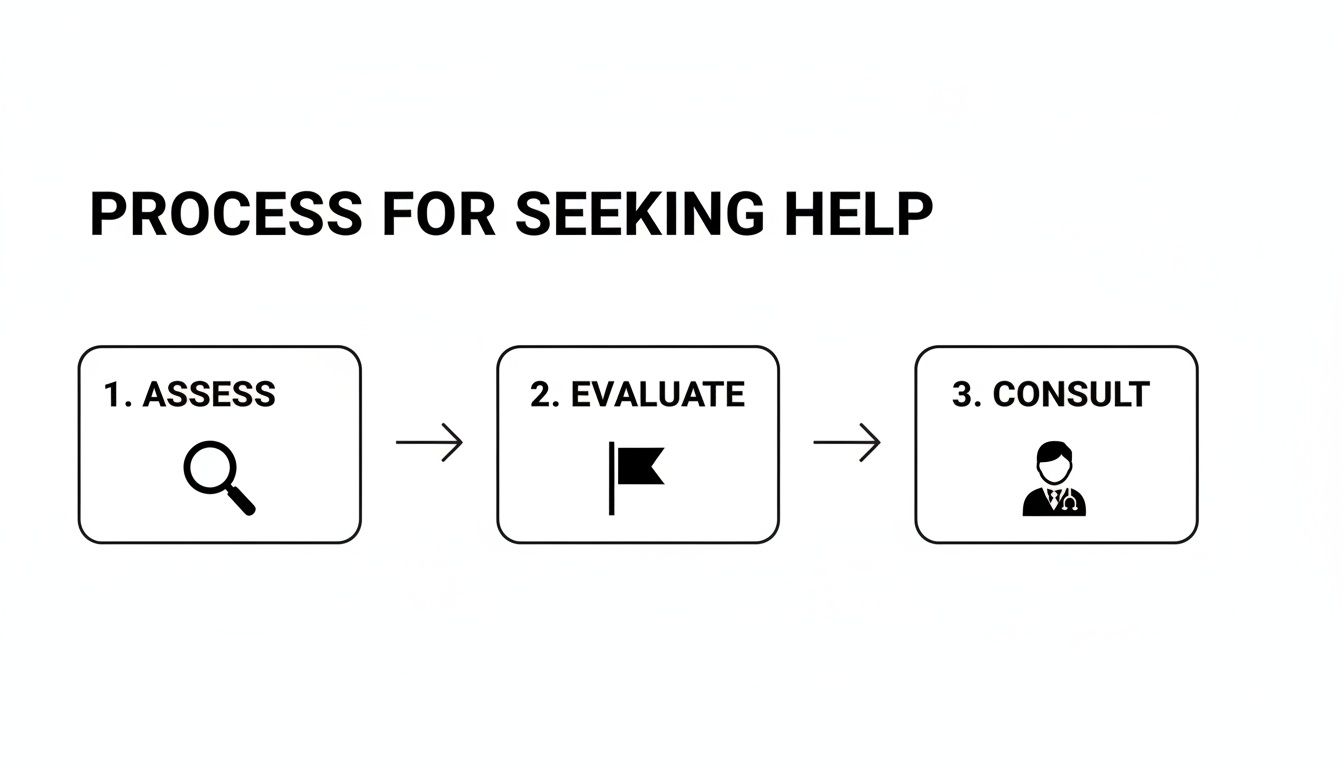
This visual guide helps reinforce the key steps: assess your symptoms, keep an eye out for any red flags, and don't hesitate to see a professional if something feels off.
When to Consider Switching to Heat
Once you’re past that initial 48-72 hour window and the first wave of swelling has gone down, it’s time to think about introducing heat. While ice constricts blood vessels, heat does the exact opposite. It’s a vasodilator, meaning it opens them up. This boosts blood flow to the area, bringing in a fresh supply of oxygen and nutrients needed to repair the damaged muscle tissue.
Applying a heating pad for 15-20 minutes at a time can work wonders for relaxing tight muscles, easing stiffness, and helping you transition into the next phase of healing: gentle movement and mobility.
To make it simple, here’s a quick breakdown of when to use ice versus heat for your upper back strain.
Ice vs Heat for Upper Back Muscle Strain
| Therapy Type | When to Use | How It Works | Best For |
|---|---|---|---|
| Ice Therapy | First 48-72 hours after injury. | Constricts blood vessels (vasoconstriction) to reduce blood flow. | Reducing initial swelling, inflammation, and numbing acute, sharp pain. |
| Heat Therapy | After 48-72 hours, once initial swelling subsides. | Widens blood vessels (vasodilation) to increase blood flow. | Relaxing muscle stiffness, soothing chronic aches, and promoting long-term tissue healing. |
Ultimately, both ice and heat are fantastic tools. The trick is knowing which one to use and when. Ice is your first responder for acute injuries, while heat is your go-to for soothing lingering stiffness and promoting recovery later on.
Building Strength for Long-Term Recovery
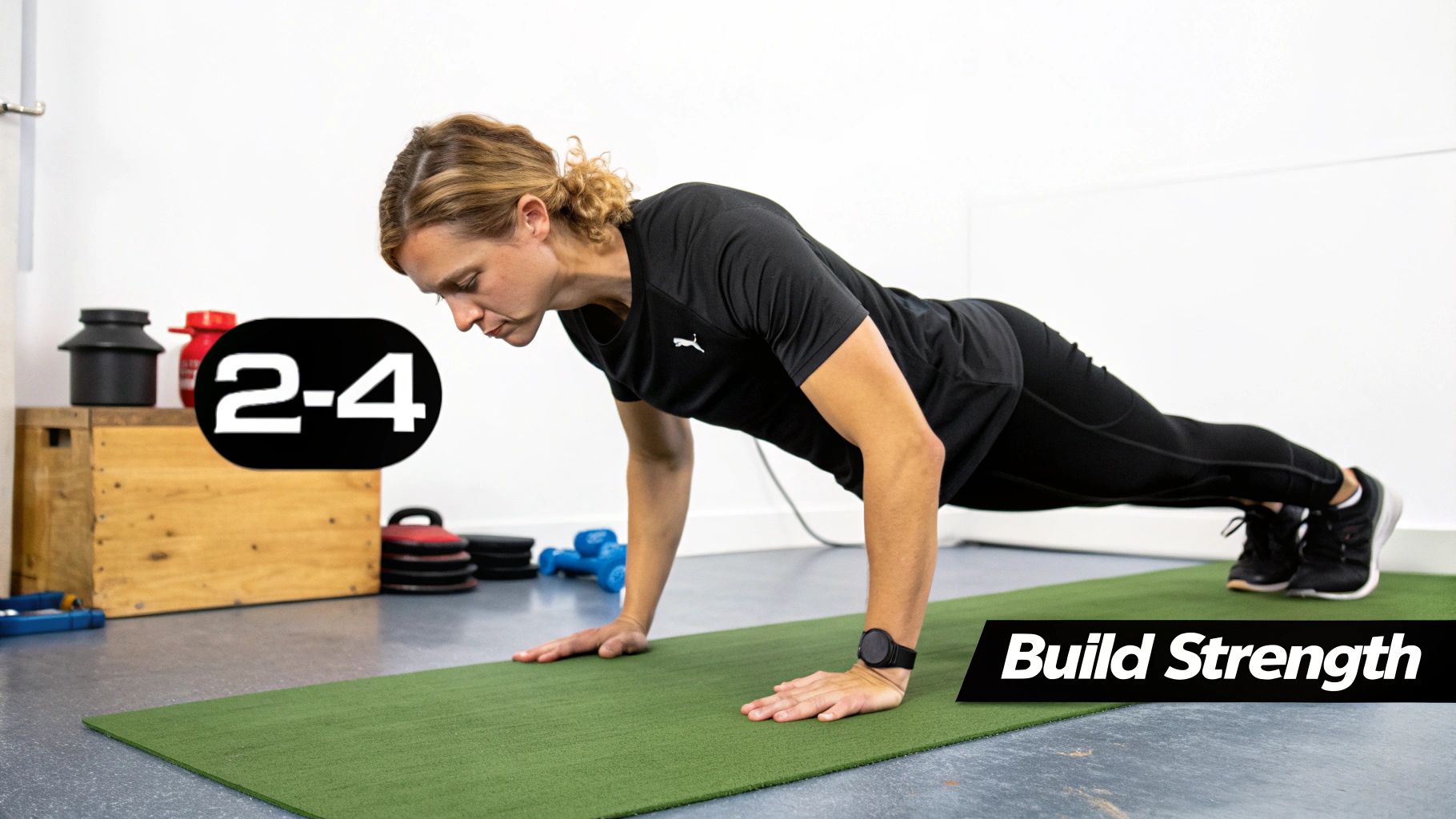
Once the sharp, initial pain from an upper back muscle strain starts to subside, it's easy to think you're in the clear. But real recovery isn't just about feeling better right now—it's about building a stronger, more resilient back to make sure this injury doesn't become a repeat visitor. This is where active rehabilitation becomes your best friend.
Think of your muscle fibres like a frayed rope. After you’ve stopped the immediate damage, the next job is to weave in new, stronger fibres. That’s exactly what targeted exercises and gentle movement do, helping you gradually restore strength and function to the injured area.
Starting With Gentle Mobility
Your first step on the road to active recovery is reintroducing movement without making things worse. After a few days of rest, your muscles can get stiff and guarded. Gentle mobility work is how you carefully get your range of motion back and teach your body that it's safe to move again.
The goal here isn't to push through pain. Instead, you're exploring your pain-free limits. These movements should feel like you're gently waking your muscles up, not throwing them into a demanding workout.
- Cat-Cow Stretch: Get on your hands and knees. Gently arch your back up toward the ceiling like a cat, then slowly drop your stomach toward the floor. This simple movement encourages gentle flexion and extension through your entire spine.
- Shoulder Blade Squeezes: Sit or stand with great posture. Gently squeeze your shoulder blades together, imagining you're trying to hold a pencil between them. Hold for a couple of seconds and then relax.
- Thoracic Rotations: While sitting in a chair, cross your arms over your chest. Slowly and carefully twist your upper body from side to side until you feel a light stretch through your mid-back.
These exercises help lubricate the joints and boost blood flow, getting your muscles ready for the more challenging strengthening work ahead.
Foundational Strengthening Exercises
When your range of motion starts to improve and the pain has backed off, it's time to build strength. A strong upper back isn't about one muscle; it's about a team of muscles—including the rhomboids, trapezius, and your core—working together. Strengthening this support system is the secret to long-term stability.
Focus on slow, controlled movements. Form is everything. It’s much better to do five perfect repetitions than 15 sloppy ones.
1. Wall Angels: Stand with your back flat against a wall, with your feet a little bit forward. Work on keeping your head, upper back, and tailbone touching the wall. Raise your arms out to the side with your elbows bent at 90 degrees (like a goalpost), keeping your wrists and elbows pressed against the wall as best you can. Slowly slide your arms up the wall, then back down.
2. Resistance Band Rows: Loop a resistance band around a sturdy anchor point at chest height. Hold the band with both hands, arms straight out in front of you. Pull the band back towards your chest, really focusing on squeezing your shoulder blades together. Pause for a second, then slowly return to the start. This is a fantastic exercise for the rhomboids and mid-trapezius.
3. Prone "Y" Lifts: Lie face down on the floor. Extend your arms overhead into a "Y" shape, with your thumbs pointing up at the ceiling. Keeping your neck in a neutral position, lift your arms a few inches off the floor. Concentrate on using the muscles between your shoulder blades to do the work. Hold for a moment, then lower your arms back down.
The core ideas behind building strength are pretty consistent across different muscle injuries. This focus on controlled, gradual strengthening is also a key part of recovering from other types of back strains, like a lumbar strain.
Priming Your Muscles Before Activity
Here’s a crucial step people often skip: "priming" your muscles before you start your exercises. Think of it as a gentle wake-up call before you ask them to get to work. Applying a warming topical analgesic, like a fast-acting spray, can help increase local blood flow and reduce stiffness. This can make it much more comfortable to get into your rehabilitation routine.
This simple pre-exercise step can really reduce discomfort, helping you move more confidently through your exercises and get more out of every single rep. It perfectly bridges the gap between resting the injury and actively rebuilding it.
An upper back muscle strain is just one piece of a larger issue affecting Canadians. It's a key part of the nation's widespread back pain problem, with Statistics Canada reporting that four out of five adults will experience at least one episode of back pain in their lifetime.
This reality is especially true in professions with high physical demands. For instance, in military settings, the upper back is a primary site for repetitive strain injuries among Canadian Armed Forces pilots, highlighting the critical need for effective recovery and prevention strategies.
By patiently moving from gentle mobility to foundational strengthening, you’re not just healing an injury. You're building a more robust and resilient upper back for whatever comes next.
How to Prevent Future Upper Back Strains
Getting over an upper back muscle strain feels like a huge win, but let's be honest—the real goal is making sure you don't end up back at square one. Long-term back health isn't about getting good at fixing the problem over and over. It's about building a back that's strong and resilient enough that the problem rarely happens in the first place.
This means switching gears from treatment to prevention with some smart, sustainable habits.
Think of it like this: your back muscles are the foundation of a house. A weak foundation that's constantly under the wrong kind of stress is bound to develop cracks. By reinforcing that foundation through better daily habits, you build a structure that can handle everyday life without breaking down.
Create an Ergonomic Workspace
For so many of us, our workday means hours slumped over a desk—a primary suspect in chronic upper back strain. That poor posture slowly stretches and weakens the muscles between your shoulder blades until they finally protest. Dialing in your workspace is one of the biggest moves you can make to prevent that from happening.
A few simple tweaks can make a massive difference:
- Monitor Height: Get your screen set up so the top of it is at or just below your eye level. This stops you from constantly craning your neck down, which puts a huge strain on your neck and upper back.
- Chair Support: Adjust your chair so your feet are flat on the floor and your knees are at a comfortable 90-degree angle. Good lower back support is key, as it helps your upper back stay in a much healthier, neutral alignment.
- Keyboard and Mouse Placement: Keep your keyboard and mouse close enough that you aren't reaching for them. Your elbows should be able to rest comfortably by your sides, which prevents you from hunching forward and rounding your shoulders.
Master Smarter Movement Habits
How you move all day long, both on the job and at home, plays a huge role in keeping upper back muscle strain at bay. It's often the small, repetitive, seemingly harmless movements that add up and cause the most damage over time.
Prevention is an active process, not a passive one. It’s about consciously integrating better movement patterns and proactive care into your daily routine to build a truly resilient back.
To build a stronger defense against re-injury, start by zeroing in on three key areas of daily movement.
1. Lift with Your Legs, Not Your Back
It’s advice you’ve heard a million times for a reason. When you pick up anything with some heft, bend at your knees and hips while keeping your back straight. Brace your core and let your powerful leg muscles do the work. Holding the object close to your body also takes a huge amount of load off your spine.
2. Take Regular Movement Breaks
Set a timer on your phone to remind you to get up and move for a few minutes every single hour. A quick walk around the room or a couple of gentle stretches is all it takes to break the cycle of static posture, get your blood flowing, and give those upper back muscles a much-needed reset.
3. Always Warm-Up and Cool-Down
Before you jump into any physical activity—whether it’s a gym session or just a weekend of yard work—spend 5-10 minutes doing dynamic stretches to get your muscles warmed up and ready. Afterwards, a proper cool-down with some static stretches helps you improve flexibility and kickstart recovery. It’s a simple habit that can dramatically cut your risk of injury.
Frequently Asked Questions
When you're dealing with an upper back strain, you've probably got questions. It's totally normal. Getting some clear answers can make all the difference in how you approach your recovery and get you back on track faster.
How Long Does an Upper Back Muscle Strain Take to Heal?
This is the million-dollar question, and the honest answer is: it really depends on how bad the strain is.
For a minor tweak, you might feel a world of difference within a few days to a couple of weeks, especially if you're good about self-care. But for a more significant strain, you could be looking at four to eight weeks—sometimes even longer—for a full recovery.
The most important thing is listening to your body. Being consistent with rest, using the right home treatments, and slowly getting back to your routine are your best bets for a smooth recovery. Trying to rush it is usually a recipe for reinjuring yourself.
Can I Use a Topical Pain Reliever with Other Treatments?
Absolutely. Topical analgesics are a fantastic way to get targeted, temporary relief right where you need it. They can be a great partner to other treatments like physiotherapy or chiropractic care, helping to manage discomfort while you work on rehabilitation.
Just be sure to have a quick chat with your healthcare provider to make sure all parts of your treatment plan work together safely.
A couple of key rules: never put a topical product on broken skin, and don't apply one right before or after using a heating pad. If you're weighing your options, you can learn more about the benefits of a topical pain reliever versus an oral one in our detailed guide.
Always listen to your body and avoid any movement that causes sharp or sudden pain. The goal of gentle mobility is to encourage healing, not to push through discomfort and risk further damage to the muscle fibres.
Should I Stretch a Strained Muscle or Rest It?
This comes down to timing. In the first 48-72 hours after you’ve hurt your back, rest is your number one priority. Your body needs that time to calm down the initial inflammation. If you try to aggressively stretch a fresh injury, you can actually make the tear worse and disrupt the healing process.
Once you’re past that acute phase, bringing in some gentle mobility exercises and light, pain-free stretches is a game-changer. It helps stop stiffness from taking over, gets healthy blood flowing to the area, and starts to carefully restore your range of motion.
For powerful, targeted relief that supports your recovery, trust MEDISTIK. Our line of topical analgesics is designed to help you manage pain and get back to moving with confidence. Explore our products today and feel the difference.


