

Your ankle rolls as you land, and you limp towards the sideline. Someone offers an ice pack; a teammate asks whether you can keep playing. You're trying to decide whether this needs a clinic visit or just a quiet evening at home.
That uncertainty is where sports injury treatment begins. The first decision isn't which exercise or pain-relief product to use. It's whether the injury needs urgent assessment, what you should protect, and how to avoid making it worse while you arrange care.
What Sports Injury Treatment Really Means
Sports injury treatment isn't a single appointment or something you apply to a sore spot. It's a continuum from immediate protection to full participation, with different decisions at each stage. Pain relief matters, but so does being able to run, work, lift, or play without compensating for an injured area.
For a rolled ankle, the early question is whether there could be a fracture or another significant injury. Later, the questions change: Can you walk normally? Can you balance? Can you land and change direction confidently? Each question tests a different part of recovery.
The treatment continuum
| Phase | Main purpose | Where Canadians may access support |
|---|---|---|
| Immediate care | Stop further harm and identify danger signs | Sideline, home, trained first-aid support, emergency services |
| Acute assessment | Identify the injury and establish a plan | Primary care, walk-in clinic, urgent care, emergency department |
| Rehabilitation | Restore movement, strength, and control | Physiotherapy, athletic therapy, prescribed home exercises |
| Return to play | Rebuild tolerance for actual sport demands | Rehabilitation clinic, supervised practice, medical follow-up when required |
These phases overlap. Someone with a minor muscle injury may begin gentle movement while still managing discomfort. Someone with a suspected fracture needs assessment and protection before starting an exercise programme.
Why feeling better isn't the finish line
Clinicians consider tissue healing and functional capacity, not just pain. Think of repairing a bridge: reopening a pedestrian lane doesn't prove the structure can handle heavy traffic. Similarly, comfortable walking doesn't establish readiness for jumping, contact, or repeated sprints.
Practical rule: Judge recovery against what you need your body to do, not only how it feels at rest.
This applies equally to a competitive athlete, a parent managing a child's injury, and an active adult returning to a physically demanding job. Tell your clinician what a successful return involves. Carrying equipment upstairs and playing recreational hockey require different rehabilitation goals, even when the injured body part is the same.
Acute Injuries and Overuse Injuries
A sudden injury is like a hard pull on a rope. An overuse injury is more like repeatedly loading the rope beyond what it can tolerate. Both can interrupt sport, but the circumstances leading to them help clinicians decide what to examine and how to manage activity.
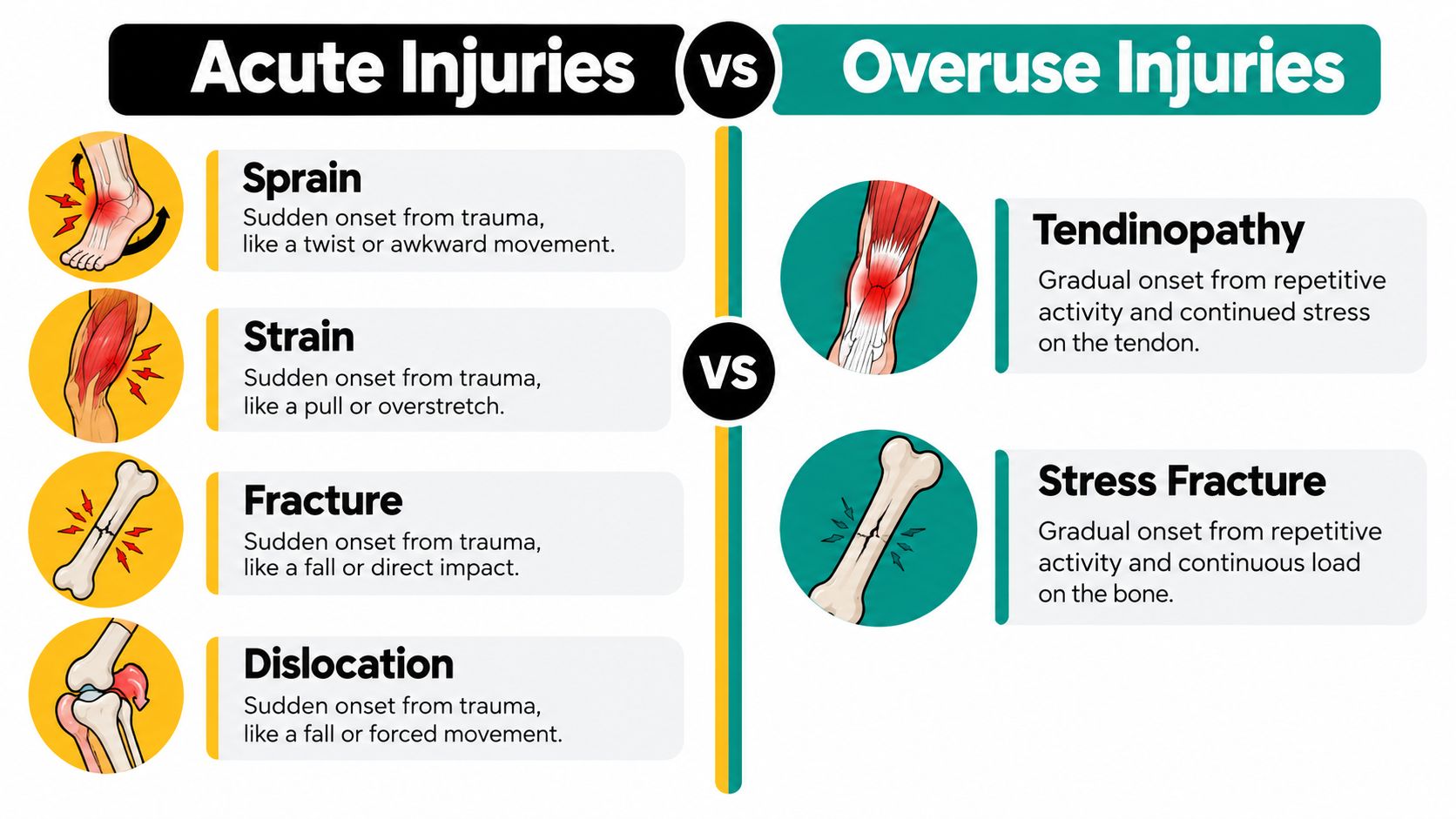
Acute injuries follow a distinct event, such as a collision, awkward landing, or forceful movement. Overuse injuries develop as repeated demands exceed a tissue's ability to recover and adapt. They may become noticeable gradually, although an already stressed area can suddenly become much more painful.
The comparison below provides a useful starting vocabulary.
The tissue matters as much as the mechanism
- Muscle produces force. A strain involves injury to muscle or its associated tendon.
- Tendon connects muscle to bone. Tendinopathy describes a painful tendon condition, not an inflamed tendon.
- Ligament connects bone to bone and helps stabilise a joint. A ligament injury is called a sprain.
- Bone provides structural support. It can fracture after trauma or develop a stress injury through repeated loading.
- Cartilage helps joint surfaces move smoothly. Injury can affect how a joint tolerates movement and pressure.
A dislocation is different again: the joint surfaces move out of their normal position. Don't try to put a visibly displaced joint back yourself.
Similar symptoms don't mean similar injuries
Swelling, tenderness, and difficulty moving can occur across several injury types. A hamstring strain and a major knee ligament injury might both make walking difficult initially, but they don't follow interchangeable treatment plans.
Likewise, gradually worsening shin pain shouldn't automatically be dismissed as muscle soreness. A clinician may need to distinguish a load-related soft-tissue problem from a bone stress injury.
The mechanism is a clue, not a diagnosis. Explain what happened, where symptoms began, whether you heard or felt anything unusual, and which tasks are now difficult. That history helps a clinician interpret the examination rather than guessing from pain intensity alone.
Immediate Care in the First 24 to 72 Hours
Stop the activity and assess safety before reaching for treatment supplies. Don't ask an athlete to run, hop, or repeatedly test an obviously injured limb to prove they can continue.
Initial triage matters. Public Health Agency of Canada sledding and tobogganing surveillance recorded 4,376 injuries between October 2016 and January 2024, with 58.5% requiring emergency-department treatment and 274 hospital admissions; fractures accounted for 69.3% of admissions and traumatic brain injuries for 13.9%. These are surveillance findings for those activities, not rates for all Canadian sports.
Decide whether home care is appropriate
Seek emergency care for an obvious deformity, a significant head or neck injury, loss of consciousness, rapidly worsening neurological symptoms, or a limb that becomes cold, pale, or numb. Don't move someone with a possible spinal injury unless necessary for immediate safety.
Inability to bear weight, substantial swelling, or suspected fracture warrants prompt assessment. If there are no warning signs and symptoms are mild, protect the area while monitoring how it behaves.
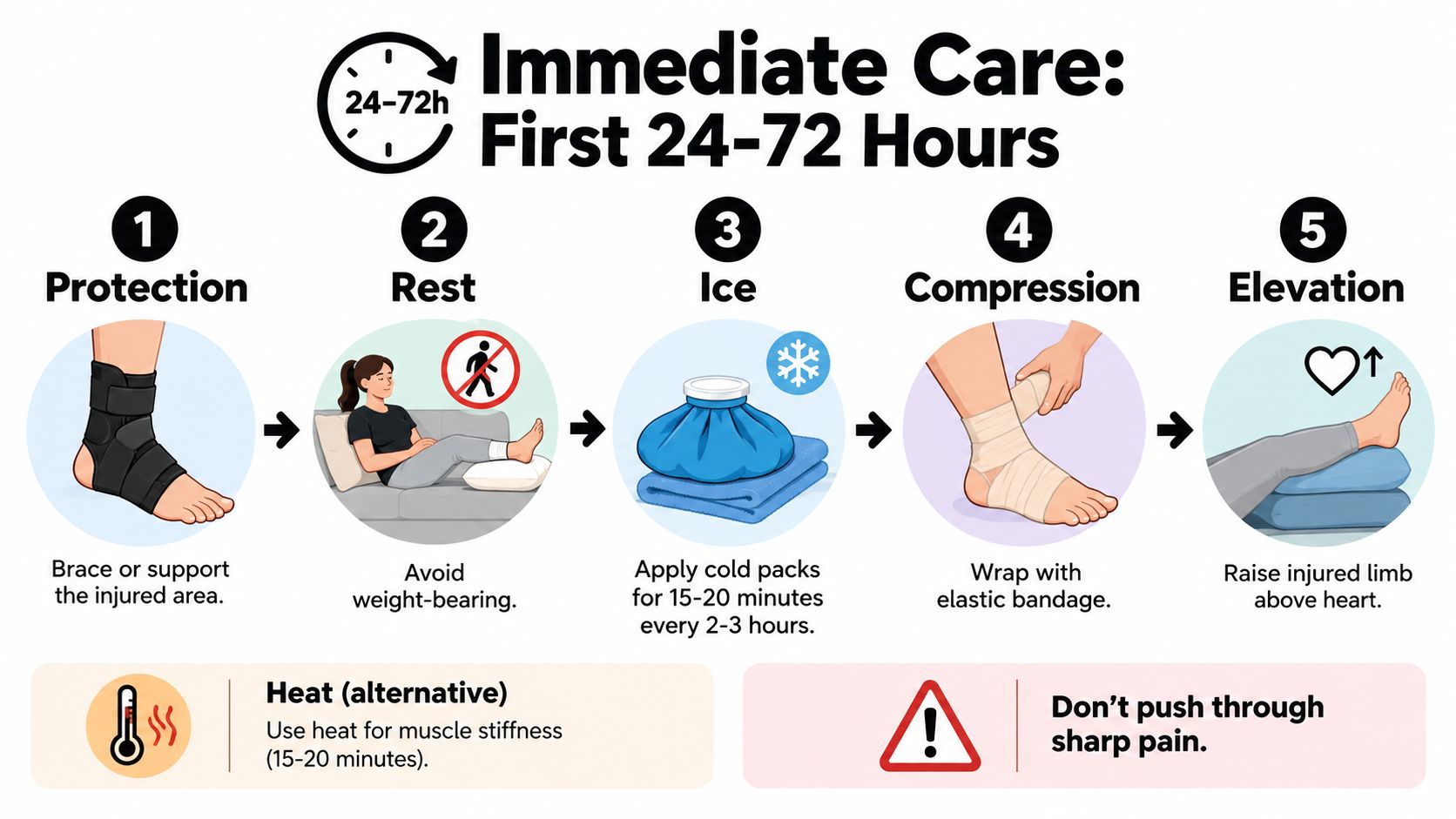
The familiar PRICE framework can organise early care, but it shouldn't become a prescription for prolonged inactivity.
Use symptom-relief measures carefully
- Protection means avoiding movements that could worsen the injury. Supports or crutches may be appropriate after assessment.
- Relative rest means reducing aggravating activity, not automatically avoiding all movement. Weight-bearing advice depends on the injury.
- Ice may help with discomfort. Use a protective layer, check the skin, and avoid falling asleep with a cold pack applied.
- Compression should feel supportive, not cause tingling, numbness, or colour changes.
- Elevation can help manage swelling when practical.
Heat may suit muscle stiffness, but it isn't the default for a newly swollen injury. The distinction between ice and heat for inflammation can help you choose a comfort measure without confusing it with definitive treatment.
Ask a pharmacist whether an oral anti-inflammatory or topical analgesic is appropriate, especially if you take other medicines or have underlying health conditions. Follow the label and don't combine products casually.
Temporary relief isn't permission to resume play. If pain becomes sharper, function deteriorates, or swelling increases, stop self-testing and arrange assessment.
Rebuilding Strength and Confidence in Recovery
Rehabilitation starts with a practical question: What can the injured area safely tolerate today? The answer guides exercise selection more usefully than asking whether pain has disappeared.
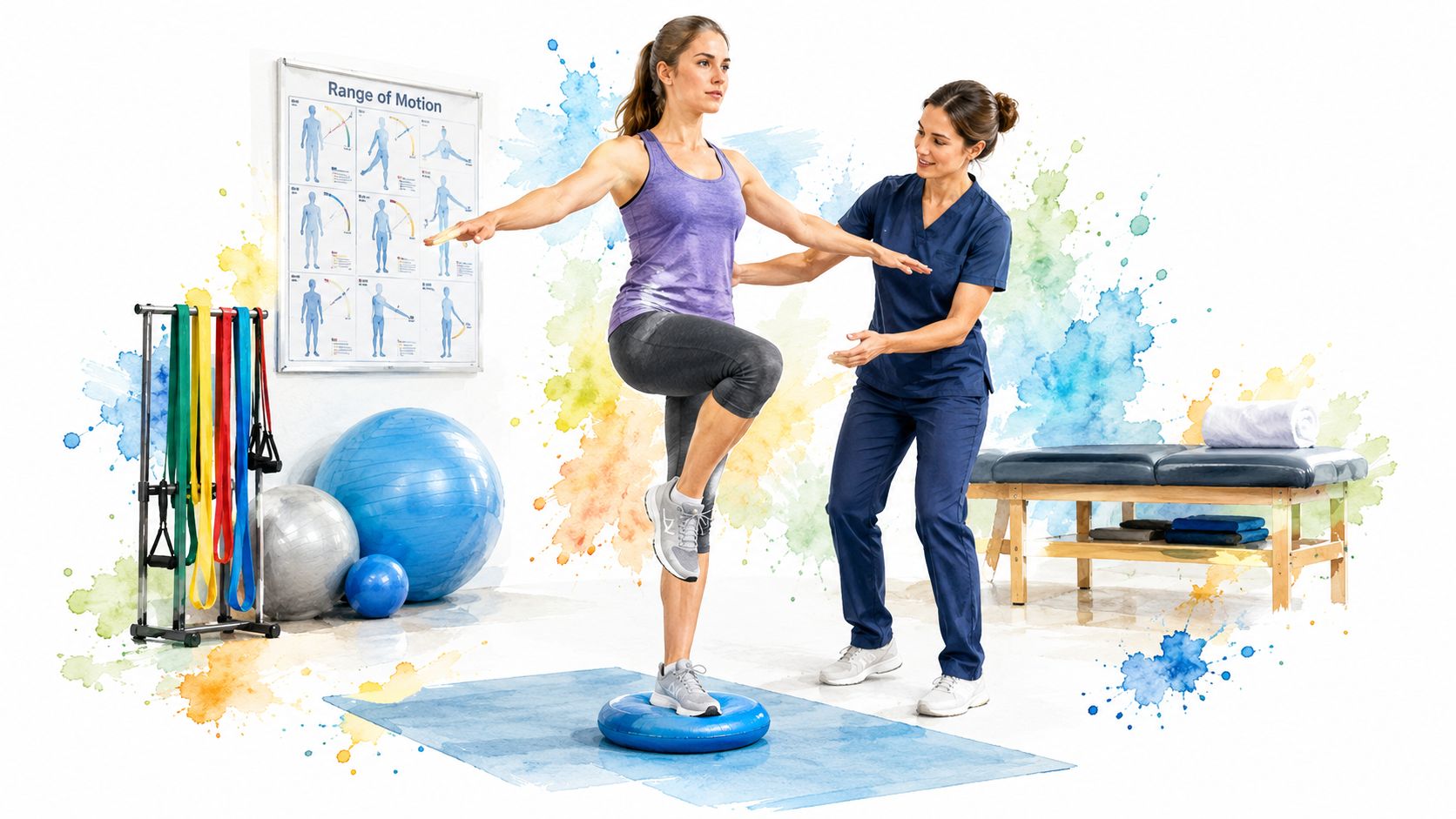
Balance work is one example of rebuilding control after injury, although the exercise must match the diagnosis and recovery stage.
Restore movement before adding demanding tasks
Early rehabilitation often includes comfortable movement within the limits set by the treating clinician. After an ankle injury, that might mean restoring walking mechanics and ankle movement before introducing jumping. After shoulder injury, the starting point may be controlled reaching rather than overhead lifting.
Don't force a stiff joint through sharp pain. Restrictions after a fracture, surgery, or significant tissue injury take priority over generic mobility advice.
Strengthening then increases the load the recovering area can manage. Proprioception, your sense of body position, also needs attention. It helps you respond when your foot lands on uneven ground or another player changes direction unexpectedly.
A broader discussion of recovery techniques for athletes can complement a prescribed programme, but sleep, hydration, and recovery habits don't replace the exercises needed to restore capacity.
Progress towards the actual sport
Think of rehabilitation as restoring the bridge, testing it under controlled loads, and then reopening it to normal traffic. A runner needs repeated impact tolerance. A basketball player also needs braking, landing, and direction changes.
Useful progression checks include:
- Movement quality: You can complete the current task without a pronounced limp, protective hitch, or loss of control.
- Load tolerance: The planned exercise doesn't produce a concerning symptom flare during or after the session.
- Confidence: You can perform the movement without persistent hesitation or a sense that the joint will give way.
Discuss these checks with your therapist rather than treating them as universal clearance criteria. Some injuries require specific testing or medical approval.
Movement demonstrations can support an exercise discussion, but they aren't a substitute for individual assessment.
If treatment access is limited, ask for a written home programme, clear progression rules, and guidance on when to return for review. A short exercise log recording the task, symptoms, and later response can make follow-up more useful.
Being comfortable during everyday activity is a milestone. Being ready for unpredictable sport demands is a separate decision.
Concussion Care and the Access Gap
A possible concussion needs a different pathway from a sore muscle. Remove the athlete from play immediately and arrange assessment by a physician or nurse practitioner. There should be no same-day return.
The Canadian Paediatric Society's sport-related concussion guidance describes an initial 24–48 hours of relative rest, followed by symptom-limited cognitive and physical activity, with a staged return requiring at least 24 hours at each stage; symptom recurrence requires stepping back to the previously tolerated stage after a further 24-hour recovery period.
A staged return, not prolonged isolation
The progression moves through daily activity, light aerobic exercise, sport-specific exercise without head impact, non-contact training with progressive resistance, full-contact practice, and normal game play. School or normal cognitive activity must also be considered, rather than treating physical recovery in isolation.
The flowchart provides an overview of that progression.
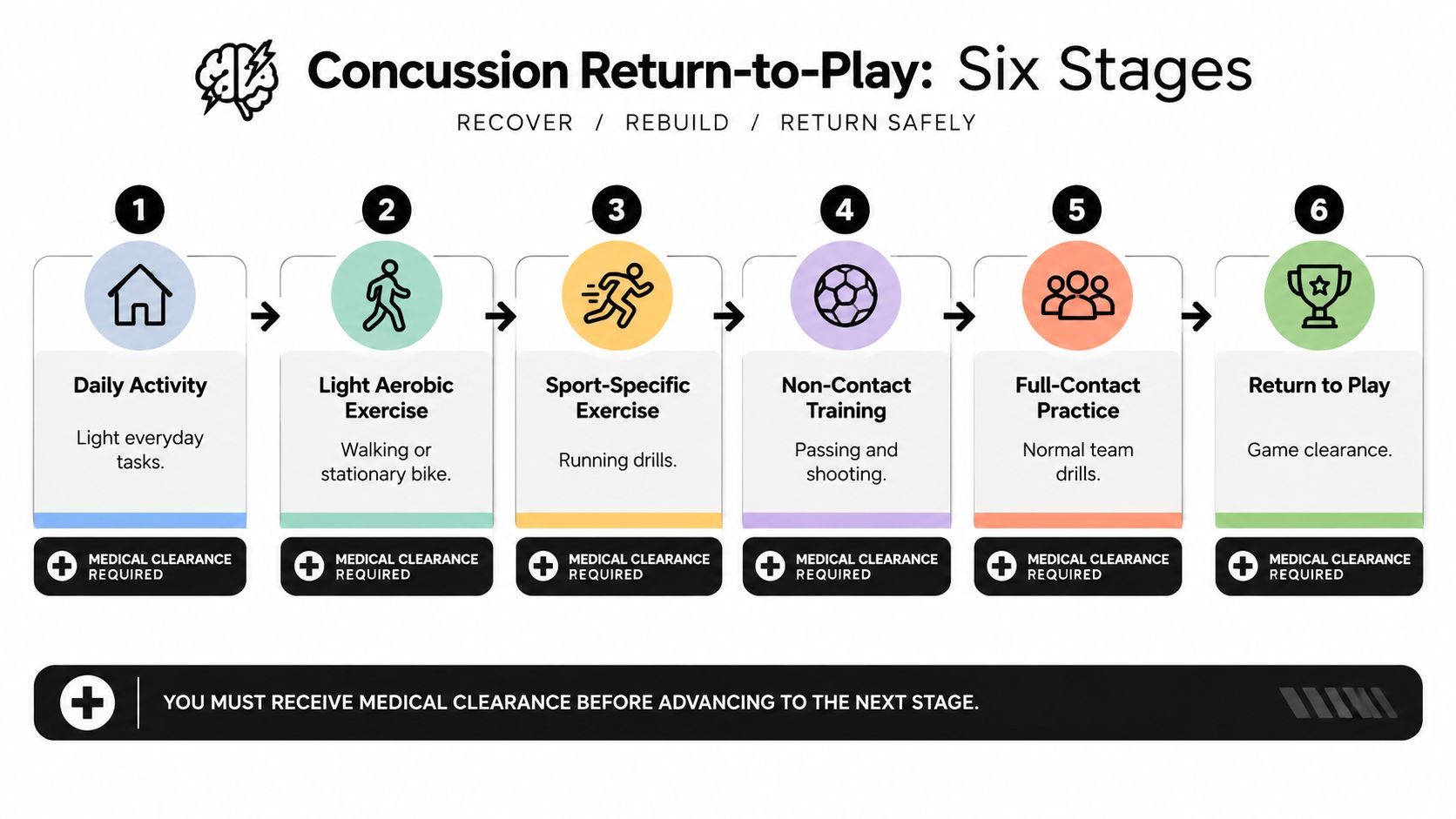
Medical clearance is essential before full-contact participation. The stages don't mean everyone should recover on the same schedule, nor should an athlete rush through them to meet a competition date.
What to do when specialist care is delayed
In a Canadian cohort of 133 Olympic athletes with concussion, median return-to-sport time was 34 days; athletes receiving multidisciplinary care within seven days recovered faster than those accessing it after eight or more days, and female athletes in the late-access group had longer recovery timelines. The study also noted that Canadian public healthcare doesn't generally subsidise the recommended level of first-line concussion support.
That association doesn't prove early care alone caused faster recovery, and an Olympic cohort doesn't establish what most recreational athletes experience. It does highlight why access deserves attention.
While awaiting specialist support:
- Start with medical assessment: Don't delay the initial evaluation while searching for a specialised clinic.
- Request a written plan: Ask about school, work, permitted activity, symptom monitoring, and follow-up.
- Track useful information: Record headaches, dizziness, sleep, concentration, and responses to activity.
- Ask about affordable routes: Check community services, virtual follow-up, school supports, and insurance eligibility.
After the initial rest period, follow clinician-guided, symptom-limited activity rather than imposing prolonged complete rest. Never use a home checklist to clear yourself for contact sport.
Choosing the Right Treatment Path
The right entry point depends on severity, functional difficulty, and the resources you can access. It doesn't depend on whether you consider yourself a serious athlete.
A 2025 Ipsos survey on injury treatment and benefits found that 44% of Canadians reported an injury affecting function at work, home, or play, while 96% supported employer health plans covering a range of injury treatments and 89% supported adding athletic therapy to plan options. These findings describe reported experiences and preferences, not proof that a particular treatment works.
Matching injury severity to the right treatment path
| Injury severity | First response | Professional care | Role of topical relief |
|---|---|---|---|
| Mild discomfort with normal movement and no warning signs | Reduce aggravating activity and monitor | Pharmacist advice or primary care if it persists | Optional temporary symptom relief, following the label |
| Persistent pain, recurring swelling, weakness, or altered movement | Modify loading and arrange assessment | Primary care, physiotherapy, or athletic therapy as appropriate | Adjunct only, not a way to override symptoms |
| Suspected fracture, major instability, or inability to bear weight | Protect the area and seek prompt assessment | Urgent care or emergency department according to severity | Shouldn't delay assessment |
| Significant head injury or worsening neurological symptoms | Stop activity and seek emergency help | Emergency assessment | No role in deciding readiness to continue |
Primary care can help clarify the diagnosis, consider whether testing is necessary, and coordinate referrals. Physiotherapists can assess movement and guide rehabilitation within their scope; athletic therapists can also support musculoskeletal assessment and recovery within theirs. Availability and coverage vary, so confirm local requirements.
Make limited appointments count
Before booking, ask about fees, referral requirements, direct billing, and whether your plan covers that specific provider. Public funding and private benefits aren't interchangeable, and a service covered for one person may be out of pocket for another.
Bring your recovery goals and ask for a home programme you can demonstrate correctly. If you can't attend frequently, say so at the outset so the clinician can plan feasible follow-up.
For gym-related wrist discomfort, Strive Workout Log's guide to pain-free bench pressing offers a focused resource to discuss alongside technique and load adjustments. It shouldn't replace assessment of persistent pain.
When comparing topical pain medications, focus on labelled uses, precautions, and compatibility with your medicines. Relief may make ordinary movement more comfortable, but it doesn't repair injured tissue or establish readiness for heavier loading.
Preventing the Next Injury
Prevention should reflect the activity and the participant, not a generic checklist. A young hockey player, an adult cyclist, and someone returning to the gym face different situations.
An Edmonton population-based emergency-department study examined 3,230,890 visits from April 1997 through March 2008, identifying 63,219 sport- and recreation-related injury records; among 4,935 head-injury cases, hockey accounted for 20.7%, cycling for 12.0%, and patients younger than 18 for 69.8%. These historical regional findings aren't national injury rates, but they show why youth participation and sport-specific head-injury prevention deserve attention.
Prepare for the demands you actually face
Warm-up and mobility should resemble the movements ahead. Begin with manageable activity, then rehearse relevant actions such as controlled lunges, easy skating, or progressive throwing. Choose warm-up exercises before a workout that fit your activity and current restrictions rather than copying someone else's routine.
Load management means considering the whole week, including work. A strenuous shift, rehabilitation session, and evening practice all contribute to physical demands. After a break or injury, increase activity deliberately rather than trying to recover missed training at once.
Check conditions and recovery habits
- Equipment and environment: Check fit, condition, playing surfaces, visibility, and weather. Follow the safety rules of your sport.
- Recovery habits: Protect opportunities for sleep, eat regularly, and maintain hydration appropriate to activity and conditions.
- Communication: Encourage young athletes to report symptoms without worrying that they'll disappoint a coach or parent.
Before returning: Decide how you'll respond if the original symptoms reappear, rather than making that decision under pressure during a game.
Topical analgesics aren't protective equipment. If used during a warm-up or recovery routine, follow the label and don't interpret reduced discomfort as proof that a concerning movement is safe.
Red Flags and Frequently Asked Questions
When should I seek urgent help?
Seek emergency care for deformity, loss of consciousness, worsening neurological symptoms, or a cold or numb limb. Inability to bear weight or severe swelling needs prompt assessment. Persistent pain that wakes you at night also warrants medical review, especially if it's unexplained or worsening.
How long will recovery take?
There's no reliable timetable without knowing the tissue, severity, and functional demands. The distinction between a torn muscle and a pulled muscle can clarify terminology, but an examination is needed to guide an individual recovery plan.
Should I use ice or heat?
Choose according to the symptoms and the precautions discussed earlier. Neither replaces assessment when function is deteriorating.
Are topical analgesics safe during training?
Suitability depends on the product, your health, and the label. Ask a pharmacist, avoid damaged skin, and don't combine a topical product with external heat unless explicitly permitted.
What should I budget for?
Request the assessment fee, follow-up costs, coverage details, and a home-programme option before booking. Ask which appointments are most important if funds are limited.
MEDISTIK offers topical pain-relief options for temporary muscle and joint discomfort alongside appropriate sports injury care. Visit MEDISTIK to review product formats, directions, and precautions, and ask your pharmacist or rehabilitation clinician where an option fits into your recovery routine.


