

Standard Advil contains 200 mg of ibuprofen as its active ingredient. It also contains inactive components that vary by product type, such as tablets, Liqui-Gels, children's products, and combination medicines.
What's in Advil beyond that familiar name on the box? Many people assume every Advil product contains the same medicine in the same form, but the Canadian range includes different strengths, excipients, and additional active ingredients. Reading the full Drug Facts label helps you identify exactly what you're taking, especially if you have allergies, follow dietary restrictions, or use other pain or cold medicines.
The Active Ingredient in Advil
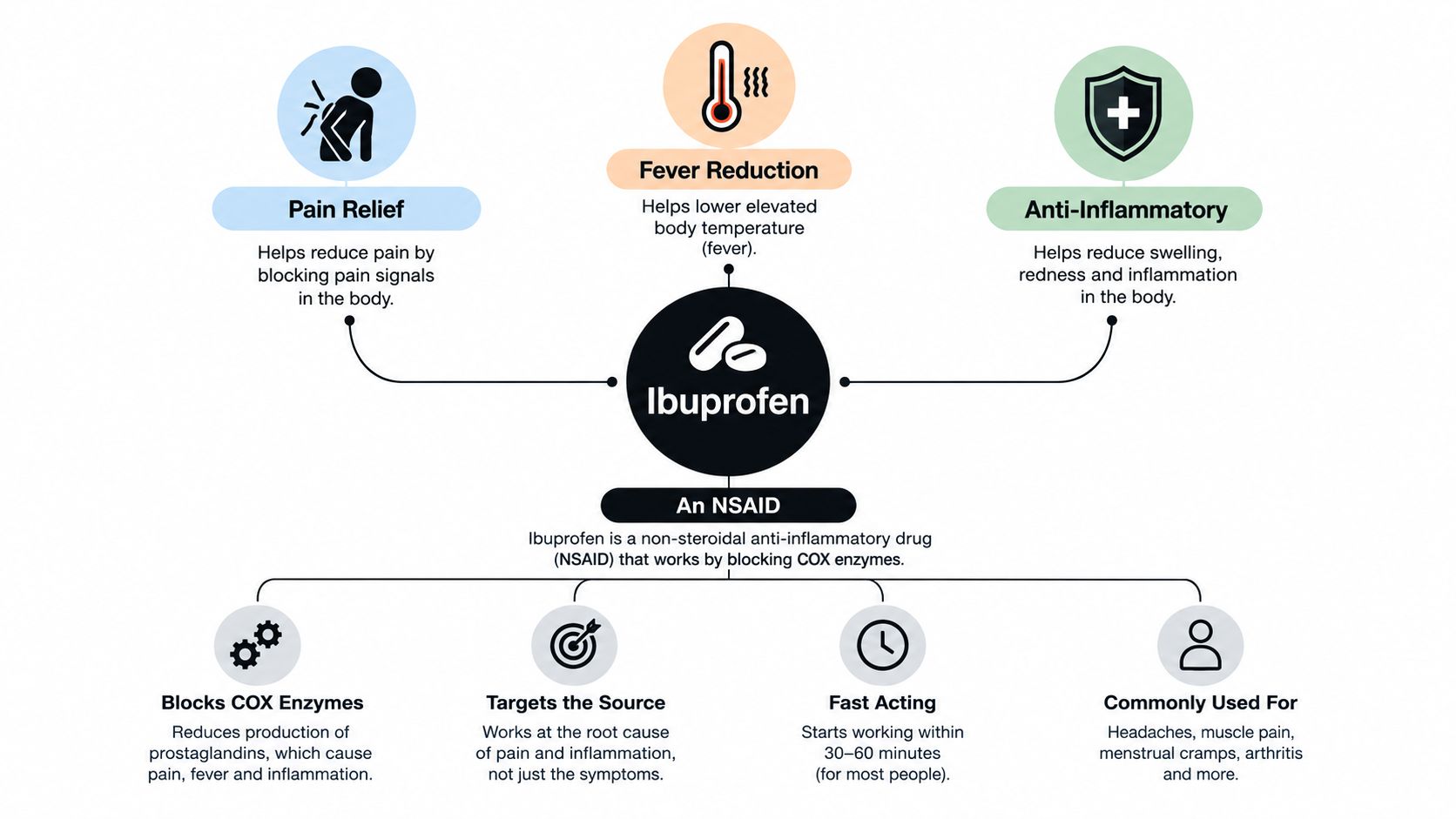
What does the active ingredient do when you take Advil for pain or fever? In standard Advil, the active ingredient is ibuprofen, a medicine in the nonsteroidal anti-inflammatory drug, or NSAID, class. Health Canada lists standard Advil Liqui-Gels as oral capsules with 200 mg of ibuprofen as the sole active ingredient in its Canadian product database.
Ibuprofen can play three roles in one product:
- Analgesic: it relieves pain.
- Antipyretic: it lowers fever.
- Anti-inflammatory: it reduces inflammation-related symptoms.
That third role helps explain why product choice is not always just about the brand name. A swollen ankle from a sprain involves inflammation that an NSAID targets, while a tension headache may call only for pain relief. The active ingredient matters because the symptom pattern matters.
Why the active ingredient matters
“Active” means the ingredient intended to produce the therapeutic effect. In plain Advil, that job belongs to ibuprofen. The other ingredients help form the capsule or tablet, affect how it holds together, or add colour and texture. They are not the ingredients meant to reduce pain or fever.
This distinction becomes more important across the Canadian Advil range, because some products contain only ibuprofen and others combine it with additional medicinal ingredients. For a patient-friendly explanation of ibuprofen and fevers, see that guide. The box name can suggest a use, but the active-ingredient panel tells you exactly what medicine you are taking.
Advil Product Strengths and Formulations
The Canadian Advil range doesn't use one universal ibuprofen strength. Standard products contain 200 mg per unit, while Health Canada lists Advil Muscle and Joint tablets containing 400 mg of ibuprofen in its product record.
That difference can be easy to miss if you shop by brand name rather than by product title and Drug Facts panel. A higher-strength tablet may contain twice the ibuprofen found in a standard unit, so taking it as though it were the regular product could change your total exposure.
| Product example | Ibuprofen information | What to check |
|---|---|---|
| Standard Advil Liqui-Gels | 200 mg per capsule | Whether another medicine also contains an NSAID |
| Advil Muscle and Joint tablets | 400 mg per tablet | The directions and maximum daily use |
| Advil Cold & Sinus Liqui-Gels | 200 mg plus another active ingredient | The complete active-ingredient list |
The reason for these variations is practical. Different formulations are marketed for different symptom combinations or dosing needs, but that doesn't make them interchangeable. Health Canada's regulatory information explains why 200 mg and 400 mg ibuprofen products have been available in the non-prescription setting since 2002, while also stressing the importance of safety information and labelling in its ibuprofen record.
Before choosing a higher-strength product, compare the exact amount per tablet or capsule. This overview of Advil 400 mg Liqui-Gels can help clarify why strength should be checked rather than inferred from the brand.
How Ibuprofen Works in Your Body
Ibuprofen works throughout the body after you swallow it. It inhibits cyclooxygenase enzymes, commonly called COX-1 and COX-2, which are involved in producing prostaglandins. Prostaglandins contribute to pain, fever, and inflammation, so reducing their production can ease several symptoms at once.
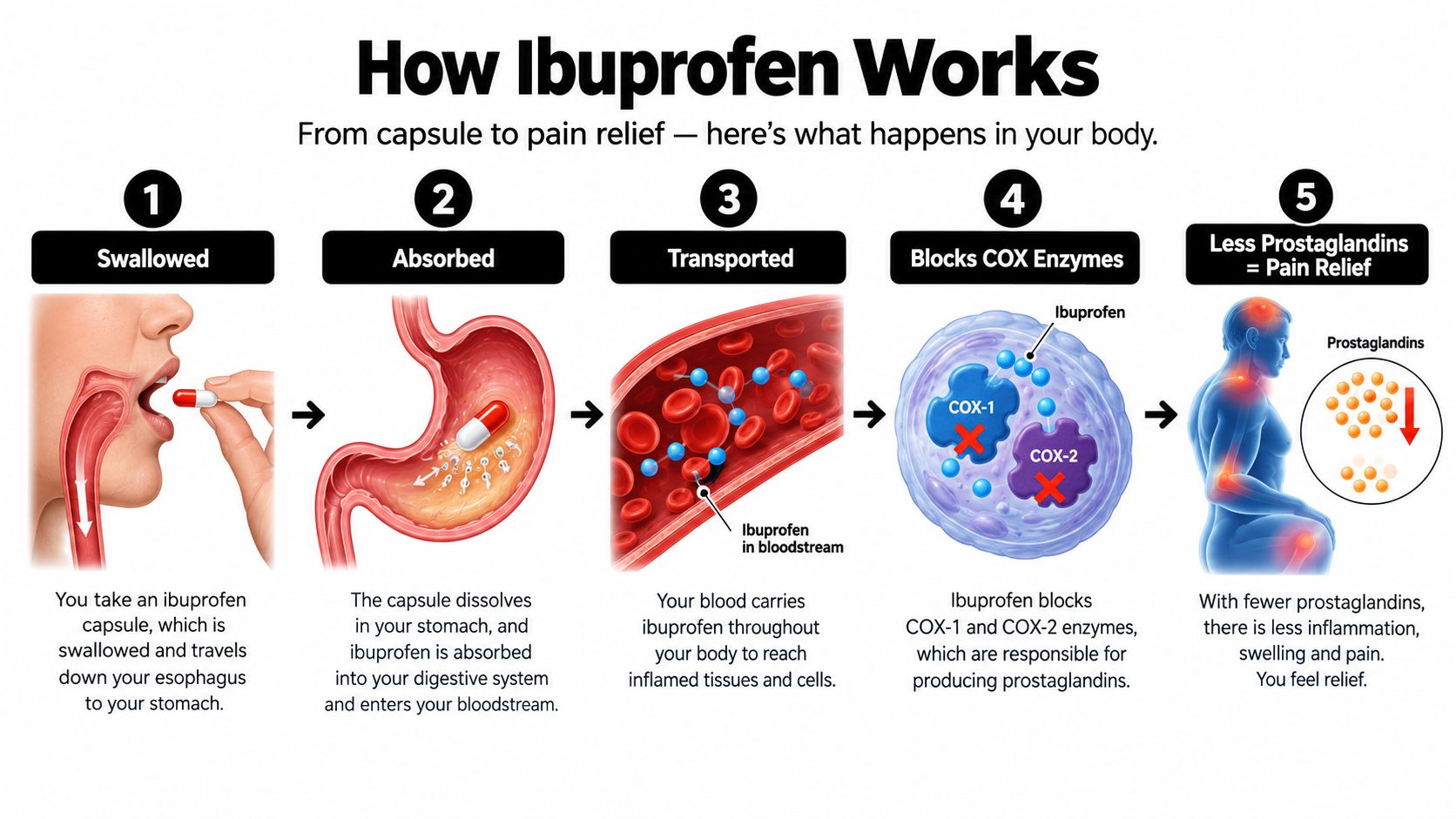
The same systemic action explains why oral Advil can affect more than the spot that hurts. It also explains why the medicine's safety considerations involve the digestive system, kidneys, cardiovascular system, pregnancy, and interactions with other medicines. Oral ibuprofen isn't a local treatment confined to one muscle or joint.
Dose and duration still matter
Canadian clinical guidance describes an adult regimen beginning at 400 mg, followed when needed by 200 to 400 mg every 4 hours, with no more than four doses in 24 hours. The same guidance says non-prescription NSAID use shouldn't continue beyond 10 days without medical advice according to HealthLink BC's NSAID guidance.
Practical rule: Use the smallest amount that follows the product label, for the shortest appropriate period, and don't increase the dose simply because recurring pain hasn't been assessed.
Ibuprofen can cause stomach bleeding, and the risk is higher for people aged 60 or older, people with a history of ulcers or bleeding, people taking blood thinners or steroid medicines, and people who consume three or more alcoholic drinks daily while using the product. Anyone with kidney disease, cardiovascular disease, dehydration, or pregnancy-related concerns should ask a healthcare professional before using an NSAID.
Inactive Ingredients Beyond Ibuprofen
Inactive ingredients don't provide Advil's pain-relieving effect, but they still matter. They can help a tablet hold its shape, support the coating, create a liquid-filled capsule, or provide colour and texture. They also differ between Canadian formats.
Canadian Advil tablets contain 200 mg of ibuprofen along with excipients such as corn starch, soy-derived lecithin, parabens, sodium benzoate, sucrose, titanium dioxide, and other coating or processing ingredients. Canadian liquid capsules use a different formulation. Their ingredients include ibuprofen as free acid and potassium salt, as well as gelatin, soy lecithin, sorbitol, sorbitan, medium-chain triglycerides, polyethylene glycol, and FD&C Green No. 3, as listed in the Canadian Advil Mini-Gels package insert.
Why format changes the ingredient list
A tablet and a Liqui-Gel aren't just two shapes containing identical contents. Their excipients support different manufacturing and delivery requirements. Gelatin may matter to someone avoiding animal-derived ingredients, while soy-derived ingredients may matter to someone managing a soy sensitivity or checking allergen information.
The list can also matter for people monitoring ingredients such as sucrose, colour additives, parabens, or sodium benzoate. An ingredient appearing in one product shouldn't automatically be assumed to appear in another.
- Tablets: May use starches, coatings, sweeteners, preservatives, and colour-related ingredients.
- Liquid capsules: Use a gelatin shell and liquid-capsule excipients, with a different colour and texture system.
- Other product lines: May have their own active and inactive ingredients, so the package insert remains the reliable reference.
If you compare oral medicines with topical products, it's also useful to understand the role of ingredients in Biofreeze. Always check the exact label rather than relying on a familiar brand name.
Combination Products and Safety Warnings
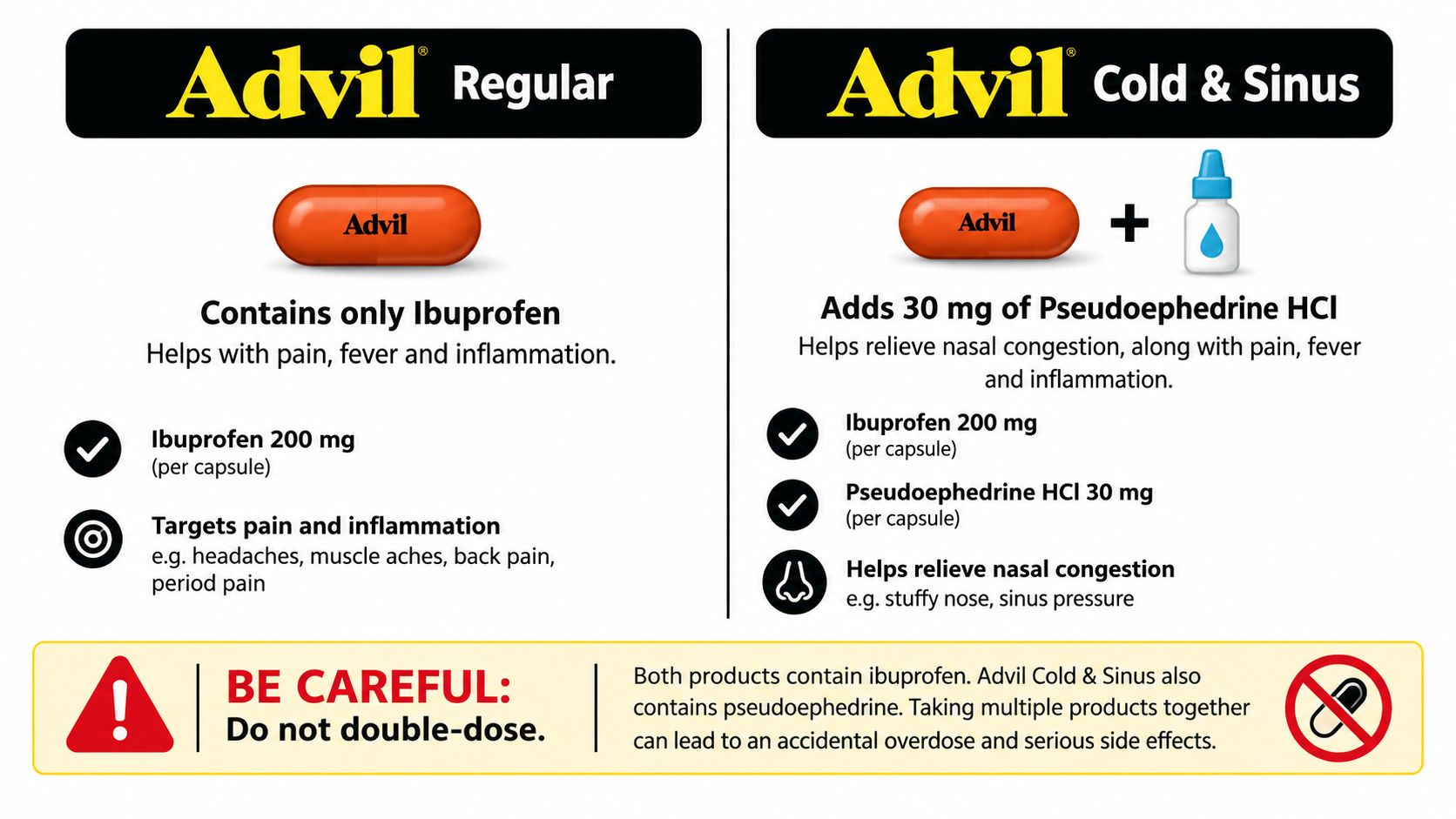
Advil Cold & Sinus Liqui-Gels combine ibuprofen with a decongestant, so they are not the same medicine as regular Advil. In Canada, that matters at the formulation level. A combination product changes what the capsule is meant to treat, and it changes the safety questions you need to ask before taking it.
Pseudoephedrine helps open nasal passages, while ibuprofen targets pain, fever, and inflammation. Put together, they work more like a two-tool kit than a single-purpose pain reliever. That can be helpful during a cold, but it also means a familiar brand name can hide a different ingredient profile than you might expect.
Read across the whole medicine cabinet
Duplicate treatment is a common problem. Someone may reach for Advil for pain, then add a cold medicine for congestion, without noticing that the second product already contains ibuprofen or another anti-inflammatory ingredient.
The practical rule is simple. Read the active ingredients on every box, not just the brand name on the front. If two products treat different symptoms, they can still overlap in ways that increase risk.
This is especially important with NSAIDs. As noted earlier, ibuprofen should not be combined casually with other NSAID-containing products, including acetylsalicylic acid, naproxen, and prescription anti-inflammatory medicines. The concern is not just “too much pain medicine.” Combined exposure can raise the chance of serious side effects.
The same caution applies across the Advil lineup. Regular, Cold & Sinus, children's, and other formulations can differ in both active and non-medicinal ingredients. If you want a clearer picture of the added precautions for a combination product, this guide to Advil Cold and Sinus side effects explains why it deserves separate consideration.
Oral vs Topical Pain Relief Options
Oral Advil provides systemic NSAID therapy, meaning ibuprofen is absorbed and distributed through the body. That can suit short-term pain, fever, or inflammation when the medicine is appropriate, but it also means the safety profile includes whole-body exposure.
Topical pain-relief products are applied to the skin over or near the uncomfortable area. They may suit someone seeking a local approach, someone who prefers not to take an oral medicine, or someone discussing alternatives with a healthcare professional. They aren't automatically risk-free, and the product label still matters.
For temporary cooling and local comfort, some people also compare options such as a pain relieving cold gel. The right choice depends on the cause of pain, the area involved, skin condition, medical history, and other treatments. For recurring joint symptoms, review options such as joint pain relief tablets with a pharmacist or clinician rather than repeatedly increasing oral doses.
MEDISTIK offers Canadian-made topical analgesic formats, including a long-lasting stick, an extra-strength spray, and a cooling ice roll-on for temporary relief of sore muscles and joints. If you're comparing oral ingredients with targeted topical options, visit MEDISTIK to review the products and educational resources before choosing an approach.


