

A roll on pain relief product is pretty straightforward: it’s a topical analgesic that uses a rollerball to deliver potent, pain-fighting ingredients right where you need them. It's a clean, portable, and precise way to target muscle and joint discomfort, getting you fast-acting relief on the spot.
How Roll On Pain Relief Delivers Targeted Relief
Think of your nervous system as a busy highway, with pain signals travelling from an injury straight to your brain. A good roll-on pain relief product acts like a clever traffic controller, creating a temporary diversion to take your mind off the jam.
This idea is often explained with what’s known as the "gate control theory" of pain. Essentially, your nerves can only handle so much information at once. When you apply a roll-on with ingredients like menthol or camphor, it creates a new sensation—cooling or warming. These new signals travel along the same nerve pathways, effectively "closing the gate" on the original pain signals. Your brain pays more attention to the cooling or warming feeling than the ache, giving you temporary but immediate relief.
The Advantage of Precision Application
Unlike creams or gels that get all over your hands, the roll-on applicator is a real game-changer. It’s clean and mess-free, making it perfect for when you're on the move—at the gym, in the office, or out on a hike.
The real win, though, is its precision. The rollerball lets you apply consistent pressure, giving the sore spot a gentle massage as you go. This mix of targeted ingredients and light massage helps boost blood flow and improve absorption right at the source of the pain.
This direct approach makes sure the active ingredients are concentrated exactly where they’re needed, instead of being spread thinly over a wide area. That's why the roll on pain relief format is so efficient for hitting specific trigger points, soothing a stiff neck, or calming a sore knee joint without wasting a drop or getting your hands messy.
Clinically Proven Formulas You Can Trust
Of course, the applicator is only half the story; what’s inside the bottle is what really counts. Formulas that are clinically proven and approved by bodies like Health Canada give you a layer of trust and reliability. You know the ingredients aren't just effective but also safe for regular use.
For instance, MEDISTIK offers solutions trusted by everyone from pro athletes and military personnel to physiotherapists and people just dealing with daily aches. By combining powerful, proven ingredients with a practical roll-on format, these products offer a dependable way to manage pain and keep you moving. It’s this combination of smart delivery and a potent formula that makes roll on pain relief a go-to for modern muscle and joint care.
The Science Behind High-Performance Ingredients
To really get what makes a roll on pain relief product work, you have to look inside the bottle. The secret isn't one single "magic" ingredient, but a smart combination of active ingredients, each with a specific job. Think of it like a one-two punch: one group distracts your brain from the pain, while the other gets to work on the underlying problem.
These ingredients aren’t just tossed in together; they’re chosen to work in tandem. One set provides that immediate feeling of relief that cuts through the noise of an ache or pain, while the other digs deeper to tackle inflammation head-on.
The Power of Counterirritants
First up are the ingredients known as counterirritants. Their whole strategy is brilliantly simple: create a new sensation on the skin, like a strong cooling or warming feeling, to distract your nerve endings. This new signal—coolness, for instance—travels up to your brain faster than the dull ache of your muscle, effectively pushing the pain signal out of the way.
It’s a bit like turning up the radio to drown out a distracting noise. The original problem is still there, but your brain is too busy processing the new, more intense sensation to pay attention to it.
Below are a few of the most common counterirritants and how they work.
| Ingredient | Mechanism of Action | Primary Sensation | Common Use Case |
|---|---|---|---|
| Menthol | Triggers cold-sensitive TRPM8 receptors in the skin without changing temperature. | Intense Cooling | Fast-acting relief for acute muscle soreness and joint pain. |
| Camphor | Stimulates nerve endings, creating a mild warming or cooling sensation. | Mild Cooling/Warming | Soothing tight muscles and improving local blood flow. |
| Eucalyptus Oil | Produces a warming sensation and has mild anti-inflammatory properties. | Gentle Warming | Easing stiffness and reducing muscle tension. |
| Capsaicin | Depletes Substance P, a neurotransmitter for pain signals, after an initial warming/burning sensation. | Deep, Lasting Heat | Chronic pain conditions like arthritis or nerve pain. |
These ingredients are the frontline defence, giving you that "ahhh" moment of immediate relief while the deeper-acting ingredients get to work.
Analgesics Targeting Inflammation
While the counterirritants are busy running interference, another group of ingredients, called analgesics, goes after the source of the problem. Their main job is to reduce pain and inflammation right where it hurts.
The most common and effective topical analgesic is Methyl Salicylate. This powerhouse ingredient is in the same family as aspirin. It works by blocking the body's production of prostaglandins—the chemical culprits responsible for causing inflammation and pain. By calming inflammation, you get real, lasting relief from stiffness and discomfort.
This is how a roll-on application gets straight to the point, intercepting the pain signal before your brain has a chance to fully process it.
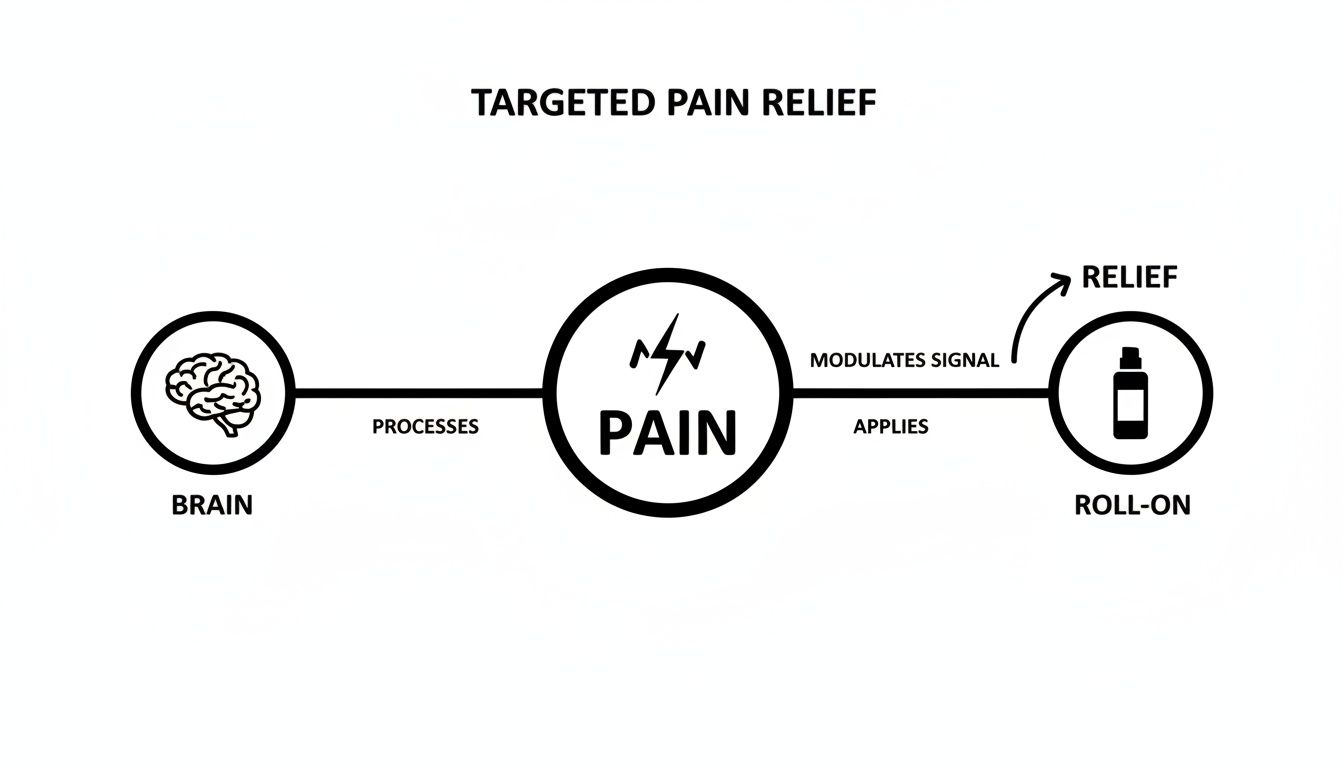
The key is that topical relief creates an interruption. It modulates the pain pathway, giving your body a break and a chance to feel more comfortable.
How MEDISTIK Creates a Synergistic Effect
The real magic behind a high-performance roll on pain relief product is how these ingredients are blended into a powerful, cohesive formula. MEDISTIK products, for instance, are carefully formulated to create a specific therapeutic effect—whether it’s intense cooling, deep warming, or long-lasting relief.
By blending multiple active ingredients, a product can deliver a one-two punch against pain. The cooling sensation from menthol offers immediate relief, while the methyl salicylate works in the background to calm inflammation and provide sustained comfort.
This combined approach is far more effective than just using a single ingredient. For example, the MEDISTIK Dual Action Roll-On brings together 30% Methyl Salicylate with 15% Menthol, which makes it one of the strongest formulas you can get without a prescription. You can learn more about how these combinations provide powerful relief and support your recovery.
Plus, all MEDISTIK formulas are approved by Health Canada. This isn't just a rubber stamp; it means they meet strict standards for safety, quality, and effectiveness. That approval gives you the confidence that the science in the bottle delivers real-world results you can count on.
A Framework for Priming and Restoring Muscles

Smart pain management is about more than just reacting when something hurts. For anyone leading an active life, it’s a constant cycle of preparation, performance, and recovery. A good roll on pain relief product is a surprisingly powerful tool that can help you at every single stage.
Thinking about your muscle care in three distinct phases—Prime, Perform, and Restore—gives you a clear strategy. It’s all about using the right tool at the right time to keep your body moving and minimize downtime.
Prime Your Muscles for Action
Before you even start your workout, the goal is to get your muscles ready for the work ahead. We all know a proper warm-up increases blood flow, gets oxygen to muscle tissues, and improves elasticity, which is your best defence against strains and sprains.
This is where a warming roll-on becomes the perfect partner for your warm-up routine. It creates a gentle sensation of heat that encourages vasodilation—basically, it helps your blood vessels widen. This process naturally boosts circulation right where you apply it, helping to loosen up stiff joints and prime your muscles for movement.
Think about a runner getting ready for a chilly morning race. Applying a warming roll-on to their calves and hamstrings about ten minutes before their dynamic stretches can really accelerate that warm-up process. Their muscles become more pliable and ready for the demands of the run, right from the first step.
This isn’t about replacing your warm-up, but supercharging it. It gives your muscles that extra edge, preparing them to perform safely and effectively.
Perform at Your Peak
Even with the best prep, a sudden ache, cramp, or patch of stiffness can pop up mid-activity. This is exactly when a fast-acting roll on pain relief product becomes an indispensable part of your toolkit. Because it’s so portable and mess-free, it’s perfect for a quick application right when you need it most.
Picture a weightlifter who feels a sudden twinge in their lower back during a heavy set. They can pause, apply a cooling roll-on directly to the spot, and get immediate relief as it calms down the over-stimulated nerve endings. This allows them to reset their form and finish their workout safely. Best of all, no greasy hands, so they can get right back on the barbell.
Restore Your Body Post-Workout
Once you've pushed your body, the recovery phase kicks in. This part is all about soothing tired muscles and managing inflammation, which is the key to preventing that dreaded delayed onset muscle soreness (DOMS). This is where cooling roll-ons really shine.
That cooling sensation, usually from an ingredient like menthol, causes vasoconstriction—the narrowing of blood vessels. By gently reducing blood flow to the area, it can significantly cut down on swelling and inflammation. It's like having a targeted ice pack you can carry in your pocket, without any of the mess.
For example, a hiker finishing a long trek can roll a cooling formula over their quads and knees. The immediate cooling effect soothes the ache and starts the recovery process by calming inflamed tissues, long before they even get home.
By making a roll-on part of your post-activity routine, you can kickstart recovery and wake up feeling a lot less sore. Beyond that immediate relief, knowing some top tips for faster recovery is crucial for anyone who wants to stay active. The Prime, Perform, and Restore framework turns pain management from a reactive chore into a proactive strategy for long-term health.
The Shift Toward Topical Pain Management
Across Canada, something interesting is happening in how we manage pain. People are thinking twice before reaching for a bottle of pills, looking instead for targeted, non-invasive options. This growing preference for topical solutions like roll on pain relief isn't just a fleeting trend—it’s a conscious move toward taking more control over our own wellness.
It makes a lot of sense when you think about it. People want effective relief that goes right to the source of the problem, avoiding the systemic side effects that can come with oral medications. Why treat your whole body when it’s just a sore knee or a tight shoulder that’s bothering you? This is a smarter, more direct way to handle discomfort.
A Solution for Every Generation
This shift isn't limited to one group; it's being driven by Canadians from all walks of life. Athletes and active people were some of the first to catch on. They needed safer ways to manage aches from training and speed up their recovery without relying on pills. A mess-free roll-on is the perfect thing to toss in a gym bag or a pre-race kit.
At the same time, Canada's aging population is playing a huge role here. With older adults making up 19% of the total population, there's a massive demand for accessible, non-prescription solutions for chronic issues like arthritis. The numbers speak for themselves: over-the-counter analgesic sales shot past 35 million tubes in 2023 alone.
This wide-ranging appeal proves that topical relief is no longer a niche product. It's become a mainstream choice for managing pain effectively and responsibly.
Trust in Canadian-Made Quality
With so many people turning to topical solutions, the need for products that are both effective and trustworthy has never been greater. We're all looking for formulas we can count on, backed by solid evidence and proper regulatory oversight. This is where Canadian-made, Health Canada-approved products really stand out.
When a product like MEDISTIK earns Health Canada approval, it’s not just a piece of paper. It’s a guarantee that the formula meets some of the world's strictest standards for safety, quality, and efficacy. It tells you that what’s on the label is exactly what’s in the bottle, and that it actually works as promised.
This kind of trust is crucial, especially when you're dealing with persistent pain. Choosing a proven, clinically backed product turns pain management from a hopeful guess into a confident step toward feeling better. If you're weighing your options, our guide on the benefits of a topical pain reliever versus an oral pain reliever can help you learn more.
Ultimately, the move toward options like roll on pain relief is more than just a trend—it's a fundamental shift toward smarter, more targeted self-care.
Choosing the Right Roll On for Your Pain

Walking down the pain relief aisle can feel overwhelming, with dozens of products all promising to be the best. When it comes to a roll on pain relief product, the secret is knowing that not all formulas are built the same. The right one for you hinges entirely on what kind of pain you’re dealing with.
Think of it this way: you wouldn't use a hammer to turn a screw. In the same way, the roll-on you grab for a sudden ankle sprain should be completely different from the one you use to ease chronic back stiffness. It all boils down to one simple question: are you trying to cool down inflammation or warm up tight muscles?
Cooling vs. Warming Formulas
Your first move is to figure out the nature of your pain. This is what will point you toward either a cooling or a warming formula, because each one serves a very different purpose.
1. Cooling Roll-Ons for Acute Pain and Inflammation
- When to use it: Right after an injury, following a tough workout, or for anything involving swelling and sharp pain—think sprains or strains.
- How it works: Cooling formulas, usually driven by menthol, work like a targeted ice pack. They cause vasoconstriction (a fancy term for narrowing blood vessels), which slows blood flow to the area. This is a game-changer for reducing swelling and inflammation, while that intense cooling sensation helps numb the nerve endings for instant relief.
2. Warming Roll-Ons for Chronic Pain and Stiffness
- When to use it: For those nagging, persistent aches, chronic issues like arthritis, general muscle stiffness, or even to get your muscles primed before a workout.
- How it works: Warming formulas do the exact opposite. Ingredients like methyl salicylate trigger vasodilation, which widens the blood vessels and boosts circulation. This rush of blood helps relax tight, knotted muscles, soothe those deep aches, and bring some much-needed flexibility back to stiff joints.
This idea of matching the treatment to the pain is a growing trend across Canada. Both healthcare pros and consumers are moving away from a one-size-fits-all mindset and toward tailored solutions that actually work for their specific situation.
The Roll On Advantage Over Other Formats
Beyond the hot-or-cold debate, the way you apply your pain relief matters. A lot. While creams, sprays, and sticks all have their uses, the roll-on format brings a unique set of benefits to the table.
A roll-on isn’t just about a clean, mess-free application. The rollerball glides a perfect, even layer of product onto your skin while giving the area a gentle massage. This one-two punch helps the formula absorb better and works to release muscle tension right where you need it.
Let's break down how it stacks up against the other common options out there.
Roll On vs Other Topical Formats
Choosing between a roll-on, cream, spray, or stick really comes down to the job at hand. Here’s a quick comparison to help you decide.
| Format | Application Method | Best For | Key Advantage |
|---|---|---|---|
| Roll-On | Rollerball applies liquid directly to the skin with light massage. | Targeted relief for specific trigger points, joints, and sore muscles. | Mess-free application and targeted pressure. |
| Cream/Gel | Applied and rubbed in with hands. | Covering larger surface areas like the lower back or thighs. | Good for broad coverage and deep massage. |
| Spray | Aerosol or pump dispenses a fine mist. | Hard-to-reach areas like the middle of the back. | Quick, no-touch application. |
| Stick | Solid balm is glided over the skin. | Applying a thick, concentrated layer without using hands. | Extremely portable and long-lasting formula. |
While personal preference plays a big part, the roll on pain relief format is tough to beat for precise, on-the-go relief. It’s practical, efficient, and gets the job done without any fuss. For example, MEDISTIK’s award-winning Natural Ice ROLL-ON delivers that rapid cooling effect in a super convenient package, making it perfect for tackling inflammation after any activity.
Your Top Questions About Using Roll-On Pain Relief
Even after you get the hang of how it works, you probably still have a few practical questions. That’s perfectly normal. Getting clear answers is the key to using these tools safely and getting the results you’re looking for every single time.
This section tackles the most common questions we hear, from athletes fine-tuning their routines to people trying a topical analgesic for the first time. Our goal is to clear up any confusion so you can make roll-on relief a seamless part of your health and wellness plan.
How Often Can I Use My Roll-On?
This is easily the most common question, and the answer comes down to safety and consistency. For most high-quality topical analgesics, the standard advice is to apply it to the sore spot three to four times per day. That’s usually enough to keep the relief going without overwhelming your skin.
It's really important to read the label on your specific product, though, because ingredient strengths can differ. Formulas like MEDISTIK are designed to be potent and targeted, so sticking to the guidelines ensures you get that intended therapeutic effect. Applying it more often won't make you heal faster and might just lead to skin irritation.
If you’re managing something chronic like arthritis or nagging muscle soreness, consistency is everything. Applying the roll-on at regular intervals helps keep those pain signals and inflammation in check throughout the day. For any long-term pain management strategy, it's always a good idea to chat with a healthcare pro like a physiotherapist or chiropractor.
Can I Use It with My Other Medications?
People often worry about how a topical pain reliever might mix with other medications, especially pills they’re taking. The good news is that since topical products work locally—right on the skin and the tissues just beneath it—very little of the active ingredients actually gets into your bloodstream. This makes the risk of interacting with your oral meds incredibly low.
But it’s always better to be safe. It’s smart practice to have a quick chat with your doctor or pharmacist before adding any new product to your routine. This is especially true if you’re on blood thinners, have sensitive skin, or have any kidney or liver conditions.
Keeping your healthcare provider in the loop about everything you use, prescription or not, helps them see the full picture and give you the best advice for your specific situation.
Is It Safe to Use Under Kinesiology Tape?
Kinesiology tape and athletic braces are fantastic for supporting muscles and joints, but they don't always mix well with topical analgesics if you apply them at the same time. The best rule of thumb is not to apply a roll-on right before you tape. The oils and moisture in the formula can mess with the tape's adhesive, causing it to peel off before it can do its job.
There’s another safety angle to consider. If you cover a freshly treated area with a non-breathable wrap or tight tape, you can trap heat and make your skin absorb the active ingredients faster. This can sometimes lead to redness, irritation, or an uncomfortable burning sensation.
Here’s the right way to use both together for maximum benefit:
- Apply the roll-on first and give it time to dry completely. This usually takes about 10–15 minutes.
- Once the area is totally dry to the touch, go ahead and apply your kinesiology tape or brace.
- This order lets you get the pain-soothing benefits of the roll-on without wrecking the tape’s stickiness.
What’s the Difference Between a Warming and a Cooling Roll-On?
Choosing between a warming or cooling formula isn’t just about what feels better—it’s about matching the right tool to the right kind of pain. Each type triggers a different physiological response to tackle specific issues.
Cooling Roll-Ons: For Acute Injuries and Inflammation
- What it feels like: An intense, icy sensation.
- How it works: Driven by ingredients like menthol, these formulas cause vasoconstriction, which is just a fancy way of saying they temporarily narrow your blood vessels. This slows blood flow to the area, which is exactly what you want to reduce swelling and inflammation.
- When to use it: Perfect for new injuries (think the first 48-72 hours), like a sprained ankle, a fresh muscle strain, or that immediate post-workout soreness.
Warming Roll-Ons: For Chronic Pain and Stiffness
- What it feels like: A deep, soothing heat.
- How it works: Ingredients like methyl salicylate or capsaicin do the opposite—they cause vasodilation, which widens blood vessels. This boosts circulation, bringing more oxygen-rich blood to the area to help relax tight, stiff muscles.
- When to use it: Your go-to for chronic issues like arthritis, persistent low back pain, or for warming up muscles before a workout to improve flexibility and prevent injury.
The choice is simple: cool down new and swollen injuries, and warm up chronic stiffness and tight muscles. Getting this right is fundamental to effective relief.
Can I Use a Roll-On for Plantar Fasciitis?
Absolutely. That sharp, stabbing pain in your heel from plantar fasciitis comes from inflammation in the plantar fascia ligament. A cooling roll-on pain relief product can be a game-changer for managing this.
When you apply a menthol-based roll-on directly to the arch and heel, you get an immediate cooling sensation that helps numb the pain and calm down that localized inflammation. The rollerball is especially great here because you can use it to apply gentle pressure, giving that tight ligament a mini-massage as you go.
For the best results, use your roll-on along with recommended stretches and exercises, like:
- Towel Stretches: Gently pulling your foot towards you.
- Ball Rolls: Rolling a tennis or lacrosse ball under your arch.
- Calf Stretches: Leaning against a wall to stretch the muscles connected to your heel.
Using a roll-on before you start these stretches can ease that initial pain, making for a much more comfortable and effective session.
With these answers in hand, you’re ready to bring roll-on pain relief into your routine with confidence. Whether you’re prepping for a workout, recovering from an injury, or just tackling daily aches, the right product used the right way can make a world of difference.
Ready to feel seriously strong, targeted relief? Discover the award-winning, clinically proven formulas from MEDISTIK. Our Health Canada-approved products are trusted by professionals to help you move with confidence. Explore our solutions at Medistik.


