

Which remedy fits your joint pain, and why do so many recommendations treat a swollen knee and stiff hands as the same problem? The symptom pattern matters as much as the product. A knee that feels hot after activity needs a different response from fingers that loosen up after a warm shower.
Joint discomfort is common, but it isn't a diagnosis. In 2016–2017, approximately 3.9 million Canadians aged 20 years and older were living with diagnosed osteoarthritis, according to the Public Health Agency of Canada. That doesn't mean every painful joint has osteoarthritis, or that every osteoarthritis remedy suits an injury, inflammatory arthritis, or nerve-related pain.
The most useful joint pain relief remedies have a clear job: easing stiffness before movement, reducing localized symptoms, settling discomfort after exertion, or improving your capacity for everyday activity. Temporary relief is valuable, especially when it helps you walk, work, sleep, or complete rehabilitation exercises. It doesn't prove that the underlying problem is harmless.
Before choosing a remedy, identify your main pattern:
- Stiff but not hot or swollen: Gentle movement and warmth may help.
- Newly swollen or irritated: Reduce the provoking activity and consider protected cold.
- Recurring pain with everyday loading: Prioritize assessment, progressive exercise, and a sustainable relief routine.
- Rapidly worsening pain or systemic symptoms: Seek medical assessment rather than trying another product.
1. Topical NSAIDs (Diclofenac Gel)
Best suited to localized osteoarthritis symptoms, particularly at the knee or hand. Diclofenac gel is a topical nonsteroidal anti-inflammatory drug, or NSAID. Unlike a cooling rub, it delivers an anti-inflammatory medicine through the skin.
A Canadian Family Physician primary-care guideline supports topical NSAIDs for osteoarthritis, while noting that the underlying trials mainly studied hand and knee osteoarthritis. That's an important boundary: evidence for those joints shouldn't automatically become a recommendation for deep hip pain, a fresh sports injury, or unexplained widespread pain.
For example, someone with diagnosed knee osteoarthritis might use diclofenac as part of a plan that also includes strengthening and walking adjustments. The practical aim is to make those activities more manageable, not to keep increasing activity because the knee hurts less.
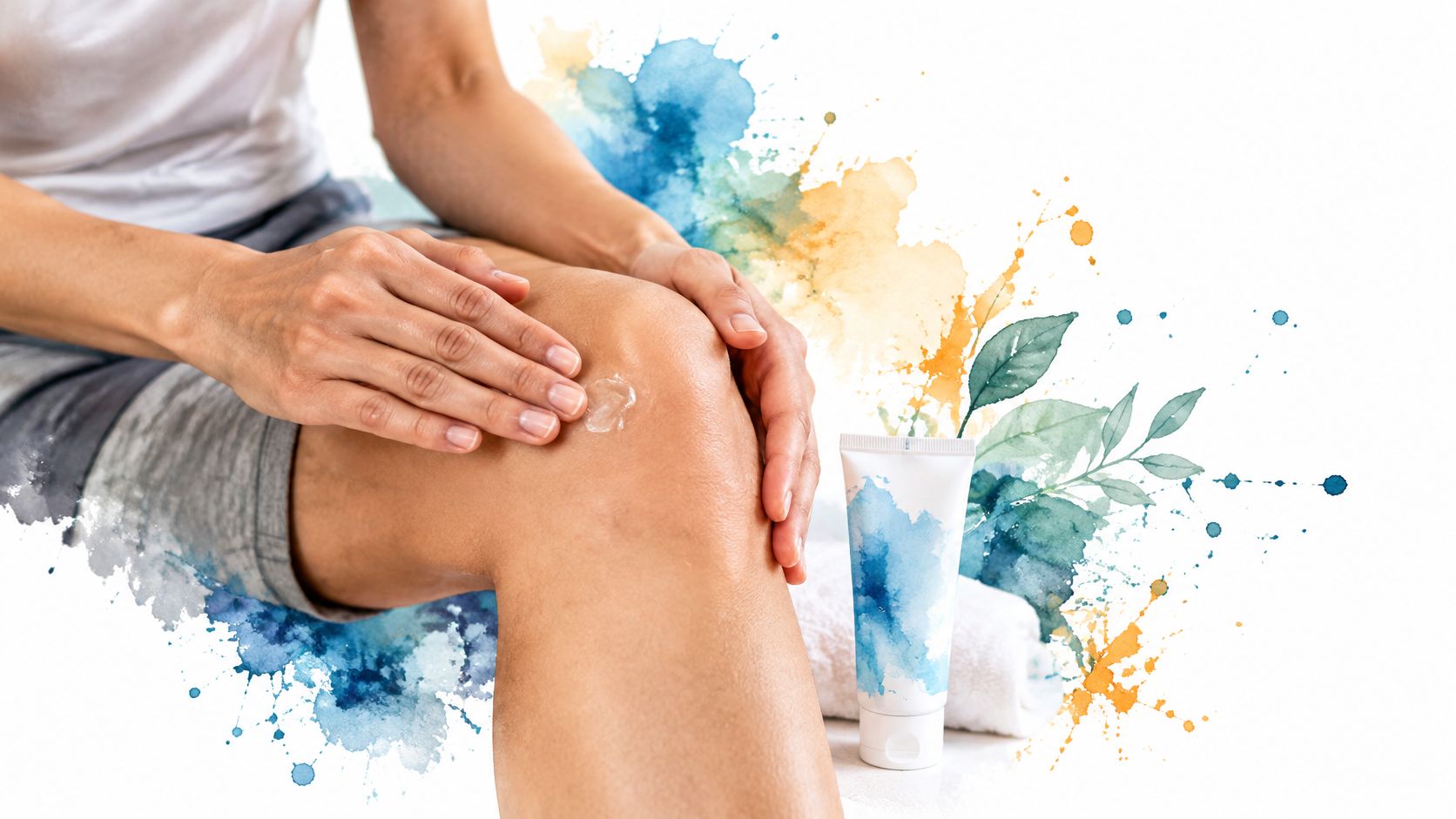
Use the medicine, not just the sensation
Apply the measured amount specified on your product to clean, dry, intact skin. Different diclofenac formulations have different directions, so don't transfer the schedule from another tube.
- Prevent accidental transfer: Wash your hands afterwards unless you're treating them, then follow the product's hand-washing instructions.
- Avoid doubling up: Ask a pharmacist before combining topical diclofenac with oral ibuprofen, naproxen, or another NSAID.
- Check suitability: Discuss blood thinners, pregnancy, previous NSAID reactions, and kidney or stomach problems before starting.
Less medicine generally reaches the bloodstream than with oral NSAIDs, but topical doesn't mean risk-free. Skin irritation and medication-related precautions still matter.
The distinction between medicated anti-inflammatory gels and other rubs is explained further in this guide to topical NSAIDs. If repeated use isn't improving everyday function, reassess the plan rather than applying more.
2. Capsaicin Topical Cream
Capsaicin is a better match for persistent, localized discomfort than for a newly swollen joint that needs immediate assessment. Derived from the compound responsible for chilli peppers' heat, it acts on pain-sensing nerve endings rather than functioning like diclofenac.
The first application can feel warm, prickly, or burning. With repeated use, capsaicin can reduce the sensitivity of those nerve endings, but that initial sensation isn't proof that it's working well for you. More burning doesn't mean more benefit.
Say your diagnosed knee osteoarthritis causes a familiar ache during everyday tasks, and you can't tolerate an NSAID product. Capsaicin may be worth discussing with your pharmacist, provided your skin is healthy and you can apply it without transferring it to sensitive areas.
Practical rule: A topical should make your routine more manageable. You shouldn't have to endure substantial skin pain to justify continuing it.
Make consistency and skin safety the priorities
Start with a small area, following the package's testing and application directions. If tolerated, use the product on its stated schedule rather than applying a large amount whenever symptoms peak.
- Keep it away from your face: Wash thoroughly after application and avoid touching your eyes, mouth, or contact lenses.
- Don't add heat: Heating pads, hot wraps, and tight coverings can intensify irritation.
- Stop for a significant reaction: Blistering, marked redness, or persistent burning needs attention, not another application.
Hand application can be awkward because treated fingers easily touch the face. That practical limitation may make another formulation preferable, even when capsaicin otherwise seems suitable.
When comparing topical pain relief options for arthritis, distinguish a consistent treatment trial from an occasional soothing sensation. Capsaicin isn't a cartilage-repair treatment, and it shouldn't replace movement or assessment of changing symptoms.
3. Menthol and Cooling Topical Analgesics
A worker finishing a physically demanding shift may want temporary comfort without taking a pill. An athlete may prefer a portable roll-on for familiar soreness during a training break. Menthol-based topicals suit these short-term comfort needs, provided there isn't an injury that needs assessment.
Menthol stimulates cold-sensitive receptors in the skin, creating a cooling sensation that changes how pain feels. Some products combine it with camphor or methyl salicylate, so the active-ingredient panel matters more than whether the container says gel, stick, spray, or roll-on.
Cooling sensation isn't the same as cooling the joint with an ice pack. It also doesn't establish that swelling has decreased or that an injured structure is ready for loading.
Match the format to the situation
A stick or roll-on can simplify application to a reachable knee or elbow. A spray may be easier for a larger area, but it needs careful direction to avoid the face and inhalation.
- Before activity: Apply only as directed, then complete a gradual warm-up. Don't treat reduced pain as permission to skip it.
- During work or training: Reassess your movement. Limping, altered technique, or worsening pain means modify or stop.
- After activity: Check the skin and symptom pattern before reapplying. More product isn't a substitute for recovery.
Don't layer different pain rubs on the same area unless a pharmacist confirms that combination is appropriate. Also avoid heating pads and tight coverings over treated skin.
These products can be useful when the goal is temporary symptom control, not treatment of the underlying cause. If you need a cooling rub to tolerate an increasingly painful workload, change the workload and arrange an assessment.
4. Heat Therapy
Morning stiffness without marked warmth or swelling is a sensible use case for heat. A warm shower, warm bath, or wrapped heat pack can make a stiff joint feel easier to move and relax the muscles around it.
For example, someone whose hands feel tight on waking could use comfortably warm water, then gently open and close the fingers. The useful combination is warmth followed by movement, rather than heat followed by another prolonged period of stillness.
Heat isn't automatically appropriate because a joint hurts. A newly swollen knee that already feels hot is different from a chronically stiff knee before a walk.
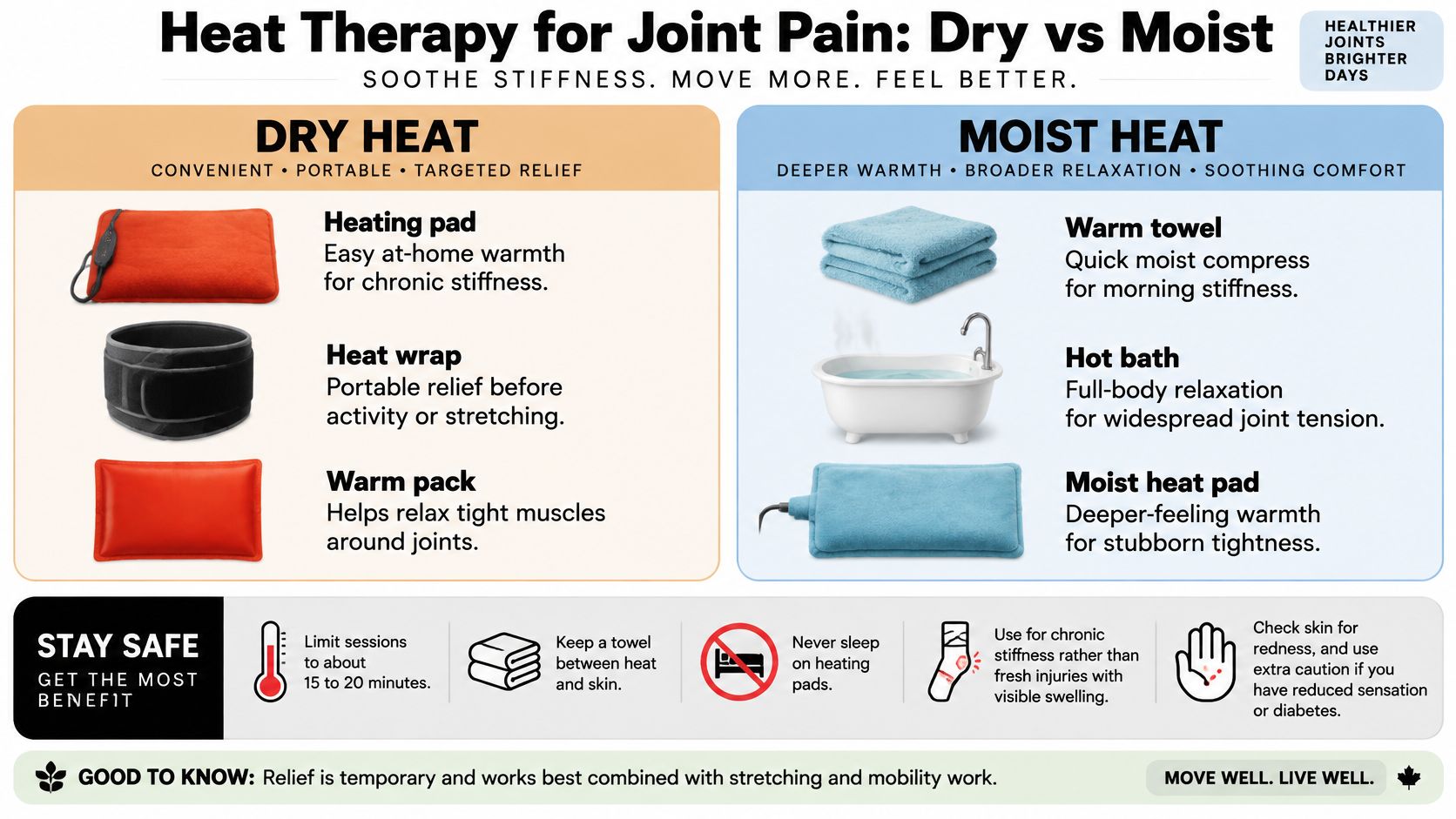
Choose controllable warmth
A warm damp towel conforms well to hands or an ankle. A commercial heat pack may be convenient for a knee, while a shower can help when several areas feel stiff.
Keep a fabric barrier between a heat pack and your skin, and use a comfortable setting. Check the skin throughout the session rather than relying solely on a timer or the device's automatic shut-off.
- Stay awake: Don't sleep on a heating pad or lie with your body weight pressing onto it.
- Protect vulnerable skin: Get professional advice if you have reduced sensation, fragile skin, or impaired circulation.
- Separate heat from topical medicines: Don't apply external heat over a medicated rub unless its directions explicitly permit it.
Heat is preparation for comfortable movement, not permission to force a stiff joint through pain.
Stop if warmth increases throbbing, swelling, or discomfort. The right response to heat should be easier movement, not a redder, more irritated joint.
5. Cold Therapy (Ice and Cryotherapy)
Fresh irritation after exertion is the clearest everyday use case for a wrapped cold pack. If a familiar knee problem becomes mildly puffy after an unusually demanding walk, cold may ease discomfort while you reduce the activity that provoked it.
Cold slows local nerve signalling and can temporarily dull pain. That can be useful, but it doesn't diagnose an injury, repair damaged tissue, or guarantee that inflammation has resolved.
A reusable gel pack or a bag of crushed ice wrapped in cloth is usually more practical for a single joint than an elaborate cryotherapy setup. You don't need a whole-body treatment to test whether local cooling makes a sore knee more comfortable.
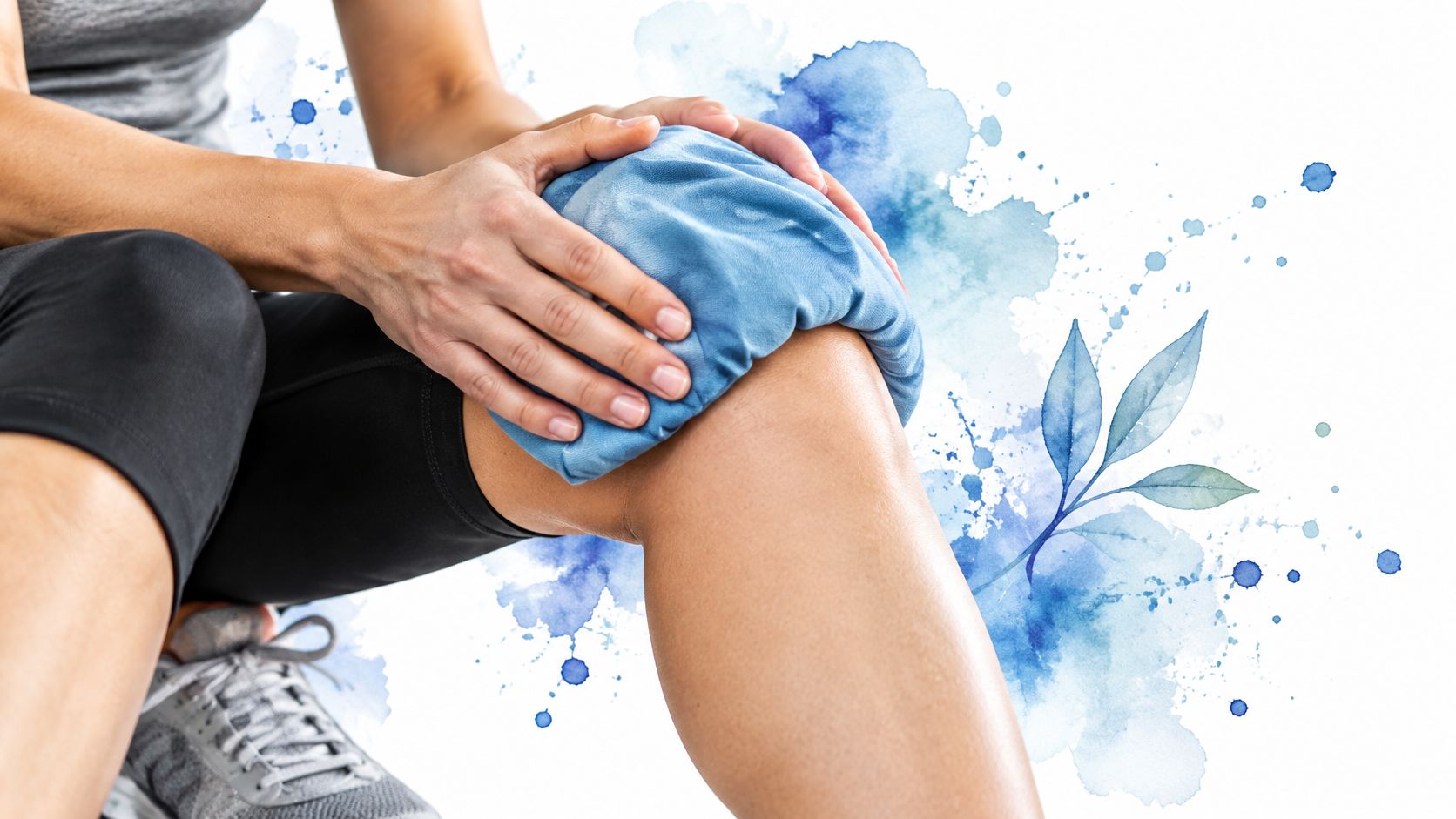
Protect the skin and reassess afterwards
Place a cloth between the pack and your skin. Keep applications brief, check the area frequently, and let the skin return to its usual temperature before considering another application.
Stop for burning, unusual colour changes, or excessive numbness. People with impaired circulation, reduced sensation, or a condition that makes cold exposure problematic should get individual advice first.
- Modify the trigger: Shorten the next walk, reduce resistance, or pause the aggravating drill.
- Keep comfortable movement: If appropriate, gently move through an easy range rather than holding the joint rigid all day.
- Don't test a numbed joint: Wait until normal sensation returns before deciding whether activity is tolerable.
Cold is a comfort measure, not a reason to ignore significant swelling. A traumatic injury, inability to bear weight, or a rapidly worsening hot joint warrants assessment even if the pack temporarily reduces pain.
6. Therapeutic Exercise and Physiotherapy
Recurring pain, reduced strength, and declining activity tolerance call for more than a soothing product. Therapeutic exercise addresses what you can do with the joint, including strength, movement control, range of motion, and endurance.
The Arthritis Society Canada's osteoarthritis guidance identifies physical activity and therapeutic exercise as foundational, while recommending temporary rest with range-of-motion movement during a hot, swollen flare. The distinction matters: chronic pain doesn't automatically require complete rest, and acute swelling isn't a challenge to push through.
A physiotherapist can help separate a manageable response to exercise from a programme that's too demanding. They can also adapt movements around an old injury, balance difficulty, work demands, or another health condition.
Build capacity without chasing exhaustion
For knee osteoarthritis, a starting programme might include supported sit-to-stand practice, comfortable knee bending and straightening, and easy stationary cycling. Someone who struggles with land-based activity may find pool exercise more manageable.
- Start below your limit: Choose a manageable range and resistance rather than testing maximum capacity.
- Watch the later response: Increasing swelling, a new limp, or symptoms that remain noticeably worse afterwards suggest the session needs adjusting.
- Progress deliberately: Change duration, resistance, or complexity separately so you can identify what your joint tolerates.
Exercise demonstrations can help you understand a movement, but they don't replace individual assessment.
Use these exercises for knee arthritis as discussion points when building an appropriate programme. A suitable topical may make movement more comfortable, but it shouldn't conceal worsening symptoms so you can complete an unsuitable session.
Consistency beats occasional overexertion. The goal is a repeatable routine that supports daily life, not a workout you need days to recover from.
7. Weight Management for Joint Health
Weight management is most relevant when excess body weight contributes to symptoms in weight-bearing joints, particularly the knees and hips. It isn't an immediate remedy for a flare, and it isn't a prerequisite for receiving pain treatment.
Ontario Health's osteoarthritis patient guide places exercise and weight management within the treatment plan and recommends a topical cream before oral pain medicines when those foundational approaches don't sufficiently control symptoms. That supports a layered approach rather than asking someone to tolerate pain until their weight changes.
Say knee pain has reduced your walking, and less activity has made weight management harder. The practical response is to make movement accessible, address nutrition realistically, and treat symptoms in parallel.
Clinical perspective: Weight management should support function and health, not become a reason to postpone rehabilitation or dismiss new joint symptoms.
Preserve strength while changing habits
Start with changes you can repeat: regular meals, satisfying protein-containing foods, more fibre-rich choices, and fewer drinks that add energy without much fullness. Pair dietary changes with tolerable activity and strengthening rather than relying on food restriction alone.
A registered dietitian can help adapt the plan to diabetes, appetite changes, medication effects, or a history of restrictive eating. For some people, clinician-supervised medical weight loss for joint pain may be an option to discuss, not a guaranteed solution.
Judge progress by more than the scale. Easier stair climbing, better walking tolerance, and maintained strength matter.
For a broader discussion of reducing inflammation in joints, keep expectations grounded: no dietary change replaces assessment of a hot swollen joint, and no individual food cancels the effects of an excessive workload.
8. Glucosamine and Chondroitin Supplements
These are optional, lower-priority choices for persistent osteoarthritis symptoms, not remedies for fresh swelling or unexplained joint pain. Glucosamine and chondroitin are components associated with cartilage and are sold as joint-health supplements.
Their proposed role sounds appealing, but taking a cartilage-related ingredient doesn't establish that it rebuilds damaged cartilage. Symptom benefits are inconsistent, and the cost and inconvenience can outweigh an uncertain improvement.
For someone already exercising, managing activity, and using appropriate symptom relief, a carefully monitored trial may be worth discussing. For someone skipping rehabilitation to buy a supplement stack, the priorities need reversing.
Treat a trial as a decision, not a commitment
Before starting, define what improvement would matter. That might be less difficulty rising from a chair or a more comfortable usual walk, rather than a vague sense that your joints feel healthier.
- Review interactions: Tell your pharmacist about prescriptions, non-prescription medicines, and other supplements, especially if you take blood thinners.
- Check the product: Look for clear ingredients and Canadian authorization information, such as a Natural Product Number. Authorization isn't proof that you'll benefit.
- Avoid changing everything together: Starting several supplements and a new exercise routine at once makes it difficult to identify what's helping.
- Set a review point: Agree on when to reassess, and stop if there's no worthwhile improvement or you develop adverse effects.
A symptom diary should record function as well as discomfort. If you still avoid the same activities and need the same rescue measures, continuing automatically may not make sense.
When exploring natural remedies for joint pain, remember that natural doesn't mean interaction-free or reliably effective. Supplements should never delay evaluation of changing symptoms.
8 Joint Pain Relief Remedies at a Glance
| Remedy | How It Works | Best For | Time to Effect |
|---|---|---|---|
| Topical NSAIDs (Diclofenac Gel) | Reduces pain and inflammation locally at the joint | Knee or hand osteoarthritis pain | Relief may build with repeated use |
| Capsaicin Topical Cream | Desensitizes pain receptors with consistent application | Chronic, localized joint or muscle pain | Several days to weeks |
| Menthol and Cooling Topical Analgesics | Activates skin cold receptors to temporarily distract from pain | Short-term soreness around activity | Rapid, temporary relief |
| Heat Therapy | Increases blood flow and relaxes tight muscles | Chronic stiffness and muscle tension | Temporary relief during or after use |
| Cold Therapy (Ice and Cryotherapy) | Slows nerve signals and reduces localized swelling | Acute soreness, swelling, or post-exercise discomfort | Quick, temporary relief |
| Therapeutic Exercise and Physiotherapy | Strengthens supporting muscles and improves mobility | Joint pain and reduced function, especially with osteoarthritis | Builds with consistent practice |
| Weight Management for Joint Health | Reduces load on weight-bearing joints and may lower inflammation | Long-term support for knee or hip joint comfort | Gradual, with sustained changes |
| Glucosamine and Chondroitin Supplements | Intended to support cartilage; may modestly ease symptoms for some | People considering supplements for osteoarthritis symptoms | Several weeks for a trial |
Building Your Own Relief Routine and Knowing When to See a Doctor
A useful joint-pain routine begins with the pattern you have. Stiff mornings may respond to warmth followed by gentle movement; post-activity irritation may call for reduced loading and protected cold. Persistent localized osteoarthritis symptoms may justify a suitable topical alongside exercise.
Start with a manageable foundation rather than using every remedy at once. Choose tolerable daily movement, add joint-specific strengthening, and adjust the activities that repeatedly provoke symptoms. Then select a comfort measure that helps you carry out that plan.
The strongest practical test is whether you function better. Can you get dressed more easily, walk without developing a limp, complete your rehabilitation, or finish work without a substantial symptom increase? Relief that only lets you exceed your current capacity isn't the same as recovery.
Move, modify, pause, or seek assessment
- Move: Use comfortable activity when symptoms are familiar, stable, and not accompanied by concerning swelling or illness.
- Modify: Reduce distance, resistance, repetitions, or task duration when your usual workload causes a lingering increase in symptoms.
- Pause: Stop the aggravating activity when a joint becomes newly hot, swollen, or increasingly painful.
- Seek assessment: Get help for persistent swelling, marked warmth, rapidly worsening pain, or symptoms that don't settle with sensible adjustments.
A hot, red, swollen joint with fever needs urgent medical assessment. Significant trauma, inability to bear weight, new numbness, or weakness also requires prompt attention. Don't keep testing remedies while those signs develop.
Book a non-urgent appointment when pain keeps recurring, disrupts sleep or everyday function, or repeatedly requires medication without a clear diagnosis. Bring a brief record of the affected joint, triggers, swelling, morning stiffness, products used, and response to activity. That information is more useful than just reporting that you've tried everything.
For clinics and rehabilitation professionals, agree on the treatment's purpose before recommending it. A topical might support comfortable exercise, while heat may help someone begin their morning routine. Review the person's skin tolerance, medication use, and functional response rather than judging success by the strength of a cooling or warming sensation.
The right remedy has a defined role and a review point. Keep what meaningfully helps, stop what irritates or adds no value, and reassess when the symptom pattern changes.
Our MEDISTIK topical pain-relief options include the Power Stick for localized relief, the Power Spray for larger or hard-to-reach areas, and the Daily Defence Roll-On for cooling relief and everyday maintenance. Visit MEDISTIK to compare formats for temporary relief of sore muscles and joints, and choose an option that fits your activity and recovery routine.


