

Living with joint pain every day is tough. It’s frustrating, it’s limiting, and it can really get in the way of doing the things you love. But finding relief doesn’t always mean reaching for a prescription.
The best natural remedies for joint pain aren’t about a single magic pill. Instead, it’s a smart, layered approach. We’re talking about combining evidence-based supplements, targeted topical treatments, and gentle lifestyle changes to manage that nagging discomfort and get you moving more freely. This is all about supporting your body’s own healing power for relief that lasts.
Understanding Joint Pain and Natural Alternatives
If you're here, you already know what joint pain feels like—that morning stiffness, the ache that settles in after a long day, or the throb that keeps you on the sidelines. It’s an incredibly common experience, and it’s no wonder so many people are looking for safer, more sustainable ways to manage it.
This guide isn’t about replacing your doctor's advice. Think of it as building a personalized pain management toolkit. A mechanic wouldn’t use a wrench for every single job, right? In the same way, you can assemble a team of different strategies that work together to tackle your specific pain.
Building Your Pain Management Toolkit
Your toolkit is all about combining different approaches to get the best possible results. The goal is to create a routine that actually works for you—one that’s both effective and easy to stick with.
- Internal Support: This is where oral supplements like turmeric or Boswellia come in. They work from the inside out to help calm down inflammation.
- External Relief: Think targeted creams and gels. These provide fast-acting relief right where you feel the pain, helping to quiet down those pain signals at the source.
- Lifestyle Foundations: You can't overlook the basics. Gentle movement, an anti-inflammatory diet, and stress management are the bedrock of any successful long-term plan. For a deeper dive into building this routine, check out this practical guide to natural joint pain relief.
This integrated approach is becoming more popular, and for good reason. Joint pain is a huge issue in Canada, with arthritis being one of the most common chronic conditions out there. Over four million Canadians are living with it. Among those diagnosed, 37% report osteoarthritis as their only form. The pain is real, with 29% experiencing knee pain and another 29% feeling it in both their hips and knees. This reality is exactly why people are so interested in effective, accessible ways to manage their pain.
By understanding how different remedies work, you can layer them strategically. You might use a topical for immediate relief while a supplement works on long-term inflammation, creating a powerful, synergistic effect.
Ultimately, managing joint pain is about taking back control. It starts with understanding the complex conversation between your body and its pain signals. To get a better handle on this, you can learn more about how pain is processed by the brain in our detailed guide. This knowledge is power—it helps you choose the right natural tools to interrupt those signals and live more comfortably.
Evidence-Based Supplements for Joint Health
Walking down the supplement aisle can be pretty confusing. Countless bottles make big promises, but it’s tough to know what actually works. Instead of getting lost in the marketing hype, let's look at what the science says about natural remedies for joint pain. Here, we'll dive into the oral supplements that have solid clinical evidence behind them, working from the inside out to bring you relief.
Think of these supplements as different tools in your toolkit. Some are like natural firefighters, calming the inflammatory blaze that fuels joint pain. Others are more like mechanics, providing the raw materials your body needs to support and repair cartilage. The trick is figuring out which tools are right for the job.
This visual guide shows the journey from first noticing joint discomfort, to exploring natural options, and finally building a personalized toolkit for relief.

This simple flow shows that finding relief is an active process—it’s about learning what works for your body and putting those strategies into practice.
The Anti-Inflammatory Powerhouses
Chronic inflammation is a major culprit behind joint pain, especially in conditions like osteoarthritis. The good news is that certain supplements are incredibly effective at interrupting this inflammatory cycle. They offer a way to dial down pain and improve mobility, often without the side effects that can come with some conventional medications.
One of the most heavily researched is Boswellia serrata, also known as Indian frankincense. Its power comes from active compounds called boswellic acids, which have potent anti-inflammatory effects.
Boswellia extract has become a go-to natural remedy for joint pain relief, both in Canada and worldwide. The clinical evidence is strong, consistently showing its effectiveness for managing osteoarthritis discomfort.
One major review found that taking 100 mg daily of enriched Boswellia for three months dropped osteoarthritis pain by nearly 20 points on a 100-point scale. Another deep dive into 20 different osteoarthritis supplements identified Boswellia as a top performer for providing significant short-term relief. For a closer look, the Arthritis Foundation has an excellent supplement guide.
Turmeric and Curcumin Explained
Next up is another anti-inflammatory giant: turmeric. You probably know it as the vibrant yellow spice in curry, but its real strength lies in its main active compound, curcumin. Curcumin gets to work by blocking specific inflammatory molecules in the body, essentially cutting off the pain signal at its source.
There’s a catch, though. Our bodies don't absorb curcumin very well on their own. It needs a partner to be effective. That's why you’ll almost always see it paired with piperine (an extract from black pepper), which can crank up its absorption by a staggering 2,000%.
To help you decide what might work best, we've broken down the top evidence-backed supplements in the table below. It outlines how each one works, what the research says, and what a common dose looks like.
Top Evidence-Backed Supplements for Joint Health
| Supplement | How It Works | Key Evidence | Common Dosage |
|---|---|---|---|
| Boswellia Serrata | Inhibits pro-inflammatory enzymes, helping to reduce pain and slow cartilage breakdown. | Consistently shown in reviews to significantly reduce osteoarthritis pain and improve function. | 100-300 mg daily of an extract standardized to boswellic acids. |
| Turmeric (Curcumin) | Blocks inflammatory pathways and acts as a potent antioxidant to protect joint tissues. | Multiple studies show it provides pain relief comparable to NSAIDs for knee osteoarthritis. | 500-1,000 mg of curcumin extract daily, combined with piperine for absorption. |
| Glucosamine & Chondroitin | Provides the building blocks for cartilage repair and helps maintain joint lubrication. | Evidence is mixed, but some studies show benefits for moderate-to-severe knee osteoarthritis. | 1,500 mg of glucosamine sulfate and 1,200 mg of chondroitin sulfate daily. |
This table serves as a quick-glance guide, but remember that individual results can vary. It’s always best to discuss options with a healthcare professional to see what fits your specific needs.
Supporting Cartilage and Joint Structure
While taming inflammation is key, you also want to support the physical structure of your joints. That's where two other well-known supplements come in: glucosamine and chondroitin.
Glucosamine is a natural compound found in cartilage—the tough, flexible tissue that cushions your joints. Think of it as a fundamental building block for keeping that cushion healthy. Chondroitin is also a major component of cartilage, and its job is to help it hold onto water, which is crucial for shock absorption and keeping things moving smoothly.
The scientific evidence on these two has been a bit of a mixed bag over the years. However, many people swear by them, reporting real benefits after using them consistently for a few months. The research seems to suggest they work best for people dealing with moderate-to-severe knee osteoarthritis.
Choosing the Right Supplement for You
So, which one should you choose? There’s no single right answer. The best supplement for you really depends on your specific symptoms and what you’re trying to achieve. What provides amazing relief for one person might not do much for another.
Before you start any new supplement, it is absolutely essential to chat with your doctor or a registered dietitian. They can help you:
- Check for any potential interactions with medications you’re already taking.
- Figure out the right dosage for your specific situation.
- Make sure the supplement is safe for you based on your overall health.
By sticking to evidence-backed options like Boswellia, curcumin, glucosamine, and chondroitin, you can build a daily routine that is both safe and effective. These supplements are powerful allies in your natural toolkit, helping you manage joint discomfort from the inside and get back to a more active, comfortable life.
Finding Immediate Relief with Topical Remedies
When a joint suddenly flares up, the last thing you want is to wait for a pill to make its way through your system. You need relief, and you need it now. This is where topical remedies really come into their own, delivering fast, targeted comfort right where you need it most.
Instead of being swallowed and circulated throughout your entire body, a topical treatment is applied directly to the skin over the aching joint. This allows the active ingredients to get straight to work on the underlying tissues and nerve endings, often bringing relief in just a few minutes.
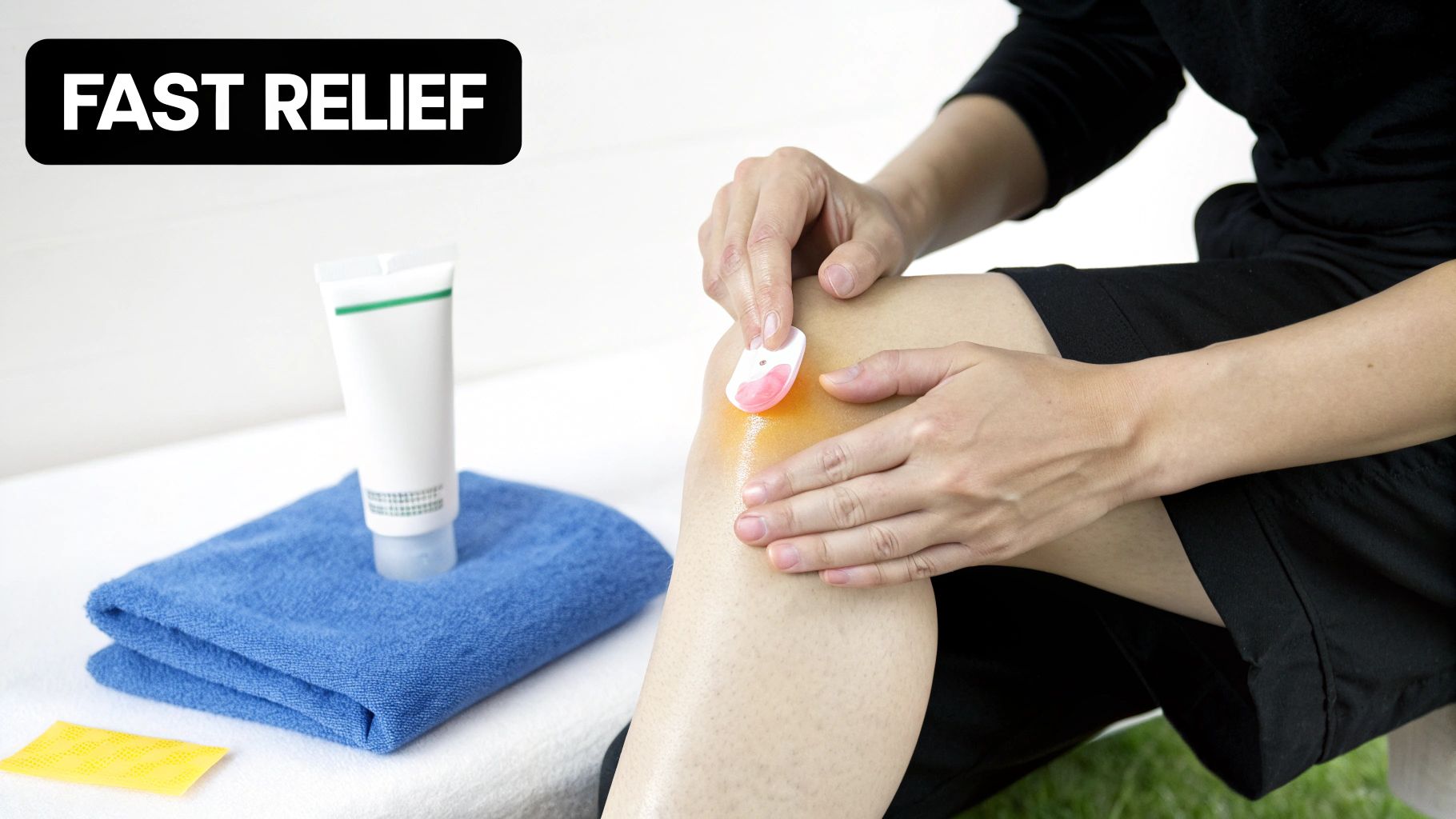
Think of it like this: your body’s pain signalling network is like a busy telephone switchboard. An aching joint is constantly sending "pain" calls to your brain. Topicals act like a clever operator, creating new sensations—like cooling or warmth—that effectively jam the lines and interrupt those pain messages from getting through.
Because the application is so direct, you get a concentrated dose of relief right at the source. It’s a powerful and efficient way to handle sudden flare-ups and manage day-to-day aches.
Understanding Warming and Cooling Therapies
Topicals generally fall into two camps based on the sensation they create: warming (thermotherapy) and cooling (cryotherapy). Knowing which one to reach for depends on what your joint is telling you.
Cooling Gels and Creams (Cryotherapy) are your best friend for acute injuries or that hot, throbbing feeling of inflammation. The active ingredients often include:
- Menthol: Sourced from mint, menthol delivers a powerful cooling sensation that essentially distracts your brain from the pain signals. It’s fantastic for calming that “on fire” feeling in an angry joint.
- Camphor: This ingredient provides a gentler cooling effect and helps desensitize nerve endings, which further dials down the pain you feel.
This cooling action constricts blood vessels, helping to reduce swelling and inflammation in a freshly irritated joint—much like a high-tech ice pack.
Warming Rubs (Thermotherapy) are better suited for chronic stiffness and the deep ache of sore muscles. These formulas work to increase blood flow to the area.
- Methyl Salicylate: This compound, which is chemically similar to aspirin, creates a gentle warmth that helps relax tight muscles and soothe stiff, creaky joints.
- Capsaicin: Derived from chili peppers, capsaicin produces a potent warming effect. It works by depleting a neurotransmitter responsible for sending pain signals, offering longer-lasting relief for chronic issues like arthritis.
Warming topicals are perfect for loosening up stiff joints first thing in the morning or for prepping your muscles before you get active.
Deciding between an oral pill and a topical cream isn't always straightforward. To help you weigh the pros and cons, we've put together a detailed comparison in our article on the benefits of a topical pain reliever versus an oral pain reliever.
How to Use Topical Remedies Strategically
To get the most mileage out of your topical treatments, think of them as specialized tools in your pain management toolkit.
- For Daily Aches: Is your back or knee stiff when you wake up? Apply a warming cream first thing to improve mobility and ease into your day with less discomfort.
- For Pre-Activity Prep: Before a workout, a long walk, or even just a session in the garden, using a warming topical on key joints can help increase blood flow and get them ready for movement.
- For Post-Workout Recovery: After you’ve pushed yourself, a cooling gel can be a lifesaver. Apply it to sore muscles and joints to help calm inflammation and take the edge off post-exercise soreness.
- For Acute Flare-Ups: When a joint suddenly becomes painful and swollen, reach for a cooling topical. It can provide immediate, soothing relief while you give the area a chance to rest and recover.
By understanding when to use heat and when to use cold, you can choose the right product for the right moment. This smart approach helps you manage your discomfort effectively, keeping you in control and on the move.
How Gentle Movement Can Heal Your Joints
When your joints are screaming in pain, the last thing you probably want to do is move. It feels counterintuitive, right? The natural impulse is to rest and protect the sore area. But here’s the thing: the right kind of movement is actually one of the most powerful medicines for aching joints.
Think of it this way: motion is lotion. A rusty door hinge doesn't get better by sitting still; that just lets the rust set in. You have to work it back and forth, slowly and gently, to get it gliding again. Your joints work on a similar principle. Gentle movement encourages your body to produce more synovial fluid—its own natural joint lubricant—which helps ease stiffness and improve how well you can move.
The Power of Mind-Body Practices
This is where mind-body exercises really shine. They're brilliant because they merge physical movement with focused breathing and mental awareness. This combination doesn't just help your body function better; it also gives you tools to manage the stress and anxiety that so often tag along with chronic pain.
Two of the best practices for joint health are Yoga and Tai Chi.
- Yoga uses a series of postures and stretches to build flexibility and, crucially, strengthen the muscles that surround your joints. When these muscles are strong, they act like a natural brace, taking a significant amount of pressure off the joints themselves.
- Tai Chi is often called "meditation in motion" for good reason. Its slow, flowing movements are fantastic for improving your balance, cutting down on stiffness, and bringing about a sense of calm.
The goal isn't to force yourself into painful positions. It’s about listening to your body and moving within a range that feels good, then gradually expanding that range as you get stronger.
Mind-body exercises like Tai Chi have shown impressive results in clinical research for managing joint pain. A comprehensive analysis of multiple studies found that consistent practice significantly reduced pain and stiffness while improving physical function.
What’s really interesting is that these studies also noted a decrease in symptoms of depression, underscoring that deep connection between how we feel mentally and how we feel physically. For anyone looking for natural ways to handle joint pain, this is solid proof that gentle movement offers benefits that go far beyond just the physical.
Building a Stronger Foundation With Targeted Exercise
While practices like yoga and tai chi are great for overall wellness, sometimes a joint needs more specific, targeted support. That's where physical therapy and focused strengthening exercises come into the picture.
The main objective is to build up the muscles that support your most vulnerable joints. For instance, if you have knee pain, strengthening your quads, hamstrings, and glutes creates a muscular "scaffold" around that knee. This structure helps absorb shock and reduces the strain on the joint with every single step. A strong core is also a must-have, as it acts as the stable foundation for all your body’s movements. You can learn more about the fundamentals in our guide to building core stability through exercise.
Working with a professional, like a physical therapist, can be a total game-changer. They can assess your unique situation and create a safe, personalized exercise plan that’s built just for you.
Safe and Smart Movement Strategies
Starting a new movement routine can feel a little daunting, but a few simple rules can help you begin safely and see real results. The secret is to be consistent but also kind to yourself.
- Start Low and Go Slow: You don't need to jump into hour-long sessions. Begin with just 5-10 minutes a day and slowly add more time as you start to feel stronger and more comfortable.
- Focus on Low-Impact Activities: Choose exercises that are gentle on your joints. Swimming, water aerobics, cycling on a stationary bike, and walking are all excellent choices.
- Listen to Your Body: The old "no pain, no gain" saying absolutely does not apply here. You should feel a gentle stretch or the pleasant fatigue of your muscles working, but never sharp, stabbing, or worsening joint pain. If you feel that, it's your body's signal to stop or modify what you're doing.
For those dealing with specific issues like knee trouble, adding gentle, targeted movements is key. This guide on safe and effective exercises for bad knees is a great place to find movements that can support your healing. The first step is to start seeing movement not as a threat, but as your most important tool for building a stronger, more resilient body.
Building Your Personal Joint Care Routine
Knowing the science behind supplements, topicals, and gentle movement is a great start. But the real magic happens when you weave these separate strategies into a consistent, personal daily plan. A solid routine is your best offence, helping you manage joint pain proactively instead of just reacting when a flare-up hits.
Think of it like creating a blueprint for your own well-being. You plan meals and schedule appointments, right? Scheduling your joint care makes it a non-negotiable part of your day. It’s this consistency that allows the long-term benefits of natural remedies to really take hold and make a difference.

The goal is synergy—making sure all your efforts work together. For instance, a morning supplement can help reduce inflammation throughout your body, while a targeted topical gives you immediate relief on a stiff knee. That relief might be just what you need to do the gentle stretches that improve your mobility over time. See how it all connects?
Creating Your Daily Action Plan
A successful routine is one you can actually stick with. It needs to fit your lifestyle, target your specific pain points, and be simple enough that you won't skip it on a busy day. To give you a better idea, we’ve put together a few sample plans for common scenarios, showing how you can layer different strategies for the best effect.
These are just starting points, of course. Use them as inspiration to build a routine that feels right for you, and don't be afraid to adjust things based on what your body is telling you.
Sample Integrated Pain Management Plans
Here are a few examples of how different people might structure their day to manage joint pain. The key is combining lifestyle habits, supplements, and topical treatments in a way that fits their unique needs and schedule.
| Time of Day | The Athlete | The Office Worker | The Active Senior |
|---|---|---|---|
| Morning | Turmeric supplement with breakfast. Apply a warming topical like MEDISTIK Extra-Strength Stick 30 mins before activity to warm up muscles. | Boswellia supplement to manage chronic inflammation. 5-10 mins of neck and shoulder stretches before starting the workday. | Glucosamine/chondroitin with breakfast for cartilage support. Apply a warming topical to ease morning knee stiffness. |
| Midday | Immediately post-workout, use a cooling topical like MEDISTIK Dual Action Roll-On on sore joints to manage inflammation. | Set an hourly reminder to stand and walk. Keep a topical pain relief spray like MEDISTIK Extra-Strength Spray at the desk for quick relief. | 20-30 mins of low-impact activity like swimming, Tai Chi, or walking to lubricate joints and strengthen muscles. |
| Evening | Warm Epsom salt bath to relax muscles. 10-15 mins of gentle, full-body stretching before bed to prevent overnight stiffness. | 20 mins of gentle yoga focusing on spinal mobility. Apply a warming topical to the lower back to soothe deep muscle aches. | Apply a cooling topical to knees to calm any inflammation. Elevate legs for 10 mins before bed to reduce swelling. |
These plans show how a thoughtful combination of remedies provides round-the-clock support. The best routine is the one that becomes an effortless part of your life, helping you move with more comfort and confidence every single day.
Common Questions About Natural Joint Pain Relief
Jumping into the world of natural joint pain remedies can bring up a few practical questions. You want to know what to expect, how to stay safe, and—importantly—when it's time to call in a professional. Let's clear up those common concerns so you can move forward with confidence.
Think of this as your final checklist before putting your plan into action. We’ll talk about timelines, mixing remedies with your medications, and the red flags that mean you should see a doctor. The goal is to make sure you feel totally prepared to manage your joint health effectively.
How Long Does It Take for Natural Remedies to Work?
When it comes to natural options, patience is your best friend. The time it takes to feel relief really varies depending on what you’re using. It’s not always a quick fix, but the results can be powerful and long-lasting.
The speed of relief often comes down to how the remedy works. Some offer almost instant comfort, while others chip away at underlying issues like inflammation over time.
-
Immediate Relief (Minutes): Topical solutions with ingredients like menthol or camphor can get to work within minutes. They create cooling or warming sensations that essentially distract your nerves from sending pain signals.
-
Short-Term Relief (Weeks to Months): For oral supplements like Turmeric or Boswellia, it’s more of a slow burn. Their anti-inflammatory compounds need time to build up in your system. You’ll likely need to take them consistently for four to eight weeks before noticing a real, lasting improvement in pain and movement.
-
Long-Term Benefits (Months): The good stuff from mind-body practices like Yoga and Tai Chi really adds up over time. While you might feel better after just one session, the research shows that sticking with it for 8 to 12 weeks is what leads to significant drops in chronic pain and stiffness.
Can I Combine Natural Remedies with My Prescription Medications?
This is a big one, and the answer is simple: you absolutely need to talk to a professional first. While lots of natural remedies are safe, some can interact with prescription drugs. Your doctor or pharmacist has to be in the loop.
Your healthcare provider is your most important partner in pain management. Always maintain an open dialogue about every supplement, topical, and lifestyle change you make to ensure your entire treatment plan is safe and coordinated.
Think about it this way: certain supplements have active properties that can change how your body handles medication.
- Blood Thinners: Supplements like turmeric, fish oil, and ginger can have mild blood-thinning effects. If you're already taking an anticoagulant like warfarin, this could amplify the effect and increase your risk of bleeding.
- Blood Sugar Medication: Some supplements might affect your blood sugar levels, which could throw off your diabetes medications.
Topical remedies are generally a safer bet here because very little is absorbed into your bloodstream. Even so, it's always best practice to run everything by your healthcare team. They can look at your full list of medications and supplements and spot any potential conflicts.
When Should I See a Doctor for My Joint Pain?
Natural remedies are fantastic for managing day-to-day discomfort, but it's crucial to know when you need a professional medical opinion. Some symptoms can be red flags for a more serious issue that needs immediate attention.
You should book an appointment with a doctor if your joint pain is severe, pops up suddenly for no reason, or comes with other symptoms that affect your whole body. These are signs that something more is going on under the surface.
Keep a close eye out for these warning signs:
- The joint is intensely red, swollen, and feels hot when you touch it.
- You’re also dealing with a fever, unexplained weight loss, or major fatigue.
- The pain is so bad you can't put any weight on the joint or move it at all.
- Your pain just keeps getting worse, even after a few weeks of consistent self-care.
- The discomfort is seriously getting in the way of your daily life.
Getting a professional diagnosis in these cases is key. It helps rule out serious problems like an infection, a fracture, or an aggressive inflammatory condition that needs a different kind of treatment.
At MEDISTIK, we're committed to providing powerful, effective topical solutions to support your joint care routine. Explore our Canadian-made, clinic-trusted products to find the targeted relief you need to prime, perform, and restore. Find your seriously strong pain relief at MEDISTIK today.


