

You're standing in a Canadian pharmacy aisle with a sore back, a stiff knee, or a pulled muscle from yesterday's game. The instinct is usually simple: reach for the strongest-looking pill and hope it works quickly. That instinct causes problems because over the counter pain relief isn't one product category. It's a choice between systemic medicine, targeted topical treatment, or a carefully selected combination.
The right first option depends on where the pain sits, whether inflammation is involved, how long relief needs to last, and what your medical history allows. A local muscle strain may need a topical product and gentle movement, while widespread inflammatory pain may justify a short course of an oral NSAID. Neither choice is automatically safer or more effective for every person.
This guide takes a Canadian pharmacist-clinician approach. It compares acetaminophen, oral NSAIDs, combination analgesics, menthol, methyl salicylate, capsaicin and lidocaine, then applies those choices to sport, clinic care, chronic joint pain and physically demanding work. Many people reach for the wrong tool first, often a systemic NSAID when a topical would do, or acetaminophen when an anti-inflammatory option is more appropriate.
The OTC Pain Decision Most People Get Wrong
Saturday morning brings a familiar argument. A recreational hockey player has tweaked his groin and reaches for the strongest pill in the cabinet. His colleague from the clinic suggests a menthol patch, a short walk and a careful warm-up instead.
Neither person should decide by brand reputation. The decision is oral versus topical versus combined treatment, matched to the pain pattern and the person using it. A pill travels through the entire system. A topical product concentrates treatment at the application site, which can make more sense when the pain is small, superficial and localised.
Start with the location. A sore knee, shoulder, elbow or small patch of back muscle is a good candidate for topical treatment. A headache, fever or pain spread across several areas usually requires a systemic option if medicine is appropriate. Pain that follows a significant injury, causes marked swelling or limits normal movement deserves assessment rather than repeated product changes.
Next, consider the activity demand. Someone who must stay alert at work may prefer a local product that doesn't involve swallowing a systemic medicine. Someone who needs coverage across a broad area may find an oral option more practical, provided the safety profile fits.
Practical rule: Choose the narrowest effective treatment for the narrowest painful area, then reassess before increasing the dose or adding another product.
The safety ceiling matters as much as the expected benefit. NSAIDs can be useful for inflammatory pain, but they aren't suitable for everyone. Acetaminophen avoids many stomach-related concerns but has a hard daily limit and doesn't treat inflammation. Combination products can improve acute pain relief, but they also make dose duplication easier.
The rest of this guide separates oral analgesics from topical options, then applies both to real situations. The strongest product isn't automatically the best first product. The best first product is the one that matches the pain without creating avoidable risk.
What Counts as Over the Counter Pain Relief in Canada
In Canada, OTC pain relief generally falls into four practical groups.
Oral acetaminophen reduces pain and fever but isn't an anti-inflammatory medicine. It may suit people who can't take an NSAID, although liver disease, alcohol use and duplicate ingredients in cold and flu products require caution.
Oral NSAIDs include ibuprofen, naproxen and ASA. They can be useful when inflammation contributes to pain, including some muscle, joint and injury-related complaints. They also carry stomach, kidney, bleeding and interaction concerns, especially when used repeatedly or combined with other NSAIDs.
Topical analgesics include counterirritants such as menthol, warming ingredients such as methyl salicylate, capsaicin and local anaesthetics such as lidocaine. They're applied to the skin over a painful area. Their main advantage is targeted use, not unlimited safety.
Fixed-dose combinations contain more than one active ingredient, such as ibuprofen plus acetaminophen. They can provide strong short-term relief for acute pain, but only when the user totals every ingredient across every medicine.
Health Canada's safety review identified over 400 OTC topical pain relievers sold in Canada containing menthol, methyl salicylate or capsaicin, alone or in combination. That breadth explains why the topical aisle can feel confusing. Product formats, strengths and directions vary, so the active ingredient matters more than the front-of-package promise. The review also marked a significant regulatory response to serious skin-burn reports. (Health Canada's review of topical pain relievers)
OTC doesn't mean risk-free. It means the product can be supplied without a prescription under its relevant Canadian sale category. Some medicines are available from a pharmacy shelf, some require a pharmacist's involvement, and others are prescription-only. The same active ingredient may appear in both OTC and prescription products at different strengths or under different directions.
Combination products containing codeine aren't the focus here. For a practical overview of products authorised for use in Canada, readers can also review this Health Canada approved products guide.
Compare products within their category first. Then decide whether the pain calls for an oral medicine, a topical treatment or neither.
Oral Options Compared Acetaminophen NSAIDs and Combination Analgesics
Oral analgesics aren't interchangeable. Acetaminophen is mainly an analgesic and fever reducer. Ibuprofen and naproxen are NSAIDs, so they may be more suitable when inflammation is part of the problem. ASA has a narrower role for routine pain relief because of its bleeding and gastrointestinal concerns.
| Active Ingredient | Onset | Duration | Max Daily Dose Adult | Best-Fit Pain Type | Key Safety Note |
|---|---|---|---|---|---|
| Acetaminophen | Follow the product label | Follow the product label | 4,000 mg per day, the Canadian maximum referenced in the evidence summary | Pain or fever when an NSAID isn't suitable | Count every product containing acetaminophen and consider liver risk |
| Ibuprofen | Follow the product label | Follow the product label | 1,200 mg per day for the Canadian OTC limit referenced in the evidence summary | Acute pain with an inflammatory component | Avoid or seek advice with ulcer, kidney, bleeding, cardiovascular or interaction risks |
| Naproxen sodium | Follow the product label | Longer acting than ibuprofen in practical use | Use the product label and pharmacist guidance | Pain needing longer coverage | NSAID risks remain, even when dosing is less frequent |
| ASA | Follow the product label | Follow the product label | Use the product label | Selected pain situations only | Bleeding, stomach irritation and age-related concerns limit routine use |
| Ibuprofen plus acetaminophen | Follow the combination label | Follow the combination label | Total both ingredients across all products | Short-duration acute musculoskeletal pain | Never add duplicate ibuprofen or acetaminophen without checking |
The evidence summary for acute pain found fixed-dose ibuprofen plus acetaminophen combinations had NNT values below 2, with reported success rates ranging from under 20% for weaker OTC agents to about 70% for better-performing options. It specifically identifies ibuprofen plus paracetamol as a strong nonprescription class, with studied doses of ibuprofen 200 to 400 mg and acetaminophen 500 to 1,000 mg. (Cochrane evidence on ibuprofen plus paracetamol)
That makes the combination a rational first-line option for a short acute injury when both ingredients are appropriate. It doesn't mean a higher dose is better, and it doesn't give permission to combine several cold, flu, sleep or prescription products without checking their contents.
Match the medicine to the pain
Use an NSAID when inflammation appears central and your medical history permits it. Use acetaminophen when fever is present, when NSAIDs are unsuitable, or when the pain doesn't appear to require an anti-inflammatory effect. For recurring pelvic or abdominal pain after NSAID use, this clinical discussion of pelvic pain after NSAIDs is a useful reminder that persistent or changing pain needs evaluation rather than indefinite self-treatment.
ASA's role as a general OTC pain reliever has diminished. Its effects on gastrointestinal irritation and bleeding make it a poor casual choice for many adults, and it requires particular caution in children and teenagers with viral illness. Don't stack ASA with another NSAID unless a clinician specifically tells you to.
Brand familiarity doesn't settle the choice. A useful comparison of Advil and Tylenol for back pain can help clarify the difference between an anti-inflammatory medicine and an analgesic that doesn't treat inflammation.
Topical Analgesics When a Stick Spray or Roll-On Beats a Pill
For a small, clearly localised muscle or joint problem, I usually prefer a topical product before an oral NSAID. A stick, spray or roll-on puts the treatment where the discomfort is and avoids exposing the whole body to an oral medicine.
Menthol creates a cooling sensation that can make a sore area feel less prominent during movement. Methyl salicylate products create a warming sensation and are often chosen for muscle stiffness. Capsaicin works differently and may be more useful for recurring localised pain, but it can cause burning, especially when first used. Lidocaine is a local anaesthetic that temporarily reduces sensation at the application site.
| Active Ingredient | Feel | Onset | Duration | Best For | Key Warning |
|---|---|---|---|---|---|
| Menthol | Cooling | Follow the product label | Follow the product label | Localised soreness, warm-up and post-exercise discomfort | Don't use with external heat or on damaged skin |
| Methyl salicylate | Warming | Follow the product label | Follow the product label | Stiff muscles and local aches | Avoid excessive amounts and consider salicylate or blood-thinning risks |
| Capsaicin | Warming or burning | Builds with repeated use for some products | Follow the product label | Recurring localised pain | Wash hands carefully and keep away from eyes |
| Lidocaine | Numbing | Follow the product label | Follow the product label | Superficial, localised pain | Don't exceed the label or apply broadly without professional advice |
Topicals are particularly practical when the pain is confined to a small area, when you need to remain alert, or when gastrointestinal or renal concerns make oral NSAIDs unattractive. They're also useful for people who cannot tolerate swallowed medicines. The product still needs to be used correctly. More cream, a larger patch or longer exposure isn't a reliable route to better relief.
Health Canada's safety review followed serious skin reactions involving topical products with menthol alone or combined with methyl salicylate or capsaicin. Reported reactions included pain, swelling and blistering, which led to labelling updates across the category. (Health Canada's topical analgesic safety information)
Cooling or warming sensation is not proof that the underlying injury is improving. Use the product to support movement and recovery, not to push through worsening pain.
Sprays and roll-ons can help older adults and workers apply a controlled amount without rubbing a painful joint. Patches can be convenient for a defined area, but the user must follow wear-time and skin instructions. Don't combine a topical warming product with a heating pad, hot bath or tight covering.
For a closer look at ingredient choice and use, see this guide to topical analgesics.
Reading the Label the Way a Clinician Does
A pharmacist doesn't start with the brand name. The first check is the active ingredient in the Drug Facts table. Tylenol, Advil, Robax and store brands may contain different ingredients, or the same ingredient in different strengths. The front label is marketing. The Drug Facts table is the decision point.
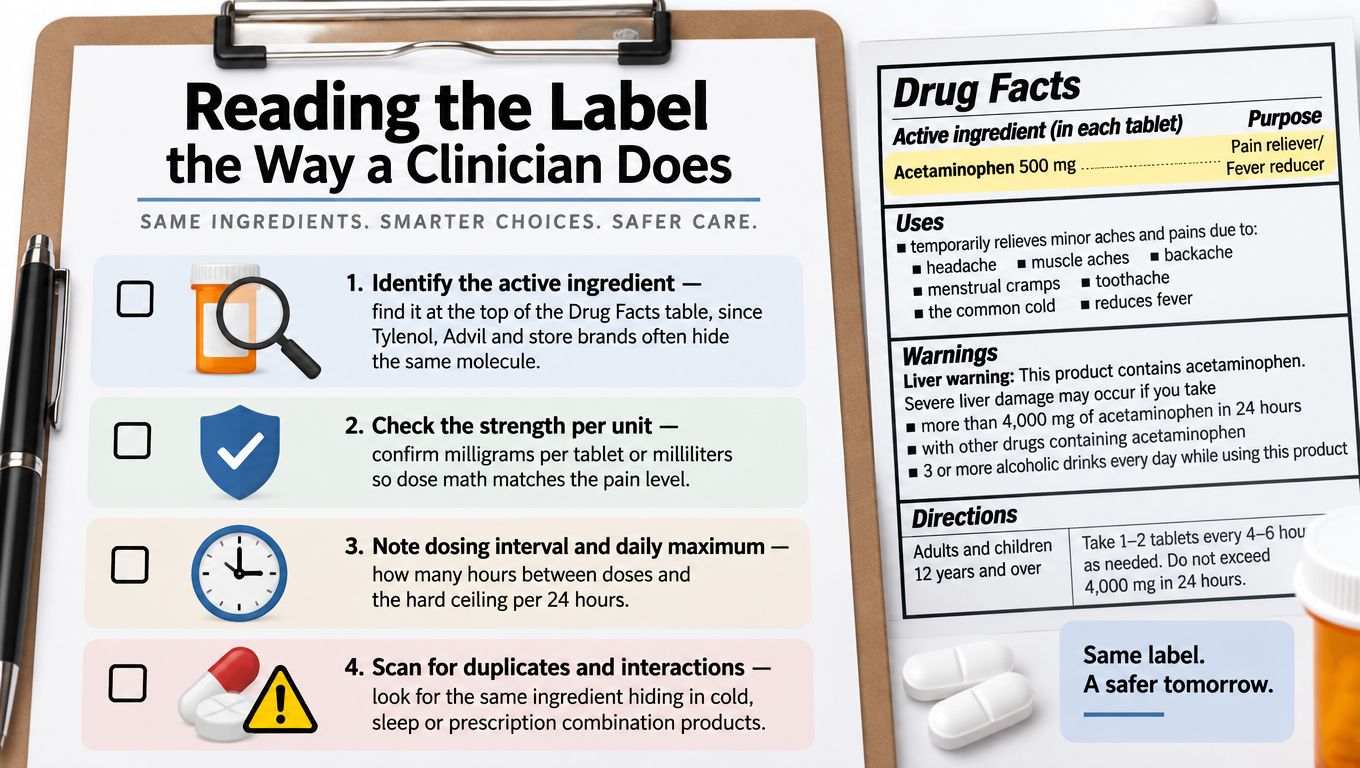
Four checks prevent most mistakes
- Identify the molecule. Write down the active ingredient before taking a second product. This catches duplicate acetaminophen in cold and flu medicines and duplicate NSAIDs across separate pain products.
- Check the amount per unit. Confirm the milligrams per tablet, capsule, spoonful or measured application. A familiar number of tablets isn't a safe dose unless you know the strength of each one.
- Find the dosing interval and daily maximum. Acetaminophen's Canadian maximum in the evidence summary is 4,000 mg per day, and users must count all sources. The label may set a lower limit for particular products or people.
- Read warnings and interactions. Alcohol and acetaminophen can create a poor combination for people with liver risk. NSAIDs can interact with anticoagulants and other medicines, and aspirin-sensitive people may react to ibuprofen. Pregnancy, kidney disease, ulcer history and cardiovascular conditions also change the recommendation.
A lower dose may be appropriate even when the package lists a larger adult maximum. Age, body size, liver function, kidney function, alcohol use and other medicines all matter. If you're unsure, ask a pharmacist before taking the next dose.
For a practical explanation of local options, review this resource on topical pain relief in Canada. If you can't name the active ingredient and the daily maximum, don't take a second dose until you've checked.
Safety Realities Dosage Misuse and the Oral vs Topical Choice
Canadian consumers use OTC pain relief often, but many don't use it safely. An Ipsos survey found 83% of Canadian adults used an OTC medicine for pain in the previous year, and those users reported taking it about five times in the previous month. The same survey found 37% admitted taking more than the recommended amount in some way, including 32% who took the next dose too soon, 18% who took more pills at one time than directed, and 17% who exceeded the daily dose. Only 44% had ever discussed interactions with other OTC or prescription medicines. (Ipsos survey on Canadian OTC pain medication use)
Those figures describe behaviour, not bad intentions. People misread intervals, forget what they took, or combine a pain tablet with a cold remedy containing the same active ingredient. OTC status doesn't remove the need for dose tracking.
Use three questions before choosing
Where is the pain? A small joint or muscle area favours a topical first. A headache, fever or widespread pain may need oral treatment if the person has no contraindication. Deep, severe or unexplained pain shouldn't be masked repeatedly.
How long has it lasted? A brief flare after activity may respond to movement modification, ice or a topical product. Pain that keeps returning needs a diagnosis and a plan rather than an expanding collection of OTC medicines. Health Canada describes topical analgesics as products for temporary relief of minor aches, strains, backache, bruises and arthritis or rheumatic discomfort. That is not the same as long-term disease management.
What does the person need to do? If the person must drive, work safely or perform a skilled task, avoid using a medicine that causes unwanted effects and prefer a local option where appropriate. If the pain is inflammatory and widespread, a short oral NSAID course may be more logical, but only after checking risks and interactions.
The chronic-pain gap matters. In a Canadian survey, 69% reported using OTC medicines, while OTC treatments received an effectiveness rating of 38%, one of the lowest ratings in that survey. (Angus Reid Institute Canadian chronic-pain survey) That mismatch should change expectations. If OTC relief remains modest, escalating the dose isn't the answer.
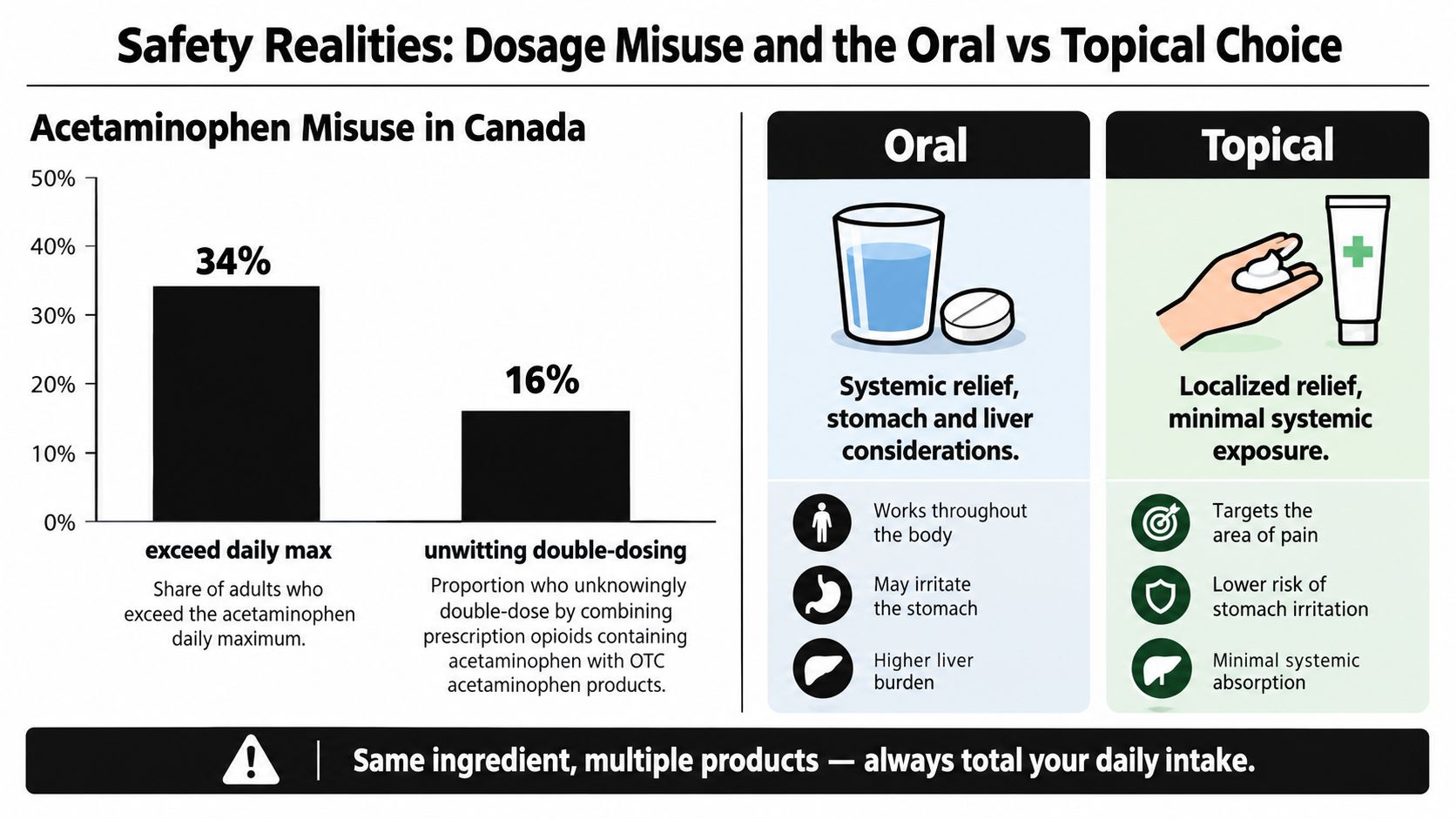
Do not continue self-treatment when pain persists beyond the product's intended short-term use, or when fever, swelling, worsening redness or gastrointestinal bleeding appears. Black stools, vomiting blood, severe abdominal pain, shortness of breath, chest pain, a severe headache or a stiff neck require prompt medical attention.
People considering lidocaine can review this information on lidocaine in Canada, but persistent numbness, spreading symptoms or an unexplained source of pain still calls for clinical assessment.
Best Pick by Situation From Clinic Room to Job Site
The same medicine can be reasonable in one setting and a poor choice in another. The useful question isn't “What's the strongest option?” It's “What will control this local problem while keeping the person safe and functional?”
| Situation | First-Choice Oral | First-Choice Topical | Why This Pick |
|---|---|---|---|
| Clinic or procedural discomfort | Acetaminophen if systemic relief is needed and suitable | Lidocaine or menthol, according to the product label | Local treatment can support comfort without committing the person to a systemic NSAID |
| Sport warm-up and recovery | An NSAID only when appropriate and directed by the label | Menthol for a localised flare, with ice and compression after an acute sprain | Local support preserves function while the athlete assesses movement and injury severity |
| Chronic joint pain in an older adult | Acetaminophen may be considered when appropriate | Topical NSAID or capsaicin, according to label and clinician advice | Limiting repeated systemic NSAID exposure is a sensible priority |
| Physically demanding work or shift roles | Naproxen may provide longer practical coverage when suitable | Menthol or methyl salicylate roll-on for local back or shoulder strain | A portable topical can be reapplied according to directions between tasks |
Clinic and procedure settings
For a small, superficial source of anticipatory or procedural discomfort, a local product is usually the more logical first conversation. The user should follow the product's application instructions and confirm that the skin is intact. Acetaminophen can be a systemic backup for selected people, but it shouldn't be treated as automatically appropriate just because it is familiar.
Sport
A sore muscle after training is different from a suspected tear, fracture or significant sprain. For a localised flare, a topical product can support movement while the athlete warms up carefully. For an acute sprain, reduce load and use appropriate physical measures rather than taking an analgesic only to continue playing.
Taking an oral NSAID before activity to suppress expected soreness can conceal worsening symptoms and may not be appropriate for people with gastrointestinal, kidney, cardiovascular or bleeding risks. If the athlete needs repeated medication to complete normal training, the problem has moved beyond routine self-care.
Chronic joint pain
For an older adult with recurring knee or hand discomfort, topical treatment deserves a serious first trial. It limits the need for repeated systemic exposure, although topical NSAIDs still require label attention and professional advice when used frequently or alongside other medicines.
A pain pattern that doesn't improve meaningfully, interferes with sleep or progressively limits walking should be assessed. OTC treatment can support a rehabilitation plan, but it can't replace diagnosis, strengthening, load management or review of an inflammatory condition.
Work and shift roles
A roll-on or spray can be practical for a local shoulder or back strain because it travels easily and doesn't require swallowing a tablet during a busy shift. If pain affects lifting technique, balance, breathing or concentration, stop the task and report the problem. No analgesic makes an unsafe movement safe.
What to Reach For First and When to Stop Self Treating
For most acute mild-to-moderate pain with an inflammatory component, an oral NSAID may be the first option if the person has no contraindication and follows the label. A topical menthol product makes sense alongside it when the pain is confined to one area. Don't automatically combine them. First decide whether the second treatment adds useful benefit or unnecessary exposure.
Acetaminophen is the more sensible oral choice when NSAIDs are unsuitable, when fever accompanies pain, or when a pharmacist advises avoiding NSAIDs because of the person's medical history. It still has a firm daily ceiling, and every cold, flu, sleep or prescription combination product counts toward it.
For short-duration musculoskeletal pain, a fixed-dose ibuprofen and acetaminophen combination can be an effective option when both ingredients are appropriate. Use the combination label, not memory, and don't add another product containing either ingredient without checking the total.
Topical treatment is particularly reasonable for a small painful joint or muscle area, for people who need to stay alert, and for those who should avoid routine oral NSAID use. Stop self-treating and arrange clinical assessment when pain persists beyond the recommended self-care window, when fever, swelling, redness, chest pain, severe headache, black stools, shortness of breath or a stiff neck appears, or when you feel you need more than the labelled maximum to function.
Keep one written list of every medicine you take, including topical products. Read every label before adding a new treatment, and ask a pharmacist when the active ingredients or dose limits aren't clear.
MEDISTIK offers non-prescription topical pain relief in formats including a stick, spray and roll-on for temporary relief of sore muscles and joints. If you want a portable topical option for work, sport, clinic use or everyday joint discomfort, visit MEDISTIK and compare the formats with your current pain-management routine.


