

When you’re dealing with the sharp, radiating pain of sciatica, the best cream is one that packs a powerful, multi-action punch. Look for a formula that combines counterirritants like menthol and camphor with anti-inflammatory agents. These ingredients team up to give you that immediate cooling or warming sensation that distracts from deep nerve pain, all while targeting the underlying inflammation causing the trouble in the first place.
Your Immediate Guide to Sciatica Pain Creams

When that unmistakable sciatica pain strikes, finding fast relief is all that matters. While oral medications have to make the long journey through your digestive system, topical analgesics—creams, gels, and sprays—take a more direct route. You apply them right onto the skin over your lower back, hip, or thigh, delivering the active ingredients exactly where you’re feeling the discomfort.
This targeted action is really the biggest advantage of using a cream for sciatica. Instead of waiting around for a pill to kick in, a high-quality cream can start soothing the area within minutes. It works by absorbing through the skin to interact with nerve endings and muscle tissue, helping to calm the storm of pain signals sent by that irritated sciatic nerve.
The Power of Targeted Ingredients
The secret to a truly effective sciatica cream is all in its blend of active ingredients. A formula that just numbs the surface won't give you the lasting relief you need. The best products out there use a multi-pronged strategy to tackle both the symptoms and the source of the pain.
Here’s a breakdown of the key players that make a sciatica cream work so well:
- Counterirritants: Think of ingredients like menthol, camphor, and methyl salicylate. They create a distinct cooling or warming sensation on your skin. This feeling essentially "distracts" your nerve pathways, making it harder for your brain to focus on the deeper sciatic pain. It’s a clever trick that provides immediate relief.
- Anti-inflammatories: These compounds get to work reducing the swelling and inflammation in the tissues surrounding the compressed sciatic nerve. When there’s less inflammation, there’s less pressure on the nerve—and as a result, less pain.
By bringing these actions together, a well-formulated cream gives you that instant comfort while also working to calm down the underlying issue. As you search for relief, understanding how these different components work is a huge help. Many top-tier products are specifically formulated for this dual-action benefit, including those you can find by checking out where to buy MEDISTIK.
The most successful topical treatments don't just mask pain—they create a competing sensory signal while simultaneously addressing inflammation at the source, offering a comprehensive strategy for immediate and sustained relief.
To make things clearer, let's break down the most common active ingredients you'll find in sciatica creams and what they do.
Quick Guide to Active Ingredients in Sciatica Creams
| Ingredient Type | How It Works | Primary Benefit |
|---|---|---|
| Counterirritants | Creates a cooling or warming sensation to distract nerve endings and block pain signals. | Provides fast, noticeable relief from sharp, distracting nerve pain. |
| Anti-inflammatories | Reduces swelling and inflammation in the muscles and tissues around the sciatic nerve. | Addresses the root cause of nerve compression for longer-term comfort. |
| Natural Analgesics | Ingredients like arnica or eucalyptus oil can offer mild pain-relieving properties. | Supports the primary active ingredients and can soothe irritated skin. |
Understanding these roles can help you choose a product with the right combination of ingredients to tackle your specific type of sciatica pain.
Understanding Sciatica and Its Unique Pain
To find the best cream for sciatica pain, you first need to get a handle on what you’re up against. It’s a common misconception that sciatica is a medical condition on its own. It’s not. Sciatica is actually a symptom—a tell-tale sign that something is putting pressure on the sciatic nerve, which happens to be the longest and thickest nerve in your entire body.
Think of your sciatic nerve as a massive electrical cable that runs from your lower back, down through your buttocks, and along the back of each leg. When something pinches this cable—like a bulging disc or a bone spur—it messes with the signals, triggering a kind of pain that's intense and debilitating.
This isn't your average backache. People often describe it as a shooting, burning, or electric-shock sensation that radiates from the lower back and travels down one leg. For some, it's a deep, relentless throb. For others, it’s a sharp jolt that comes with simple movements like standing up or even just a sneeze.
What Causes the Nerve to Get Pinched?
The root cause of sciatica is almost always some form of compression on the sciatic nerve roots in the lower spine. Knowing what’s causing the pinch is the first step toward getting real relief.
The most common culprits are:
- Herniated or Slipped Disc: This is the big one. The soft, gel-like centre of a spinal disc bulges out through a tear in its tough outer layer, pressing right on the nerve.
- Spinal Stenosis: This is when the spinal canal narrows, which can squeeze the sciatic nerve. It tends to be more common as we get older.
- Piriformis Syndrome: Deep in your buttock, you have a muscle called the piriformis. If it spasms or gets too tight, it can irritate the sciatic nerve right next to it.
Less common causes include a spinal tumour or an injury. Pinpointing the underlying issue is vital because it shapes the entire treatment approach. For a deeper dive, check out this great resource on understanding sciatica and its unique pain.
Sciatica pain is not just "back pain." It's nerve pain, defined by its radiating path and sharp, electric quality. That's a crucial distinction because nerve pain often needs a different game plan than typical muscle soreness.
This kind of intense, radiating pain is a huge problem for a lot of people. In Canada, one in five adults lives with chronic pain, and sciatica is a major factor for about 10% of those long-term cases. A 2020 study from Western University in London, Ontario, drove home just how bad it can get, with patients rating their leg pain at nearly 8 out of 10 on average before they got treatment.
Recognizing the Symptoms of Sciatica
Because the sciatic nerve is so long and has so many branches, the symptoms can pop up anywhere along its route. Radiating leg pain is the classic sign, but it’s usually not the only one. Knowing the full range of symptoms can help you figure out if sciatica is what you’re really dealing with.
Common signs that point to sciatica include:
- Pain on One Side: Sciatica almost always picks a side. The pain typically runs from the lower back, through the buttock, and down into the leg or foot on just one side of your body.
- Numbness or Tingling: You might get that "pins-and-needles" feeling, tingling, or even numb patches anywhere along the nerve’s path.
- Muscle Weakness: In more serious cases, the affected leg or foot might feel weak. This can make it tough to walk or even stand on your toes.
- Pain Worsened by Position: The pain often gets worse when you sit for a long time, stand up, cough, or twist your spine.
Being able to spot these signs helps you have a more productive conversation with a healthcare professional. It also empowers you to choose a pain management strategy—like a targeted topical cream—that directly addresses the sensations you're experiencing.
How Topical Creams Work to Soothe Nerve Pain
When you’re dealing with the sharp, radiating agony of sciatica, it’s fair to ask how a simple cream on your skin could possibly reach that deep, angry nerve. The answer is pretty clever—it’s a two-pronged attack that uses your body’s own wiring to interrupt pain signals and calm inflammation right where it starts. It’s all about a targeted approach that puts relief exactly where you need it.
Think of your nervous system as a busy highway, and the pain signals from your sciatic nerve are cars trying to race to their destination: your brain. A good sciatica cream acts like a traffic cop, strategically diverting and blocking those signals before they cause a major pile-up. This whole process is often explained by the Gate Control Theory of pain.
The Gate Control Theory suggests that non-painful sensations can "close the gates" to painful signals, preventing them from reaching the brain. Topical creams leverage this by creating competing sensations like cold or heat to override the deep nerve pain of sciatica.
This is where active ingredients like menthol and camphor really shine. When you smooth on a cream with these compounds, they create a powerful cooling or warming sensation. These new signals are fast and loud, flooding the nerve pathways and essentially demanding all the attention. They get priority at the "intersection," pushing the slower, nagging pain signals from your sciatic nerve to the back of the line. It's less about numbing the pain and more about outsmarting it.
Targeting the Source of the Problem
While messing with pain signals brings that immediate ahhh-feeling, the best creams for sciatica also get to the root of the problem: inflammation. Sciatica is often triggered by a compressed nerve, and that pressure causes swelling in the surrounding muscles and tissues. This inflammation then puts even more pressure on the nerve, kicking off a vicious cycle of pain.
Topical anti-inflammatory ingredients, such as methyl salicylate, are absorbed through the skin to get to work directly on that inflamed area. They help dial down the swelling locally, which in turn eases the pressure on the sciatic nerve. It’s this dual-action strategy that makes topical treatments so effective.
- Signal Interruption: Counterirritants create sensations that block pain signals from reaching the brain, offering fast relief.
- Inflammation Reduction: Anti-inflammatory agents penetrate the tissue to reduce swelling and pressure on the sciatic nerve.
This localized action is a huge advantage over taking a pill. For a deeper dive, you can learn about the benefits of a topical pain reliever versus an oral pain reliever in our side-by-side comparison. Instead of sending medication on a tour through your entire system, a cream delivers its active ingredients precisely where the pain is, which can minimize the risk of system-wide side effects.
A Symphony of Sensations for Relief
Imagine a well-formulated sciatica cream as a finely tuned orchestra. Each ingredient has a specific part to play, and when they all work together in harmony, the result is powerful pain relief. The cooling menthol provides the immediate distraction, the warming camphor helps to relax tense muscles, and the anti-inflammatories work behind the scenes to quiet the irritation.
This layered approach is designed to give you both rapid and sustained relief. Understanding the different ways to tackle nerve pain, like MLS laser therapy for nerve pain, helps paint a bigger picture of how various treatments interact with the body's pain pathways. Ultimately, the goal is to break that pain cycle, giving your body the space it needs to heal without the constant distress signals firing from your sciatic nerve.
Decoding the Label of Your Sciatica Cream
Stepping into the pain relief aisle can feel overwhelming. You’re faced with countless tubes and bottles, all promising to be the best cream for sciatica pain. But how do you choose?
The secret isn't in the flashiest box; it's about understanding the powerhouse ingredients inside. Learning to read the label is your map to effective relief, helping you find the exact formula that targets your unique nerve pain.
A truly effective sciatica cream doesn’t rely on a single ingredient. It’s all about teamwork. The best formulas combine several active compounds that work together, creating a multi-layered defence against pain. Think of it as a coordinated strategy: some ingredients run interference to block pain signals, while others get to work calming the underlying inflammation.
The diagram below shows how these key mechanisms work together to bring you relief.
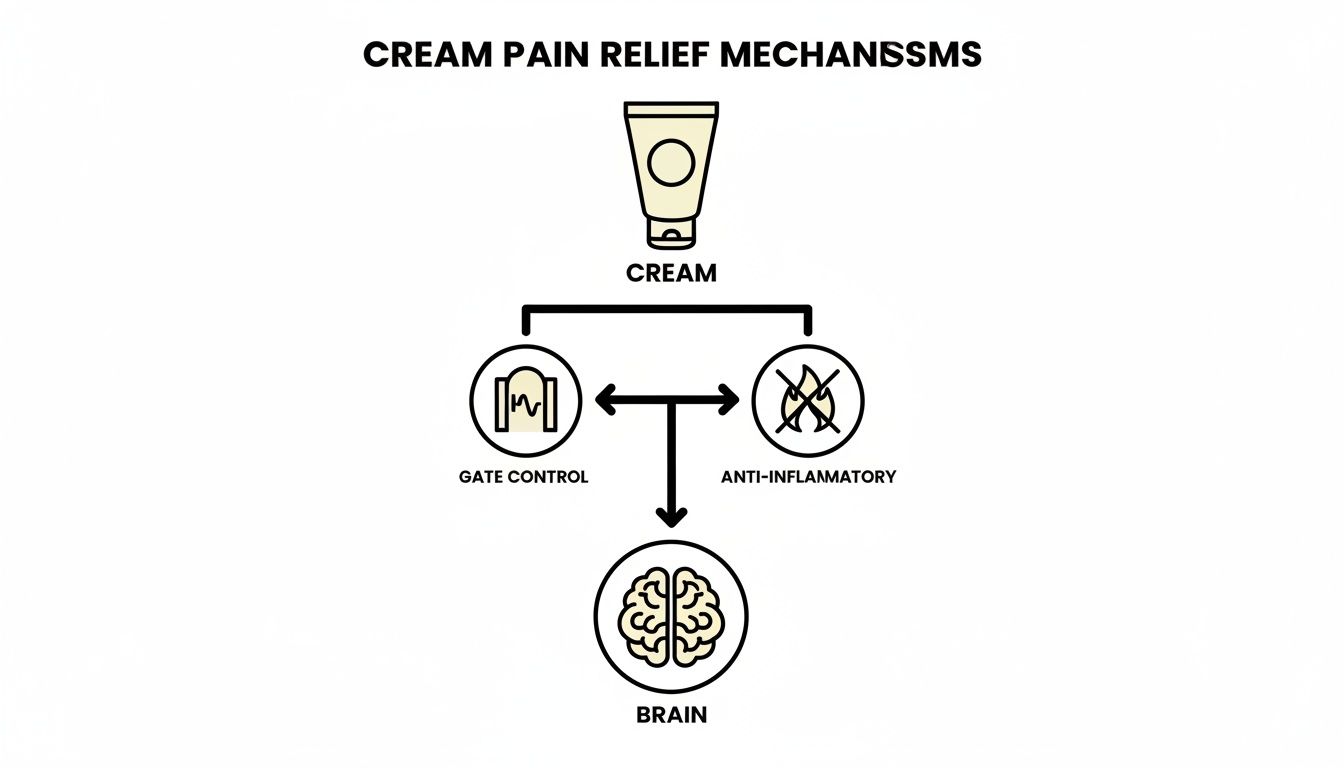
As you can see, the active ingredients interrupt pain pathways through two main routes—the Gate Control Theory and direct anti-inflammatory action—which changes how your brain actually perceives the pain signal.
The Major Players: Ingredients to Look For
So, what should you be looking for on that label? The most effective creams for sciatica typically contain a blend of ingredients from a few key categories. Each one plays a distinct role in tackling that deep, radiating pain from different angles.
To help you decode the labels, we've broken down the top ingredients you'll find in high-quality sciatica creams.
Comparing Top Ingredients for Sciatica Relief
This table compares some of the most common and effective active ingredients found in topical creams for sciatica, highlighting their specific benefits and what they're best used for.
| Ingredient | Category | How It Relieves Sciatica | Best For |
|---|---|---|---|
| Menthol | Counterirritant | Creates an intense cooling sensation that "distracts" the brain from deeper pain signals (Gate Control Theory). | Sharp, shooting nerve pain and immediate relief. |
| Camphor | Counterirritant | Provides a gentle warming sensation that increases blood flow, helping to relax tight muscles around the nerve. | Muscle tightness and spasms in the lower back and glutes. |
| Methyl Salicylate | Analgesic (NSAID) | Reduces inflammation directly at the source by inhibiting the production of pain-causing compounds (prostaglandins). | Addressing the root cause of nerve compression and providing longer-term relief. |
| Eucalyptus Oil | Botanical | Offers mild anti-inflammatory properties and a penetrating sensation that complements other active ingredients. | Enhancing the overall soothing effect of the cream. |
| Arnica Montana | Botanical | A traditional herbal remedy used to reduce swelling, bruising, and muscle soreness. | Supporting the reduction of local inflammation and discomfort. |
| MSM | Botanical | A natural sulfur compound thought to help reduce inflammation and support connective tissue health. | General joint and muscle support alongside primary pain relievers. |
Understanding how these ingredients work—both alone and together—is the key to finding a formula that provides comprehensive relief. A good cream will offer both fast-acting sensory distraction and deeper, long-lasting anti-inflammatory action.
The Fast-Acting Distractors: Counterirritants
The first ingredients you’ll often feel working are the counterirritants. These are the components responsible for that immediate cooling or warming sensation. Their job is to create a new, harmless feeling on your skin that effectively distracts your nervous system from the deep, radiating pain of sciatica.
- Menthol: This is the superstar of cooling relief. Derived from mint, menthol activates specific cold receptors in your skin, creating a refreshing sensation that helps "close the gate" on pain signals trying to reach your brain. It’s perfect for tackling that sharp, electric jolt common with sciatica.
- Camphor: Often paired with menthol, camphor provides a gentle warming effect. This warmth helps increase blood flow to the area, relaxing the tight muscles in your lower back and glutes that might be squeezing the sciatic nerve.
This hot-and-cold combination creates a powerful sensory distraction that provides immediate comfort, allowing you to move with more ease.
The Inflammation Fighters: Analgesics
While counterirritants are busy managing the immediate symptoms, another group of ingredients gets to work on the root cause. Analgesics, especially those with anti-inflammatory properties, are crucial for achieving long-term relief.
One of the most effective is Methyl Salicylate, a topical non-steroidal anti-inflammatory drug (NSAID) that's chemically related to aspirin. When it's absorbed through the skin, it helps reduce the production of prostaglandins—the compounds that trigger inflammation and pain. By calming the swelling around the sciatic nerve, it helps relieve the pressure causing all that trouble.
The Natural Supporters: Botanical Boosters
Beyond the primary active ingredients, many high-quality formulas also include natural compounds that support the main pain-fighting team. These botanicals often bring their own mild analgesic or soothing properties to the table, enhancing the cream's overall effectiveness.
Common supporting ingredients include:
- Eucalyptus Oil: Known for its penetrating aroma and anti-inflammatory properties.
- Arnica Montana: A popular herbal remedy used to reduce bruising, swelling, and muscle soreness.
- MSM (Methylsulfonylmethane): A sulfur compound believed to help reduce joint pain and inflammation.
When these ingredients are combined, they create a robust formula that addresses sciatica pain from multiple angles. To see how these components are expertly blended, you can explore the science behind MEDISTIK's formulations.
By understanding these key components, you can confidently decode any label and choose a product that offers both immediate sensory relief and targeted anti-inflammatory action, putting you back in control of your sciatica pain management.
Applying Your Sciatica Cream for Maximum Relief

You've found a great cream for your sciatica pain—that's a huge first step. But how you put it on can make all the difference between temporary relief and really getting to the root of the problem.
To get the most out of your topical analgesic, you need a smart approach. It’s not just about rubbing some cream where it hurts most. It's about a methodical application that targets the entire pain pathway, starting from the irritated sciatic nerve in your lower back.
Simply slathering cream on your calf might feel good for a moment, but that's just chasing the symptoms. True sciatica pain originates higher up. For real, lasting relief, you have to go to the source.
Your Step-by-Step Application Guide
Follow these simple steps to make sure you’re getting every bit of relief from your cream. This process helps deliver the active ingredients right where the problem starts, calming the whole nerve from your back down to your leg.
- Start with a Clean Slate: Always apply your cream to clean, dry skin. Any sweat, natural oils, or other lotions can act as a barrier, preventing the good stuff from soaking in properly. A quick wash and pat dry is all it takes.
- Focus on the Source: Begin by applying a generous amount of cream directly to your lower back, specifically on the side where your sciatica is flaring up. This is mission control—where the sciatic nerve roots leave the spine.
- Massage with Gentle Pressure: Using your fingertips, gently but firmly massage the cream into your lower back and glutes. You’re not trying to give yourself a deep-tissue massage; the goal is just to help the cream absorb without irritating the area further.
- Trace the Pain Pathway: After you've treated the source, apply a bit more cream and continue massaging it down the back of your thigh and calf, following the exact path where you feel the pain. This helps soothe the entire length of that aggravated nerve.
Proper application isn’t just about where you put the cream, but also how. Avoid applying to broken, irritated, or sensitive skin, and always wash your hands thoroughly after use to prevent spreading the product to your eyes or other mucous membranes.
Choosing the Right Tool for the Job
The best cream for sciatica pain is one you can actually use easily and consistently. Today’s topicals come in different formats, and picking the right one for your lifestyle can make a big impact.
- No-Mess Sticks: Products like the MEDISTIK Extra-Strength Dual Action Stick are fantastic for a clean, hands-free application. The stick format lets you apply firm pressure to your lower back and glutes without getting anything on your hands, making it perfect for use at work or when you're on the move.
- Convenient Roll-Ons: A roll-on gives you a gentle massage while you apply the product. This is a great option for covering the larger areas along your leg, helping to stimulate circulation as you trace the pain down its path.
- Fast-Acting Sprays: Got a hard-to-reach spot on your back? A spray is your best bet. It offers quick, even coverage without you having to twist into a pretzel, ensuring you can treat the source of your sciatica even when no one's around to help.
When you match the right formula with the right applicator, you’re creating a powerful, personalized strategy for managing your sciatica. Correct and consistent use is what turns a good product into your best tool for relief.
When to See a Doctor About Your Sciatica
While a good topical cream for sciatica offers powerful, targeted relief, it’s a tool for managing your symptoms—not a replacement for professional medical advice. Think of it as an essential part of your pain management toolkit, but not the whole workshop.Knowing when to reach for that cream versus when to pick up the phone and call a doctor, physiotherapist, or chiropractor is key to a safe and effective recovery.
Most sciatica cases get better with self-care, but sometimes the pain is signalling a more serious underlying issue that needs a proper diagnosis. If your pain is severe, isn't improving after a few weeks, or is actually getting worse despite using topical relief, it's time to book an appointment. A healthcare professional can get to the root cause—whether it’s a herniated disc or spinal stenosis—and map out a complete treatment plan.
Navigating the Canadian Healthcare System
Getting that professional help isn’t always straightforward. In Canada, back pain and sciatica are incredibly common. One national survey found that one in four people had experienced it in the last three months alone.
This high demand can lead to long wait times for specialists. Some studies have found median waits of six months for multidisciplinary pain clinics, with some waits stretching up to five years. You can learn about the challenges in Canadian pain management for more detail.
This reality makes effective at-home care, including using a high-quality topical analgesic, even more critical for staying comfortable while you wait for your appointment.
Red Flag Symptoms That Need Immediate Attention
While most sciatica is manageable, certain symptoms are considered "red flags." These point to a rare but serious condition called cauda equina syndrome, which involves severe compression of the nerve roots at the very bottom of your spinal cord.
Don’t wait if you experience these symptoms. Go to the nearest emergency room or call 911 immediately. Prompt treatment is crucial to prevent permanent damage.
Seek immediate medical help if you experience any of the following along with your sciatica:
- Sudden loss of bowel or bladder control.
- Numbness or weakness that is severe or rapidly getting worse in your leg, foot, or groin area.
- "Saddle anaesthesia," which is numbness in the area that would touch a saddle (inner thighs, back of legs, and buttocks).
These symptoms are rare, but being aware of them is an essential part of taking charge of your health. For most people, a combination of self-care, targeted topical relief, and professional guidance offers the most effective path to getting back on your feet.
Frequently Asked Questions About Sciatica Creams
When you're dealing with sciatica, finding the right topical relief can bring up a few questions. We get it. To help you feel totally confident in choosing and using the best cream for your sciatica pain, we’ve put together answers to the questions we hear most often.
How Quickly Do Sciatica Creams Start Working?
This really comes down to the active ingredients in the formula.
Creams packed with counterirritants like menthol and camphor get to work almost immediately, creating a cooling or warming sensation that can start dialing down the pain within minutes. That rapid response is exactly what you need for those sharp, sudden flare-ups.
On the other hand, ingredients that fight inflammation, like methyl salicylate, might take a few applications to build up to their full effect. They’re working on a deeper level to reduce the swelling that’s causing the problem. A dual-action cream gives you the best of both worlds: that instant sensory relief you crave, plus deeper, more sustained comfort.
Can I Use a Topical Cream with Other Treatments?
Absolutely. In fact, topical creams are a fantastic partner in a well-rounded sciatica treatment plan. Because they work locally, they can be used alongside other therapies without getting in the way.
- Physiotherapy: Applying a cream before your session can help warm up tight muscles and ease discomfort, which can make your prescribed exercises feel more comfortable and effective.
- Chiropractic Care: Using a cream between appointments can help keep your muscles relaxed, supporting the adjustments your chiropractor is making.
- Stretching Routines: A quick application beforehand can reduce pain and stiffness, helping you get a deeper, more productive stretch.
Just be sure to chat with your doctor before combining any topical cream with oral medications, to make sure there are no issues.
One of the biggest benefits of a topical analgesic is that it works locally, right where you apply it. Unlike a pill that affects your whole system, this targeted approach means the risk of side effects is significantly lower.
Are There Side Effects to Using Sciatica Creams?
For the most part, any side effects are minor and stay right on the skin. You might see a bit of irritation, redness, or a mild rash. A good rule of thumb is to always do a small patch test on your skin first to see how it reacts.
To stay safe, never apply cream to broken, damaged, or already irritated skin. It's also critical that you never place a heating pad over an area where you’ve applied a pain relief cream. This can dangerously increase absorption and lead to skin burns. For total peace of mind, always look for products that are Health Canada approved, which means they’ve met tough standards for safety and quality.
For a powerful, Canadian-made solution built for deep, lasting relief, you can trust MEDISTIK. Our Health Canada-approved formulas are designed to help you prime, perform, and restore, so you can take control of your sciatica and get back to doing what you love.
Find the right format for your needs and feel the difference at MEDISTIK.


