

If you've ever felt that dreaded twinge in your calf mid-run, you're not alone. It’s one of the most common complaints for runners, and it’s usually your body’s way of telling you that your calf muscles have been pushed a little too far. Think of this not as a setback, but as your body sending you important feedback.
Why Your Calves Hurt When You Run
Your calf muscles, specifically the big gastrocnemius and the deeper soleus, are the powerhouses of your lower legs. They’re like a spring-loaded suspension system, absorbing the shock every time your foot hits the ground and then launching you forward into your next stride. It's a demanding job.
When this system gets overworked, isn't strong enough for the mileage you're doing, or isn't warmed up properly, it protests. That protest comes in the form of pain. This isn't a sign to just give up and hang up your runners. It’s a message that something in your approach needs to change. Learning to listen to what your body is telling you is what separates runners who are always injured from those who run strong for years.
Understanding Your Body's Signals
Pain is just data. Ignoring it is like driving with the check-engine light on—you might get away with it for a little while, but eventually, you’re heading for a breakdown. What starts as a minor ache can quickly become a chronic injury that forces you onto the sidelines for weeks, or even months.
The goal is to stop just "running through the pain" and start understanding why it's there in the first place.
A smart running plan isn't just about logging kilometres. It’s a complete cycle of preparing your body for the stress of a run, doing the work, and then helping your muscles recover and rebuild. This "Prime, Perform, and Restore" mindset is the foundation of long-term, injury-free running.
A Common Challenge for Canadian Runners
Trust us, you are far from the only one dealing with this. Calf pain is a massive issue in the running community. In fact, research shows that a staggering 80-85% of runners experience some kind of calf soreness after a run.
This is exactly why so many Canadian runners have made topical pain relief a non-negotiable part of their recovery toolkit. You can learn more about just how common runner-related calf pain is on EliteHP.com.au.
By getting to know the anatomy of your calves and the incredible demands you place on them, you can start building smarter strategies to manage and prevent this all-too-common running issue.
Decoding Your Pain: Identifying Common Calf Injuries
That sharp, nagging, or dull ache in your lower leg can feel like a total mystery, but learning to speak your body's language is the first step toward getting back on the road. Different kinds of calf pain point to very different underlying issues, and figuring out which one you're dealing with is key to responding the right way.
Think of yourself as a detective. The location, sensation, and timing of the discomfort are your biggest clues. Did the pain come on like a sudden, sharp stab that stopped you mid-stride? Or is it more of a dull, throbbing ache that only shows up hours after your run? Let's break down the usual suspects.
The Sudden "Pulled Calf" (Muscle Strain)
A calf muscle strain—what most of us call a "pulled calf"—is exactly what it sounds like: the muscle fibres have been stretched too far or have torn. This injury almost always announces itself with a sudden, sharp pain during a run, especially when you're accelerating, pushing off, or tackling a hill. Some runners even feel a distinct "pop."
The pain is usually easy to pinpoint in one specific spot. That area will likely be tender to the touch, and you might see some swelling or bruising pop up later. This is a classic acute injury caused by overloading the muscle beyond its capacity.
Delayed Onset Muscle Soreness (DOMS)
If your calves just feel generally sore, tight, and achy a day or two after a particularly tough run, you’re probably just dealing with Delayed Onset Muscle Soreness (DOMS). This isn't a true injury. It's simply your body's normal response to the microscopic muscle damage that happens when you push yourself harder or longer than usual.
With DOMS, the discomfort is spread throughout the calf muscles, not concentrated in one spot. It feels more like a generalized tenderness and stiffness that, thankfully, usually fades on its own within a few days.
Shin Splints That Feel Like Calf Pain
Sometimes, what you think is calf pain is actually referred pain from medial tibial stress syndrome (MTSS), much better known as shin splints. This is an inflammatory condition affecting the muscles, tendons, and bone tissue around your tibia (your shin bone).
While the main event is happening along the inner edge of your shin, the pain can easily radiate into the lower, inner part of your calf. It typically feels like a dull, persistent ache that crops up during your run and can stick around for a while after you stop.
Chronic Exertional Compartment Syndrome (CECS)
A less common but more serious condition to be aware of is Chronic Exertional Compartment Syndrome (CECS). This happens when exercise causes pressure to build up inside a muscle compartment in your lower leg, which then squeezes the blood vessels and nerves inside.
The tell-tale sign of CECS is a cramping, squeezing, or burning pain that starts like clockwork after a certain amount of time or distance into every run. Unlike other issues, this pain usually disappears within 30 minutes of stopping, only to come roaring back the next time you lace up. You might also notice some numbness or tingling in your foot.
These aren't rare, abstract conditions, especially for Canadian runners. The lower leg is the second most frequently injured area for long-distance runners, right after the knee. One review found that among athletes with exercise-induced leg pain, 33% had CECS and 13% had MTSS. You can read the full research about these findings to get a deeper understanding of running injuries.
To help you start sorting through these signals, the decision guide below can help clarify if your pain came on suddenly or gradually.
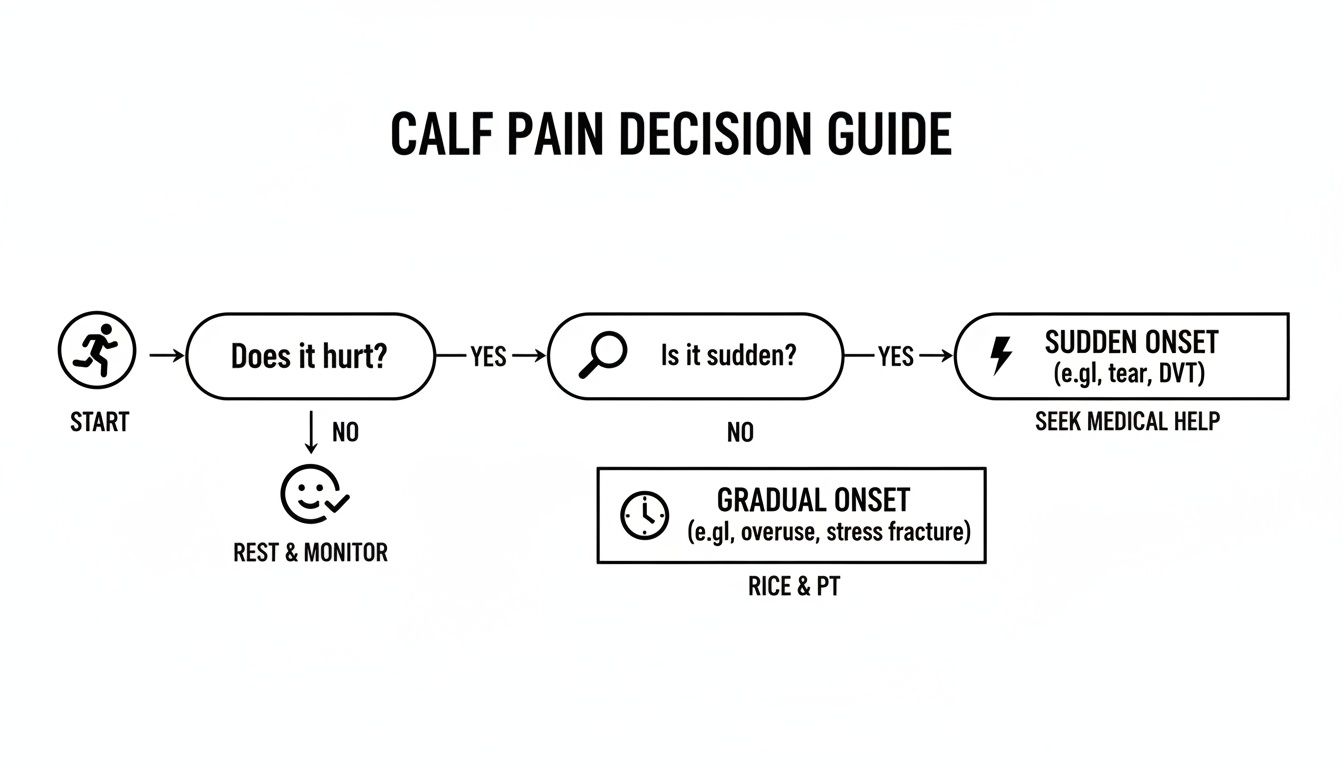
As the flowchart shows, whether the pain hit you suddenly or crept up over time is a huge clue for narrowing down the cause. While this is a great starting point for self-assessment, it’s no substitute for a proper diagnosis from a healthcare provider.
Immediate Steps for Calf Pain Relief
That sudden, sharp pain in your calf brings your run to a dead stop. What you do in these first few moments can make a huge difference in how quickly you get back on your feet. The main goal right now is simple: calm things down and prevent any more damage.
Think of it like first aid for your muscles. This isn't about toughing it out; it's about giving your body a strategic response to its own alarm bells. A modern twist on the classic R.I.C.E. protocol is your best bet. Each step is designed to manage that initial flare-up, which is the key to starting the healing process on the right foot.
The Modern R.I.C.E. Method
You've probably heard of R.I.C.E. before—it stands for Rest, Ice, Compression, and Elevation. It’s your go-to framework for any acute muscle injury.
- Rest: This seems obvious, but it's the most important step. Stop running. Immediately. Trying to push through the pain is the fastest way to turn a minor tweak into a major problem. For the next 24-48 hours, your job is to avoid anything that hurts.
- Ice: Cold therapy is your best friend for knocking down inflammation and numbing the pain. But a leaky bag of ice isn't your only option anymore.
- Compression: Wrapping your calf with a compression bandage helps control swelling. Just make sure it’s snug, not so tight that it cuts off your circulation.
- Elevation: Get that leg up! Propping your foot above the level of your heart lets gravity help drain fluid away from the injury, which is another great way to reduce swelling.
Upgrading the "Ice" Phase with Topical Relief

While a good old-fashioned ice pack works, topical solutions like the MEDISTIK Ice Roll-On offer a cleaner, faster, and more direct way to get that cooling relief right where you need it. These products are packed with active ingredients like menthol that create an intense cooling sensation.
This works through a process called counter-irritation. Basically, the cooling feeling gives your nerves something new to focus on, which helps override the pain signals coming from your sore muscle. It’s a clever way to get immediate comfort without the drippy mess. For those really deep aches, products with methyl salicylate can add an anti-inflammatory punch directly at the source of the pain.
When you apply a roll-on or stick, be gentle. You don't need to massage it in with a lot of pressure—in fact, that could make a fresh strain worse. The goal is to let the product do its work gently and effectively.
Following these initial steps sets the best possible stage for your body to start repairing itself. To get a better picture of the full recovery journey, you can learn more about how to speed up muscle strain recovery in our in-depth guide.
A Progressive Plan to Rebuild Calf Strength
So you've had a calf injury. It’s tempting to think that kicking your feet up and resting is the complete solution, but that's only half the battle. To truly prevent that nagging calf pain from making a comeback on your next run, you need to methodically rebuild the muscle’s strength and resilience.
Think of it like fixing a shaky foundation. You wouldn’t just toss all the bricks back in a pile, right? You’d carefully lay each one, making sure the new structure is even stronger than the original. The same goes for your calves.
This whole process is about taking it one step at a time, starting with super gentle movements and slowly working your way up to more challenging exercises. A common mistake I see runners make is pushing too hard, too soon, which just lands them right back where they started. In this phase, patience is your best friend.
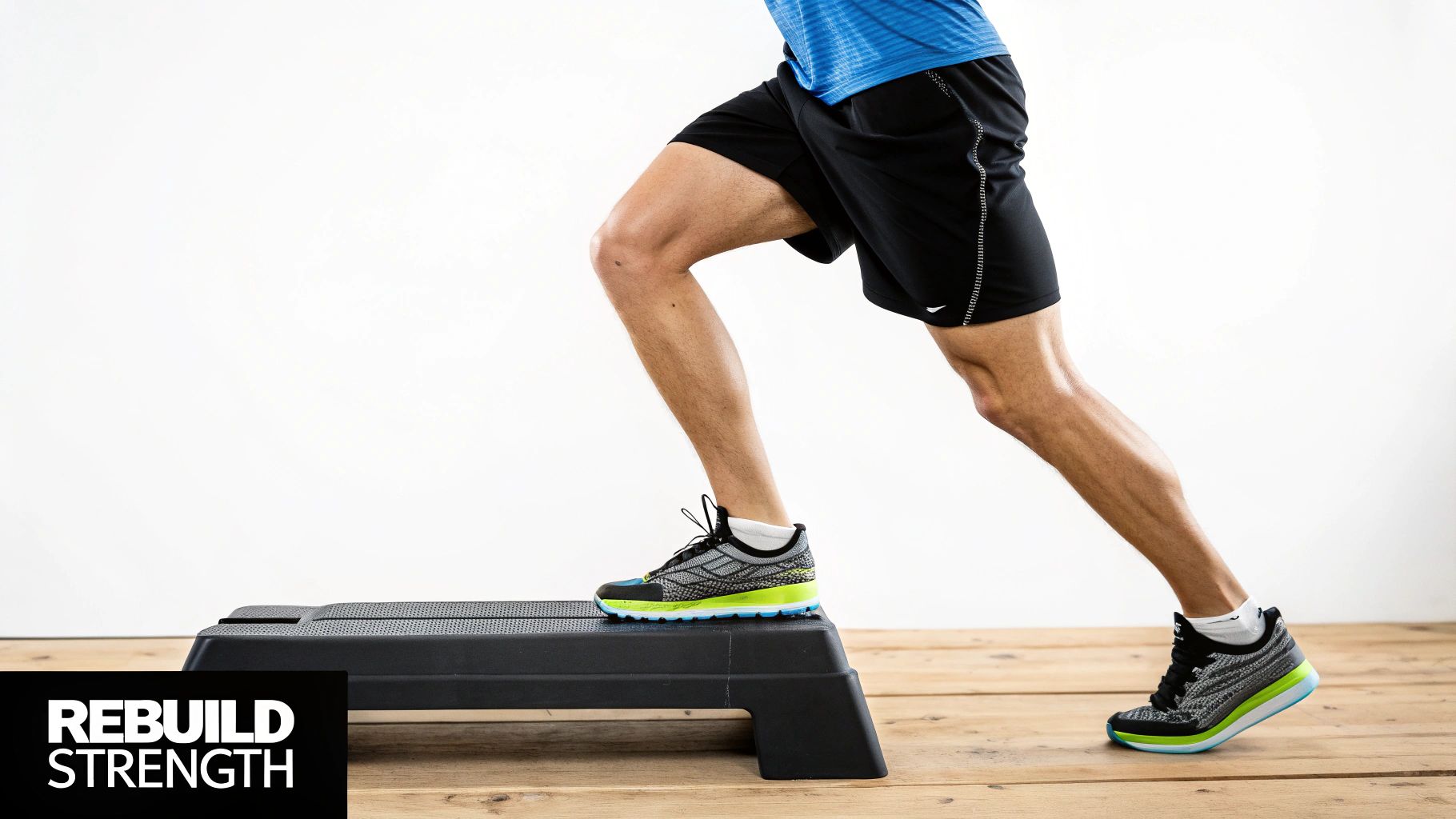
To ease into things a bit more comfortably, you might consider using a product like MEDISTIK Extra Strength Spray before your exercises. Its warming sensation can help get some blood flowing, prepping the muscle for movement and potentially taking the edge off as you get started.
Phase 1: Gentle Mobility
Right at the beginning, the only goal is to get the area moving again without pain and to encourage blood flow to the healing tissues. These aren't about building strength just yet; they're more like gentle reminders to the muscle about its day job.
- Ankle Circles: Whether you're sitting or lying down, just slowly rotate your foot in a circle. Do 15-20 rotations clockwise, then switch and go counter-clockwise.
- Foot Alphabet: Pretend your big toe is a pen and slowly write out the alphabet in the air. This gets your ankle moving in every possible direction.
Try to do these little movements a few times throughout the day. The golden rule here is to stay within a comfortable range—if you feel any sharp pain, you've gone too far.
Phase 2: Isometric Holds
Once you can move your ankle around freely without any trouble, it's time to wake the calf muscle up. We do this without actually moving the joint through what's called an isometric contraction. This starts to rebuild that mind-muscle connection.
Here’s an easy one: sit with your foot flat on the floor. Gently press the ball of your foot down, like you're about to lift your heel for a calf raise, but don't actually lift it. Hold that gentle press for 10-15 seconds, relax, and repeat it 5-10 times.
Phase 3: Controlled Strengthening
Okay, now we're ready to start laying the real bricks of strength. This is where we introduce exercises that actually lengthen and shorten the muscle under your control, which is exactly what it needs to handle the stress of running. For any progressive plan, adding specific exercises like targeted Calf Raises is absolutely key.
It's best to start with seated calf raises because they put less load on the muscle. Once those feel easy, you can move on to standing ones.
- Seated Calf Raises: Sit tall in a chair with your feet flat on the floor. Slowly lift your heels up, give a little pause at the top, and then slowly lower them back down. Shoot for 3 sets of 15 repetitions.
- Standing Calf Raises (Both Legs): When the seated raises feel like a piece of cake, move on to standing. Hold onto a wall or chair for balance and do the same movement. Aim for 3 sets of 15-20 repetitions.
Only move from one phase to the next when you can do the exercises completely pain-free. If you're looking for a more detailed recovery map, our guide on how to heal calf strain quickly has even more great info.
Preventing Future Calf Pain: Training Smarter, Not Harder
Getting your strength back is a huge part of recovery, but let's be honest, the real win is never having to deal with calf pain again. It's all about shifting your mindset from putting out fires to preventing them in the first place. That means training smarter, not just harder.
It all starts before your feet even hit the pavement. A solid dynamic warm-up is non-negotiable. Think of your calf muscles like a piece of Blu-Tack: when it's cold, it's stiff and snaps easily. But warm it up a little, and it becomes pliable and resilient. Just five to ten minutes of moves like leg swings, walking lunges, and high knees will get the blood flowing and prime your calves for the run ahead.
And what you do after your run is just as crucial. A simple cool-down, maybe a few minutes of walking followed by some static stretching, helps your muscles ease back to their resting state. Holding a gentle calf stretch for 30-60 seconds can restore flexibility and help you sidestep that dreaded post-run tightness.
Smart Training Adjustments
Beyond your bookend routines, the way you structure your actual training plays a massive role in whether you'll be sidelined with calf pain. Thankfully, one of the best injury prevention principles is beautifully simple.
The 10% Rule is a runner's best friend for safely building up mileage. It's straightforward: don't increase your total weekly distance by more than 10% over the previous week. This simple guideline gives your muscles, tendons, and bones the time they need to adapt, heading off the overuse that so often leads to strains.
Your running form matters, too. While there's no single "perfect" way to run, focusing on a slightly higher cadence—taking more steps per minute—can be a game-changer. This small tweak often reduces the impact forces shooting up your legs with every footstrike, which can seriously lighten the load on your calves over the long haul.
The Right Gear and Lifelong Habits
Your shoes are your most important piece of running gear, period. When they get worn out, they stop absorbing shock effectively, and all that stress gets transferred straight to your lower legs. As a rule of thumb, it’s time to replace your running shoes every 500-800 kilometres. Knowing how to fit shoes properly is fundamental, as the right support and comfort can make all the difference.
This becomes even more critical as we get older. Research on Canadian runners aged 35 and up has shown that soft-tissue injuries in the calves, hamstrings, and Achilles are far more common than in younger athletes, particularly for those running more than 48 kilometres a week. These findings really drive home why consistent warm-ups and smart recovery aren't just suggestions—they're essential.
When to See a Healthcare Professional
While rest and smart self-care are your first line of defence, some symptoms are non-negotiable red flags. Every runner needs to know when to stop, put their ego aside, and call in a professional.
Think of it this way: listening to your body isn't just about managing soreness; it's also about knowing when to call for backup from a doctor, physiotherapist, or sports medicine specialist.
Topical pain relief is a fantastic tool in your recovery arsenal, but it’s not a substitute for a proper diagnosis when something serious might be brewing. Pushing through certain warning signs can turn a minor issue into a chronic injury that keeps you off the pavement for months.
Clear Signs You Need a Professional Opinion
Your body has its own emergency alert system. If you notice any of these signals, it’s time to book an appointment and get it checked out properly.
- Severe pain that makes it difficult or even impossible to walk normally.
- A visible deformity in your calf muscle, like a noticeable lump or a sudden dent.
- Major swelling that doesn’t go down even after trying the R.I.C.E. method.
- Pain that shows zero improvement after a solid week of rest and self-care.
- Any feelings of numbness, tingling, or weakness that travel down into your foot.
One of the most urgent signs to watch for is a calf that feels unusually warm to the touch, looks red, and is swollen without any specific "pop" or strain that you can recall. These can be symptoms of deep vein thrombosis (DVT), which is a serious medical condition requiring immediate attention.
When in doubt, it's always better to err on the side of caution and get a professional opinion. For a deeper dive, check out our guide on when to worry about leg pain.
Frequently Asked Questions About Calf Pain and Running
Even when you feel like you have a handle on things, nagging questions about calf pain always seem to pop up. We get it. Here are some quick, straightforward answers to the most common queries we hear from runners, helping you dial in your recovery and prevention game.
Are Compression Socks Actually Any Good for Calf Pain?
Yes, absolutely—they can be a fantastic part of your toolkit. Compression socks help by giving your circulatory system a bit of a boost and cutting down on the muscle vibrations that lead to soreness and fatigue. Many runners swear by them for managing minor calf niggles, both during and after a run, finding they really speed up recovery.
But it's crucial to think of them as a supportive measure, not a magic fix. While they're great for symptom management, they aren't going to heal a significant muscle tear on their own.
How Soon Can I Start Running Again After Straining My Calf?
This one really comes down to the severity of the strain. A minor tweak might only need a few days of taking it easy. A more serious tear, on the other hand, could sideline you for several weeks or even a couple of months.
The golden rule here is to wait until you are completely pain-free with everyday activities like walking before you even consider jogging. When you do head out, start with a very short, slow shuffle and stop immediately if you feel any sharp pain. A physiotherapist can give you a personalized return-to-run schedule that’s right for you.
Should I Use MEDISTIK Before My Run to Prevent Calf Pain?
Definitely. Applying a product like the MEDISTIK Extra-Strength Stick as part of your warm-up is a brilliant proactive move. Its warming action helps get more blood flowing to your calf muscles, making them more elastic and far less likely to strain when you hit your stride.
This is exactly what the "Prime" step in the MEDISTIK system is designed for. It’s all about getting your body ready to perform at its peak while actively lowering your risk of injury.
At MEDISTIK, we’re all about helping you prime, perform, and restore with confidence. Our Canadian-made topical analgesics deliver powerful, targeted relief to keep you on the move. Discover what seriously strong pain relief can do for you by checking out our products at MEDISTIK.


