

When you're dealing with sore muscles and aching joints, a quality cream for muscle pain relief can be a game-changer. These formulas go to work right where you need them, delivering soothing ingredients directly to the source of your discomfort.
Unlike oral medications that have to travel through your entire body, a topical cream gets straight to the point, whether it’s a cooling sensation from menthol or the natural comfort of arnica.
Your Guide to Effective Muscle Pain Relief Creams
Let’s be honest, we’ve all been there—that nagging ache that disrupts your day or sabotages your workout. It's an incredibly common problem. In fact, over 50 million adults grapple with chronic pain, a figure that surpasses both diabetes and heart disease combined. But finding a solution shouldn't mean jumping through hoops for prescriptions or considering invasive procedures.
This guide is designed to cut through the noise and show you what makes a cream for muscle pain relief truly effective. We'll look past the marketing claims to explore the science behind how these products provide comfort exactly where it counts.
Why Topical Relief Matters
Think of it this way: when you take a pill for pain, it’s like sending a city-wide alert for a fire in one building. A topical cream, on the other hand, is like dispatching the fire truck directly to the blaze. It’s a targeted approach that offers some clear advantages:
- Targeted Action: The active ingredients are delivered straight to the source of pain and inflammation, right where you apply them.
- Reduced Systemic Side Effects: Because the ingredients work locally, you minimize the risk of stomach issues or other side effects often linked to oral medications.
- Convenience and Ease of Use: Modern formats like sticks, sprays, and roll-ons make application quick, simple, and completely mess-free.
Our goal here is to empower you with the knowledge to pick the right product and use it effectively to manage your discomfort. While topicals are fantastic for direct relief, it's also smart to think about the bigger picture. Learning how to speed up muscle recovery with a broader strategy can make a huge difference in your overall well-being.
Now, let's dive into the ingredients that make these creams so effective, from the science of cooling agents to the power of natural remedies.
How Topical Creams Soothe Muscle Pain
Ever wonder how rubbing a cream on your skin can actually get deep enough to ease muscle pain? It’s not magic—it's a smart, direct-to-the-source delivery system. Think of it as a specialized courier that brings relief right to the painful area, skipping the full-body trip that pills and oral medications have to take.
When you apply a cream for muscle pain, its active ingredients start a journey down through the layers of your skin. Their mission is to reach the underlying tissues, muscles, and nerve endings where the discomfort is actually happening. It's this targeted approach that makes topicals so effective for those specific, localized aches and pains.
This direct path lets the ingredients get to work fast, without sending them through your entire system. That's a huge reason why so many people prefer them over oral painkillers.
Bypassing the Brain with the Gate Control Theory
One of the most fascinating ways topical relief works is explained by the gate control theory of pain. Picture a gatekeeper in your nervous system who decides which signals are allowed to reach your brain. When you’ve got muscle pain, that gate is wide open, letting a constant flood of "pain!" messages rush through.
Topical creams with ingredients like menthol or camphor act as a powerful, welcome distraction. They create a strong cooling or warming sensation on your skin, sending a rush of competing signals—"cold!" or "warm!"—that also want to get through that same gate.
Since your nervous system can only handle so much information at once, these cooling or warming signals essentially elbow the pain messages out of the way. The gate "closes" on the pain signals as your brain shifts its attention to the new sensation, giving you almost instant relief.
This is exactly why you feel that soothing cool or comforting warmth almost immediately after you apply it—it’s your nervous system being cleverly redirected away from the pain.
Targeting Inflammation at the Source
But it's not just about distraction. Many topical creams work on a deeper, physiological level by going after inflammation. When muscles are injured or overworked, your body’s natural response is inflammation, which usually brings along swelling, heat, and that persistent ache.
Certain active ingredients, especially topical NSAIDs (Nonsteroidal Anti-inflammatory Drugs), are designed specifically to fight this. Once they’re absorbed through the skin, they get to work blocking the production of prostaglandins—compounds that are major players in the inflammatory process.
Here’s what that means for you:
- Reduced Swelling: By calming that inflammatory response, the cream helps bring down the swelling in the sore spot.
- Alleviated Pain: Less inflammation means less pressure on your nerve endings, which directly translates to less pain.
- Improved Mobility: As the swelling and pain ease up, you’ll find you can move that sore muscle or joint more freely again.
Targeting this inflammatory response is a common strategy for many topical creams. To get a better handle on how they bring relief, you can learn more about understanding inflammation, which is often at the heart of muscle discomfort.
The Power of Localized Action
Ultimately, the magic of a cream for muscle pain comes down to its localized action. Whether it’s creating a sensory distraction or actively putting out the inflammatory fire, the relief is concentrated precisely where you need it. You can learn more about the specific mechanisms behind MEDISTIK’s formulas and how they deliver powerful, targeted relief. This direct approach avoids the potential side effects that can come with oral medications, making it a safe and reliable choice for managing muscle pain and getting you back to doing what you love.
Decoding the Active Ingredients in Pain Relief Creams
The real magic behind any cream for muscle pain relief is hiding in plain sight on its ingredient list. Think of these active ingredients as a pro's toolkit—each one has a very specific job, and getting the best results comes from picking the right tool for the problem at hand. Once you understand what these ingredients do, you can see past the marketing hype and choose a formula that’s actually right for your type of pain.
Generally, these powerhouse ingredients fall into three main families, each with its own unique way of bringing you comfort.
Comparing Active Ingredients in Muscle Pain Creams
To make it easier to see how these ingredients stack up, here’s a quick comparison of the three main types you'll find in pain relief creams. Each category targets pain from a different angle.
| Ingredient Category | Examples | How It Works | Best For |
|---|---|---|---|
| Counterirritants | Menthol, Camphor, Methyl Salicylate | Creates a cooling or warming sensation to distract the brain from deeper muscle or joint pain. | Immediate relief from acute injuries, post-workout soreness, and general muscle aches. |
| Topical NSAIDs | Diclofenac, Ibuprofen | Reduces inflammation directly at the source by blocking pain-causing enzymes (prostaglandins). | Chronic inflammatory conditions like arthritis, tendonitis, or localized joint pain. |
| Natural Agents | Arnica Montana, Eucalyptus Oil, Capsaicin | Offers plant-based relief; can reduce swelling and bruising (Arnica), soothe stiffness (Eucalyptus), or block pain signals (Capsaicin). | Bruising, sprains, muscle stiffness, and nerve-related discomfort (for Capsaicin). |
Understanding these differences is key to finding a product that does more than just mask the pain—it actively helps you get back to feeling like yourself.
Counterirritants: The Masters of Distraction
The first and most common group you'll see are counterirritants. Ingredients like menthol and camphor are masters of misdirection. They create a distinct sensation on your skin—either a crisp coolness or a gentle warmth—that essentially tricks your brain into paying less attention to the underlying muscle pain. It’s a clever bit of neuroscience based on what’s known as the gate control theory.
Think of your nervous system as a busy highway. The pain signals from your sore muscle are like a frustrating traffic jam, moving slowly and clogging everything up. When you apply a counterirritant, you’re sending a new, more urgent signal—like an emergency vehicle with its sirens on—that gets priority. Your brain immediately focuses on the new cooling or warming sensation, and the original pain signals get pushed to the background.
- Menthol: Delivers that classic cooling sensation, providing sharp, immediate relief. It's fantastic for the acute pain that comes with a fresh injury or that day-after-the-gym soreness.
- Camphor: Usually brings a gentle warming feeling. That warmth is great for soothing and relaxing muscles that are tight, stiff, or chronically achy.
This is how those signals work to interrupt the pain messages travelling to your brain.
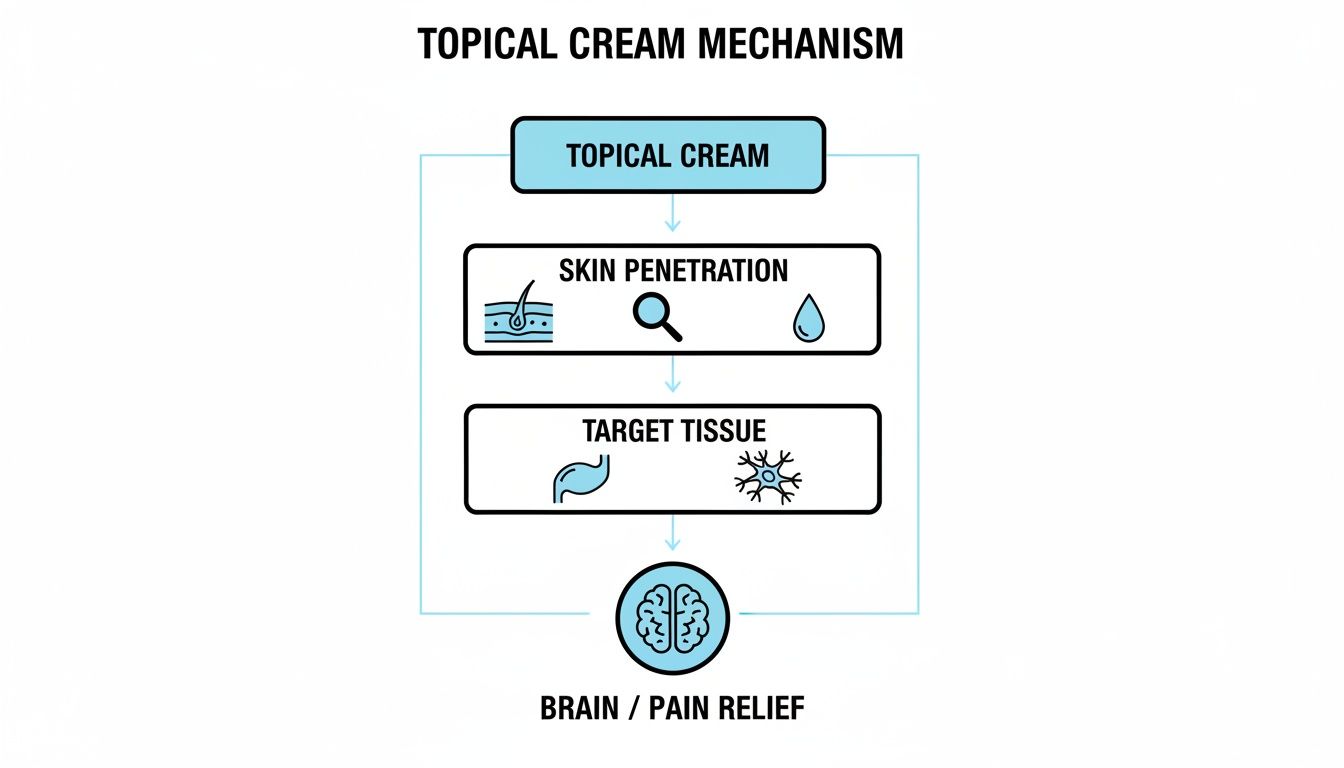
As you can see, the process starts at the skin but the real relief happens when the brain’s perception of pain is altered.
Topical NSAIDs: The Inflammation Fighters
Next up, we have topical NSAIDs (Nonsteroidal Anti-Inflammatory Drugs). While counterirritants are busy distracting your brain, NSAIDs get straight to the root of the problem: inflammation. You can think of them as a tiny, targeted firefighting crew. Once they’re absorbed through the skin, they go to work putting out the inflammatory fire that’s causing your pain.
Diclofenac is the most common player in this category. It works by blocking the production of enzymes called prostaglandins, which are the main culprits behind inflammation, swelling, and pain.
By tackling inflammation right where it’s happening, topical NSAIDs deliver powerful relief without the systemic side effects, like stomach issues, that can sometimes come with taking them orally. This makes them a go-to choice for chronic inflammatory pain.
They’re especially effective for conditions where inflammation is the star of the show, like arthritis or tendonitis, because they put relief exactly where you need it.
Natural Agents: The Botanical Soothers
The third group is made up of natural and botanical agents, many of which have been trusted for centuries. These ingredients offer a gentler, plant-powered approach to pain management, straight from nature's own medicine cabinet.
- Arnica Montana: This mountain flower is probably the most famous botanical for pain relief. It’s widely used to help with bruising, swelling, and the aches that come with sprains and strains.
- Eucalyptus Oil: Known for its soothing scent and warming properties, eucalyptus helps ease muscle stiffness and gets the blood flowing to the affected area.
- Capsaicin: This one is pretty unique—it's derived from chili peppers. It starts by creating a warm sensation, but with consistent use, it can actually reduce a specific chemical in nerve cells that’s responsible for sending pain messages.
The demand for natural solutions isn’t just a fad; it’s a significant shift. We’re seeing a strong preference among Canadian consumers for over-the-counter analgesics, which is helping drive market growth. There’s a clear move toward natural remedies, with ingredients like Arnica becoming incredibly popular. It’s all part of a broader trend where people are seeking effective, accessible options. You can read more about OTC analgesic trends in Canada on Statista.com.
By figuring out if you need a distraction, an inflammation fighter, or a natural soother, you can pick a cream for muscle pain relief with confidence, knowing it has the right ingredients to help you move comfortably again.
Choosing the Right Product for Your Needs
Not all muscle pain is the same, so your choice of relief cream shouldn't be a one-size-fits-all solution. The best product for you really depends on your lifestyle, the kind of pain you're dealing with, and what you need it to accomplish. Finding the perfect match is about looking beyond just the ingredients and thinking about which format and application method fits right into your daily routine.
Think about it: a marathon runner's needs are worlds apart from an office worker's nagging neck tension or an active senior managing stiff joints. Each situation calls for a specific kind of relief. By matching the product's features to your personal needs, you can make sure you’re getting the most effective and convenient help possible.
For the Athlete: Fast Recovery is Key
Athletes push their bodies to the limit, and with that effort comes the inevitable muscle soreness and strain. When your focus is on performance and a quick bounce-back, you need a solution that’s fast-acting, easy to apply, and doesn't get in your way.
For that immediate relief after a killer workout or during a game, a fast-acting spray is a game-changer. You can quickly cover large areas like your back or hamstrings without having to stop and rub it in—perfect for those hard-to-reach spots or when you're on the move. The rapid absorption means the active ingredients get to work fast, cooling down hot, overworked muscles and kickstarting the recovery process.
- Best For: Post-workout soreness, mid-game muscle tightness, and covering large muscle groups.
- Why It Works: Sprays deliver a quick, no-mess application for immediate cooling and relief.
For Chronic Pain Sufferers and Office Workers
If you're dealing with chronic pain from a condition like arthritis or the persistent aches that come from sitting at a desk all day, your priority is different. You need sustained, long-lasting relief that can get you through a workday or a full night's sleep without needing to reapply constantly.
This is where a long-lasting solid stick really shines. The stick format gives you a concentrated, mess-free way to apply a powerful formula directly to the source of the pain, like a stiff neck, sore lower back, or aching joints. Its formulation is built for a slow release, providing hours of consistent relief. You can put it on in the morning and feel its effects throughout your day.
The key benefit here is duration. For chronic pain, you're not just looking for a quick fix; you need a reliable partner that provides steady, dependable comfort so you can focus on your life, not your pain.
For Active Seniors Managing Stiffness
For seniors who stay active but still have to manage joint stiffness or the aches of arthritis, how easy a product is to apply is just as important as the relief it provides. Products that are tough to open or require a lot of rubbing can be more trouble than they're worth.
A cooling roll-on is often the perfect solution. The rollerball does the work for you, gently massaging the product into the skin while delivering targeted, cooling relief. This format is ideal for applying with precision to specific joints like knees, elbows, and wrists. It’s clean, easy to handle, and provides a soothing sensation that helps reduce inflammation and ease stiffness.
The Canadian market clearly reflects these different needs. Musculoskeletal disorders affect millions of people around the world, and Canada has a significant share of that burden—over 6 million adults here experience persistent muscle pain each year. Athletes drive 32% of the demand for topical recovery products. At the same time, seniors dealing with arthritis, which affects about 1.2 million Canadians over 65, often prefer non-prescription sticks and sprays for their long-lasting effects without causing drowsiness. These numbers highlight a clear national focus on finding practical, effective pain management to support active lifestyles. You can find out more about muscle pain treatment market trends at ResearchAndMarkets.com.
By thinking about your specific situation—whether you need speed, duration, or precision—you can confidently pick the pain relief product that will best support your lifestyle and help you get back to moving with comfort and confidence.
Proper Application for Maximum Muscle Pain Relief
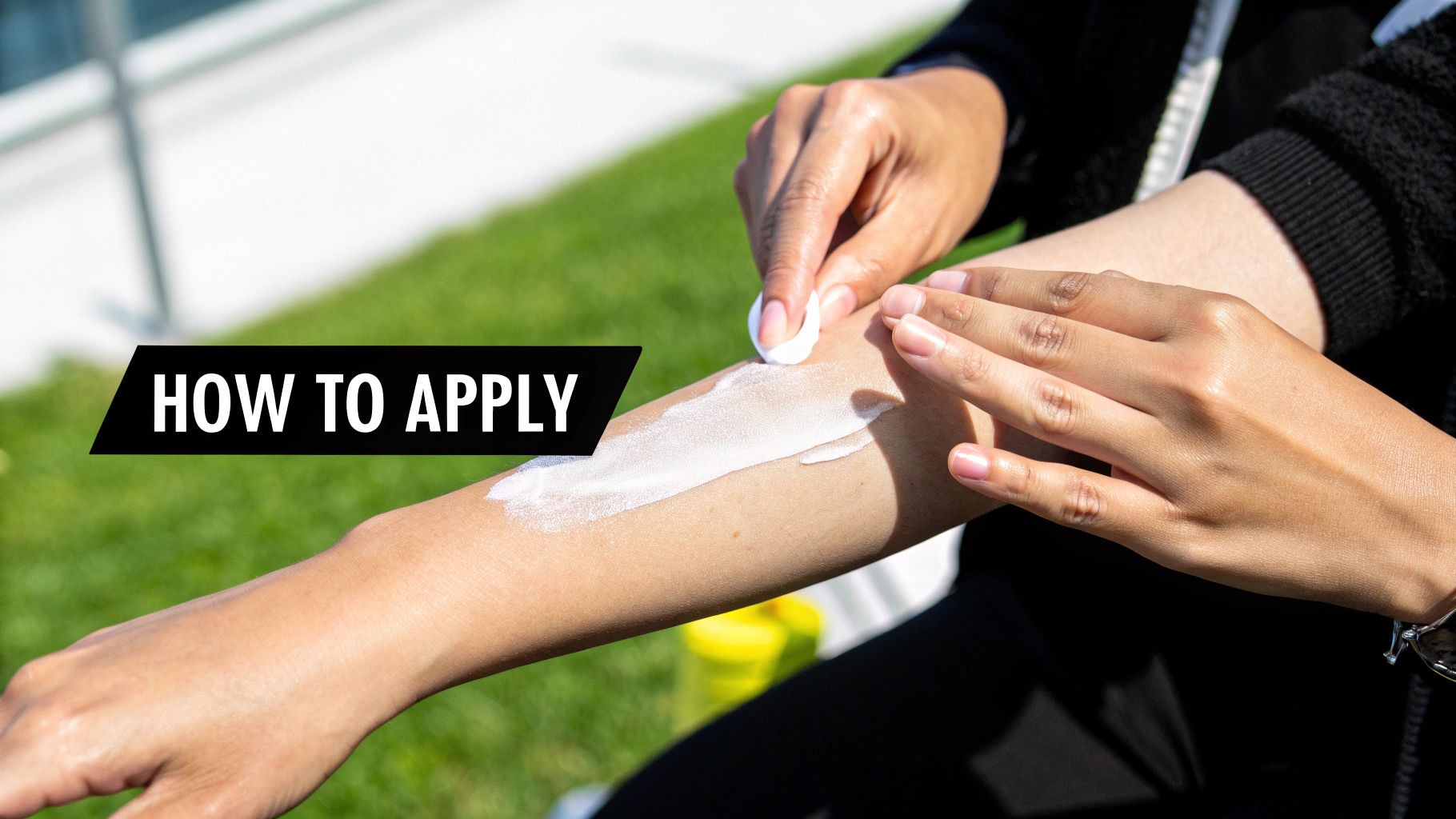
Simply having a good pain relief cream on hand is only half the battle. To really get the most out of it, you need to know how to apply it correctly. The right technique ensures the active ingredients get absorbed efficiently, hitting the spot right where you need relief the most.
Think of it like watering a plant. You wouldn't just splash water on the leaves and hope for the best; you pour it at the base so the roots can soak it up. In the same way, your application technique helps the cream’s powerful ingredients penetrate the skin to reach those sore, overworked muscles underneath.
It’s a straightforward process, but getting these key steps right can be the difference between so-so results and powerful, lasting comfort.
Your Step-by-Step Application Guide
Follow these simple steps every time you reach for your topical analgesic. This will help you get the best possible results, safely and effectively.
-
Start with Clean, Dry Skin: Before you do anything, wash the area with a bit of soap and water and pat it completely dry. This simple prep clears away any sweat, oils, or lotions that could create a barrier, preventing the active ingredients from doing their job.
-
Use the Right Amount: It’s easy to think more is better, but that’s not the case here. You only need a thin, even layer of the product to cover the entire sore muscle or painful joint. Using too much can irritate your skin and is really just a waste of good product—it won’t speed up your relief.
-
Massage It In Gently: Don't just wipe the cream on and walk away. Take a moment to massage it into the skin with gentle, circular motions until it’s fully absorbed. This not only helps with absorption but also stimulates blood flow to the area, which can give the healing process a little extra boost.
-
Wash Your Hands Thoroughly: This is a step you absolutely can't skip. As soon as you're done, wash your hands well with soap and water. Ingredients like menthol or capsaicin feel great on your muscles but can cause serious irritation if you accidentally touch your eyes, nose, or mouth.
Critical Best Practices to Remember
Beyond those basic steps, keeping a few best practices in mind will help you stay safe and get the most out of every single application.
-
Never Apply to Broken Skin: This is a big one. Do not use topical pain relievers on cuts, scrapes, rashes, or sunburned skin. Putting these products on damaged skin can cause intense burning and discomfort.
-
Avoid Heat Sources: Never, ever use a heating pad or wrap a tight bandage over an area where you've applied a warming cream. This can trap the heat against your skin and may lead to serious skin burns or blistering.
Always perform a patch test on a small area of skin before your first full application. This quick check helps you spot any potential allergic reactions or sensitivities before you cover a larger area.
Following these guidelines will make your experience with topical pain relief both effective and safe.
For those looking to combine different product formats for even more targeted relief, you can learn more about the best techniques for layering products for extra-strength relief. When you master the application, you make sure your chosen product works as hard as you do.
The Growing Role of Topical Analgesics in Modern Healthcare
Topical pain relief isn’t just an alternative anymore—it's fast becoming a cornerstone of modern pain management. You'll find healthcare professionals everywhere, from physiotherapists to chiropractors and massage therapists, increasingly recommending these solutions as a first line of defence against muscle and joint pain. And for good reason.
This trend points to a major shift toward safer, more targeted care. A quality cream for muscle pain relief has a powerful advantage: it delivers active ingredients directly to the source of your discomfort. This localized approach sidesteps many of the risks that come with oral medications, like systemic side effects and potential drug interactions.
A Safer Approach to Pain Management
The growing preference for topicals is also tied to a wider movement away from relying on oral painkillers, especially opioids. Both patients and clinicians are actively looking for effective, non-addictive options to manage everything from acute injuries to chronic conditions. It's a clear vote of confidence in high-quality topical analgesics.
By focusing relief right where it’s needed, topical products empower individuals to manage their pain effectively without the concerns linked to systemic drugs. This is crucial for long-term conditions like arthritis or for athletes needing consistent recovery support.
You can see this growing reliance on targeted relief reflected in market trends. In Canada, the topical pain relief market hit $871.515 million in 2024 and is projected to keep climbing. This surge perfectly aligns with the needs of healthcare clinics and the more than 7 million Canadians living with arthritis, a key driver of muscle pain. You can dive deeper into the data on Canada's topical pain relief market at CognitiveMarketResearch.com.
Integrating Topical Relief into Clinical Practice
Clinicians are weaving topical analgesics into their treatment plans for several key reasons, and you can learn more by exploring the benefits of topical versus oral pain relievers.
Here’s how it looks in a real-world setting:
- Complementing Manual Therapy: Physiotherapists and massage therapists often use topical creams to enhance their hands-on treatments, helping to relax tight muscles and soothe inflammation before, during, or after a session.
- Improving Patient Compliance: Let's be honest—the easier a treatment is, the more likely we are to do it. Easy-to-use formats like sticks and sprays encourage patients to stay on top of their treatment plan at home.
- Empowering Patient Self-Care: Giving patients a reliable tool for managing flare-ups provides a sense of control over their condition, bridging the gap between appointments.
From elite athletes managing sports injuries to seniors seeking comfort from chronic joint pain, topical analgesics have truly solidified their place. Their effectiveness, safety profile, and ease of use confirm they are an indispensable tool in modern healthcare.
Common Questions About Muscle Pain Relief Creams
When you're dealing with muscle pain, you want answers that are clear and simple. To help you feel completely confident in choosing and using a topical analgesic, we've answered some of the most common questions we hear.
Think of this as your quick guide to getting the information you need, so you can get back to moving freely and feeling your best.
How Quickly Does a Cream for Muscle Pain Relief Work?
This really comes down to the active ingredients and the format you're using. If your product contains counterirritants like menthol or methyl salicylate, you’ll likely feel that classic cooling or warming sensation almost immediately—often within just a few minutes. That rapid response is fantastic for distracting your brain from acute soreness.
For creams that have anti-inflammatory ingredients, such as topical NSAIDs, you’re looking at a slightly longer timeline. These need a bit of time to absorb into the skin and start working on the inflammation at its source, so expect to feel the effects within 30 minutes to an hour. As a general rule, fast-acting sprays tend to work quicker than thicker creams or solid sticks, which are often designed for a more sustained, long-lasting release.
Can I Use These Creams for Arthritis Pain?
Yes, absolutely. Many topical creams are a great option for managing the localized pain, inflammation, and stiffness that come with arthritis. Formulations with ingredients like NSAIDs can directly target joint inflammation, while counterirritants offer a soothing effect that can help dull the chronic ache.
One of the biggest advantages here is that topical solutions minimize the systemic side effects often linked to daily oral medications. This makes them an excellent choice for long-term arthritis management. Still, it's always a good idea to check in with a healthcare professional to make sure a topical cream is the right fit for your specific condition.
Are There Any Side Effects I Should Know About?
For most people, topical pain relievers are considered very safe. The most common side effect is a bit of localized skin irritation, like redness, itching, or a rash right where you applied it. To play it safe, it’s always a good idea to test the product on a small patch of skin first.
To ensure you stay safe, always follow these key guidelines:
- Avoid Damaged Skin: Never apply these creams to broken, damaged, or already irritated skin.
- Check for Allergies: If you have sensitive skin or a known allergy to ingredients like salicylates (the same family as aspirin), be extra cautious.
- Consult a Professional: If you are pregnant, breastfeeding, or taking other medications, have a chat with your doctor before trying a new topical product.
Is It Okay to Use a Muscle Pain Cream Before Exercise?
It sure is. In fact, many athletes and active people swear by using a warming cream before a workout to help increase blood flow and get their muscles ready for action. Applying a cream can help loosen up stiff spots and prime them for exercise, making your warm-up feel that much more effective.
Just remember, a pre-workout cream is meant to complement your warm-up, not replace it. You still need a proper routine of stretching and light cardio. Look for products designed specifically for this purpose and try to avoid applying them right before intense activity that causes heavy sweating, as this can sometimes increase the risk of skin irritation.
Ready to find a powerful, Canadian-made solution for your muscle pain? MEDISTIK offers a range of seriously strong, non-prescription formulas trusted by healthcare professionals and athletes alike. Explore our products and find the targeted relief you need to move with confidence.


