

To really get a handle on muscle soreness, you need a two-pronged approach: take care of your body right after a workout, and build smart, consistent recovery habits into your routine. Kicking things off with an active cool-down, rehydrating, and refuelling with some protein and carbs is your best bet to jumpstart the repair process before that delayed soreness really settles in.
Understanding Why Your Muscles Get Sore

That familiar ache you feel a day or two after a tough workout isn't just a badge of honour for hard work; it's a physiological process called delayed onset muscle soreness (DOMS). This is different from the immediate "burn" you might feel during the exercise. DOMS is the result of microscopic tears in your muscle fibres, which happen when you put them under new or intense stress.
Your body's natural reaction is to kick off an inflammatory repair process. It sends fluid to the area to start healing these tiny tears, which is how your muscles eventually get stronger and more resilient. But it's this healing process that brings on the stiffness, tenderness, and discomfort that usually peaks anywhere from 24 to 72 hours after your workout.
What Causes Muscle Soreness
A few key factors play into how intensely you feel DOMS. Getting to know them is the first step toward managing the discomfort and learning how to reduce muscle soreness effectively.
- New Movements: Trying a new exercise or an activity your body just isn't used to is a classic trigger for soreness.
- Eccentric Contractions: Think about the lowering phase of an exercise—like bringing a dumbbell down slowly in a bicep curl or running downhill. These movements, where the muscle lengthens under tension, are known to cause more of that micro-damage than when the muscle is shortening.
- Increased Intensity or Volume: Suddenly jacking up the weight, doing more reps, or extending your workout time can easily push your muscles past their current limits.
This is a really common issue. In Canada, musculoskeletal disorders affect a huge portion of the population, and a lot of those injuries come from being active. In fact, 35% of all Canadian injuries are from sports or exercise, which just goes to show how critical good recovery protocols are.
The key takeaway here is that muscle soreness is a normal part of getting stronger. The goal isn't to avoid it completely but to manage it so it doesn't mess up your training schedule or your daily life.
By understanding how pain is processed by the brain, you can get a better sense of why these recovery techniques actually work. This guide will walk you through some practical strategies to soothe those aching muscles and get you back to feeling your best.
Your First Hour After a Tough Workout
What you do in the first 60 minutes after your last rep can make or break how your body feels for the next couple of days. Think of this window not as the end of your session, but as the critical first phase of your recovery.
Skipping it is like building a house and walking away before the foundation sets—you're just asking for trouble down the line. That urge to just drop onto the nearest bench is strong, I get it, but fighting it is one of the best things you can do to sidestep serious muscle soreness.
Initiate an Active Cool-Down
Instead of slamming on the brakes, ease your body out of the workout with 5-10 minutes of low-intensity movement. This helps your heart rate come down gradually, but more importantly, it keeps the blood pumping. Good circulation is key to flushing out the metabolic junk, like lactate, that builds up in your muscles when you're working hard.
A solid cool-down isn't complicated. It could be something like:
- After a heavy lifting session: A slow walk on the treadmill or some gentle cycling.
- After a long run: Downshift from your running pace to a jog, then finish with a brisk walk.
- After a high-intensity class: Keep moving with some easy dynamic stretches. Think leg swings, big arm circles, and gentle torso twists—anything that keeps you moving without adding strain.
This isn't about pushing yourself. It’s about giving your body a clear signal that the hard work is done and it's time to start the repair process.
Refuel for Rapid Repair
Within that first hour, your muscles are like sponges, primed to soak up nutrients for repair and replenishment. You might have heard this called the "anabolic window," and it's a prime opportunity to kickstart your recovery. Your goal is simple: give your body the building blocks it needs, right away.
Your post-workout snack or meal should ideally have a mix of fast-digesting protein and carbs. The protein gets to work repairing those tiny muscle tears, while the carbohydrates focus on refilling your muscle glycogen—the fuel you just burned through.
A protein shake with a banana or a bowl of Greek yogurt topped with berries are both great, simple options. They deliver the nutrients you need without feeling like a heavy meal, making them easy to get down right after a workout.
Take Proactive Steps for Relief
Once you've cooled down and had a snack, you can take some immediate, targeted action to get ahead of the inflammation that causes DOMS. This is where you shift from being reactive to being proactive.
Throwing on some compression gear, like sleeves or socks, can help minimize swelling by keeping circulation moving in the muscles you just worked. Another powerful first move is using a topical analgesic.
Applying a cooling roll-on or a strong pain relief spray to vulnerable areas—like your quads, shoulders, or lower back—can help manage that initial inflammatory response before it really takes hold. It’s a simple strategy to improve pain relief and recovery right from the get-go.
By nailing these three things—a smart cool-down, timely fuel, and proactive relief—you set yourself up for a much smoother recovery, keeping the worst of the soreness from derailing you tomorrow.
Navigating Peak Soreness: The 24-72 Hour Window
You wake up the morning after a tough workout, and bam—it hits you. Every step is a not-so-subtle reminder of yesterday's efforts. Welcome to the peak of delayed onset muscle soreness (DOMS), which typically sets in between 24 and 72 hours post-exercise.
Your first instinct might be to stay completely still, but that can actually make the stiffness worse. When you don't move, fluid can pool in the muscles, increasing that feeling of tightness. The real secret to getting through this phase is gentle, purposeful movement.
The Power of Active Recovery
The goal here isn't to grind through another workout. Instead, you want to encourage blood flow to those aching muscles. Good circulation delivers fresh oxygen and nutrients needed for repair while helping to flush out metabolic by-products. This is what we call active recovery, and it’s your best friend during the peak DOMS phase.
This simple graphic breaks down the three core pillars that kickstart your recovery right after you finish your session, helping to minimize the soreness you'll feel over the next couple of days.
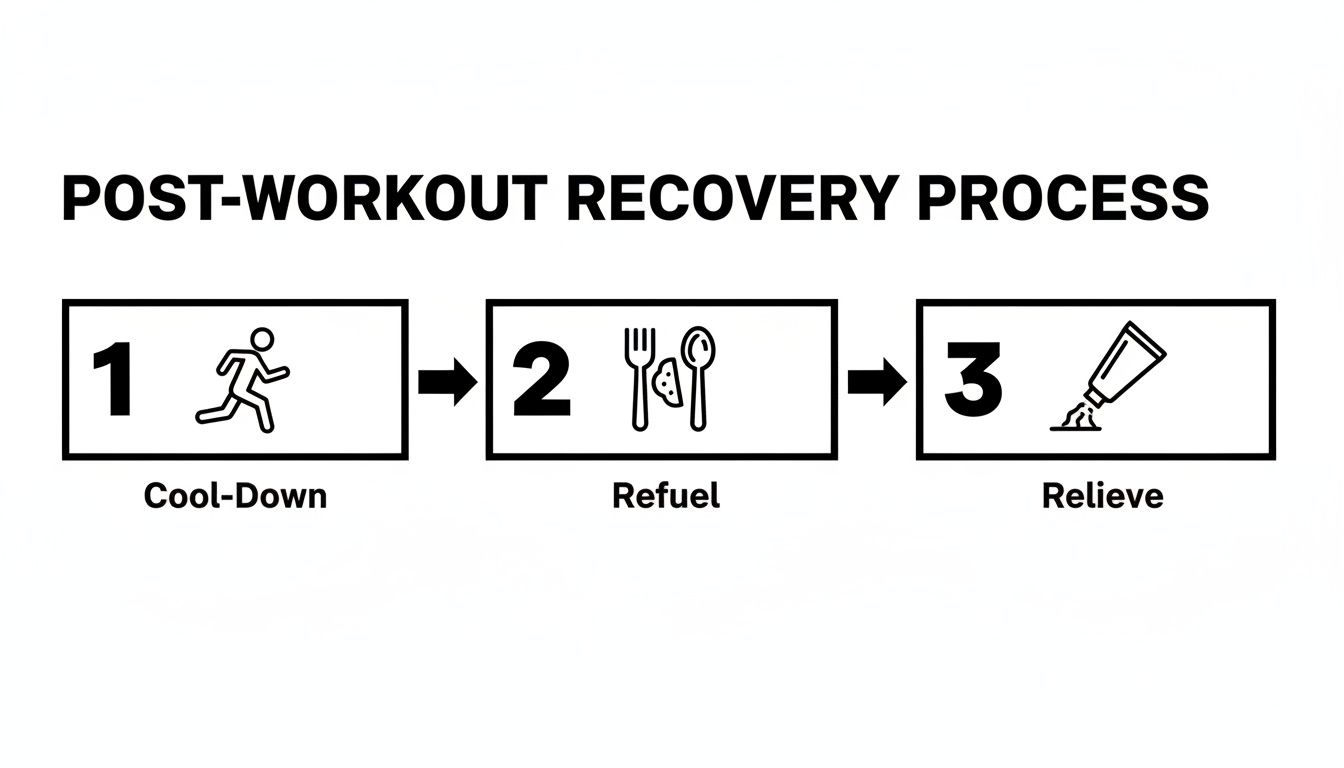
As you can see, recovery starts the second your workout ends. A proper cool-down, smart refuelling, and immediate relief are foundational for managing what’s to come.
Gentle Movement is Non-Negotiable
When you're stiff and sore, the thought of moving might seem completely backward, but light activity can make a huge difference. It keeps your joints lubricated and stops your muscles from feeling like they’re seizing up.
Think low-impact. Here are a few great options:
- A casual walk: Just 20-30 minutes is enough to boost circulation without adding more stress to your muscles.
- A gentle swim or water walk: The water’s buoyancy takes the load off your joints, letting you move more freely.
- Light cycling: A slow pedal on a stationary bike gets the blood pumping through your legs with almost zero impact.
The golden rule for active recovery? Keep the intensity low enough that you could easily carry on a conversation. You should finish feeling looser and more mobile, not more tired.
Targeted Relief for Aches and Pains
During the peak DOMS window, tools like foam rollers and massage balls are invaluable. They let you apply direct pressure to tight, knotted-up muscles—a technique called self-myofascial release. This helps break up adhesions and drives blood flow right where you need it most.
For example, if your quads are burning after leg day, sit on the floor with a foam roller under your thighs. Using your arms for support, gently roll back and forth from your hip to just above your knee. When you find a particularly tender spot, hold the pressure for 20-30 seconds. The relief can be immediate.
For those really deep, specific aches, targeted topicals are a game-changer. Exploring things like the magnesium oil spray benefits for muscle comfort can offer a great natural option. Applying a powerful analgesic spray or roll-on directly to the source of the pain can help soothe the discomfort and reduce localized inflammation, making it much easier to move.
DOMS Management Techniques At-A-Glance
When you're in the thick of it, it helps to have a quick reference guide. Here’s a breakdown of different methods to manage soreness during that tough 24-72 hour period.
| Technique | Primary Benefit | Best For | MEDISTIK Pro Tip |
|---|---|---|---|
| Active Recovery | Increases blood flow, flushes waste | General stiffness, full-body soreness | Keep it light! Think a gentle walk or swim. If you're out of breath, you're pushing too hard. |
| Foam Rolling | Releases muscle knots, targets specific areas | Tight hamstrings, quads, IT bands, back | Go slow. When you find a tender spot, pause and breathe into it for 20-30 seconds before moving on. |
| Contrast Therapy | Reduces inflammation, stimulates circulation | Intense, localized soreness (e.g., after heavy lifts) | Always end on cold to help minimize inflammation. A 3:1 ratio of hot to cold usually works well. |
| Topical Analgesics | Provides fast, targeted pain relief | Acute, sharp pain in a specific muscle or joint | Apply 15-20 minutes before gentle activity. It will ease discomfort, allowing for better movement. |
| Hydration | Supports metabolic function, flushes toxins | Overall recovery and preventing cramps | Add an electrolyte tablet to your water to help with muscle function, especially if you sweated a lot. |
Each technique offers unique benefits, so don't be afraid to combine them. A little active recovery followed by some targeted foam rolling can be a powerful one-two punch against DOMS.
Don't Forget Nutrition and Hydration
What you eat and drink during this 24-72 hour window is just as critical as it was right after your workout. Your body is in full-on repair mode, and it needs the right building blocks.
Keep chugging water. Staying hydrated helps your entire system work more efficiently, including flushing out waste products that contribute to soreness.
On the food front, prioritize anti-inflammatory options. Think berries, leafy green vegetables, fatty fish (like salmon) that are rich in omega-3s, and spices like turmeric. And, of course, continue to consume adequate protein to give your muscles the amino acids they need to rebuild stronger.
Smart Strategies to Prevent Future Soreness
While dealing with soreness after a tough workout is one thing, the best game plan is always to keep it from getting out of hand in the first place. Shifting your mindset from treatment to prevention is the real secret to making consistent, long-term gains without those debilitating aches. It all comes down to prepping your body for the work you’re about to do and being smart about how you dial up the intensity over time.
A good warm-up isn't just about getting your head in the game; it physically primes your muscles for action. The main goal is to increase blood flow and raise your core temperature, which makes your muscle fibres more flexible and way less likely to get damaged.
The Right Way to Warm Up
Forget about holding a few lazy stretches for a couple of seconds. A truly effective warm-up has to be dynamic—that means active movements that actually mimic the exercises you're about to perform. This approach wakes up the specific muscles you'll be targeting and gets your joints moving through their full range of motion.
For instance, if you're getting ready for a leg day, a solid dynamic warm-up might include:
- Leg Swings: Doing both forward-and-back and side-to-side swings is fantastic for opening up your hips.
- Bodyweight Squats: These are perfect for activating your glutes, quads, and hamstrings before you add weight.
- Walking Lunges: A great way to fire up your core and get your body ready for single-leg stability work.
Try to spend a good 10-15 minutes on this process. Afterwards, your muscles should feel warm and ready to go, but not tired. This simple habit is honestly one of the most powerful tools you have for preventing muscle soreness before it even starts.
Master Progressive Overload Gradually
If you want to get stronger, you have to challenge your body. That’s the core idea behind progressive overload—the gradual increase of stress you place on your body during training. But the most important word there is gradual. Pushing for too much, too soon is a surefire way to end up with crippling DOMS and maybe even an injury.
Instead of trying to pile on a ton of weight every single week, think smaller. You can still apply progressive overload by:
- Adding just one or two more reps to your set.
- Bumping up the weight slightly, even if it's just by a few pounds.
- Cutting down your rest time between sets a little.
- Focusing on perfecting your form and control through the entire movement.
This methodical approach gives your muscles, tendons, and ligaments time to adapt together. It's how you build real, sustainable strength without constantly redlining your body's ability to recover.
True progress isn't about destroying yourself in every session. It's about showing up consistently and making small, intelligent increases over time that your body can handle and recover from.
Listen to Your Body and Plan for Rest
Your body is constantly giving you feedback; learning to listen is a skill every athlete needs. Pushing through sharp pain is never the answer, and ignoring that nagging feeling of fatigue can quickly lead to overtraining. This is where scheduling your rest becomes a non-negotiable part of your training plan.
Rest days are when the real magic happens. That’s the time your muscles need to repair themselves and grow back stronger. Make sure you're getting at least one or two dedicated rest days each week.
It's also a great idea to plan a "deload week" every 4-6 weeks. During a deload, you intentionally back off your training volume and intensity, which gives your entire system a chance to fully recover. Supporting your body with the right fuel is also key, and exploring the best supplements for muscle recovery can help optimize your body's healing processes during these crucial rest periods.
How Daily Habits Impact Your Muscle Recovery
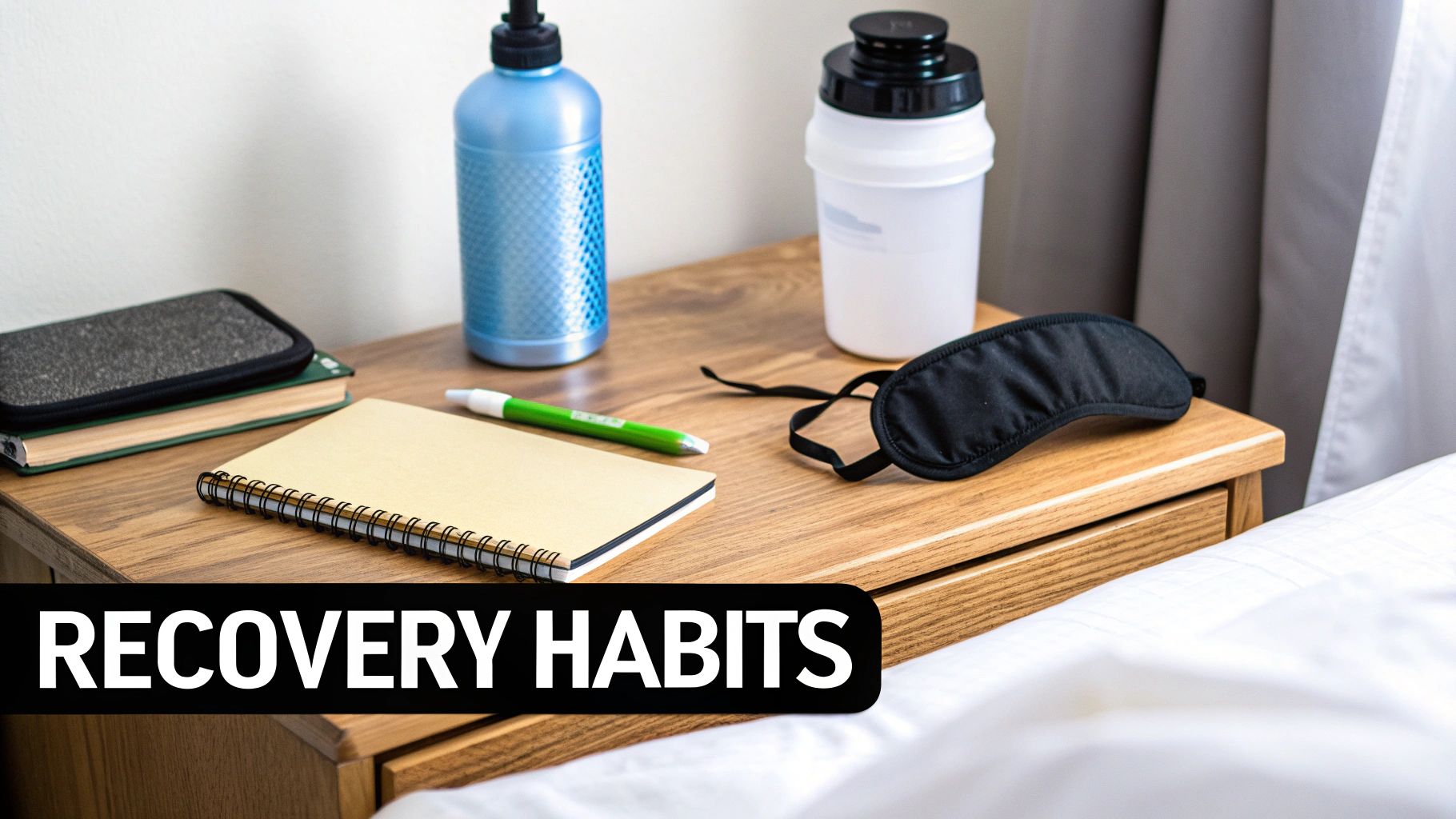
The effort you put into reducing muscle soreness doesn't stop when you walk out of the gym. Far from it. Your daily habits are the absolute foundation of how well your body repairs itself. Ignoring them is like trying to build a house on sand—even the best recovery techniques will fall flat without a solid base.
Three key areas—sleep, hydration, and nutrition—are basically the command centre for your body's healing processes. They control everything from hormonal balance to clearing out metabolic waste, and getting them right can dramatically speed up your recovery and cut down on future aches.
Prioritize High-Quality Sleep
Sleep is, without a doubt, the most powerful and underrated recovery tool we have. While you're sleeping, your body gets down to business, releasing the growth hormone essential for repairing those microscopic muscle tears you created during your workout. Skimping on sleep completely short-circuits this critical process.
A bad night’s sleep doesn't just leave you feeling groggy; it can ramp up inflammation and your sensitivity to pain, making DOMS feel significantly worse. This isn't just an issue for elite athletes, either. A 2017 report showed that nearly 90% of Canadians dealt with muscle or joint pain in the last year, often triggered by something as simple as poor sleeping posture. It really highlights how universal the need for quality rest is. You can learn more about how pain affects Canadians and the role our lifestyles play.
Your goal should be 7-9 hours of solid, uninterrupted sleep a night. To make it happen, create a dark, cool bedroom and try to ditch screens for at least an hour before you turn in. Your muscles will thank you.
Hydration Is Non-Negotiable
Staying hydrated is about so much more than just quenching your thirst. Water is vital for nearly every metabolic function in your body, especially flushing out the waste products that contribute to muscle soreness. When you're dehydrated, your body simply can't perform this clean-up job efficiently.
Think of it like trying to wash a stack of greasy dishes with just a trickle of water—it’s slow, messy, and ineffective. Dehydration actually thickens your blood, which forces your heart to work harder to pump nutrient-rich blood to your recovering muscles.
- During the day: Make a habit of sipping water consistently, not just when you feel thirsty. By then, you're already behind.
- Post-workout: A great rule of thumb is to drink about 500 ml (or 16 oz) of water for every pound of body weight you lost during your session.
Fuel Your Recovery with Smart Nutrition
The food you eat provides the actual raw materials your body needs to rebuild tissue and calm inflammation. While that post-workout shake is important, it’s your daily diet that creates the overall environment for healing. Focusing on anti-inflammatory foods is a game-changer for managing the discomfort that comes with DOMS.
Try to build these nutritional powerhouses into your regular meals:
- Omega-3 Fatty Acids: Found in foods like salmon, walnuts, and flaxseeds, these healthy fats are well-known for their ability to combat inflammation.
- Antioxidant-Rich Foods: Berries, leafy greens like spinach, and other colourful vegetables help fight the oxidative stress caused by intense exercise.
- Magnesium: This crucial mineral, found in almonds, avocados, and even dark chocolate, plays a key role in muscle function and relaxation.
When you consistently fuel your body with these nutrients, you create an internal environment that supports rapid repair. It makes every other recovery strategy you use that much more effective.
When Muscle Pain Is More Than Just Soreness
Knowing how to manage muscle soreness is a huge part of staying active, but it’s just as important to recognize when that ache is a sign of something more serious. While DOMS is a normal—if uncomfortable—part of getting stronger, a real injury needs a totally different game plan. Trying to "push through" a genuine injury can set you up for long-term problems, so learning to tell the difference is a skill every active person needs.
Typical post-workout soreness usually feels like a dull, widespread ache in the muscles you trained. It might leave you feeling stiff and tender to the touch, but it shouldn't completely stop you from going about your day. An actual injury, on the other hand, often sings a very different tune.
Identifying Red Flags
Your body is pretty good at sending signals when something isn't right. The tricky part is learning how to listen and interpret them correctly. DOMS might be annoying, but it usually gets better with a bit of gentle movement and time. An injury often feels worse with activity and might not improve on its own.
Keep an eye out for these warning signs that suggest your pain is more than just standard soreness:
- Sharp, Shooting, or Stabbing Pain: DOMS is almost always a dull ache. If you feel any pain that's sharp, electric, or stabbing, that’s a major red flag. It could signal a significant tear or even a nerve issue.
- Pain Localized to a Joint: Discomfort that’s centred right on a joint—like your knee, elbow, or shoulder—instead of in the fleshy part of the muscle, needs a closer look.
- Visible Swelling, Bruising, or Redness: If you see significant swelling or discolouration around a painful spot, that's a clear indicator of trauma and inflammation that goes way beyond normal muscle soreness.
- Loss of Function or Limited Range of Motion: If the pain is so bad that you can't move a limb through its full range or put weight on it, it's time to stop what you're doing and get some advice.
Here's a solid guideline I often share: the three-day rule. If your soreness doesn't start feeling better after 72 hours, or if it's actively getting worse, you should start considering that you might be dealing with something more than DOMS.
Understanding the difference between soreness and a potential muscle strain is key to recovering safely. You can learn more about speeding up muscle strain recovery in our detailed guide.
When to Consult a Professional
If any of those red flags pop up, don't just hope they go away. It’s time to get a professional opinion. A doctor, physiotherapist, or chiropractor can give you an accurate diagnosis and create a recovery plan that’s right for your specific issue. Trying to self-diagnose and tough it out is one of the biggest mistakes you can make. Putting your long-term health first is always the smartest play.


