

You wake up, swing your legs out of bed, and pause. Your knee feels rusty. Your fingers don't want to close around the coffee mug. By the time you've moved around for a few minutes, things loosen a bit, but the question stays with you. Is this normal aging, overuse, or arthritis joint pain?
That uncertainty is one of the hardest parts. People don't just want a label. They want to know whether they can keep walking the dog, working a full day, gardening, sleeping through the night, or getting up from a chair without bracing first. In Canada, arthritis is common enough that many families are already living with it. Statistics Canada reported that in 2014, 16.5% of Canadians aged 15 and older, about 4.8 million people, said a health professional had diagnosed them with arthritis. The same report noted arthritis was already one of the most common chronic conditions in the country, and projections estimated about 7 million Canadians, or 20% of the population, by 2031 (Statistics Canada and PHAC summary).
Arthritis joint pain isn't just about what shows up on an X-ray. It's about function. Can you grip a jar, climb stairs, kneel, type, carry groceries, or stay active without paying for it later? That's the lens that helps make sense of symptoms and choose the next step.
Understanding Arthritis Joint Pain and Why It Happens
A joint works a bit like a door hinge. The bones are the solid parts of the hinge. Cartilage covers the ends of the bones so they glide instead of grind. The synovium is the thin lining inside the joint that helps make lubricating fluid. When these parts get irritated, worn, or inflamed, the hinge stops moving smoothly.
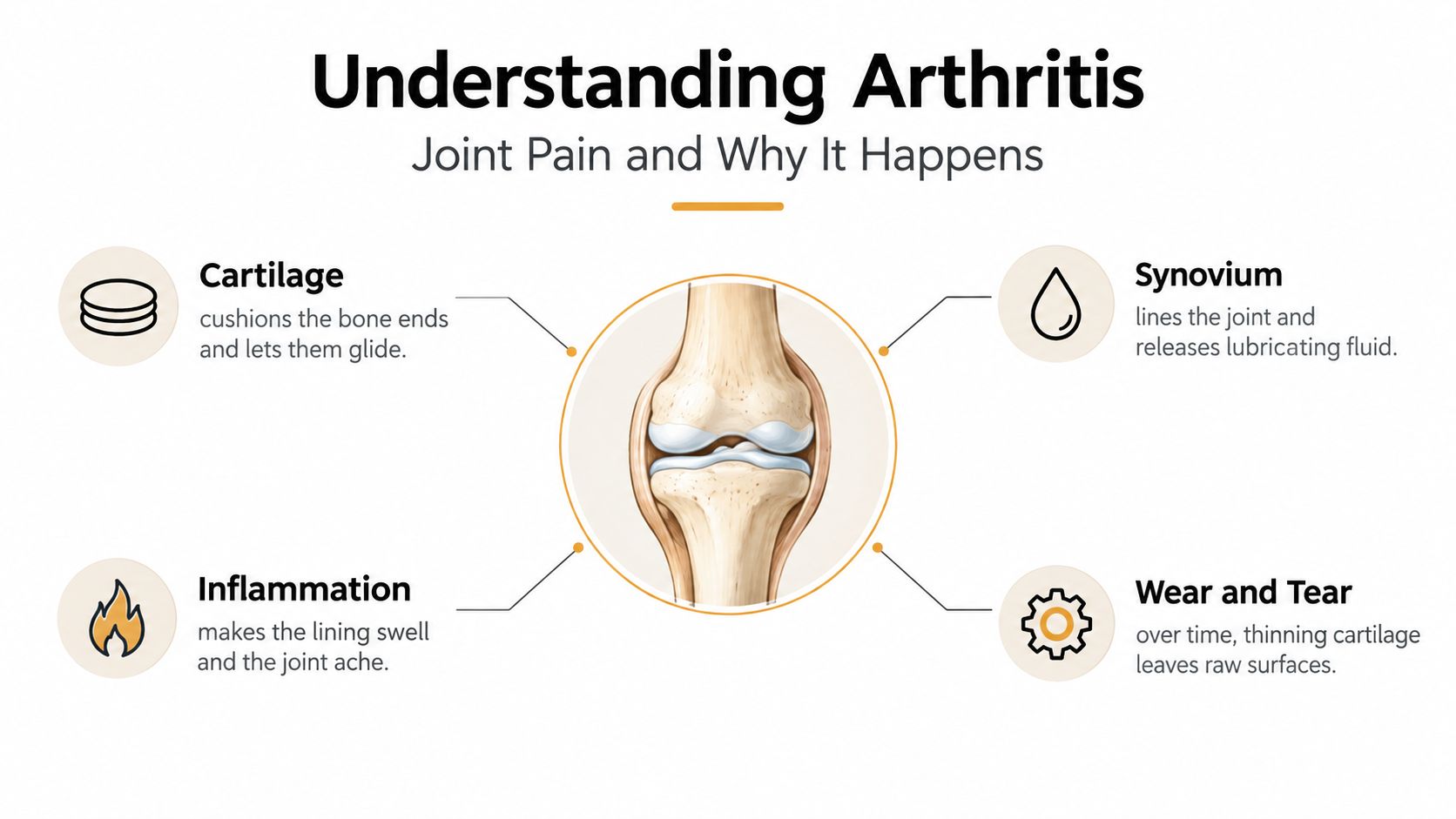
That's why arthritis joint pain can feel confusing. It isn't always sharp. Often it's an ache, stiffness, swelling, or a sense that the joint doesn't trust you. A knee may protest on stairs. A hip may feel tight when you first stand up. Finger joints may throb after opening containers or texting too long.
Why pain changes from day to day
Many people notice that pain shifts with time of day and activity. A joint can feel stiff after rest because it hasn't been moving much. Then it may loosen with gentle motion, only to become sorer later if you overdo it. That pattern doesn't mean the pain is “in your head”. It reflects how irritated joints, nearby muscles, and the nervous system respond to load.
If you've ever wondered why pain can spread beyond the exact sore spot, it helps to understand how pain is processed by the brain. The joint sends signals, but your body's overall sensitivity, sleep, stress, and past pain all shape how strong those signals feel.
Arthritis pain often behaves less like a light switch and more like a dimmer. It rises and falls based on movement, inflammation, load, and recovery.
Why understanding the pattern matters
Early understanding helps you respond better. Instead of stopping all movement, you can learn which activities warm the joint up and which ones overload it. Instead of waiting until pain is severe, you can track what makes it flare.
It also helps to know the warning signs that deserve medical attention. A good practical guide on when to seek care for joint pain can help if you're trying to sort out ordinary stiffness from symptoms that shouldn't wait.
Common Types of Arthritis That Cause Joint Pain
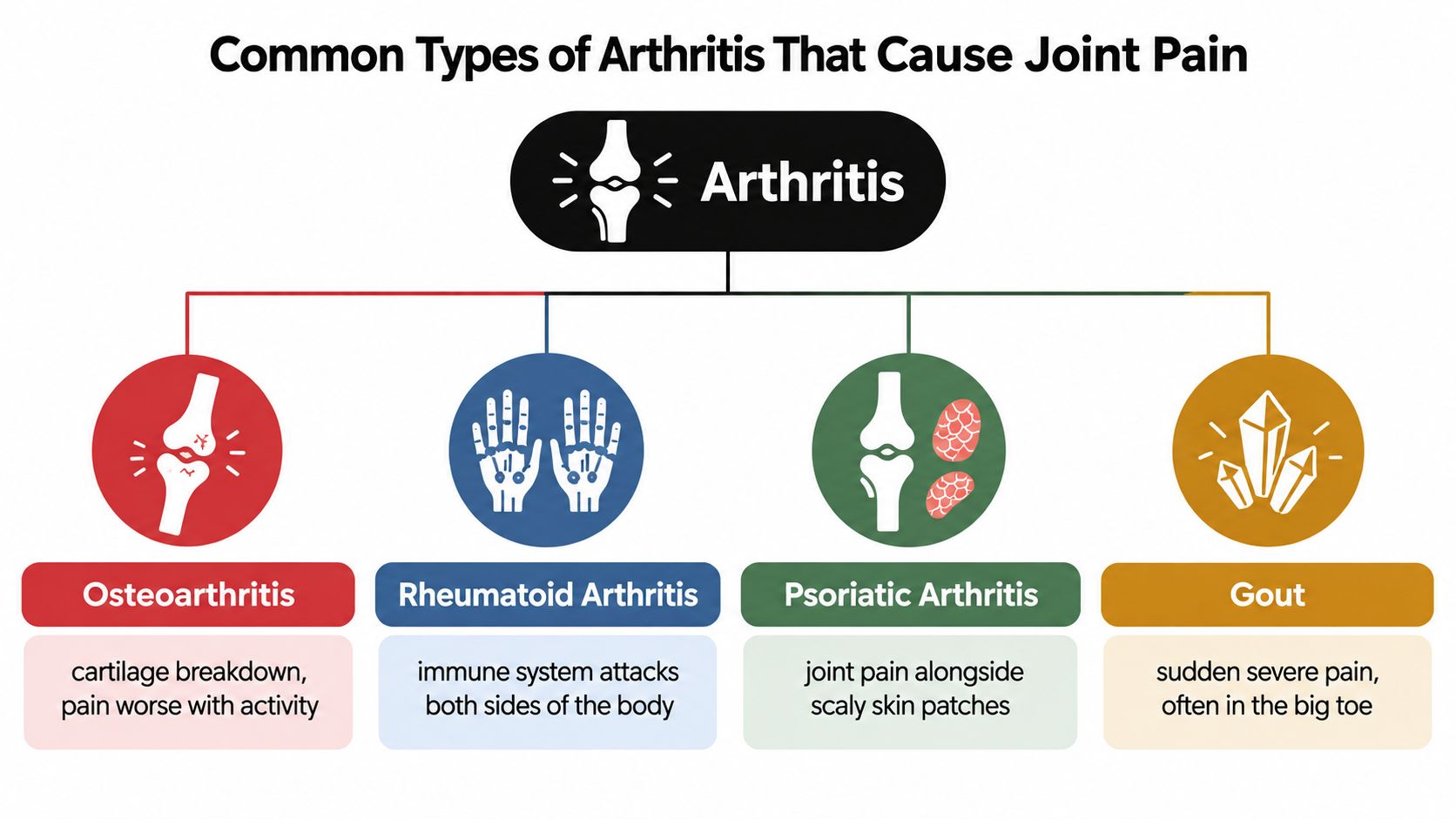
Not all arthritis joint pain comes from the same process. The hinge analogy still helps, but the reason the hinge hurts can differ a lot.
Osteoarthritis
Osteoarthritis is the type many people mean when they say “wear and tear,” though that phrase is a bit too simple. The cartilage and nearby joint structures change over time, and movement can become painful and stiff. In Canada, this is the most relevant arthritis subtype for joint pain because it commonly affects weight-bearing and hand joints. About 3.9 million Canadians aged 20 and older lived with diagnosed osteoarthritis, and 219,000 people were newly diagnosed in 2016 to 2017 (Public Health Agency of Canada osteoarthritis overview).
Pain often shows up in the knee, hip, or hands. Stairs may bother the knee. Standing from a low chair may bother the hip. Twisting a doorknob or gripping a pen may set off hand pain.
Rheumatoid arthritis
Rheumatoid arthritis is different. Here, the immune system attacks the joint lining, which causes inflammation. People often notice swelling, warmth, and stiffness that can last longer in the morning. Small joints in the hands and feet are common early targets, and symptoms often affect both sides of the body in a similar way.
The pattern matters. Pain in both wrists, both hands, or both forefeet sends up a different flag than one sore knee after a long hike.
Psoriatic arthritis
Psoriatic arthritis can affect people who have psoriasis, a skin condition that often causes scaly patches. Joint pain may come with swollen fingers or toes, stiffness, nail changes, or pain where tendons attach. Sometimes the skin signs are obvious. Sometimes they're subtle and easy to miss.
A person may think they only have a “sausage finger” or heel pain, when the broader pattern points to inflammatory arthritis.
Gout
Gout usually behaves more dramatically. The pain often arrives suddenly, becomes intense quickly, and may come with redness, swelling, and heat. The big toe is classic, but gout can affect other joints too.
For people whose main problem is knee pain, it can help to compare your symptoms with a focused resource on arthritis knee pain treatment. The goal isn't to self-diagnose. It's to notice whether your pattern sounds mechanical, inflammatory, or sudden enough to need prompt care.
Recognizing Symptom Patterns and When to Seek Care
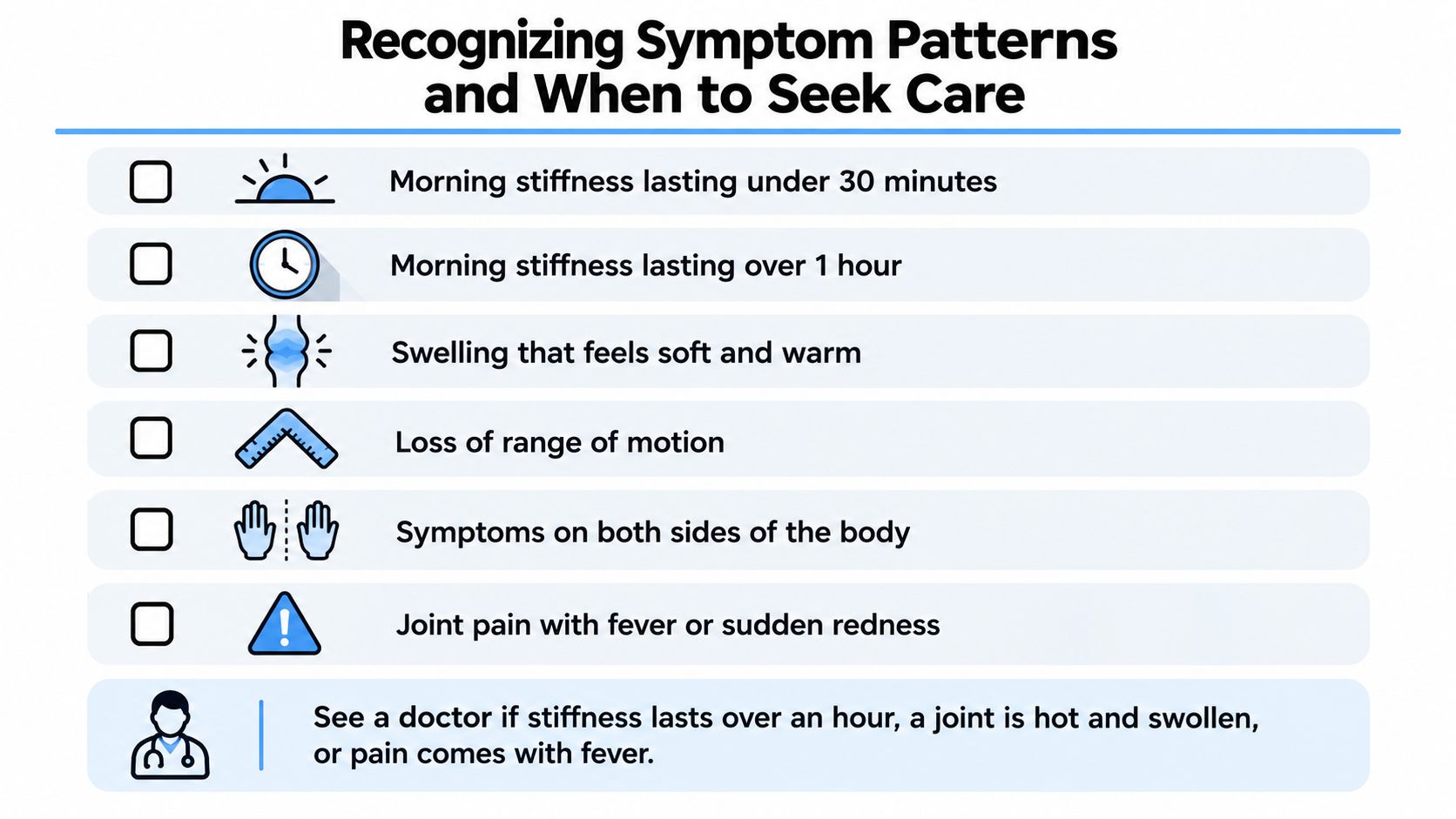
The same joint can hurt for very different reasons. What helps a clinician most isn't just the location. It's the story of the pain. When does it start? How long does stiffness last? What makes it better? What shuts down your day?
Patterns that are often seen with arthritis
Some people wake stiff, loosen after a shower, then feel more discomfort later after errands or housework. Others notice swelling in the hands after repetitive tasks. Some have pain that comes in flares, while others deal with a lower-grade ache most days.
A useful distinction is whether the pain mainly hurts or whether it changes what you can do. That's a big issue in osteoarthritis. Canadian reporting notes that more than 90% of people with osteoarthritis experience joint pain, stiffness, or aching, and earlier Canadian survey data found 43.8% of people with arthritis reported pain or discomfort that prevented some to most of their activities, compared with 9.7% without arthritis (Canadian osteoarthritis burden summary).
Practical rule: Track function, not just pain. “Couldn't grip the kettle,” “needed the railing on stairs,” or “stopped halfway through the grocery trip” tells more than a pain score alone.
Red flags that shouldn't be ignored
Some symptoms need quicker assessment because they may not be routine arthritis at all.
- A hot, very swollen joint: Especially if it appears quickly or feels dramatically different from your usual flare.
- Pain with fever or feeling unwell: A joint infection or another urgent problem needs medical attention.
- Sudden inability to bear weight: If you can't stand or walk on the joint, don't assume it's just arthritis.
- Rapid redness and severe pain: This can happen with gout, infection, or another acute issue.
- New weakness or major loss of motion: Particularly if the joint feels blocked or unstable.
A simple symptom log to bring to an appointment
Write down a few specifics for a week or two:
- Time pattern: Morning, evening, after activity, or after sitting.
- Joint pattern: One side, both sides, one finger, whole hand, knee plus hip.
- Visible changes: Swelling, redness, warmth, or none.
- Function changes: Trouble with stairs, dressing, sleep, work, exercise, or driving.
- What helps: Heat, short walks, rest, topical products, or medication.
If you're unsure whether your symptoms fit an injury, a flare, or a long-term pain condition, this overview of acute vs chronic pain can help you describe what's happening more clearly.
How Arthritis Joint Pain Is Diagnosed
Diagnosis often begins earlier than an X-ray, with a careful conversation. A clinician listens for clues in the pattern. Which joints hurt, when stiffness shows up, whether there's swelling, how long symptoms have been going on, and what your daily life looks like all matter.
What happens during the visit
The physical exam often looks simple, but it gives a lot of information. Your clinician may watch you walk, bend the joint, press on tender areas, compare one side to the other, and check whether the problem seems to be in the joint itself or in nearby muscles, tendons, or bursae.
That last point is important. Not every painful knee has arthritis, and not every sore shoulder comes from the joint. Sometimes pain that seems “deep in the bone” is muscle or tendon trouble. This explainer on bone vs muscle pain can help you understand why those problems feel similar at first.
Tests may help, but they don't tell the whole story
Some people do need imaging or blood work. X-rays may show changes that fit osteoarthritis. Blood tests may help if inflammatory arthritis is a concern. But not everyone needs every test right away.
A person can have significant pain with modest imaging changes, or noticeable changes on imaging with less pain than expected. That's one reason clinicians don't diagnose by picture alone. They match the test results to your symptom pattern and function.
Bring a short list of your most affected joints, what time of day they act up, and which activities you've started avoiding. That often speeds up the visit more than bringing a long pain diary with no pattern.
Questions worth asking
During the appointment, it helps to ask:
- What type of arthritis seems most likely?
- Do I need imaging or labs now, or only if symptoms change?
- Would physiotherapy help at this stage?
- Should I try a topical treatment before an oral medicine?
- What signs mean I should come back sooner?
Sometimes the next referral is to physiotherapy for movement and joint protection. Sometimes it's to rheumatology if the picture looks inflammatory or complex. A good diagnosis doesn't just name the problem. It points toward the safest plan.
Evidence Based Treatments and Safe Pain Relief Options
Good arthritis care usually works best as a layered plan. One tool rarely does everything. Individuals do better when they combine movement, pacing, and targeted pain relief instead of relying on one rescue strategy.
Starting with the least disruptive options
For many people, first-line care includes gentle exercise, joint protection, heat or cold, and practical changes like better footwear or kitchen tools that reduce strain. If those aren't enough, medication options may come into the plan.
For older adults, the choice between topical and oral anti-inflammatories deserves special care. Canadian guidance notes that topical diclofenac is a reasonable alternative when acetaminophen is insufficient, is better tolerated than oral NSAIDs, and should be the initial NSAID choice in people 75 years and older (Arthritis Society Canada NSAID reference guide).
That recommendation matters because people often assume a cream or gel must be “weaker” than a pill. In practice, a topical NSAID may give similar pain and function benefits for some joint problems while lowering the chance of whole-body side effects.
Choosing topical versus oral NSAIDs
| Factor | Topical NSAID | Oral NSAID |
|---|---|---|
| Where it works | Applied directly over the painful joint area | Travels through the whole body after swallowing |
| Best fit | Localized pain such as hands or knees | Broader pain patterns or when topical treatment isn't enough |
| Tolerability | Often easier on the stomach and whole body | More likely to raise concerns about stomach, kidney, blood pressure, or heart effects |
| Older adults | Often preferred first, especially in later life | Needs more caution, particularly with other medical conditions or medications |
| How to use | Apply to clean, intact skin and wash hands after | Take exactly as directed and review interactions with a clinician or pharmacist |
| When to escalate | If relief is incomplete or function keeps slipping | If pain persists despite careful use, or side effects appear |
How to use topical products well
Topical products help most when people use them intentionally, not randomly.
- Target the joint: Apply over the painful area rather than widely over the whole limb.
- Use clean skin: Avoid broken or irritated skin.
- Watch timing: Many people do well applying before a walk, before hand-heavy chores, or after activity when the joint tends to complain.
- Reassess function: Don't judge success only by pain level. Notice whether stairs, grip, or standing tolerance improve.
For readers comparing non-prescription options, this guide to the best topical pain relief for arthritis can help sort through formats and ingredients. A product such as MEDISTIK may be used as one non-prescription topical option for temporary relief of sore muscles and joints associated with arthritic or rheumatic pain.
When more treatment may be needed
If self-care and topical options aren't enough, a clinician may discuss oral medication, injections, bracing, physiotherapy, or surgery in selected cases. The main question isn't whether a treatment sounds strong. It's whether it helps you function more safely and consistently.
Some patients also like a broader conversation about recovery variables such as training load, inflammation, and lab-based context. This discussion of Dr Elizabeth Yurth biomarker testing offers that wider lens, though it doesn't replace diagnosis or treatment planning for arthritis itself.
Daily Movement Lifestyle and Exercise for Healthier Joints
When a joint hurts, many people swing between two extremes. They either push through until they flare, or they avoid movement so much that the joint stiffens further. The middle ground is usually where progress happens.

Think of movement as joint maintenance
A sore hinge works better when it moves regularly and stays supported. Joints are similar. Gentle motion can reduce stiffness, and stronger muscles around the joint can improve how forces travel through it during daily tasks.
That doesn't mean punishing workouts. It means choosing movement your joint can tolerate today, then building from there. Walking, cycling, pool exercise, resistance bands, chair exercises, and simple range-of-motion drills are all reasonable starting points depending on the joint involved.
A simple weekly template
You don't need a perfect plan. You need a repeatable one.
- Most days: Short bouts of easy movement such as walking, marching in place, or cycling.
- Two or three times weekly: Strength work for the muscles around the sore joint. For knees, that might include sit-to-stands or supported squats. For hands, it may mean gentle grip and finger mobility work guided by a therapist.
- Daily: Range-of-motion practice, especially after waking or after long sitting.
- Add balance work: If lower-limb arthritis makes you less steady, simple balance practice near a counter can help.
Movement should leave you feeling worked, not wrecked. Mild soreness that settles is common. A flare that knocks out the next day means the dose was too high.
A guided routine can make that easier to picture:
Small habits that protect joints all day
Exercise matters, but so do the tiny choices repeated through the day.
- Break up stillness: If you sit for long stretches, stand and move the joint gently before it stiffens.
- Use heat strategically: A warm shower or heat pack can help before activity if stiffness is the main barrier.
- Use cold after overload: If the joint feels puffy or irritated after activity, cold may be more soothing.
- Pace demanding tasks: Split heavy chores into shorter rounds instead of doing everything in one push.
- Reduce unnecessary strain: Use railings, supportive shoes, jar openers, carts, or larger-handled tools when needed.
What about work, travel, and winter?
Those settings often trigger setbacks. Long drives stiffen hips and knees. Travel means more walking, carrying, and waiting. Cold seasons often bring less movement and more guarding. The answer usually isn't rest alone. It's planning.
Before travel, map out stretch breaks and pack any braces or topical products you use regularly. During colder months, warm up the joint before heading outside and keep indoor movement routines short and consistent. If you're not sure what's safe, a physiotherapist can tailor the dose to your goals and your flare pattern.
Living Well With Arthritis and Next Steps for Support
Living well with arthritis joint pain usually means shifting the goal. Instead of chasing a day with zero symptoms, aim for a week where pain takes up less space and function comes back into view. Better mornings, easier stairs, steadier walking, and fewer cancelled plans are meaningful wins.
Build your own working plan
A practical plan often includes three parts:
- Daily support: movement, pacing, sleep, and simple joint protection
- Targeted relief: topical or other treatments chosen with safety in mind
- Medical follow-up: reassessment when symptoms change, spread, or stop responding
Arthritis support isn't perfectly even across Canada. The broader burden is high, and access to services can vary by province, territory, and community. If one strategy isn't enough, that doesn't mean you've failed. It usually means the plan needs adjusting.
Know when to revisit the plan
Check in with your clinician if:
- Pain starts limiting new activities
- Morning stiffness is getting longer or swelling is more noticeable
- You're relying on pain relief more often but doing less
- A flare doesn't settle the way it usually does
The best arthritis plan is the one you can repeat on ordinary days, not just on motivated days.
Keep notes on what helps your real life. Not just “pain better,” but “walked farther,” “opened jars,” “slept through,” or “worked at the computer without stopping every half hour.” Those details guide smarter care than pain scores alone.
Arthritis joint pain can be persistent, but it doesn't have to make every decision for you. With the right diagnosis, thoughtful treatment choices, and a steady movement routine, many people regain confidence in daily life.
If you're looking for practical support between appointments, MEDISTIK offers Canadian-made topical pain relief options along with educational resources that can fit into a broader arthritis self-management plan. If localized joint pain is making movement harder, visit MEDISTIK to explore topical formats and learn more about everyday pain management.


