

Aching knees can turn a morning routine into a careful negotiation. Getting out of bed, walking to the bathroom, opening a jar, or climbing the front steps may all require more time than they once did. A caregiver may then wonder whether a cream is enough, whether a tablet is safe, or whether pain is something an older person must accept.
It isn't. Pain relief for seniors works best as a layered, safety-first plan, not as a search for the strongest single treatment. The right combination may include a targeted topical product, gentle movement, changes around the home, and medication selected with a pharmacist or clinician. The aim is practical relief with fewer avoidable side effects, so an older adult can keep moving and living with confidence.
Why Pain Feels Different as You Age
Margaret wakes with stiff fingers and a sore knee. She can still make tea, but gripping the kettle hurts, and her first steps feel unsteady. Her daughter considers an over-the-counter painkiller, then remembers Margaret already takes medicine for blood pressure and another long-term condition. The safer question is which option helps without creating a new problem.
Ageing can change how the body handles medicines. The liver and kidneys may process and clear some substances more slowly. Thinner or more sensitive skin may also react to certain products. Many older adults manage several conditions while taking prescriptions, vitamins, or supplements, so dose, timing, interactions, and duration need careful attention.
Pain may also last longer or affect daily life more. Health Canada's Canadian Pain Task Force estimated that 7.63 million Canadians age 15 and older lived with chronic pain in 2019, with more than 28% of those cases involving people age 65 and older (Health Canada's Canadian Pain Task Force report). Earlier national surveillance found chronic pain among 27% of seniors living in private households and 38% of seniors in health-care institutions, and prevalence increased steadily with age.
A safer goal: Use the least burdensome combination that improves movement, sleep, and daily function.
A layered plan can begin with the painful area itself, such as a topical option for a knee, then add non-drug support such as warmth, gentle movement, muscle strengthening, or a safer chair, shoe, or bathroom setup. Oral medicine may still have a place, but adding it after a medication check can help limit unnecessary whole-body exposure and polypharmacy risk.
Understanding how pain is processed by the brain can also reassure families that pain is real even when an injury is not visible. Start by identifying the pain's type and location, then add one treatment layer at a time and watch how the body responds.
Understanding Pain Types and How Relief Works
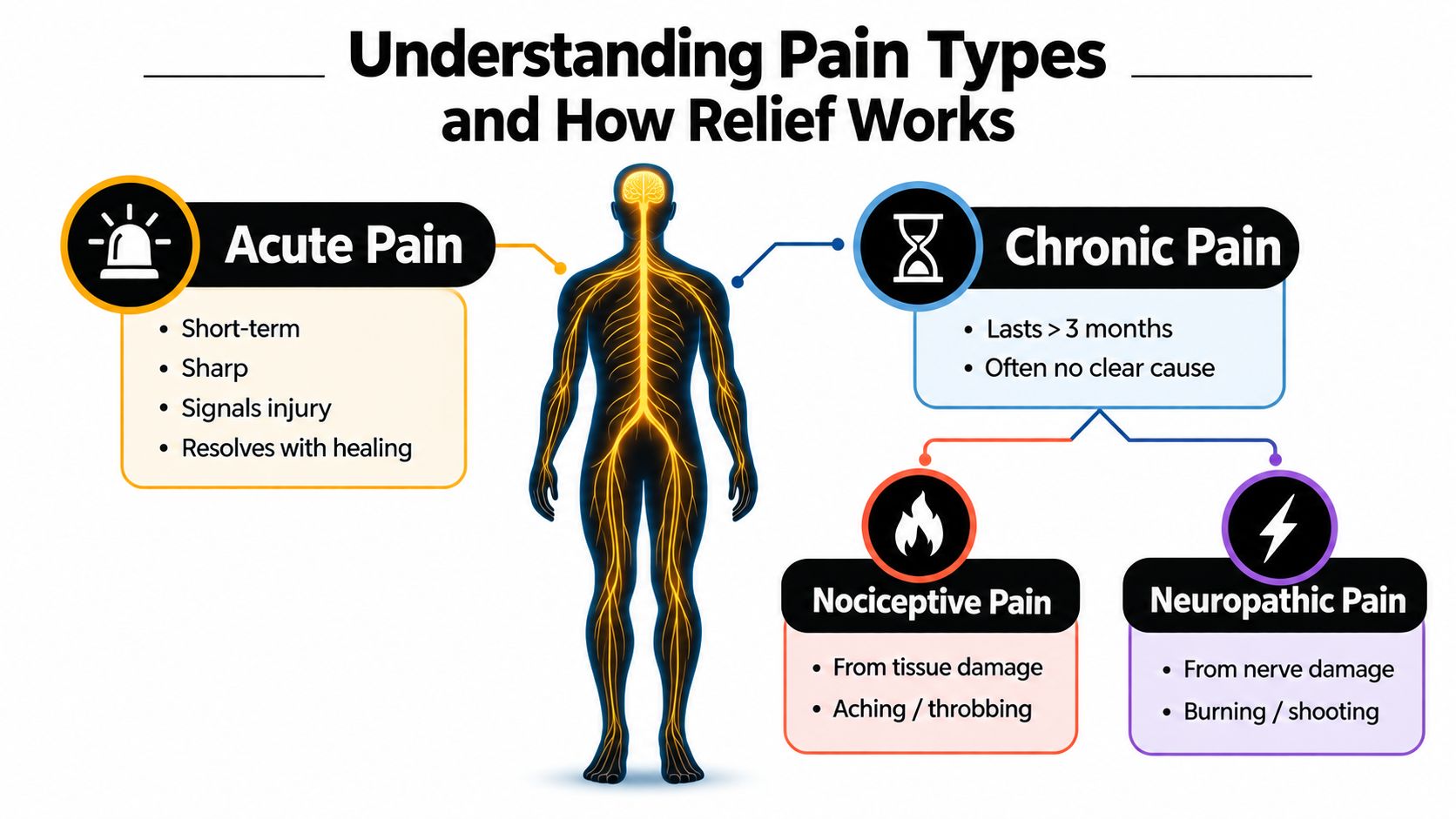
Pain is an alarm system, but alarms don't all mean the same thing. A cut finger sends a short, sharp warning while the tissue heals. Arthritis may create a recurring ache with stiffness after rest. Nerve irritation can feel like burning, pins and needles, or an electric shock.
Start with the pattern
Acute pain usually begins suddenly after an injury, procedure, or strain and often settles as healing occurs. Chronic pain continues or returns over time and can affect sleep, mood, walking, and concentration. The boundary matters because persistent pain often needs more than repeated short-term medicine.
Clinicians also distinguish between two broad sources:
- Nociceptive pain: This comes from irritated or damaged body tissue. Osteoarthritis in a knee, a strained muscle, or an inflamed tendon may cause aching, throbbing, or tenderness.
- Neuropathic pain: This involves the nerves themselves. Burning, shooting, tingling, or numb sensations may point toward nerve involvement and may require a different assessment.
A useful question is, “Where is the alarm, and what kind of signal is it sending?” A sore hand joint and a burning foot may both be called pain, but a topical anti-inflammatory may be more suitable for the first than the second.
Match the treatment to the target
Topical products work mainly where they're applied, making them a logical consideration for pain confined to a knee, hand, elbow, or nearby muscle. Oral medicines travel through the digestive system and bloodstream, so they can affect the whole body. Non-drug approaches work differently again. Movement can improve strength and joint function, while heat, cold, physiotherapy, relaxation, and sleep support can reduce the factors that amplify discomfort.
For example, a person with back pain may benefit from gentle strengthening, improved sleep positioning, and professional assessment rather than relying only on a tablet. A supportive guide to medium-firm sleep surfaces can help a household think through sleep comfort, but a new or severe back problem still deserves clinical advice.
Pain that persists, changes character, or limits ordinary activities should be assessed rather than repeatedly masked. A plain-language overview of acute versus chronic pain can help families prepare for that conversation.
Topical Pain Relief Options That Are Gentler for Seniors
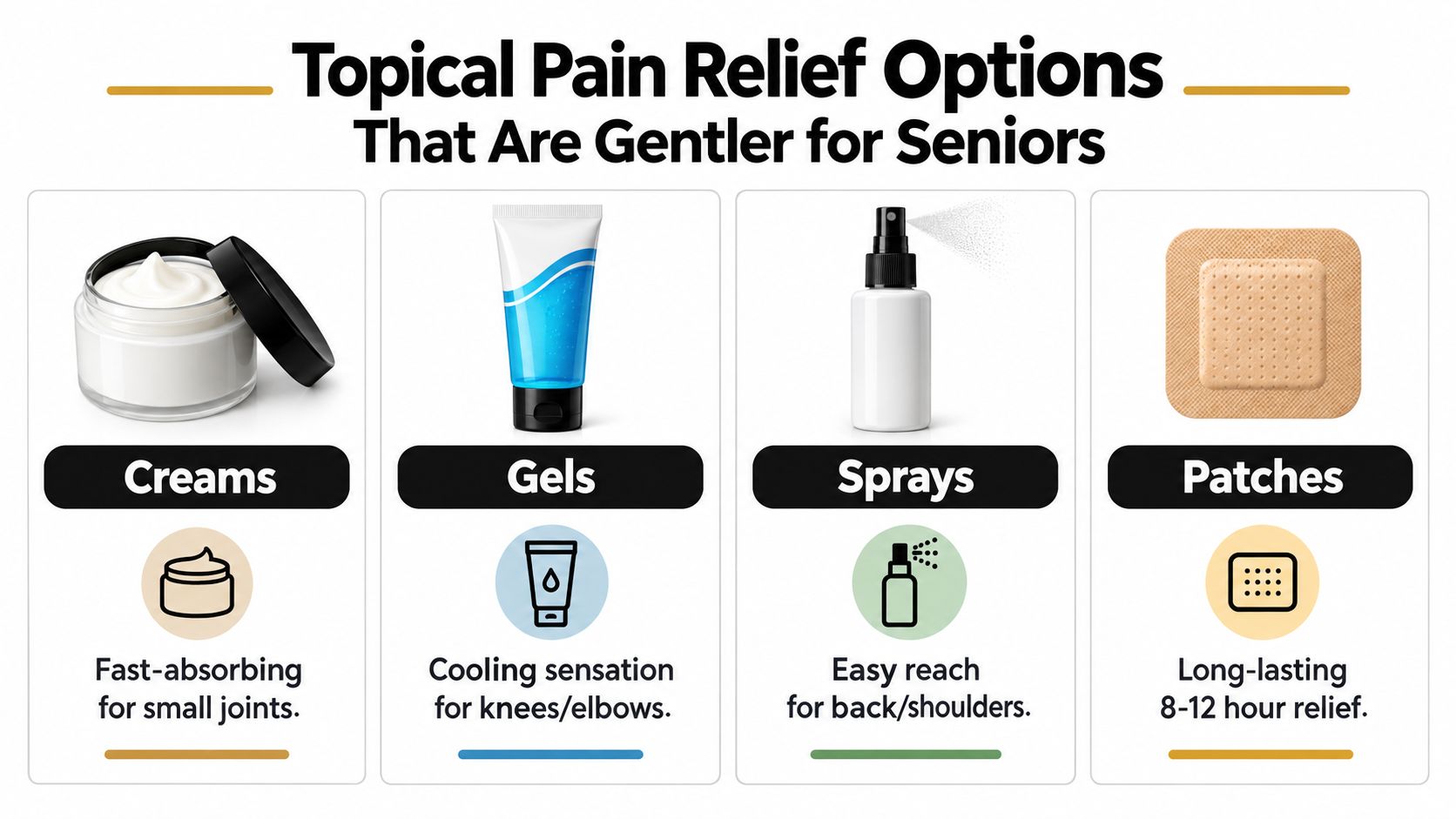
A sore knee may make walking difficult, while the rest of the body feels well. For pain limited to one or two reachable areas, a topical product can provide a targeted layer before considering an oral medicine. Creams, gels, sprays, sticks, and roll-ons are applied over or near the sore area, so they do not expose the whole body in the same way a swallowed medicine does.
Canadian primary-care guidance states that topical NSAIDs are generally well tolerated in people over 65, with systemic absorption estimated at about 6% to 23% of oral forms (RxFiles geriatric pain guidance). This lower exposure may matter for older adults who are more vulnerable to kidney, stomach, cardiovascular, or blood-pressure concerns related to medicines. It does not make a topical product risk-free. Use it exactly as directed, and include it in the person's medication review.
Compare the formats
| Format | Practical use | Points to remember |
|---|---|---|
| Cream | Useful for small joints and areas that need careful rubbing | Wash hands afterwards and avoid broken skin |
| Gel | Often convenient for knees, elbows, or other larger joints | Follow the label, especially if the skin is sensitive |
| Spray | Helpful when reaching the back or shoulder is difficult | Avoid inhaling the spray and protect the eyes |
| Stick or roll-on | Portable and easy to apply without getting product on the hands | Use only on the recommended area and keep the container clean |
Topical diclofenac 1% to 4%, ibuprofen 5% to 10%, and ketoprofen 1% to 5% are among formulations with supporting evidence. These are formulation ranges, not directions for choosing a product independently. A pharmacist can check whether an ingredient fits the person's other medicines, including an oral NSAID or blood thinner, and whether a history of skin reactions changes the choice.
MEDISTIK offers non-prescription topical formats including a stick, spray, and cooling roll-on for temporary relief of sore muscles and joints. A format like this may fit a warm-up, daily activity, or recovery routine when discomfort stays localised. It works best as one layer in a broader plan, rather than as a substitute for movement support, assessment, or other treatment.
Apply with care
Apply a small amount to clean, intact skin and follow the package directions for frequency. Do not use a topical NSAID over cuts, rashes, infected skin, or a large area unless a clinician has instructed you to do so. Stop and ask a pharmacist or clinician about worsening redness, blistering, swelling, breathing symptoms, or another unexpected reaction.
Topical products can suit localised osteoarthritis, particularly in the hand or knee. Reassess the response every three months and continue only if the person is benefiting. If comfort or movement has not improved after an appropriate trial, applying more is unlikely to solve the problem. Recheck the diagnosis and the overall pain plan instead.
For a visual demonstration of topical use and product formats, this short video may be useful:
More practical information about choosing a product for localised discomfort is available in this Canadian topical pain-relief resource.
Oral Medications and Safety Checks for Older Adults
An oral pain medicine may help when discomfort affects several areas, but it should follow a medication review rather than trial and error. A tablet travels through the whole body. That can reach widespread pain, while also involving the kidneys, liver, stomach, heart, and existing medicines. For many older adults, topical and non-drug measures can form earlier layers, leaving oral treatment for situations where its broader effect is needed.
Check the medicine before checking the pain
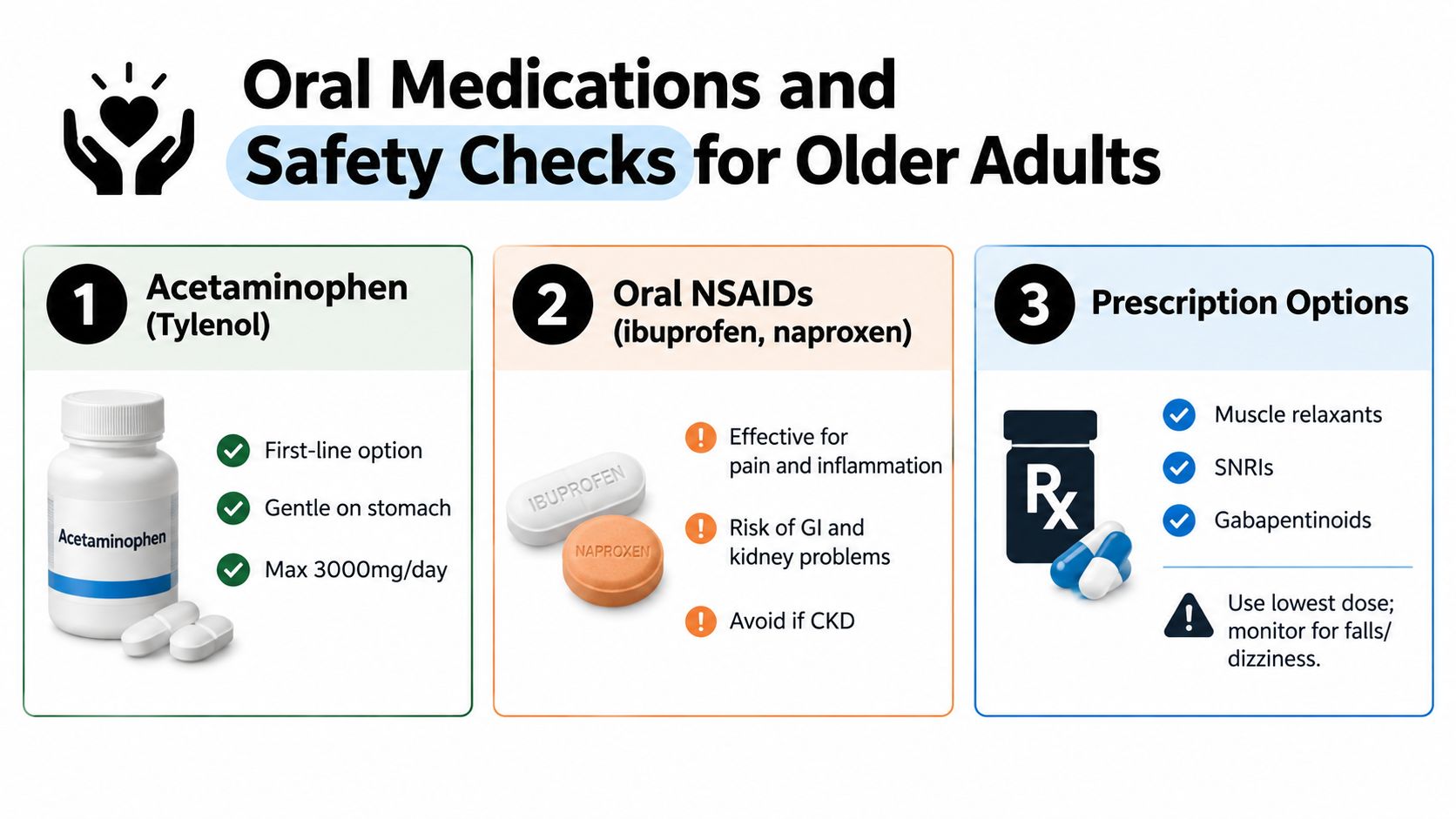
Acetaminophen may suit some types of pain, but check the total amount across every product. Cold and flu medicines may contain the same ingredient, making accidental duplication easy. A pharmacist can check whether a planned dose fits the person's liver health, alcohol use, and other medicines.
Oral NSAIDs, including ibuprofen and naproxen, may reduce inflammation but can be unsuitable with kidney disease, stomach ulcers, heart failure, uncontrolled blood pressure, or certain cardiovascular risks. They can also interact with blood thinners, blood-pressure medicines, and other prescriptions. Do not combine an oral NSAID with a topical NSAID without professional advice.
For people 75 years of age or older with localised pain, Canadian geriatric guidance recommends topical treatment as the initial NSAID approach when treatment is appropriate. It also describes topical diclofenac as a reasonable option for osteoarthritis pain when acetaminophen is insufficient or oral NSAIDs are not tolerated (American Geriatrics Society guidance).
Use a simple safety checklist
Before starting or changing an oral pain medicine, ask:
- What is the active ingredient? Check prescriptions, non-prescription products, and supplements.
- Which health conditions matter? Mention kidney, liver, heart, stomach, blood-pressure, and bleeding concerns.
- Could this cause falls? Some prescription medicines can cause drowsiness, dizziness, confusion, or weakness.
- How long should I use it? Set a review date rather than continuing indefinitely.
- Which symptoms mean stop? Ask about bleeding, swelling, rash, breathing problems, or sudden confusion.
Keep a written medication list for appointments and daily checks. A reminder system can help caregivers support safe timing. The Velma medication reminders guide offers practical ways to organise doses.
Prescription medicines may be considered for nerve pain or persistent pain. They often need gradual dose changes and monitoring for sedation, constipation, dizziness, and falls. The aim is not to avoid every oral medicine. It is to match the medicine to the type of pain, use the lowest effective burden, and review the plan regularly. This comparison of Advil and Tylenol for back pain can help frame questions for a clinician, but it cannot replace personal medical advice.
Non Drug Therapies That Ease Pain Without Pills
Movement is often part of the treatment, even when movement initially feels uncomfortable. The key is to choose an activity that challenges the body gently without provoking a prolonged flare. A physiotherapist can adapt exercises to strength, balance, joint range, and confidence.

Make movement manageable
Start with a short, comfortable activity and build only when the body responds well. Chair exercises, slow walking indoors, water walking, gentle cycling, and range-of-motion movements can be easier to tolerate than high-impact exercise. A person with knee pain might begin by straightening one leg while seated, then take a brief walk with a suitable aid.
Pacing prevents the common cycle of doing too much on a good day, flaring up, and then becoming inactive. Break household tasks into smaller parts. Rest before exhaustion, not only after pain becomes severe.
Practical rule: Some discomfort during rehabilitation may be acceptable, but a clear worsening that persists should prompt a pause and professional advice.
Use heat and cold deliberately
Heat often suits stiffness. A warm shower, heating pad, or warm pack can help loosen muscles before movement, provided the temperature is comfortable and the skin is checked regularly. Older adults may not feel heat accurately, particularly when sensation is reduced, so a caregiver should help prevent burns.
Cold can be useful after activity when a joint feels hot, swollen, or irritated. Wrap a cold pack in cloth and use it for a brief, comfortable period rather than placing ice directly on skin. A small cooling roll-on may offer a convenient sensation, but it shouldn't be used on damaged or numb skin.
Include the nervous system
Slow breathing, guided relaxation, music, mindfulness, and calming routines can reduce the tension that makes pain harder to manage. Massage or physiotherapy may improve comfort and movement for some people, while occupational therapy can show safer ways to dress, cook, grip, and reach.
Pain management works better when daily habits support treatment. This chronic pain management resource can help families think about a broader routine rather than relying on pills alone.
Everyday Habits and Home Changes That Prevent Pain Flare Ups
A pain plan should continue after the product is put away. Small changes can reduce the strain that repeatedly irritates the knees, hips, hands, neck, and back.
Begin with the first and last parts of the day. A supportive sleeping position may reduce morning stiffness, while gentle range-of-motion movements can prepare the body before dressing or making breakfast. Supportive footwear, clear walking paths, and a stable chair with arms can make ordinary movement less demanding.
Build a lower-strain home
In the kitchen, store frequently used items between waist and shoulder height. Use lightweight cookware, an electric can opener, or jar-opening aids when hand pain makes gripping difficult. In the bathroom, add secure grab bars, non-slip surfaces, and a raised seat where appropriate. Families considering bathing changes can review safe bathing solutions from Modern Bathrooms as part of a wider fall-prevention discussion.
In the bedroom, keep a lamp, phone, and mobility aid within easy reach. Remove loose mats and clutter from routes to the bathroom. These changes support independence because they reduce rushed, awkward movements.
Create a repeatable daily rhythm
A practical routine might look like this:
- Morning: Warm stiff areas, move gently, and apply a suitable topical product if needed.
- Midday: Alternate activity with rest, use supportive footwear, and avoid carrying more than necessary.
- Evening: Review what triggered discomfort, use cold or heat appropriately, and prepare the environment for safe sleep.
Nutrition, hydration, and gradual activity support general health, but no food or supplement should be assumed safe because it is natural. Discuss supplements with a pharmacist, particularly when prescriptions or blood thinners are involved. Consistency matters more than dramatic changes. A home that asks less of painful joints can reduce the need to reach for medication repeatedly.
Talking to Your Healthcare Provider and Knowing When to Seek Help
Bring a short pain record to appointments. Note where the pain occurs, what it feels like, what makes it better or worse, whether it affects sleep or walking, and which treatments have helped. Include every prescription, non-prescription medicine, topical product, vitamin, and supplement.
Useful questions are direct:
- “Could this be joint, muscle, or nerve pain?”
- “Would a topical treatment be safer for this location?”
- “Could any of my current medicines interact with this option?”
- “How long should I try it before we review the result?”
- “What movement or physiotherapy would support recovery?”
A clinician should assess sudden severe pain, pain after a fall, fever with a painful or swollen joint, new weakness or numbness, loss of bladder or bowel control, unexplained weight loss, black stools, chest pain, breathing difficulty, or a rapidly worsening condition. Pain that continues beyond six weeks also deserves medical review rather than indefinite self-treatment.
A systematic review found good short-term safety and tolerability for topical treatments in older patients, while noting that long-term safety evidence remains limited, particularly for people over 80 (systematic review of topical NSAIDs in older patients). That uncertainty is a reason for follow-up, not fear. A layered plan, reviewed with the right professionals, can balance comfort, mobility, and medication safety.
MEDISTIK offers Canadian-made, non-prescription topical options in stick, spray, and cooling roll-on formats for temporary relief of sore muscles and joints. Visit MEDISTIK to explore targeted topical pain relief and educational resources that can support a safer, more practical routine for seniors and caregivers.


