

About 80% of Canadians experience low back pain at some point in life, and roughly 5% of those cases are classified as sciatica. Pain in the back of your thigh while sitting can come from irritated nerves, compressed soft tissue, a hamstring problem, or referred pain from the hip or lower back, so the symptom alone doesn't identify the cause.
You may be working at a desk, driving home, or settling into a soft chair when a dull ache develops beneath one buttock and travels into the back of your thigh. You shift your weight, straighten your leg, or stand up, hoping the discomfort will settle. Sometimes it does. Sometimes the pain returns as soon as you sit again.
Sitting places pressure on both the tissues around your thighs and the nerves that travel from your lower back into your legs. Although many cases of back pain are mechanical, the important question is whether your symptoms behave like a simple muscle ache or like nerve irritation. That distinction helps you choose sensible self-care and recognise when you need an assessment.
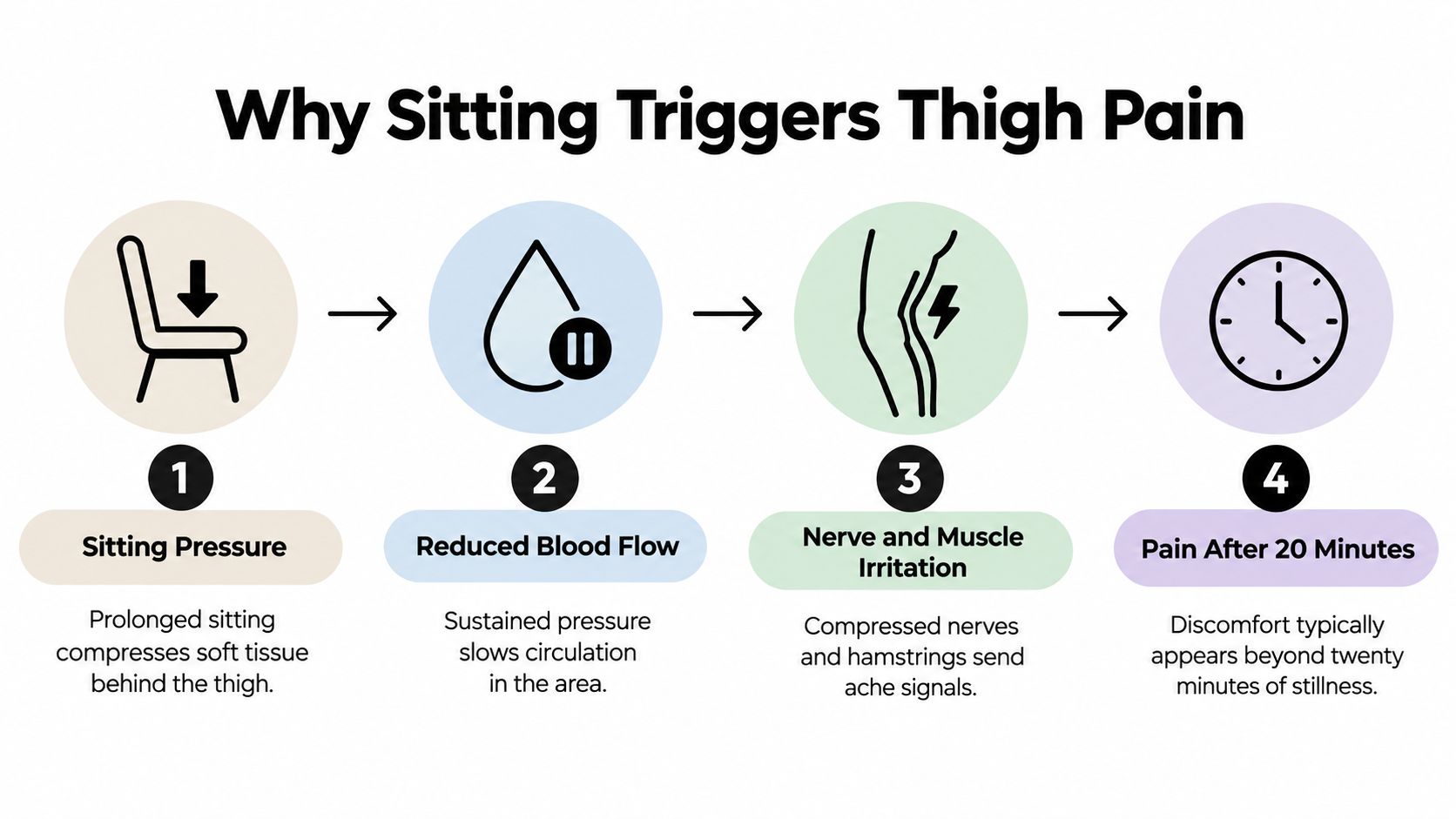
Why Sitting Triggers Thigh Pain
You sit down for a video meeting, then notice yourself moving from one side of the chair to the other. The ache may feel deep, tight, burning, or sharp. After standing, you walk around briefly and feel some relief, only to have the pain return when you sit again.
The mechanics are straightforward. Your sit bones bear much of your body weight, while the chair presses into the soft tissues beneath the buttocks and upper thighs. If you remain in one position, the pressure doesn't move between tissues as it does when you walk, change posture, or shift your weight.
The Canadian Centre for Occupational Health and Safety's guidance on poor sitting posture explains that sustained sitting can place pressure on the thighs, reduce blood flow, cause swelling, and compress the sciatic nerve. Those effects can create local discomfort, but they can also aggravate symptoms originating in the lower back or pelvis.
Why the same chair affects people differently
A firm chair may irritate the tissues near the sitting bone. A low sofa may place your hips into deep flexion and round your lower back. A car seat may hold you in a fixed position while your leg stays extended toward the pedals. Each setup changes the load on the hamstrings, hip, pelvis, and lumbar spine.
Statistics Canada has reported that back pain is commonly aggravated by sitting too long in one position, driving, and other sustained postures. That makes prolonged sitting a relevant trigger when pain is felt in the back of the thigh, especially if the discomfort may be referred from the low back or related to sciatic irritation, as discussed in this Canadian explanation of sciatica and sitting-related leg pain.
Practical rule: If standing or gentle walking changes the pain, the position is giving you useful information. It doesn't prove the cause, but it shows that load and posture matter.
You can also review practical ways to reduce discomfort in this guide to sitting too long and leg pain. The next step is to observe the pain's pattern rather than treating every posterior-thigh symptom as a tight hamstring.
Common Causes of Posterior Thigh Pain
Posterior-thigh pain usually falls into three broad categories: muscle or tendon pain, nerve-related pain, and referred pain from a joint or the lower back. These categories can overlap, which is why location alone isn't enough.
A hamstring problem often begins after a sprint, sudden reach, awkward step, or heavy exercise. The pain may be concentrated in one area of the back of the thigh, particularly when you contract the hamstring or lengthen it. A gradual irritation near the upper hamstring attachment may instead feel deep and close to the sitting bone, becoming more noticeable during sitting.
Nerve-related pain tends to behave differently. It may feel burning, electric, tingling, or unusually sensitive rather than sore. The discomfort can travel from the low back or buttock down the back of the thigh, and sometimes farther into the lower leg. Sitting, bending forward, coughing, or keeping the hip flexed may increase the irritation, although not everyone has the same pattern.
Joint or referred pain can be harder to locate. The hip, sacroiliac joint, and small joints of the lower spine can refer discomfort into the buttock or thigh without directly injuring the hamstring. This pain may stay above the knee and feel like a deep ache, pressure, or stiffness.
A pattern-based comparison
| Pattern | What it may suggest | Clues that deserve attention |
|---|---|---|
| Local soreness after a clear movement or training incident | Hamstring muscle irritation | Pain with contraction, stretching, or direct pressure |
| Burning, tingling, electric pain, or pain that travels | Nerve irritation | Numbness, weakness, or symptoms extending down the leg |
| Deep buttock or upper-thigh ache without a clear muscle event | Hip, sacroiliac, lumbar, or tendon-related referral | Pain linked to sitting, bending, or a particular hip position |
Canadian sources describe low back pain as affecting 20–25% of adults annually, while sciatica affects 5–10% of people with low back pain, according to this Canadian discussion of sciatic nerve pain. Those figures help explain why clinicians take sitting-related thigh pain seriously, but they don't mean your symptoms automatically indicate sciatica.
Treat the pattern, not the label. Stretching a nerve-irritated leg aggressively because it feels “tight” can increase symptoms instead of settling them.
If your discomfort seems more connected to the hip or surrounding tissues, the advice in this resource on hip pain relief may help you think through the possibilities. A physiotherapist can compare strength, movement, sensation, and spinal or hip positions to narrow the cause.
Understanding Sciatica and Nerve Irritation
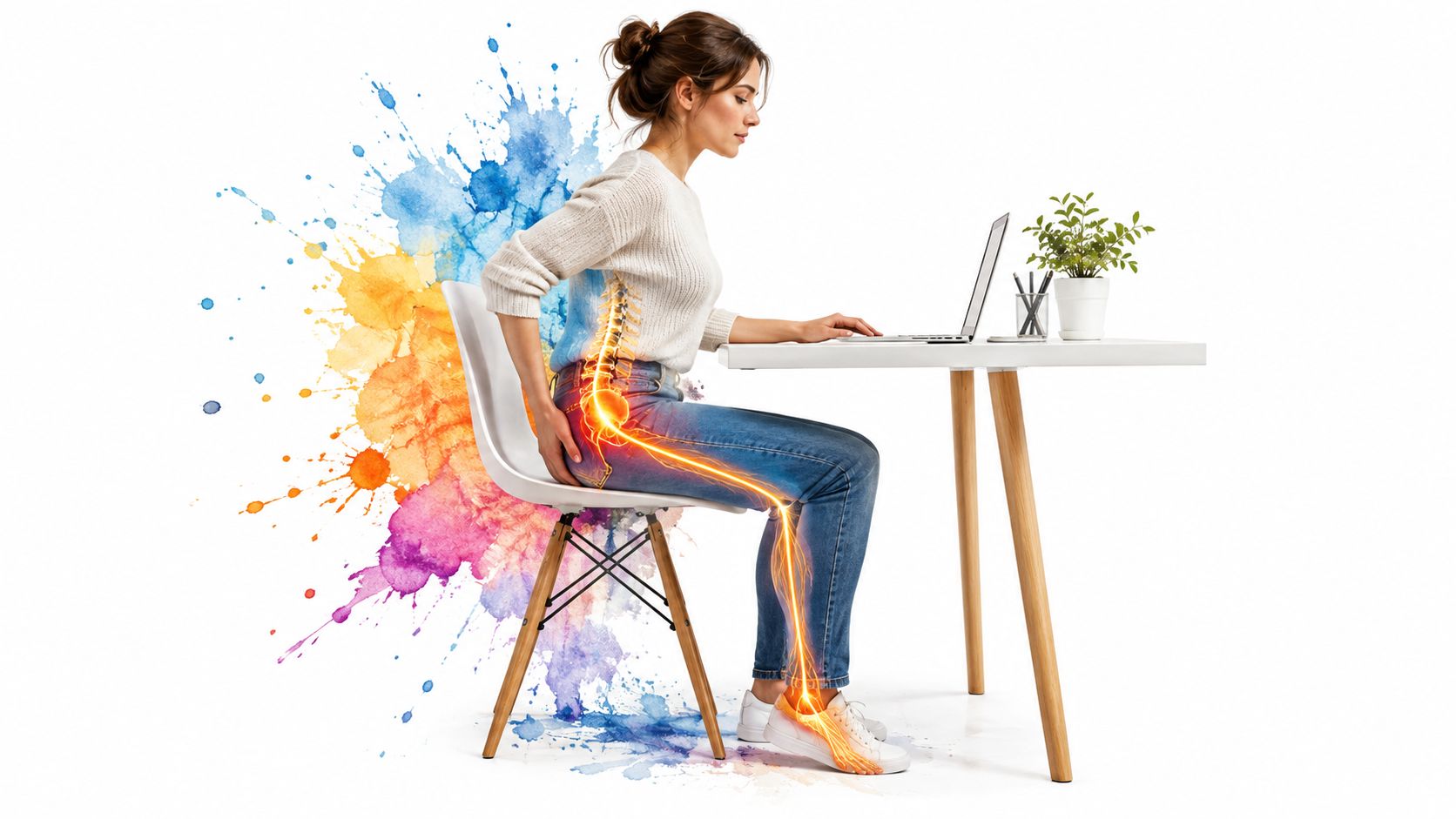
The sciatic nerve is formed by nerve roots leaving the lower spine and travelling through the buttock into the leg. Irritation can occur near the spinal nerve roots or along parts of the nerve's pathway. Sitting may aggravate the area by holding the hips and spine in a sustained position, increasing sensitivity around already irritated structures.
Alberta Health Services defines radicular leg pain as pain below the gluteal fold caused by irritation of lumbar nerve roots. That description matters because pain in the back of the thigh may represent a nerve signal rather than damage within the thigh muscle itself, as outlined in Alberta's guidance on radicular pain and hamstring syndrome.
Radicular pain versus referred pain
Radicular pain comes from irritation of a spinal nerve root and often follows a more recognisable path into the leg. It may include altered sensation, pins and needles, burning, or weakness. The pain can feel disproportionate to what you see or feel in the hamstring.
Referred pain comes from another structure, such as the lumbar spine, hip, or sacroiliac region, but is felt in the buttock or thigh. It can be uncomfortable without producing the tingling, numbness, or weakness that often makes nerve involvement more likely.
No single symptom confirms the diagnosis. A clinician considers where the pain begins, how far it travels, what positions trigger it, whether sensation or strength has changed, and how your back, hip, and leg move together.
Make sitting less provocative
Use a chair that allows your feet to rest comfortably on the floor and keeps your hips supported without forcing the knees high above the hips. Add gentle lumbar support if your lower back collapses into a rounded position. Avoid leaning into one buttock for long periods, because that shifts pressure into one side of the pelvis and upper thigh.
Stand, walk briefly, or change position before the pain becomes intense. During driving, adjust the seat so you aren't reaching forward with a straight leg or folding fully at the hip. You can also find additional at-home suggestions in this guide to immediate relief for sciatica pain.
If walking eases symptoms only partly, don't use that as a reason to push through escalating pain. Gentle movement can support tolerance, but persistent or spreading symptoms need a more careful assessment.
How to Adjust Your Sitting Position
Start with the chair, not with a forceful stretch. The Canadian Centre for Occupational Health and Safety notes that sustained sitting can compress the thighs, affect circulation, and place pressure on the sciatic nerve. A better setup reduces the amount of time one tissue stays compressed.

Try these adjustments one at a time so you can identify what helps:
- Support the lower back: Use a small cushion or the chair's lumbar support to avoid collapsing backwards.
- Check the seat depth: Leave enough space behind the knees so the front edge isn't pressing into the thighs.
- Keep both feet supported: This reduces the tendency to twist or load one side of the pelvis.
- Change position frequently: Alternate sitting, standing, and short walks instead of waiting for pain to force you up.
- Modify driving posture: Bring the seat close enough that your knee stays slightly bent and you aren't reaching for the pedals.
A soft sofa can feel comfortable at first but may allow your pelvis to sink and your lower back to round. A firmer, supportive seat often makes it easier to change position. The same principle applies to the rest of your environment. Good lighting can reduce the urge to lean toward a screen, so you may also find practical ideas in this guide to brighten your living room.
Stretching requires a symptom check
A mild, even stretch in the muscle may be acceptable. A sharp, burning, or spreading sensation suggests that the position may be irritating a nerve or a sensitive attachment. Don't chase a stronger stretch just because the leg feels tight.
For desk work, set a movement reminder that prompts you to stand or walk before discomfort builds. For long journeys, plan opportunities to change position rather than treating the seat as something you must tolerate continuously.
This short video can help you think about practical movement and positioning changes:
Your first goal isn't perfect posture. It's more variety, less sustained compression, and a position that doesn't repeatedly reproduce the same pain.
Effective Stretches and Self-Care
Movement can help, but the right dose matters. If the pain is a local hamstring ache, gentle mobility may reduce stiffness. If the pain is sharp, burning, tingling, or spreading, deep hamstring stretching may increase tension along an irritated nerve rather than solve the problem.

Choose the response that matches the symptom
For a muscular sensation, try a gentle hamstring stretch with the knee slightly bent. Keep the movement comfortable and stop if the sensation becomes sharp or travels farther down the leg. A mild piriformis stretch may also be reasonable when the discomfort feels centred in the buttock, but it shouldn't reproduce numbness or electric pain.
If sitting has clearly aggravated the area, reduce the provoking duration and use easy walking to maintain movement. Avoid combining long sitting with intense stretching, sprinting, heavy hinging, or other activities that repeatedly load the same tissues.
Heat and ice have different practical roles:
- Heat: May feel soothing when the area is stiff or guarded before gentle movement.
- Ice: May feel more useful after an aggravating activity when the area feels irritated or warm.
- Neither: Is a substitute for assessment when symptoms include weakness, numbness, or loss of function.
MEDISTIK is a Canadian-made, FDA and Health Canada approved topical pain-relief option designed to help users prime, perform, and restore. Its non-prescription formats are intended for temporary relief of sore muscles and joints, so a topical product can support comfortable movement but won't identify or correct the source of pain. You can read more about hamstring pain relief while deciding whether local self-care fits your symptoms.
Use relief strategically: If a product or heat makes movement more comfortable, use that window for gentle activity. Don't use reduced pain as permission to overload the area.
Home care is more suitable when symptoms are mild, stable, and gradually improving. Arrange a professional evaluation when the pain persists, repeatedly returns with sitting, becomes more widespread, or doesn't respond to sensible changes in activity and position.
When to Seek Professional Help
If sitting keeps triggering pain, the pattern itself deserves attention. Repeatedly waiting for symptoms, applying relief, and returning to the same position can hide whether the problem involves a nerve, a tight hamstring, or referred pain from the hip or back.
Pain limited to the buttock or back of the thigh, without travelling below the knee, may involve the sacroiliac joint, hip, or lumbar facet joints rather than sciatic nerve compression. The symptom pattern matters. This Canadian guide to sciatica and posterior-thigh pain explains that distinction, while an assessment can compare your movement, strength, and nerve responses instead of relying on a checklist.
Arrange an assessment when the pattern changes
Seek medical or physiotherapy advice if you notice:
- Persistent symptoms: Pain does not clearly improve after you change sitting habits and reduce aggravating activity.
- Neurological changes: Numbness, pins and needles, or weakness develops in the leg.
- Reduced function: Walking, climbing stairs, working, or driving becomes noticeably harder.
- Night or rest pain: Symptoms appear even when sitting is no longer loading the area.
- Uncertainty about the source: You cannot tell whether the pain comes from the hamstring, hip, back, or nerve.
For a fuller list of warning signs, see our guide on when to worry about leg pain.
Arrange urgent medical assessment for severe or rapidly worsening weakness, major loss of sensation, or new difficulty controlling bladder or bowel function. These symptoms require prompt care rather than home stretching.
A clinician can help match the symptom pattern to the likely source and choose the next step. MEDISTIK offers Canadian-made, non-prescription topical formats for temporary relief of sore muscles and joints, including thigh discomfort. Visit MEDISTIK to explore its stick, spray, and roll-on options as supportive tools while you address the cause.


