

You finish a long screen session and feel a dense band of tension between your shoulder blades. Or you leave the gym after heavy rows with a deep ache spreading across the rhomboids and mid-trapezius muscles. The discomfort feels muscular, but that label doesn't always tell you what to do next.
Sore muscles in the upper back can come from static posture, training overload, stress, sleep position, or a problem involving the thoracic spine, shoulder, tendon, or nerve. Canadian guidance connects desk work with neck and upper-back pain, while national data place spine pain, including the neck, thoracic spine, and lower back, at about 20.4% of adults (Government of Canada guidance). Use the steps below to identify the likely driver, settle an acute flare, restore movement, and recognise when self-care has run its course.
Why Your Upper Back Feels Tight Right Now
You finish a long screen session with a dense band between your shoulder blades. Or you leave the gym after extra rows and feel a broad ache across the rhomboids and trapezius. That pattern often points to muscle irritation, but the location alone cannot identify the tissue involved.
The upper back runs from the base of the neck to the lower edge of the rib cage. It includes the thoracic spine, shoulder blades, rhomboids, mid and lower trapezius, and smaller muscles that position the neck, ribs, and shoulders. The same area can hurt because of muscle overload, a tendon, a joint, the shoulder, or an irritated nerve.
Start with the sensation, not the label. Diffuse tension that eases with gentle movement behaves differently from sharp, localised pain that travels into the arm.
The important distinction is whether the area feels guarded or structurally injured. A guarded muscle commonly loosens when you walk, change position, breathe slowly, or apply warmth. A more concerning problem may sharpen with a particular joint movement, cause tingling or weakness, or remain unchanged when you alter posture.
Use this guide to the mid-back muscles to locate the sore region. The ache may sit over the rhomboids, spread across the trapezius, or feel closer to the spine and shoulder blade. That map will not diagnose the problem, but it helps you match the next step to the likely source.
Use a simple sequence:
- Identify the trigger: Check for prolonged sitting, a training change, emotional tension, awkward sleep, or a specific incident.
- Test gentle movement: Try walking, thoracic extension, relaxed breathing, or a position change. Relief supports a movement-sensitive, guarded pattern.
- Use proportionate relief: Settle irritability first. Restore range of motion after movement feels easier, then rebuild tolerance gradually.
- Watch the trend: Improving comfort and movement support continued self-management. Worsening pain, tingling, weakness, or loss of function warrants assessment.
Upper-back pain affects both physically demanding workers and people who spend much of the day at a computer. Stop repeatedly rubbing the sore spot without checking the pattern. First decide whether you are dealing with ordinary muscle soreness or pain that needs a different plan.
What Is Causing the Soreness
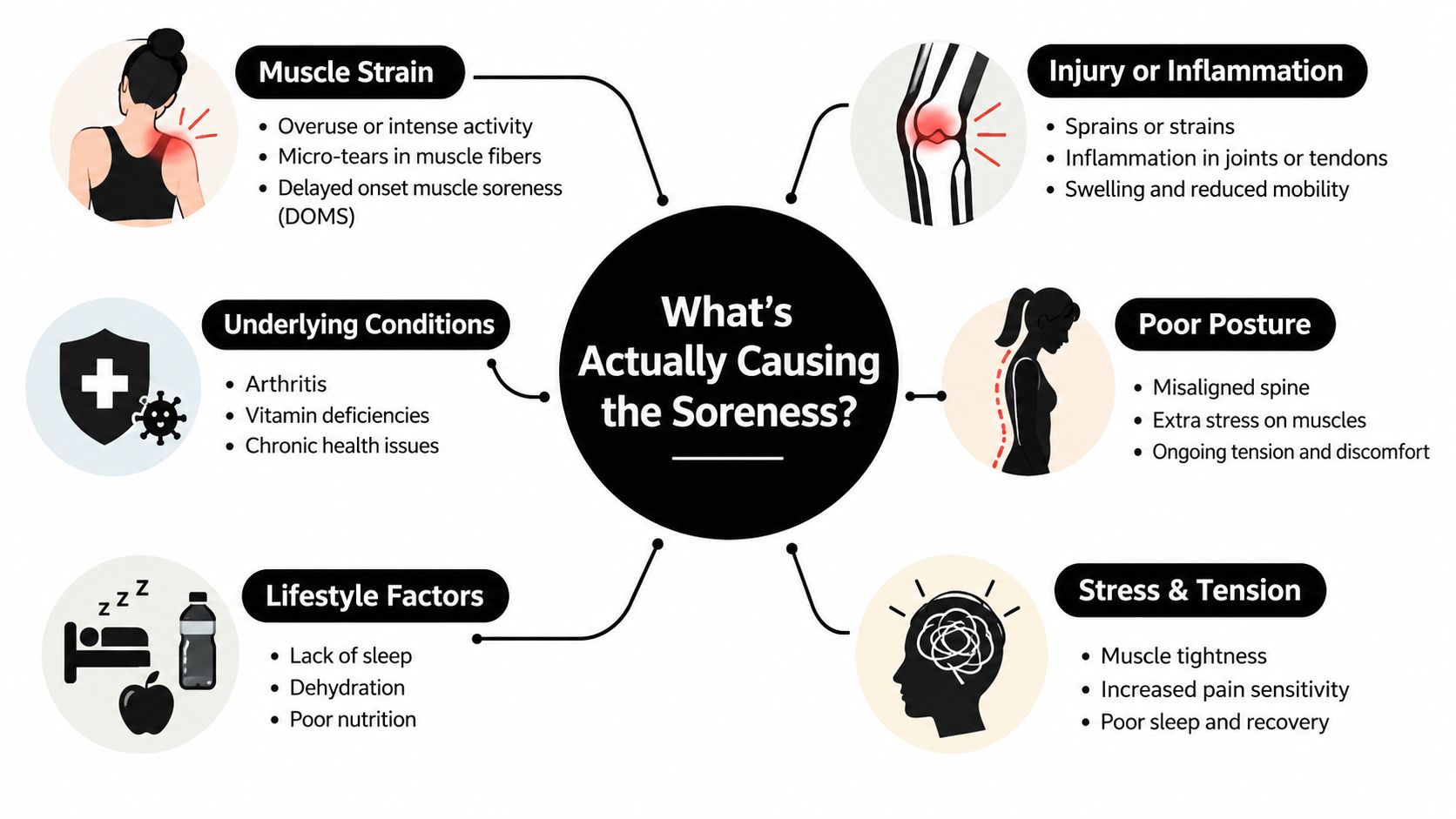
Upper-back pain needs a more precise label than “tight muscles.” It usually comes from load-related muscle irritation, but nearby joints, tendons, the shoulder, or a nerve can produce a similar feeling. Identify the source before choosing a treatment.
The muscular triggers
Forward-head posture and rounded shoulders keep the mid-back muscles working while your arms stay in front of you. Stress can create the same pattern, with the shoulders slightly raised and the muscles around the neck and shoulder blades unable to relax fully. Prolonged computer use and sedentary work are also associated with neck and upper-back pain, often involving muscular irritation.
A sudden increase in rows, pull-ups, carrying, overhead pressing, or manual work can overload the rhomboids and trapezius. Ordinary muscle soreness is usually broad, tender to pressure, and easier after warming up or reducing the provoking load. That pattern supports a muscle-focused plan.
Sleep position can contribute when a pillow or mattress holds your neck and thoracic spine in flexion or rotation for hours. Stiffness that appears on waking and improves with movement points toward the sleep setup as a contributor, rather than proving a training injury.
When it isn't only muscle soreness
Pain in a precise joint line, catching during rotation, or sharp changes with spinal movement may involve a thoracic joint. Repetitive pulling can irritate a tendon near the shoulder blade, particularly when pain stays localised and worsens with resisted shoulder movement instead of general activity.
Shoulder-blade mechanics also matter. If one shoulder hikes, wings, or moves differently from the other, surrounding muscles may work overtime to stabilise it. A shoulder problem can refer discomfort into the upper back, so a “tight knot” is not a complete diagnosis.
Canadian occupational evidence shows why tissue-specific assessment matters. An Ontario study of food-service kitchen workers reported mid-to-upper-back discomfort in 42.6% of participants (Canadian occupational review). Work-related upper-back symptoms can involve different tissues and loading patterns.
If pain becomes more precise, more reactive, or less responsive to movement, stop treating it as generic tightness. Change the assessment before changing the tool.
Your First 48 Hours of Relief
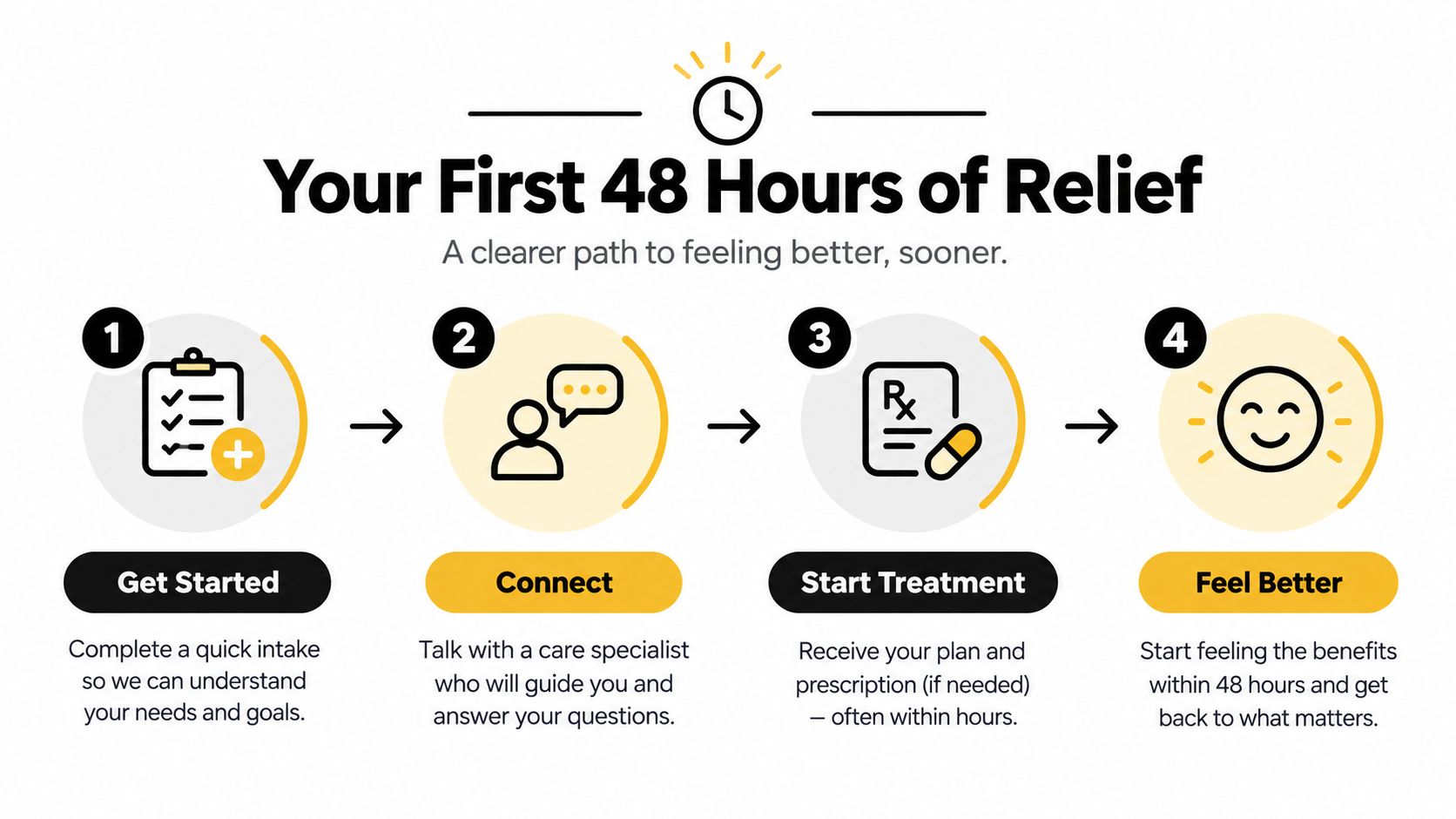
The first response should reduce irritation without turning you into a statue. Complete rest often makes stiffness more noticeable, while repeating the exact movement that caused the soreness keeps the area reactive.
Reduce the provoking load
For the next day or two, modify rows, pull-ups, overhead pressing, heavy carrying, and long periods at the screen. Keep easy walking and comfortable shoulder movement. The right adjustment lets you move without repeatedly reproducing the pain.
Choose heat when the problem feels stiff, tight, and muscular. A warm shower or heating pad can make guarding easier to release. Use ice instead when the area feels acutely hot, sharply tender, or recently strained. A guide to choosing heat or cold for muscle strain offers a useful way to match the method to the presentation.
Make movement easier, not heroic
A topical analgesic such as MEDISTIK can be applied over the rhomboids, mid-trapezius, and the muscles around the shoulder blade before mobility work. Use the product according to its label, and treat it as a way to make gentle movement more tolerable, not as permission to push through pain.
Then perform a short circuit:
- Thoracic extension: Lie over a foam roller or rolled towel across the mid-back. Support your head and extend gently without forcing the low back to arch.
- Open-book rotation: Lie on your side, keep the knees comfortable, and rotate the upper arm and chest open while breathing out.
- Chin tucks: Draw the chin straight back, rather than looking down, to reduce forward-head loading.
Repeat the circuit during the day only if each movement leaves you the same or better. The Canadian clinical guideline for recent-onset neck and upper-back-adjacent pain supports patient education combined with range-of-motion exercise, while advising against relying on education alone or using collars, electrotherapy, or clinic-based heat as the primary approach (Canadian clinical guideline).
Stress can keep the shoulders raised even after the original workload ends. If that pattern sounds familiar, this practical resource on burnout prevention with Cait Donovan may help you address the recovery problem alongside the physical one.
If the soreness eases and movement improves, continue with gradual mobility. If it doesn't change, becomes sharper, or starts travelling into the arm, stop escalating home treatment and use the targeted approach below only if the movements remain comfortable.
Stretches and Mobility That Actually Help
Upper-back mobility works best as a sequence, not a buffet of random stretches. The aim is to give the thoracic spine room to move, reduce the demand on overworked shoulder-blade muscles, and avoid making the low back or neck compensate.
Use this short routine
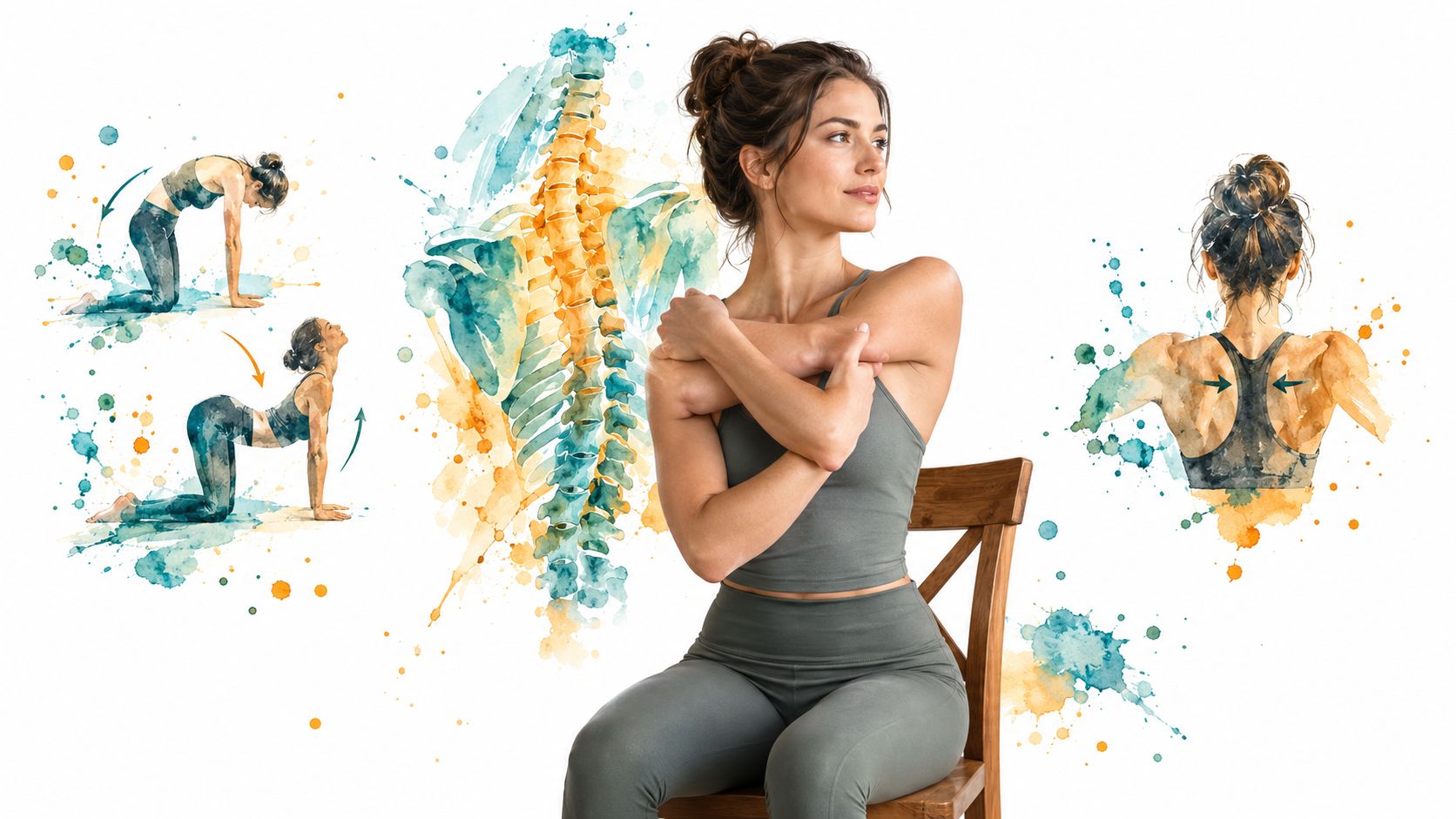
Start with thoracic extension over a foam roller or a rolled towel. Place the support across the mid-back, keep the ribs controlled, and let the upper spine extend over it. Don't fling the head backward or create the movement by arching through the lumbar spine.
Move next to a doorway pec stretch. Place the forearms or hands on the frame, step through gently, and breathe out as the chest opens. Tight chest muscles can keep the shoulders pulled forward, so this movement can unload the upper back without aggressively stretching the sore area itself.
Add a chin tuck with a light scapular squeeze. Draw the chin straight back, then gently bring the shoulder blades toward each other and slightly down. Avoid shrugging, pinching hard, or forcing the chest upward.
Finish with a cat-cow variation that concentrates on the mid-back. Keep the abdomen lightly engaged, move one spinal region at a time, and avoid turning the exercise into a large low-back arch.
Follow the response
Hold the doorway stretch and any comfortable static position for a relaxed breath cycle, then repeat only while the sensation remains diffuse and muscular. Exhale into the stretch rather than holding your breath. The Canadian guideline emphasises adjusting the type, dose, and progression of exercise to the person's symptoms, goals, capacity, and response, which is more useful than following a rigid routine (Canadian clinical guidance on exercise progression).
Skip any movement that produces sharp pain, a precise joint-line sensation, electric symptoms, numbness, or pain that travels down the arm. Those responses suggest you need a better assessment, not a deeper stretch.
Use this self-assessment for better movement to notice which positions improve control and which ones provoke symptoms. For more focused exercise ideas, see these trapezius muscle pain relief exercises, but keep the same rule: the exercise earns its place only when your response is calm and repeatable.
Heat, Ice, and Topicals Compared
Don't throw every recovery tool at the same symptom. Match the tool to the tissue behaviour you're seeing.
| Tool | Best For | How to Use | Combine With |
|---|---|---|---|
| Heat | Stiffness, guarding, and muscle-dominated soreness | Apply comfortable warmth before movement | Thoracic mobility and easy walking |
| Ice | A recent strain, hot tissue, or sharp local tenderness | Use briefly and protect the skin | Load reduction and gradual reintroduction |
| Topical analgesic | A sore, accessible area where pain limits movement | Apply as directed on the label | Heat or mobility, depending on the presentation |
| Self-massage | Tender muscular spots and protective tension | Use a lacrosse ball against a wall with light pressure | Breathing and active range of motion |
| Postural work | Recurring tension linked to desk or driving habits | Change position and practise controlled shoulder-blade movement | Strength and regular movement breaks |
Heat is the better default for a back that feels tight, dull, and restricted without obvious acute inflammation. It can make the muscles feel less guarded so you can move, but it won't correct a tendon problem, joint restriction, or nerve irritation.
Ice has a narrower role here. Use it when the soreness followed a clear acute event and feels hot or sharply sensitive. Don't use cold to numb yourself before returning to a heavy workout. Reduced sensation can hide the feedback you need to dose activity safely.
Topical products sit between symptom relief and movement preparation. A stick-format topical such as MEDISTIK can be applied around the shoulder blades without requiring you to rub a greasy product across a difficult-to-reach area. For a broader explanation of topical pain medications, compare the active ingredients, intended use, and label directions rather than assuming every formula works the same way.
A lacrosse ball can help with a tender muscular spot, but pressure should be tolerable and controlled. Avoid grinding directly over the spine, ribs, or a painful shoulder joint. Use this decision rule:
Stiffness and tightness: warmth, topical relief, and mobility.
Acute flare: load reduction, appropriate cold, and gentle movement.
Recurring tension: mobility, postural changes, and progressive strength.
Stopping It From Coming Back
Periodic damage control is not prevention. Recurring upper-back soreness improves when you reduce the daily exposure irritating the area, then build the muscles' capacity to handle that exposure.
Fix the workstation before adding exercises
Set the monitor at eye level to reduce constant downward looking. Support your low back, recline the chair slightly, keep your elbows comfortably near your body, and support both feet. A perfect posture matters less than changing position regularly.
Stand, walk, roll your shoulders, or perform a few chin tucks during the workday. Desk work and prolonged computer use can contribute to neck and upper-back pain, so changing the workstation is part of treatment, not merely an office-accessory project.
Build endurance before chasing heavier pulls
Use face pulls, banded rows, and prone Y-T-W holds with controlled technique. Keep your shoulders away from your ears, and stop before your neck takes over. The goal is easier shoulder-blade control during work, training, and carrying, not exhausting already sore muscles.
A short daily mobility block is easier to maintain than an ambitious routine that appears only after pain returns. Attach it to an established habit, such as making coffee or shutting down your computer.
Treat recovery as part of training
Consistent sleep and sensible progression matter because soreness can reflect under-recovery as well as overuse. When workload rises, reduce unnecessary pulling volume elsewhere instead of piling corrective exercises onto the same irritated tissues.
Canadian injury surveillance recorded a decline in musculoskeletal disorder claims from 147,487 in 2000 to 90,887 in 2019, yet the later figure still represented a substantial workplace burden. Prevention must address both gym habits and job demands.
A workable week can include mobility after work, two controlled mid-back strength sessions, regular movement breaks during screen time, and less pulling whenever soreness starts building. Pick two changes and attach them to habits you already maintain.
When Soreness Is a Warning Sign
Use a clear rule: if a red flag appears, self-management stops and a clinician becomes the next step.
Arrange an assessment when upper-back pain:
- Wakes you from sleep: Don't dismiss persistent night pain as ordinary tightness.
- Travels into the arm or hand: Numbness, tingling, or weakness suggests possible nerve involvement.
- Follows trauma: Sharp pain after a fall, collision, or twist needs evaluation.
- Doesn't settle: Persistent soreness despite consistent self-care deserves a diagnosis rather than more tools.
- Comes with systemic symptoms: Fever or unexplained weight loss alongside back pain requires medical attention.
- Changes bladder or bowel control: Treat this as an emergency and seek immediate care.
Muscular soreness is usually broad and linked to movement or load. Nerve irritation may produce altered sensation or weakness. A disc or joint problem may respond poorly to the stretches that help a muscle. Shoulder conditions can refer pain towards the shoulder blade, while heart and lung problems can sometimes present as pain between the shoulder blades rather than obvious chest discomfort. Women, in particular, shouldn't assume upper-back pain is muscular when it occurs with symptoms such as breathlessness, sweating, nausea, dizziness, or chest pressure.
Pain on the upper right side also deserves a careful differential when it doesn't behave like muscle soreness. This guide to pain in the upper right of the back can help you identify questions to raise, but it can't replace an examination.
Choose the level of care based on severity. Contact a primary care provider or physiotherapist for persistent, recurring, or movement-limited symptoms. Use urgent care for severe pain, concerning neurological symptoms, or pain after significant trauma. Seek emergency help immediately for loss of bladder or bowel control or symptoms suggesting a serious heart or lung problem.
MEDISTIK offers Canadian-made topical options for temporary relief of sore muscles and joints, including accessible formats for use around the upper back and shoulder blades. Visit MEDISTIK to choose a product, review application guidance, and build a more practical relief routine around movement and recovery.


