

You're halfway through a workday, your shoulders have crept towards your ears, and the area between your shoulder blades feels tight, hot, or strangely difficult to relax. Stretching may loosen it briefly, but the ache returns as soon as you sit down, drive, lift, or reach again.
That pattern is common with upper back strain, particularly when the muscles and joints of the thoracic spine face repeated low-level stress. Effective upper back strain relief usually requires more than one tactic. You need to calm the irritated area, restore comfortable movement, build tolerance gradually, and change the daily loads that keep provoking it.
Understanding Upper Back Strain and Its Hidden Costs
Upper back strain refers to irritation or overload affecting the muscles, tendons, and supporting tissues around the thoracic spine, shoulder blades, and upper ribs. It isn't identical to lower back pain, and it isn't the same thing as shoulder tension. The discomfort may sit between the shoulder blades, along the upper trapezius, beside the spine, or across the rib area.
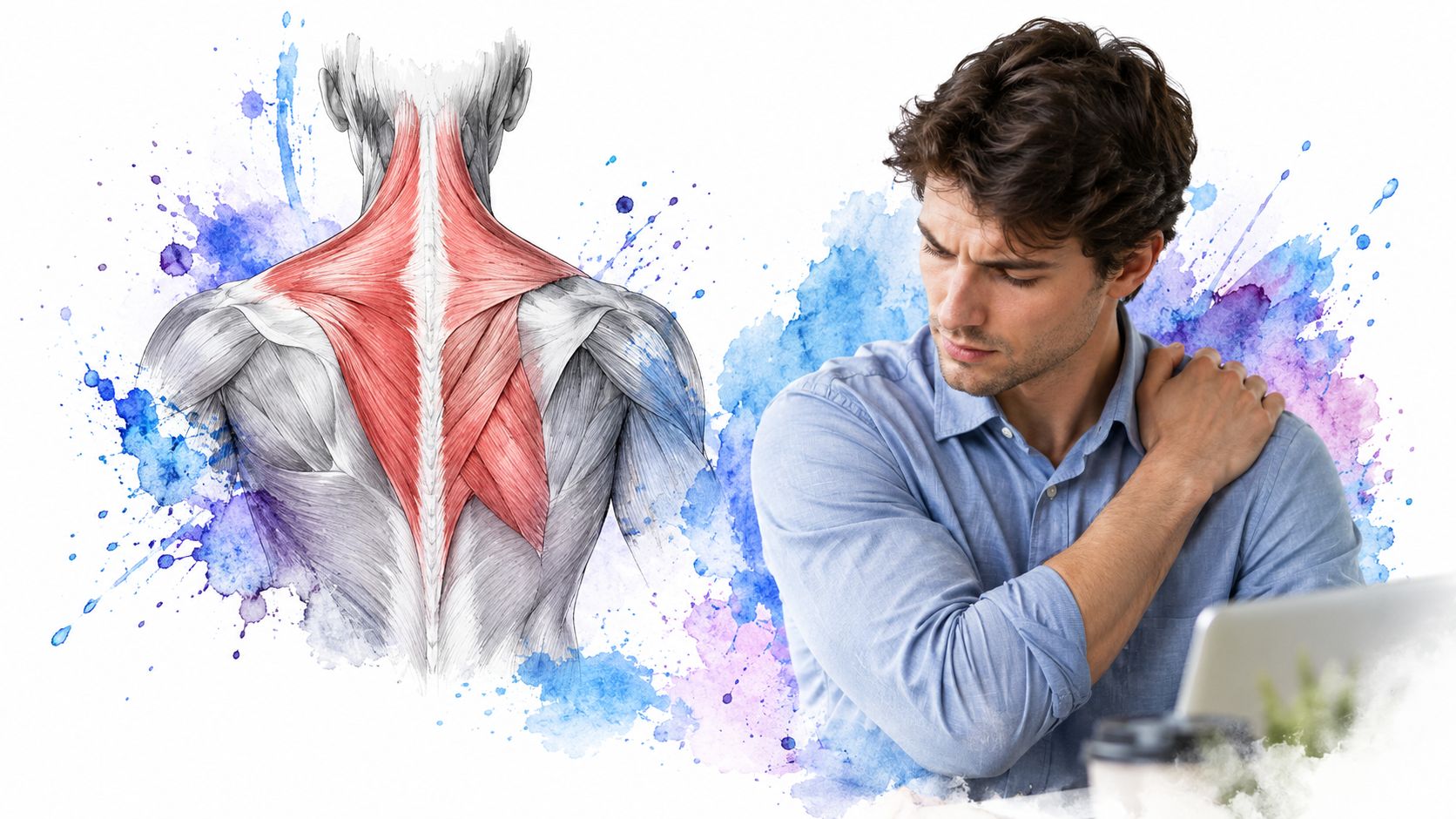
A sudden pull can cause strain, but many people develop symptoms through cumulative loading. Hours of unsupported sitting, forward-head positioning, repetitive reaching, driving, overhead work, and carrying weight on one side can keep the muscles working without enough variation or recovery. Stress can also encourage prolonged shoulder elevation and shallow breathing, which may increase the feeling of tightness.
Clinical rule: The painful spot is often where the tissues complain, not necessarily where the problem began.
The scale of back problems in Canada shows why this deserves more than a quick stretch. A Statistics Canada report on chronic back problems found that more than one million workers developed chronic back problems in the mid-1990s. Later surveys reported age-standardised chronic back disorder prevalence of 18.9% in 2007 and 17.8% in 2014, showing that back disorders remained common rather than disappearing over time.
The cost of treating symptoms alone
Heat, massage, and topical analgesics can make movement more comfortable, but relief that lasts depends on what happens after symptoms settle. If you return to the same slouched workstation, repeat the same lifting pattern, or keep the shoulder blades fixed for long periods, the tissues may become irritated again.
It helps to understand common causes of muscle pain, then match the response to the cause. A short-lived flare after an unfamiliar task calls for load modification and gentle movement. Recurrent symptoms during ordinary work suggest that your capacity, movement strategy, or environment needs closer attention.
Expert-Approved Thoracic Stretching Protocol
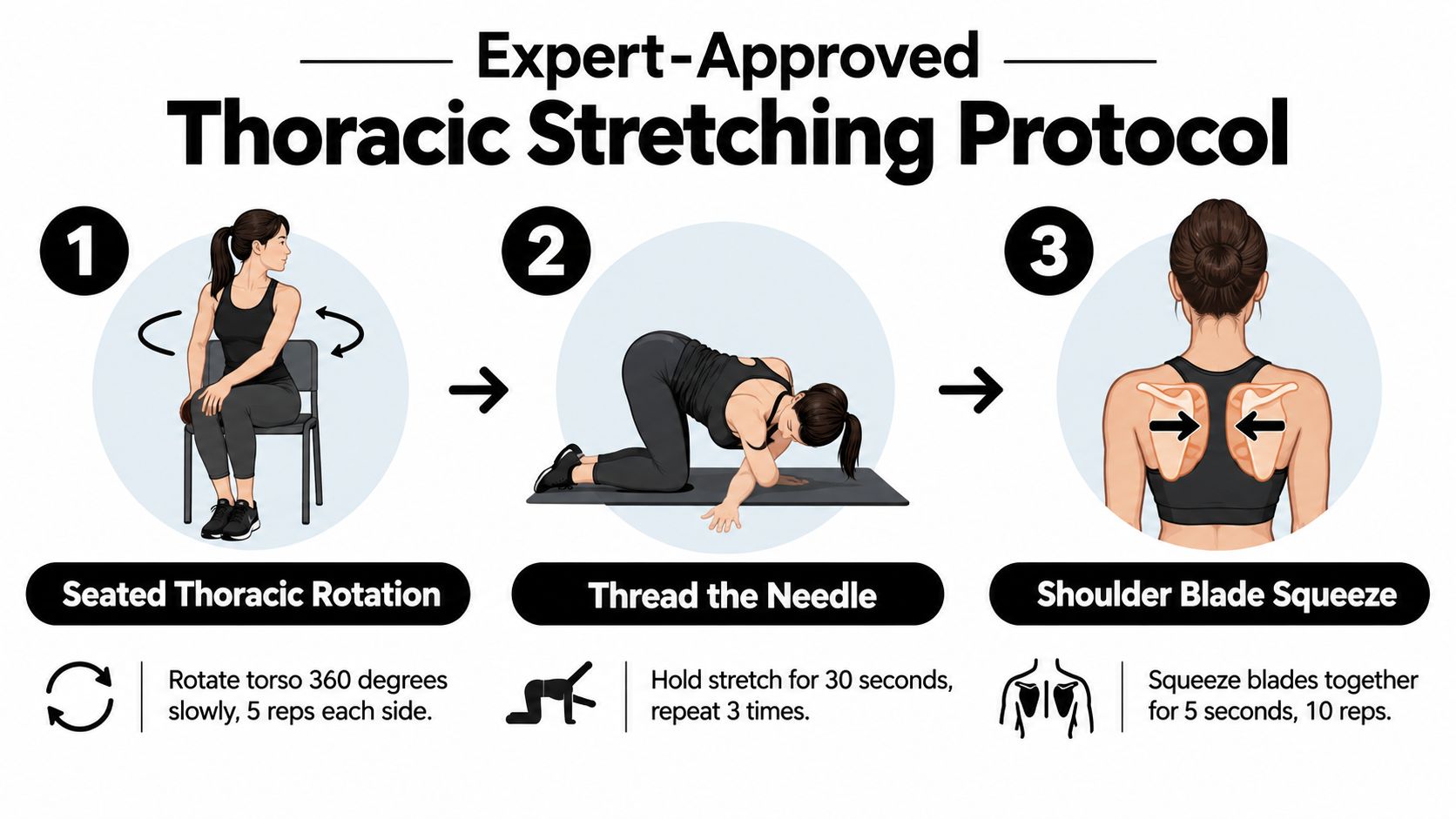
Stretching should create a sense of movement, not a contest with pain. Alberta's aftercare guidance recommends a sequence that combines thoracic rounding, wall push-up plus, banded scapular retraction, and shoulder circles, with stretch holds of 15 to 30 seconds and shoulder circles performed for 2 to 4 repetitions in each direction. See the Alberta thoracic strain exercise guidance for the original aftercare instructions.
Start with controlled mobility
- Thoracic rounding. Sit or stand comfortably. Let your upper back round gently while allowing the shoulder blades to move around the rib cage. Keep the movement slow and avoid forcing your neck forward. Hold the comfortable stretch for 15 to 30 seconds, then return to a neutral position.
- Wall push-up plus. Stand facing a wall with your hands supported against it. Perform a gentle wall push-up, then add the “plus” by allowing the shoulder blades to glide forward without shrugging. The movement trains control around the shoulder blades while keeping the load manageable.
- Banded scapular retraction. Hold a resistance band with both hands. Draw the shoulder blades gently towards one another while keeping the ribs from flaring and the shoulders away from the ears. Return slowly instead of letting the band pull your arms forward.
- Shoulder circles. Circle both shoulders smoothly in one direction, then reverse. Use 2 to 4 repetitions in each direction. Small, relaxed circles are more useful than large circles that pinch or create sharp pain.
Use graded exposure, not complete rest
The right amount of exercise is the amount you can repeat without a meaningful increase in symptoms. If the wall movement hurts, stand closer to the wall or reduce the range. That regression rule is important because it lets you expose irritated tissues to manageable movement without demanding full strength too early.
You can also make the band exercise easier by using less resistance or reducing the distance between your hands. Stop a movement that produces sharp pain, spreading symptoms, numbness, or weakness. Gentle stiffness during or after exercise may be acceptable, but worsening pain that lingers means the dose was too high.
For further movement ideas, use this back-pain exercise guide as a supplement, not a reason to collect exercises indiscriminately. A small routine performed consistently usually serves recovery better than an aggressive session followed by several days of guarding.
Self-Massage Techniques for Immediate Tension Release
Self-massage can reduce the sensation of a dense knot in the trapezius or rhomboid region, particularly when the area feels tight after sitting or repetitive work. It works best as a way to make movement easier, not as a test of how much pressure you can tolerate.
Use steady pressure
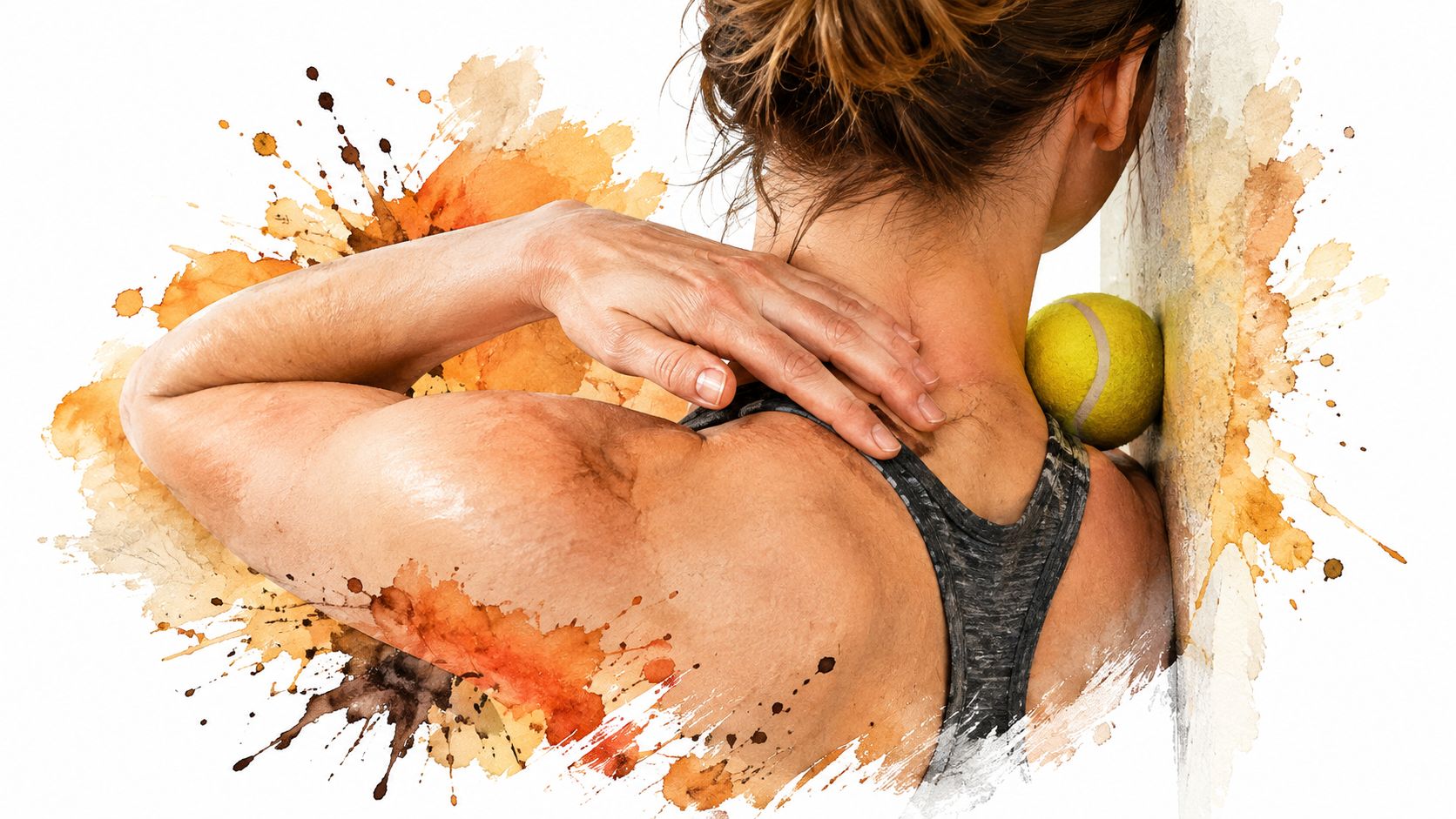
Place a tennis ball between your upper back and a wall. Lean into it gradually until you feel firm, tolerable pressure beside the shoulder blade or in the upper trapezius. Stay still while breathing normally, then move your body a small amount to explore the surrounding tissue.
Quick rubbing can feel active without changing the way the tissue tolerates load. Sustained, moderate pressure gives you time to relax the surrounding muscles and notice whether the area becomes less sensitive. Keep the pressure below the point where you hold your breath, tense your jaw, or feel a sharp or electrical sensation.
Target the muscle, not the joint
For the rhomboid region, work beside the inner edge of the shoulder blade rather than directly over the spine or the bony blade itself. You can use small cross-friction movements across a tender band, but keep them slow and light. For the upper trapezius, use your opposite hand to apply sustained thumb pressure to the fleshy area between the neck and shoulder.
A useful sequence is pressure first, then movement. After releasing the ball or thumb, perform a gentle shoulder circle or thoracic rounding movement. This helps you judge whether the massage improved function instead of relying only on temporary numbness.
The following video can help you visualise safe positioning and controlled pressure:
Avoid aggressive rolling over the spine, ribs, front of the neck, or any area with bruising, skin irritation, altered sensation, or unexplained swelling. Massage shouldn't leave the area more painful later in the day.
Ergonomic Adjustments and Topical Treatment Integration
Upper back strain relief is harder to maintain when your workstation repeats the same stress each day. Position the screen so you can look ahead without repeatedly dropping your chin. Support your back, keep both feet stable, and keep your elbows close to your sides instead of reaching constantly for the keyboard or mouse.
A good workstation supports movement rather than forcing one posture for hours. Alternate sitting and standing when possible, change arm positions, and interrupt long periods of stillness with brief walking or gentle shoulder movements. These adjustments reduce repeated loading, but they work best when paired with graded exposure, gradually returning to tasks while keeping symptoms within a tolerable range.
How the four recovery strategies differ
| Strategy | Best use | Limitation |
|---|---|---|
| Workstation changes | Reduce repeated loading during desk work, driving, or computer use | They do not provide immediate comfort during an active flare |
| Gentle exercises | Restore mobility and gradually improve load tolerance | Too much range or resistance can aggravate an irritable strain |
| Topical analgesic support | Temporarily reduce discomfort so normal movement feels more manageable | It does not correct posture, strength, lifting mechanics, or workload |
| Heat or cooling | Provide short-term comfort according to personal response and activity phase | Relief can fade if the provoking activity remains unchanged |
Topical pain relief may fit before movement, during a demanding task, or after activity. It can reduce discomfort and help you practise controlled movement, while workstation changes and graded exposure address the mechanical trigger. See MEDISTIK's guide to topical pain medications for product classifications and label guidance. Apply any product only as directed, and avoid broken or irritated skin. Do not use reduced pain as permission to push through sharp pain, numbness, or weakness.
Ontario physiotherapy content reports that many people with mild to moderate upper back pain improve within 2 to 4 weeks when they combine regular physiotherapy with home exercises, according to this Canadian upper back pain treatment resource. If symptoms are not trending better during a consistent, symptom-limited programme, reassess the diagnosis and workload rather than adding more treatment.
How to Use MEDISTIK for Warm-Up, Performance, and Recovery
A topical analgesic can support three different phases of muscle care, but each phase has a different purpose. The extra-strength stick is suited to targeted application, the fast-acting spray is practical when you need a quick application, and the natural ice roll-on provides a cooling option after activity. Follow each product's label for application instructions, skin precautions, and frequency.

Prime before movement
Before work, exercise, or lifting, apply the warming format to the relevant muscle area as directed. Give yourself time to perform the thoracic rounding, wall push-up plus, or shoulder circles gently. The aim is to make the first movements more comfortable while you prepare the tissues, not to hide pain and immediately perform a demanding task.
Perform with control
During activity, a portable spray or stick may be useful when discomfort begins to distract you. Use it as a cue to reduce the load, change position, or take a short movement break. If the upper back becomes sharper, weaker, numb, or increasingly painful, stop the activity rather than repeatedly reapplying a topical product.
Restore after loading
After activity, the cooling roll-on can provide a different sensory input for sore muscles when used according to its instructions. Pair it with relaxed breathing, a short walk, and gentle range of motion. Don't place a topical product under a tight dressing or combine warming and cooling products on the same area unless the label specifically permits it.
For a broader explanation of how topical support can sit alongside treatment, see MEDISTIK's guidance on combining topical relief with care. The central principle remains simple: use comfort to keep moving well, then address the mechanical reason the strain appeared.
When Upper Back Strain Warrants Professional Care
Self-care is appropriate for a mild, clearly mechanical strain that improves with reduced loading and gentle movement. Arrange a professional assessment if pain persists despite a consistent programme, repeatedly returns with ordinary activity, or worsens even when you rest. Persistent symptoms may reflect an unrecognised joint, rib, nerve, shoulder, or non-musculoskeletal problem.
Seek prompt medical attention for numbness, weakness, loss of coordination, severe night pain, fever, unexplained weight loss, chest symptoms, or difficulty breathing. Pain that follows significant trauma also deserves assessment rather than a home stretching trial.
Canadian workplace data underline the importance of taking recurring strain seriously. Across all provinces from 2000 to 2019, sprains and strains accounted for 84.8% of low-back claims and 55.6% of upper-extremity claims among 2,119,854 accepted lost-time injury claims, as reported in this Canadian analysis of work-related musculoskeletal injury claims. These figures don't mean every upper back ache is serious, but they do show why cumulative occupational loading deserves attention.
A physiotherapist can examine thoracic movement, shoulder-blade control, strength, work demands, and symptom behaviour, then adjust your exercise dose. Learn more about physiotherapy for back pain relief, or use a location directory to find your nearest Telomyx clinic when you need help arranging an assessment.
MEDISTIK offers portable topical formats that can support temporary relief for sore muscles and joints during warm-up, activity, and recovery. Visit MEDISTIK to explore options that can complement graded movement, ergonomic changes, and professional physiotherapy for upper back strain relief.


