

Topical anti-inflammatories, particularly NSAIDs such as diclofenac, can provide meaningful localized pain relief with less systemic exposure than oral NSAIDs. For knee osteoarthritis, topical diclofenac has a number needed to treat of 5 for achieving substantial pain relief within 6 weeks, making it a strong first-line option for many adults.
But if a cream cools your knee, eases a sore calf, or makes a stiff joint feel better, does that automatically mean it has reduced inflammation? Not necessarily. The phrase topical anti-inflammatory covers several different types of products, and the difference between a true anti-inflammatory medicine and a sensation-based pain rub matters when you're choosing treatment in Canada.
A sports strain, painful knee osteoarthritis, irritated tendon, and inflammatory skin condition don't all call for the same formulation. The most useful question isn't "Does this feel strong?" It's, "What is this product designed to change, how quickly should it work, and is that use supported for my condition?"
What Is a Topical Anti-Inflammatory?
Persistent pain can make every treatment label look interchangeable. Gel, cream, spray, roll-on, balm, and patch may all sit beside one another on a pharmacy shelf, but their ingredients and intended effects can be very different.
A topical anti-inflammatory is a medicated product applied to the skin over a painful or inflamed area. It may come as a gel, cream, spray, or roll-on. Unlike an oral medicine, which travels through the digestive system and bloodstream before reaching tissues throughout the body, a topical product is placed close to the area you want to treat.
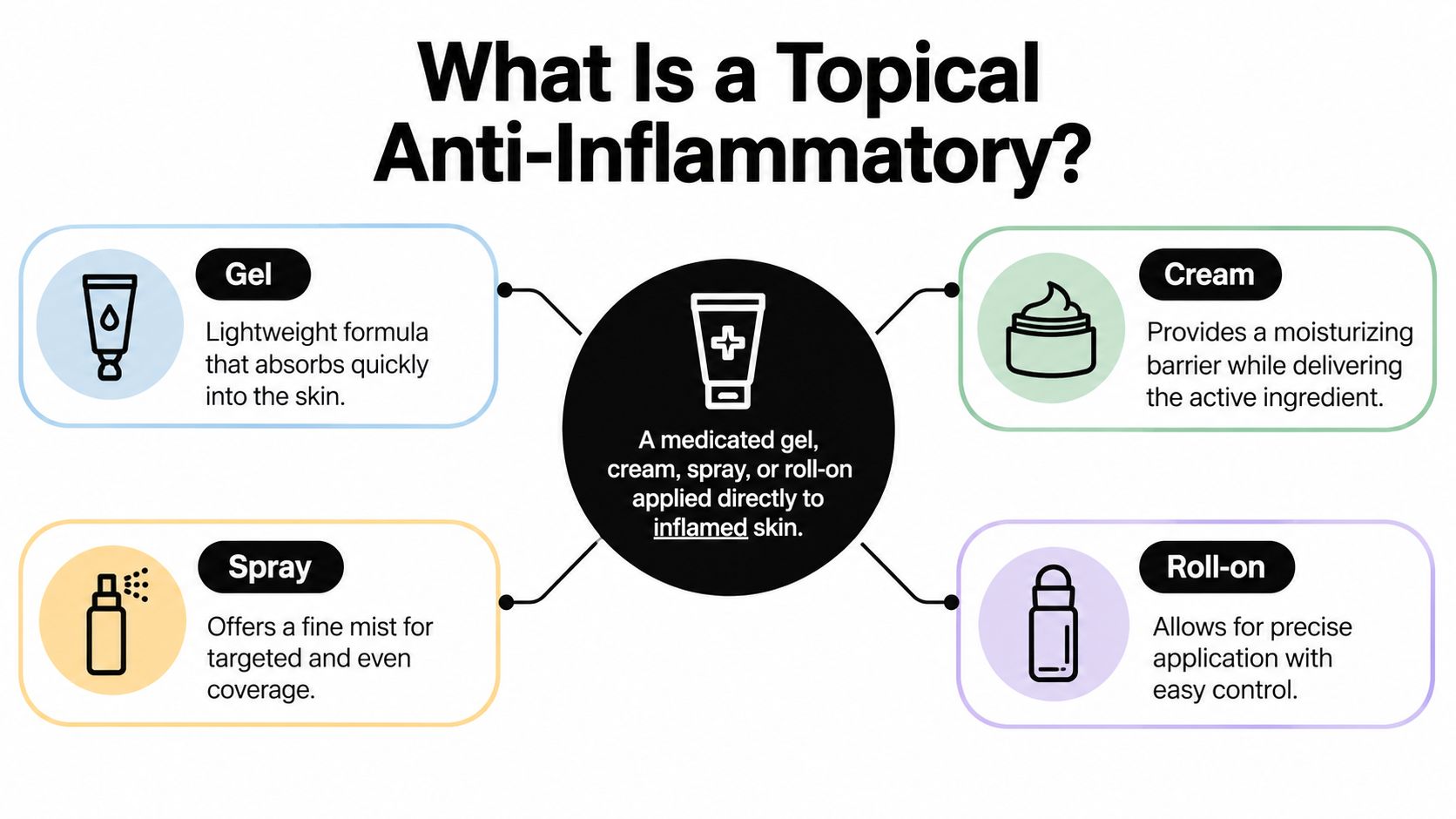
That local approach is particularly useful for a joint or muscle problem affecting a defined area. Topical NSAIDs, such as diclofenac and ketoprofen, act on inflammatory pathways rather than only creating a surface sensation. Canadian evidence supports their use for conditions including acute sprains and strains and chronic hand or knee osteoarthritis, although the evidence isn't equally strong for every body area or diagnosis. The Canadian overview of topical pain medications provides helpful background on the broader category.
Anti-inflammatory or pain-masking product?
A product can reduce the experience of pain without reducing the underlying inflammatory process. Menthol, for example, can create a cooling sensation, while capsaicin can produce warmth or alter how pain signals are perceived. Those effects may be useful, but they aren't the same as blocking inflammatory enzymes in a painful joint.
That distinction helps explain why two products can feel completely different while both claim to offer pain relief:
- NSAID products are intended to reduce local inflammatory activity and pain.
- Counterirritants use cooling, warming, or tingling sensations to change how discomfort is perceived.
- Analgesic products may relieve pain without being designed to treat inflammation.
- Topical treatments for inflammatory skin disease can have a separate purpose from products used for muscles and joints.
Don't apply a product intended for intact skin to an open wound, incision, or irritated rash unless a clinician has specifically advised it. A topical treatment is still a medicine, even when it feels gentle or is sold without a prescription.
NSAIDs vs Natural Agents How They Work
The word “natural” can create false reassurance, while the word “NSAID” can make a topical product sound more dangerous than it is. A better comparison looks at mechanism, target, evidence, and intended use.
Topical NSAIDs such as diclofenac and ketoprofen reduce the activity of cyclooxygenase enzymes involved in producing inflammatory chemicals. In practical terms, they address a biochemical part of the pain process near the treated area. Their lower systemic exposure than oral NSAIDs is one reason they can be useful when a person needs localized relief and wants to limit whole-body exposure.
Menthol and capsaicin work differently. They're commonly described as natural agents or counterirritants because they influence nerve signalling and skin sensation. Menthol tends to create cooling, while capsaicin can create heat or tingling and, with continued use, alter the responsiveness of pain-sensing nerves. These effects can make movement more comfortable, but they shouldn't automatically be described as equivalent to NSAID-driven anti-inflammatory action.
| Agent type | Example ingredients | Primary mechanism | Best for |
|---|---|---|---|
| Topical NSAID | Diclofenac, ketoprofen | Reduces local inflammatory enzyme activity | Localized osteoarthritis pain, acute sprains, and strains where an NSAID is appropriate |
| Cooling counterirritant | Menthol | Changes skin and nerve sensation to create cooling and alter pain perception | Short-term comfort for sore muscles and superficial discomfort |
| Warming counterirritant | Capsaicin | Alters pain-signal transmission and can produce warmth or tingling | Selected recurring nerve or joint pain situations, with careful attention to skin tolerance |
| Mixed topical analgesic | May combine sensory agents with other pain-relief ingredients | May combine local sensation changes with analgesic effects | People seeking a portable, surface-applied option for muscle or joint discomfort |
The category matters because a fresh sports injury and chronic osteoarthritis have different treatment questions. For an ankle strain, you may want a locally applied option alongside appropriate loading, movement, and rehabilitation. For knee osteoarthritis, the question may be whether a topical NSAID can help you walk and exercise while limiting exposure to an oral medicine.
A strong cooling sensation tells you that your nerves detected the product. It doesn't, by itself, prove that inflammation has been reduced.
Natural agents also aren't automatically risk-free. Health Canada updated labels for certain over-the-counter topical pain relievers containing menthol, methyl salicylate, or capsaicin after reviewing serious skin-burn risks. That makes ingredient checking and label directions important, whether a product is prescription, non-prescription, synthetic, or naturally derived. For a practical comparison of plant-derived and conventional approaches, see this guide to natural anti-inflammatory cream options.
Effectiveness and Onset of Action
How quickly should a topical anti-inflammatory work, and what kind of improvement should you expect? The answer depends on the ingredient, formulation, and problem being treated. A menthol roll-on may change how the area feels within minutes through cooling, while a topical NSAID is intended to reduce local inflammatory activity over time. These are different outcomes, even when both products are described as pain relief.
For a fresh sports injury, such as an ankle strain, early comfort may make gentle movement and rehabilitation easier, but it does not show that the tissue has recovered. For knee osteoarthritis, the more useful question is whether treatment helps you walk, climb stairs, or exercise with less pain during the treatment period. Topical anti-inflammatory treatment works best when expectations match the product, as explained in this comparison of the benefits of a topical pain reliever versus an oral pain reliever.
Canadian evidence gives topical NSAIDs a clinical basis for knee osteoarthritis. A Canadian meta-analysis summarised in the Canadian Medical Association Journal reported a number needed to treat of 5 for topical diclofenac and 7 for ketoprofen for achieving at least 50% pain relief within 6 weeks. In plain language, these figures mean that a relatively small group of appropriately selected people needs treatment for one additional person to reach that level of relief compared with a comparator. The CMAJ review of topical NSAIDs also supports topical NSAIDs as a first-line pharmacological option for knee osteoarthritis.
What “fast acting” should mean
A cooling or warming sensation can appear soon after application. It is a signal from the nerves, like a change in the volume of a radio, rather than proof that inflammation has been controlled. The Arthritis Society reports that topical NSAIDs usually begin working within 1 to 2 hours after application, while their full benefit for an ongoing joint problem may require consistent use as directed.
Clinical trials assess function as well as pain at rest. In a randomized, double-blind trial of 326 patients, a topical diclofenac solution performed significantly better than its vehicle for pain, physical function, stiffness, and pain during walking. The formulation contained 1.5% diclofenac solution with dimethyl sulfoxide as a penetration enhancer, as described in the Canadian clinical evidence summary.
A suitable medicine can improve symptoms without correcting every cause of pain. If pain persists, movement worsens, or the diagnosis is uncertain, reassessment is more useful than just applying more product. Canadian guidance recommends reviewing effectiveness after 6 to 12 weeks in relevant chronic pain situations. The McMaster evidence summary also describes limited evidence for some groups and conditions, including children with acute musculoskeletal pain, and distinguishes pain-relief topicals from newer non-corticosteroid treatments for inflammatory skin disease.
Safe Application and Dosage Guidelines
The safest application starts with the label, not with the size of the painful area. Different products have different concentrations, applicators, maximum daily use, and treatment limits. Use the amount and frequency stated on the package or prescribed by your clinician, and don't assume that applying more will produce faster relief.
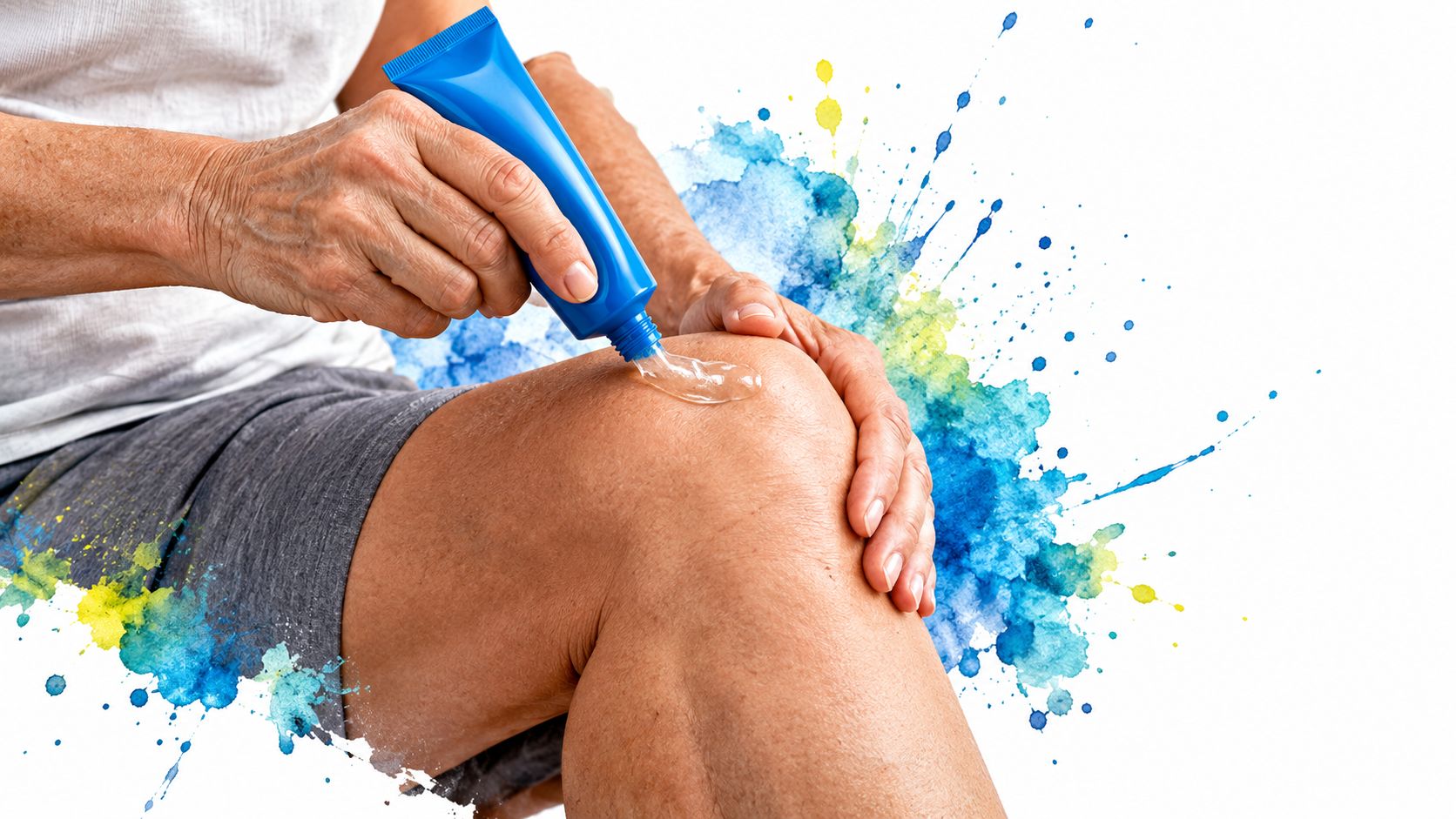
A sensible routine is straightforward:
- Check the skin first. Apply only to clean, dry, intact skin unless a healthcare professional has given different instructions.
- Measure rather than guess. Follow the label's stated amount for the body area. A larger layer isn't automatically a stronger treatment.
- Spread gently. Use light pressure so you don't aggravate a tender joint, freshly strained muscle, or sensitive skin.
- Wash your hands afterwards. This reduces accidental transfer to the eyes, mouth, food, or another person's skin.
- Let the product settle. Avoid immediately covering the area with a tight bandage, heat patch, or external heat source unless the product instructions specifically allow it.
- Track the response. Note whether walking, gripping, climbing stairs, or another relevant activity becomes easier, rather than relying only on a temporary sensation.
Don't combine topical and oral NSAIDs without checking with a pharmacist or prescriber. The medicines can contribute to a cumulative NSAID exposure, particularly when used regularly or over a large area.
Treatment duration matters
Health Canada's Canadian product monograph for 1.5% diclofenac topical solution limits the treatment regimen to no more than 3 months. That limit is a reminder that a topical medicine still needs a defined plan, even when it produces fewer systemic effects than an oral alternative. If you need treatment beyond the label period, ask for a review instead of continuing automatically.
For a separate example of how application technique and product format can affect everyday use, you can explore how to use pain relief spray. If headaches or migraine symptoms are your concern rather than a muscle or joint problem, Evo Dyne Products headache relief options address a different use case and shouldn't be treated as interchangeable with an anti-inflammatory for knee or tendon pain.
The following video can help reinforce careful topical application and handling:
Safety Profile and Side Effects Explained
“Topical” doesn't mean “risk-free.” It usually means the medicine is delivered closer to the target area and may produce less systemic exposure than an oral NSAID, but some absorption still occurs and local reactions remain possible.
The most common problems are often visible or felt at the application site. Redness, itching, dryness, rash, burning, or irritation can occur, especially if the skin is sensitive or the formula includes a strong counterirritant. Stop and seek advice if a reaction is spreading, blistering, unusually painful, or accompanied by swelling or breathing difficulty.
Why Canadian regulation matters
Canada has treated topical NSAIDs as new drugs subject to Division 8 requirements. Health Canada's policy documentation describes late-1980s evaluation work in which 1 to 2% of 200 patients developed sensitization to an arylpropionic-acid topical NSAID. That history helped shape the modern safety-review approach for these products, rather than treating topical delivery as automatically harmless. The regulatory background is set out in Health Canada's topical NSAID policy documentation.
A topical NSAID may be a reasonable option when the pain is localized, but suitability depends on your health history. Speak with a pharmacist or physician before use if you have reacted to NSAIDs, take other anti-inflammatory medicines, have significant kidney, stomach, heart, or bleeding concerns, or are pregnant or breastfeeding. The clinician can also help distinguish a joint problem from a skin condition, infection, fracture, or pain that needs a different assessment.
Safety check: If the product causes a new rash or your pain keeps worsening, don't cover the warning with another layer. Stop, read the label, and ask a healthcare professional what to do next.
The evidence isn't uniform across every condition. Canadian sources support topical NSAIDs for several acute and chronic musculoskeletal problems, but they also note that recommendations may be absent for people with common NSAID contraindications. A focused Canadian guide to topical pain relief can help you prepare questions, but it can't replace an individualized medication review.
Choosing the Right Formulation for Your Needs
The best format is the one that lets you apply the appropriate medicine consistently to the correct area without irritating your skin or interfering with your activity. A person managing knee osteoarthritis at home may value a gel that can be spread over a defined joint. A runner dealing with a sore calf may prefer a portable spray or roll-on that avoids putting product on their hands.
Start with the body area. A roll-on or stick offers controlled application over a narrow region and can be convenient before or after work. A spray may help reach a larger or awkward area with less rubbing, although you still need to follow the label and avoid inhaling the product or getting it near your eyes. A gel or cream gives you more control over where the medicine goes and may suit a joint that needs deliberate, gentle application.
Then consider the type of problem:
- Acute sports injury: Choose an option that fits alongside assessment, relative rest, gradual loading, and rehabilitation. Pain relief shouldn't be used to push through worsening swelling or loss of function.
- Chronic osteoarthritis: Look for an indication supported for the affected joint, then judge success by practical function, such as walking, stairs, or hand use.
- Sensitive skin: Avoid assuming that cooling or warming equals effectiveness. Check ingredients and stop if irritation develops.
- On-the-go use: A stick, spray, or roll-on can reduce mess and make reapplication easier, provided the product's instructions allow it.
One final distinction matters. Temporary pain relief for a muscle strain or arthritic flare is different from long-term inflammatory control for a condition such as atopic dermatitis. Canadian developments include approval of roflumilast cream for atopic dermatitis in 2025, alongside guidance supporting non-corticosteroid topical maintenance to help prevent flares and reduce corticosteroid exposure. That treatment goal isn't interchangeable with applying a topical NSAID to a sore knee.
MEDISTIK offers Canadian-made topical pain-relief formats, including a long-lasting stick, a fast-acting spray, and a cooling natural roll-on for temporary relief of sore muscles and joints. Visit MEDISTIK to compare application formats and choose an option that fits your pain location, routine, and need for portable use.


